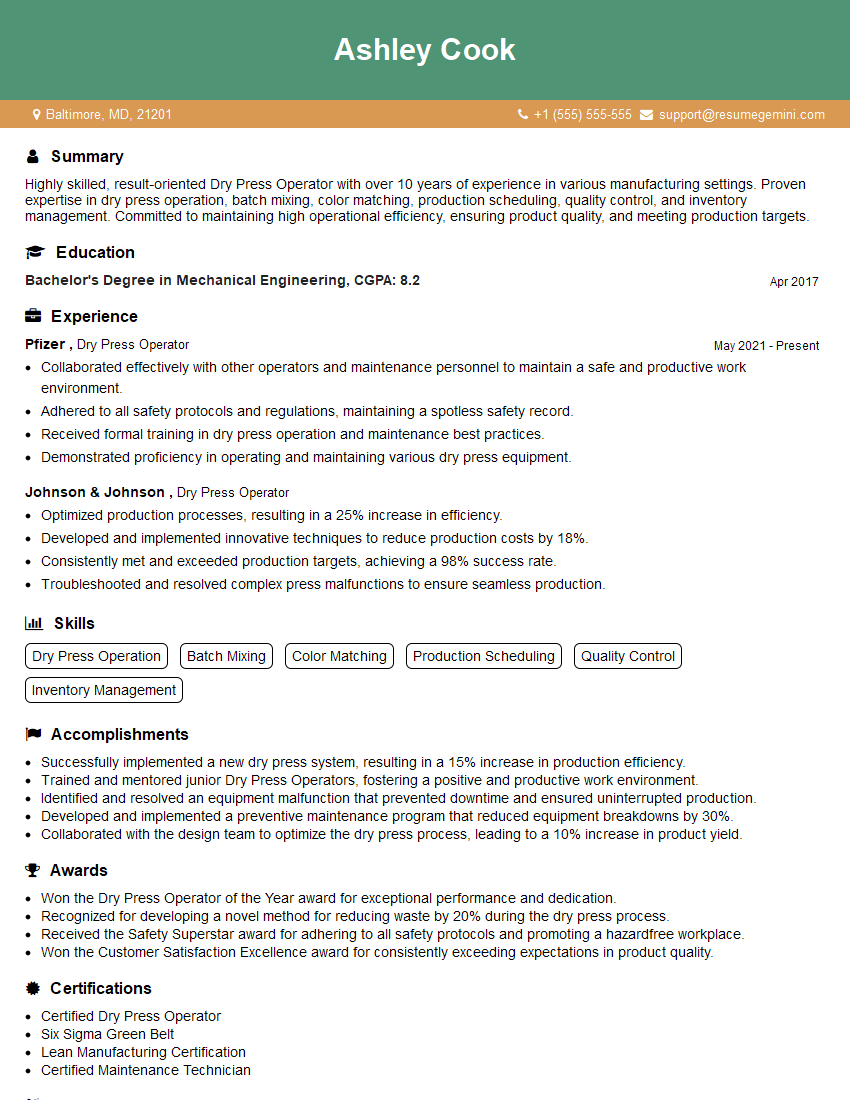
Are you gearing up for a career in Dry Press Operator? Feeling nervous about the interview questions that might come your way? Don’t worry, you’re in the right place. In this blog post, we’ll dive deep into the most common interview questions for Dry Press Operator and provide you with expert-backed answers. We’ll also explore the key responsibilities of this role so you can tailor your responses to showcase your perfect fit.
Acing the interview is crucial, but landing one requires a compelling resume that gets you noticed. Crafting a professional document that highlights your skills and experience is the first step toward interview success. ResumeGemini can help you build a standout resume that gets you called in for that dream job.






Essential Interview Questions For Dry Press Operator
1. What are the key responsibilities of a Dry Press Operator?
The key responsibilities of a Dry Press Operator include:
- Operating and maintaining dry press equipment
- Setting up and adjusting the press according to specifications
- Loading and unloading materials
- Monitoring the press operation and making necessary adjustments
- Troubleshooting and resolving operational issues
- Ensuring product quality and meeting production targets
2. What is the difference between dry pressing and wet pressing?
Dry pressing involves pressing materials without the use of water or other liquids, while wet pressing involves the use of moisture to soften and shape the material. Dry pressing is typically used for materials that are not sensitive to moisture, while wet pressing is used for materials that require moisture for proper shaping.
3. What are the different types of dry presses?
There are various types of dry presses, including:
- Hydraulic presses
- Mechanical presses
- Pneumatic presses
- Screw presses
- Toggle presses
Each type of press has its own advantages and disadvantages, and the selection of the appropriate press depends on the specific application.
4. What are the key factors to consider when setting up a dry press?
When setting up a dry press, it is important to consider the following factors:
- The type of material being pressed
- The desired product dimensions
- The available press capacity
- The desired production rate
- The safety requirements
Proper setup ensures efficient and safe operation of the press.
5. How do you troubleshoot common problems with dry presses?
Common problems with dry presses include:
- Insufficient pressure
- Misalignment
- Faulty sensors
- Hydraulic leaks
Troubleshooting involves identifying the cause of the problem and taking corrective action, such as adjusting pressure settings, realigning components, replacing faulty sensors, or repairing leaks.
6. What are the safety precautions to observe when operating a dry press?
Safety precautions for operating a dry press include:
- Wearing appropriate personal protective equipment (PPE)
- Following lockout/tagout procedures
- Maintaining a clean and organized work area
- Never placing hands or fingers near the press during operation
- Being aware of potential hazards, such as moving parts, sharp edges, and high temperatures
соблюдение этих мер предосторожности помогает предотвратить несчастные случаи и травмы.
7. How do you maintain a dry press to ensure optimal performance?
Regular maintenance of a dry press is essential for ensuring optimal performance. Maintenance tasks include:
- Inspecting and cleaning the press regularly
- Lubricating moving parts
- Checking hydraulic fluid levels and replacing filters
- Calibrating sensors
- Performing preventive maintenance, such as replacing worn or damaged parts
Proper maintenance extends the lifespan of the press and minimizes downtime.
8. What is the importance of quality control in dry pressing?
Quality control is crucial in dry pressing to ensure that the produced parts meet the desired specifications and standards. It involves:
- Inspecting incoming materials
- Monitoring the press operation
- Measuring and inspecting finished parts
- Taking corrective action when necessary
- Maintaining documentation to track quality
Rigorous quality control ensures product consistency and customer satisfaction.
9. How do you improve efficiency and productivity in dry pressing operations?
To improve efficiency and productivity, consider the following:
- Optimizing press setup and process parameters
- Automating tasks whenever possible
- Implementing lean manufacturing principles
- Training operators on best practices
- Investing in advanced technology
By implementing these measures, you can increase output, reduce waste, and lower production costs.
10. What are the latest trends and advancements in dry pressing technology?
The dry pressing industry is constantly evolving with new technologies and advancements. Some notable trends include:
- Increased use of automation and robotics
- Development of new materials and processes
- Focus on sustainability and energy efficiency
- Integration of advanced sensors and data analytics
- Digitalization and remote monitoring
Staying up-to-date with these trends helps you stay competitive and adopt the latest innovations.
Interviewers often ask about specific skills and experiences. With ResumeGemini‘s customizable templates, you can tailor your resume to showcase the skills most relevant to the position, making a powerful first impression. Also check out Resume Template specially tailored for Dry Press Operator.
Career Expert Tips:
- Ace those interviews! Prepare effectively by reviewing the Top 50 Most Common Interview Questions on ResumeGemini.
- Navigate your job search with confidence! Explore a wide range of Career Tips on ResumeGemini. Learn about common challenges and recommendations to overcome them.
- Craft the perfect resume! Master the Art of Resume Writing with ResumeGemini’s guide. Showcase your unique qualifications and achievements effectively.
- Great Savings With New Year Deals and Discounts! In 2025, boost your job search and build your dream resume with ResumeGemini’s ATS optimized templates.
Researching the company and tailoring your answers is essential. Once you have a clear understanding of the Dry Press Operator‘s requirements, you can use ResumeGemini to adjust your resume to perfectly match the job description.
Key Job Responsibilities
Dry Press Operators are responsible for overseeing the operation of dry press machines used to manufacture various products, such as ceramic tiles, bricks, and electrical components. Their key job responsibilities include:
1. Machine Operation and Maintenance
Dry Press Operators are primarily responsible for operating dry press machines. They monitor machine settings, adjust controls, and ensure optimal performance. They also perform routine maintenance tasks, such as cleaning, lubrication, and troubleshooting minor issues.
2. Material Handling
Dry Press Operators handle raw materials, such as powders, granules, and binders, used in the dry pressing process. They ensure that materials meet specifications and are properly loaded into the machine.
3. Product Quality Control
Dry Press Operators monitor the quality of products produced by the machine. They inspect for defects, such as cracks, chips, or uneven surfaces. They also perform tests to ensure that products meet quality standards.
4. Process Optimization
Dry Press Operators analyze production data and identify areas for improvement. They work with engineers and supervisors to optimize machine settings and processes to increase efficiency and reduce waste.
In addition to these core responsibilities, Dry Press Operators may also be involved in:
5. Safety and Compliance
Dry Press Operators follow safety protocols and ensure that the work environment meets regulatory standards. They wear protective gear, maintain a clean and organized work area, and report any hazards or accidents.
6. Training and Supervision
Experienced Dry Press Operators may provide training and supervision to new or junior operators. They share their knowledge and expertise to ensure a smooth transition and adherence to company policies.
Interview Tips
To ace the interview for a Dry Press Operator position, candidates should:
1. Research the Company and Industry
Research the company’s history, products, and industry trends. This knowledge will demonstrate your interest and enthusiasm for the role and the company.
2. Highlight Relevant Experience and Skills
Emphasize your experience operating dry press machines or similar equipment. Highlight your skills in material handling, quality control, and process optimization. Quantify your accomplishments whenever possible.
3. Showcase Safety Awareness
Dry press operation involves potential hazards. Explain your understanding of safety protocols and your commitment to maintaining a safe work environment.
4. Prepare for Technical Questions
Be prepared to answer questions about dry press machine operation, maintenance, and troubleshooting. Review basic principles of hydraulics, pressure control, and material properties.
5. Practice Problem-Solving Scenarios
Interviewers may ask you to discuss how you would handle specific production issues or equipment malfunctions. Demonstrate your analytical skills and ability to find solutions.
6. Ask Questions
Asking thoughtful questions at the end of the interview shows your genuine interest and engagement. It also allows you to gather additional information about the company and the position.
7. Dress Professionally
First impressions matter. Dress professionally for the interview and arrive on time. Your attire should reflect the professional nature of the role.
8. Be Confident and Enthusiastic
Enthusiasm and confidence are contagious. Demonstrate your passion for the industry and your eagerness to contribute to the company’s success.
Next Step:
Now that you’re armed with a solid understanding of what it takes to succeed as a Dry Press Operator, it’s time to turn that knowledge into action. Take a moment to revisit your resume, ensuring it highlights your relevant skills and experiences. Tailor it to reflect the insights you’ve gained from this blog and make it shine with your unique qualifications. Don’t wait for opportunities to come to you—start applying for Dry Press Operator positions today and take the first step towards your next career milestone. Your dream job is within reach, and with a polished resume and targeted applications, you’ll be well on your way to achieving your career goals! Build your resume now with ResumeGemini.