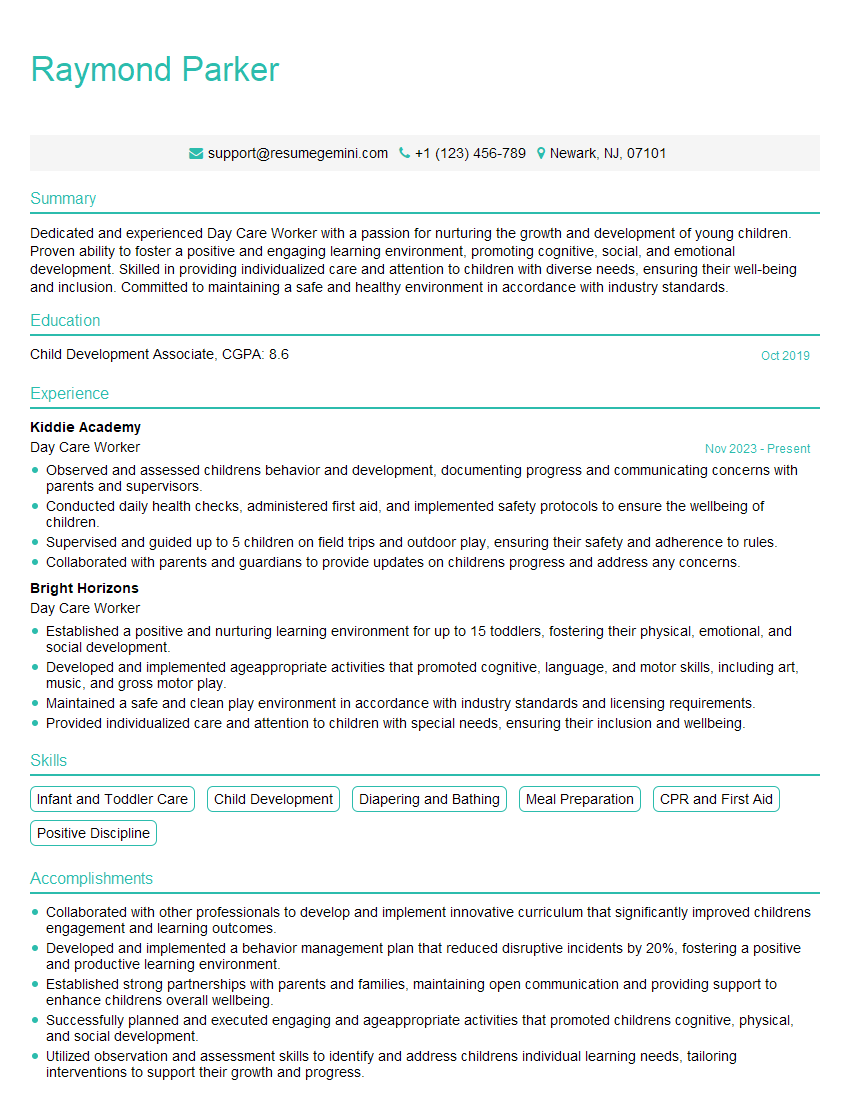
Are you gearing up for an interview for a Day Care Worker position? Whether you’re a seasoned professional or just stepping into the role, understanding what’s expected can make all the difference. In this blog, we dive deep into the essential interview questions for Day Care Worker and break down the key responsibilities of the role. By exploring these insights, you’ll gain a clearer picture of what employers are looking for and how you can stand out. Read on to equip yourself with the knowledge and confidence needed to ace your next interview and land your dream job!
Acing the interview is crucial, but landing one requires a compelling resume that gets you noticed. Crafting a professional document that highlights your skills and experience is the first step toward interview success. ResumeGemini can help you build a standout resume that gets you called in for that dream job.






Essential Interview Questions For Day Care Worker
1. How would you create a safe and stimulating learning environment for children at a day care?
To create a safe and stimulating learning environment for children at a day care, I would:
- Ensure that the environment is clean, safe, and well-maintained.
- Create a variety of learning centers that are developmentally appropriate for the children.
- Provide a variety of toys, games, and activities that are engaging and fun.
- Set clear rules and expectations for the children.
- Foster a positive and supportive environment where the children feel loved, respected, and safe.
2. How would you handle a child who is misbehaving?
Positive Discipline
- Stay calm and avoid reacting emotionally.
- Speak to the child in a respectful and firm voice.
- Explain to the child why their behavior is unacceptable.
- Set clear consequences for misbehavior.
- Follow through with consequences consistently.
Redirecting the Child’s Behavior
- Offer the child alternative activities or distractions.
- Engage the child in conversation or play to redirect their attention.
- Remove the child from the situation for a short time if necessary.
3. How would you support a child’s emotional development?
To support a child’s emotional development, I would:
- Create a safe and supportive environment where the child feels loved, accepted, and respected.
- Provide the child with opportunities to express their emotions in a healthy way.
- Help the child learn how to identify and understand their emotions.
- Teach the child how to cope with difficult emotions.
- Encourage the child to develop positive relationships with other children and adults.
4. How would you work with parents to support a child’s development?
To work with parents to support a child’s development, I would:
- Build a strong and trusting relationship with the parents.
- Keep the parents informed about their child’s progress and development.
- Share my observations and insights with the parents.
- Work with the parents to develop a plan to support the child’s development.
- Collaborate with the parents to address any challenges or concerns.
5. How would you handle a child who is having a medical emergency?
To handle a child who is having a medical emergency, I would:
- Stay calm and assess the situation.
- Call 911 immediately.
- Follow the instructions of the dispatcher.
- Provide comfort and support to the child until help arrives.
- Document the incident thoroughly.
6. How would you handle a child who has special needs?
To handle a child who has special needs, I would:
- Learn about the child’s specific needs and how to best support them.
- Work with the child’s parents to develop a plan to meet their needs.
- Collaborate with other professionals, such as therapists and teachers, to provide the child with the best possible care.
- Make sure that the child feels included and valued in the group.
- Provide the child with opportunities to learn and grow in a way that is appropriate for their abilities.
7. How would you handle a conflict between two children?
- Stay calm and objective.
- Listen to both children’s perspectives.
- Help the children identify the problem.
- Facilitate a discussion between the children to find a solution.
- Help the children learn from the conflict and develop conflict-resolution skills.
8. How would you supervise a group of children?
- Establish clear rules and expectations.
- Be aware of the children’s whereabouts at all times.
- Monitor the children’s interactions and activities.
- Intervene if there is any unsafe or inappropriate behavior.
- Provide positive feedback and reinforcement to the children.
9. How would you maintain a clean and safe environment for the children?
- Clean and disinfect surfaces regularly.
- Wash toys and equipment after each use.
- Put away toys and materials when not in use.
- Ensure that the children wash their hands frequently.
- Inspect the play area regularly for any hazards.
10. How would you stay up-to-date on best practices in child care?
- Attend workshops and conferences.
- Read books and articles about child care.
- Talk to other child care professionals.
- Take online courses.
- Stay informed about changes in regulations and licensing requirements.
Interviewers often ask about specific skills and experiences. With ResumeGemini‘s customizable templates, you can tailor your resume to showcase the skills most relevant to the position, making a powerful first impression. Also check out Resume Template specially tailored for Day Care Worker.
Career Expert Tips:
- Ace those interviews! Prepare effectively by reviewing the Top 50 Most Common Interview Questions on ResumeGemini.
- Navigate your job search with confidence! Explore a wide range of Career Tips on ResumeGemini. Learn about common challenges and recommendations to overcome them.
- Craft the perfect resume! Master the Art of Resume Writing with ResumeGemini’s guide. Showcase your unique qualifications and achievements effectively.
- Great Savings With New Year Deals and Discounts! In 2025, boost your job search and build your dream resume with ResumeGemini’s ATS optimized templates.
Researching the company and tailoring your answers is essential. Once you have a clear understanding of the Day Care Worker‘s requirements, you can use ResumeGemini to adjust your resume to perfectly match the job description.
Key Job Responsibilities
As a Day Care Worker, you will be responsible for the care and well-being of young children in a daycare setting.
1. Provide Care and Supervision
You will ensure the safety and well-being of the children by:
- Supervising children’s activities and ensuring their safety
- Providing age-appropriate care, including feeding, changing diapers, and toileting
- Monitoring children’s health and well-being and reporting any concerns to supervisors
2. Nurture Children’s Development
You will support children’s physical, cognitive, and social-emotional development by:
- Engaging children in age-appropriate activities that promote their learning and development
- Creating a positive and nurturing learning environment
- Observing and assessing children’s development and providing feedback to supervisors and parents
3. Communicate with Parents and Guardians
You will keep parents and guardians informed about their child’s care and progress by:
- Providing regular updates on the child’s daily activities and progress
- Answering questions and addressing concerns from parents and guardians
- Working with parents and guardians to develop and implement care plans
4. Maintain a Clean and Safe Environment
You will ensure the cleanliness and safety of the daycare environment by:
- Keeping the daycare clean and organized
- Inspecting and maintaining equipment and supplies
- Following all safety protocols and procedures
Interview Tips
Preparing for a Day Care Worker interview can help you make a strong impression and increase your chances of landing the job.
1. Research the Daycare and the Position
Visit the daycare’s website to learn about their mission, values, and programs. This will give you a good understanding of the organization and the role you will be playing. Also, thoroughly review the job description to ensure you understand the responsibilities and qualifications required.
2. Highlight Your Skills and Experience
In your resume and during the interview, emphasize your skills and experience that are relevant to the job. This includes your experience working with children, your ability to provide care and support, and your knowledge of child development.
3. Demonstrate Your Passion for Working with Children
Day Care Workers should have a genuine love for working with children. During the interview, share examples of your experience working with children or volunteering in childcare settings. Talk about what you enjoy most about working with children and why you are passionate about providing them with a nurturing and supportive environment.
4. Be Prepared to Answer Common Interview Questions
Research common interview questions for Day Care Workers and prepare your answers in advance. This will help you feel more confident and prepared during the interview. Some common questions include:
- Why are you interested in working as a Day Care Worker?
- What is your experience working with children?
- How do you handle challenging behaviors in children?
- What are your strengths and weaknesses as a Day Care Worker?
- How do you stay up-to-date on best practices in child care?
5. Ask Thoughtful Questions
Asking thoughtful questions at the end of the interview shows that you are interested in the position and the organization. This is also an opportunity to clarify any questions you may have about the role or the daycare.
6. Follow Up
After the interview, send a thank-you note to the interviewer. This is a great way to reiterate your interest in the position and thank the interviewer for their time. You can also use this opportunity to address any questions or concerns that you may have forgotten to mention during the interview.
Next Step:
Now that you’re armed with interview-winning answers and a deeper understanding of the Day Care Worker role, it’s time to take action! Does your resume accurately reflect your skills and experience for this position? If not, head over to ResumeGemini. Here, you’ll find all the tools and tips to craft a resume that gets noticed. Don’t let a weak resume hold you back from landing your dream job. Polish your resume, hit the “Build Your Resume” button, and watch your career take off! Remember, preparation is key, and ResumeGemini is your partner in interview success.