





In today’s competitive job market, a well-crafted resume is no longer a mere formality but a strategic weapon that can propel you towards your dream career. Savvy job seekers are continuously striving to uncover the secrets behind crafting a knockout resume that stands out from the deluge of applications and lands them coveted interviews. If you’re looking to unveil these secrets and gain an unfair advantage in the employment arena, you’re in the right place. In this comprehensive guide, we’ll delve into the three fundamental pillars of resume building that will make you an irresistible candidate to potential employers.
Optimizing Your Resume for Applicant Tracking Systems (ATS)
In today’s digital age, many companies rely on Applicant Tracking Systems (ATS) to streamline the resume screening process. These systems use algorithms to scan resumes for specific keywords and phrases related to the job description. If your resume doesn’t contain these keywords, it may be automatically rejected before it even reaches human eyes.
- Use industry-specific keywords: Research the job description carefully and identify the most relevant keywords and phrases. Incorporate these terms into your resume, particularly in your summary, skills section, and work experience descriptions.
- Avoid fancy formatting: ATSs may struggle to parse resumes with complex formatting, such as tables, columns, or graphics. Stick to a simple, text-based format with clear headings and bullet points.
- Use a standard font: Avoid using unusual or decorative fonts, which may not be recognized by ATSs. Stick to standard fonts like Arial, Calibri, or Times New Roman.
Crafting a Powerful Resume Summary and Objective
Your resume summary and objective are your chance to make a strong first impression and convince the reader to continue reading. Here’s how to craft them effectively:
- Keep it concise: Your summary should be brief, typically 2-3 sentences, and your objective should be no more than 1 sentence. Get straight to the point and highlight your most relevant skills and experience.
- Quantify your accomplishments: Use numbers and metrics to demonstrate the impact of your work. For instance, instead of saying “Managed a team”, say “Managed a team of 10 engineers, resulting in a 20% increase in productivity”.
- Tailor to each job application: Customize your summary and objective for each job you apply for. Highlight the skills and experience that are most relevant to the specific position.
Highlighting Your Skills and Experience with Impactful Language
The skills and experience section of your resume is where you showcase your capabilities and demonstrate why you’re the ideal candidate for the job. Here are some tips for maximizing its impact:
- Use action verbs: Start each bullet point with a strong action verb that conveys the impact of your work. For instance, instead of saying “Developed marketing campaigns”, say “Developed and executed marketing campaigns that resulted in a 15% increase in sales”.
- Provide context: Don’t just list your responsibilities; provide context for your work. Explain the purpose of your projects, the challenges you faced, and the outcomes you achieved.
- Quantify your results: When possible, quantify your accomplishments to demonstrate the tangible impact of your work. For instance, instead of saying “Improved customer satisfaction”, say “Improved customer satisfaction by 10%, resulting in a 5% increase in revenue”.
Additional Tips for Standing Out:
In addition to the three pillars discussed above, here are a few additional tips to help your resume stand out:
- Proofread carefully: Before submitting your resume, proofread it multiple times for any errors in grammar, spelling, or formatting. A polished and error-free resume will demonstrate your attention to detail and make you appear more professional.
- Get feedback: Ask a friend, family member, or career counselor to review your resume and provide feedback. They may have a fresh perspective and can offer valuable suggestions for improvement.
- Consider using a resume builder: Tools like ResumeGemini can help you create a professional-looking resume in just a few minutes. They offer a wide range of templates and customization options, making it easy to tailor your resume to your specific needs.
Career Expert Tips:
- Select the ideal resume template to showcase your professional experience effectively.
- Master the art of resume writing to highlight your unique qualifications and achievements.
- Checkout the resume writing tips for guidance and best practices.
- Make your 2025 brighter with a new job. Build a powerful resume with ResumeGemini and save big, enjoy exclusive discounts on premium templates.
Frequently Asked Questions (FAQ’s)
How do I create a resume that effectively passes through ATS screening tools?
To create an ATS friendly resume, you must follow resume writing best practices.
- Use industry-specific keywords: Research the job descriptions you’re applying for and include relevant keywords throughout your resume, especially in your skills section.
- Use a clean, simple font: ATS systems can struggle to read complex fonts, so it’s best to use a simple font like Arial, Times New Roman, or Calibri.
- Keep your resume concise: ATS systems typically only scan the first few pages of a resume, so make sure your most important information is towards the top.
- Use bullet points and white space: This makes your resume easier for the ATS to scan and understand.
- Test your resume on an ATS: There are several online tools that can help you test your resume against ATS systems.
What are the best practices for writing a resume summary and objective?
A resume summary provides a concise overview of your skills, experience, and career goals. It should be tailored to each job you apply for, highlighting the most relevant information.
- Start with a strong hook: The first sentence of your resume summary should grab the reader’s attention and make them want to learn more.
- Quantify your accomplishments: When possible, use numbers to show the impact of your work.
- Use keywords: Include keywords from the job description in your resume summary, but remember not to stuff keywords.
- Keep it brief: Your resume summary should be no more than 3-5 sentences.
- State your career goals: Your resume objective should clearly state your career goals and how they align with the position you are applying for.
- Tailor your resume objective: Like your resume summary, your resume objective should be tailored to each job you apply for.
- Keep it brief: Your resume objective should be no more than 2-3 sentences.
How can I showcase my skills and experience in a way that resonates with employers?
To showcase your skills and experience in a way that resonates with employers, you need to use specific examples and quantify your accomplishments.
- Use the STAR method: When describing your experience, use the STAR method (Situation, Task, Action, Result). This will help you provide specific examples of your skills and accomplishments.
- Quantify your accomplishments: Whenever possible, use numbers to show the impact of your work. For example, instead of saying “I managed a team of 10,” you could say “I managed a team of 10 and increased sales by 15%.”
- Tailor your resume to each job you apply for: Make sure to highlight the skills and experience that are most relevant to the position you are applying for.
What common mistakes should I avoid when building my resume?
Some common mistakes to avoid when building your resume include:
- Using too much jargon: Avoid using technical jargon or industry-specific terms that the reader may not understand.
- Making it too long: Your resume should be concise and easy to read. Stick to one page if possible.
- Including irrelevant information: Only include information that is relevant to the job you are applying for.
- Using poor grammar and spelling: Make sure your resume is free of any grammatical errors or typos.
- Not tailoring your resume to each job you apply for: Take the time to tailor your resume to each job you apply for. This will show the employer that you are genuinely interested in the position.
How can I tailor my resume to specific job descriptions?
To tailor your resume to specific job descriptions, you need to:
- Read the job description carefully: Pay attention to the skills and experience that the employer is looking for.
- Highlight your relevant skills and experience: Make sure to highlight the skills and experience that are most relevant to the position you are applying for.
- Use keywords from the job description: Include keywords from the job description in your resume, but remember not to stuff keywords.
- Quantify your accomplishments: Whenever possible, use numbers to show the impact of your work.
- Proofread your resume carefully: Make sure your resume is free of any grammatical errors or typos.
What are the benefits of using ResumeGemini to build my resume?
There are many benefits to using ResumeGemini to build your resume, including:
- Easy to use: ResumeGemini’s user-friendly interface makes it easy to build a professional resume in minutes.
- ATS-friendly: ResumeGemini’s templates are ATS-friendly, which means they are designed to pass through ATS systems.
- Customizable: ResumeGemini allows you to customize your resume with a variety of templates, fonts, and colors.
- Affordable: ResumeGemini offers a one-time payment plan with no recurring charges.
Next Step:
Now that you know the answers to these frequently asked questions, you can start building a resume that will help you stand out in the job market. If you need help getting started, check out ResumeGemini. With our easy-to-use resume builder, you can create a professional resume in minutes.
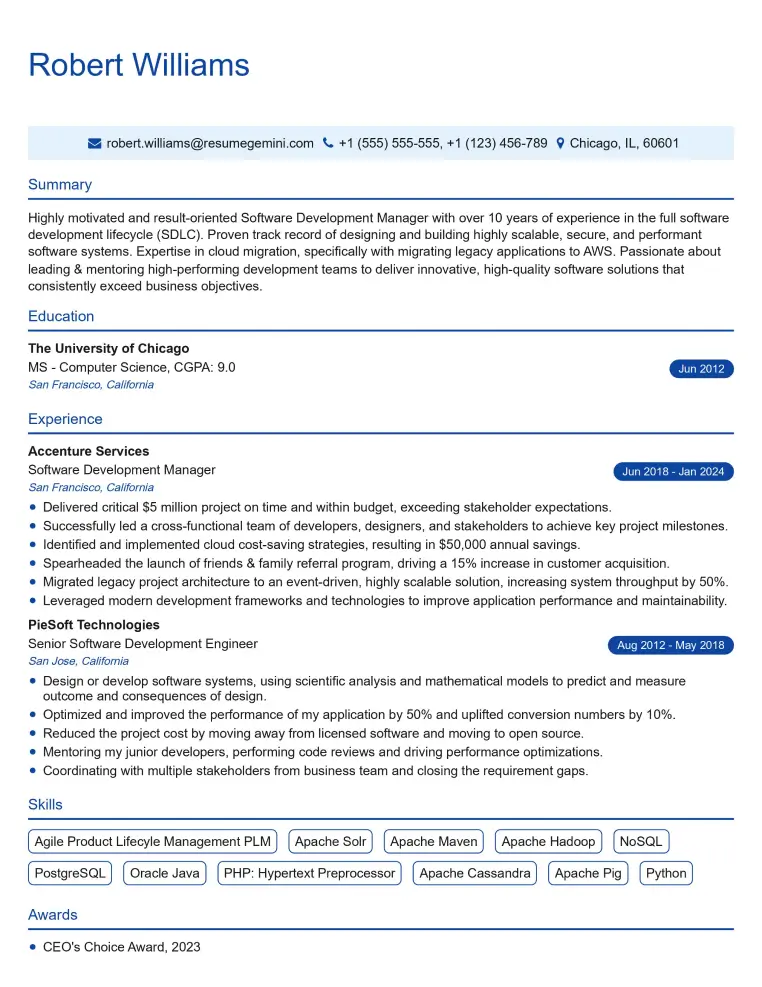
Elevate your job search with our premium resume templates. Here is an amazing resume template that can be used to build a professional and elegant resume. You can build a resume from scratch or revamp your existing resume. Impress hiring managers and secure your next opportunity.
- Top 50 Most Common Interview Questions
- The Psychology of a Great Resume: Hacks to Impress Recruiters
- What Mistakes to Avoid When Writing a Resume: A Comprehensive Guide
- Elevate Your Career with Expert Resume Building: Introducing ResumeGemini
- Crafting Your First Impression: How To Make Free Resume Online For Freshers