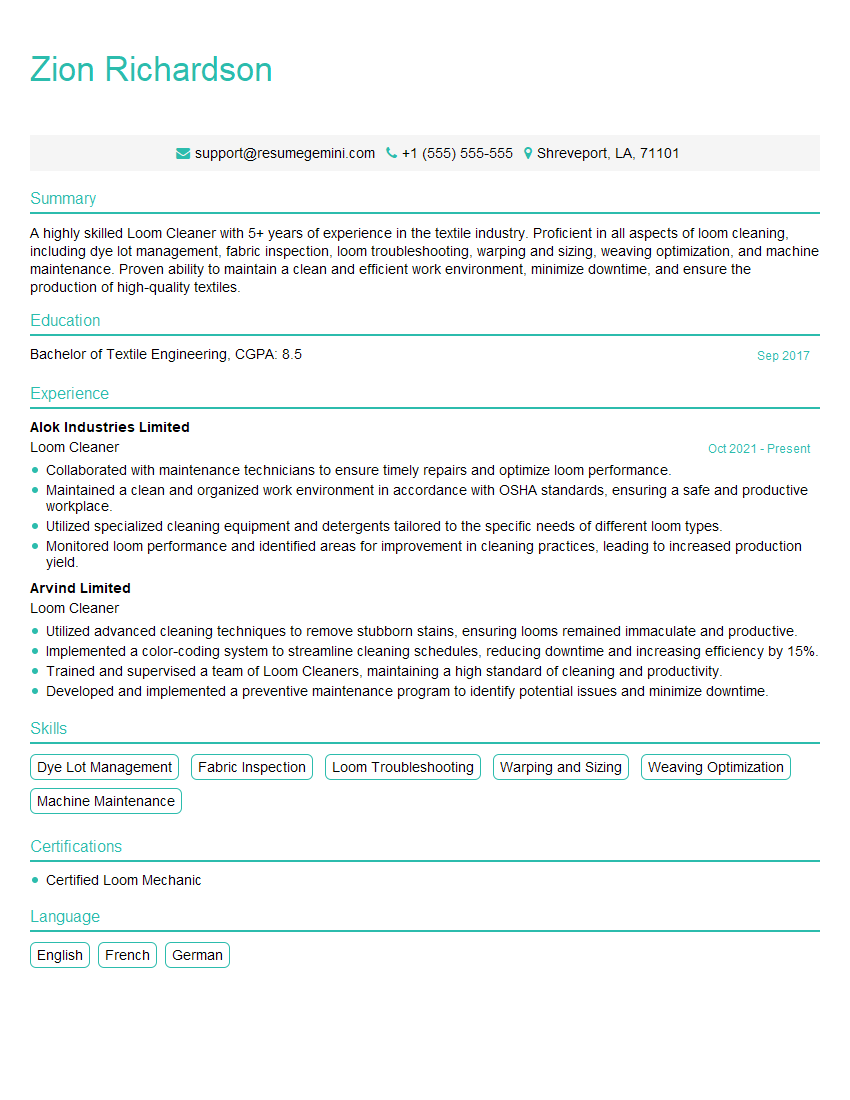
Are you gearing up for an interview for a Loom Cleaner position? Whether you’re a seasoned professional or just stepping into the role, understanding what’s expected can make all the difference. In this blog, we dive deep into the essential interview questions for Loom Cleaner and break down the key responsibilities of the role. By exploring these insights, you’ll gain a clearer picture of what employers are looking for and how you can stand out. Read on to equip yourself with the knowledge and confidence needed to ace your next interview and land your dream job!
Acing the interview is crucial, but landing one requires a compelling resume that gets you noticed. Crafting a professional document that highlights your skills and experience is the first step toward interview success. ResumeGemini can help you build a standout resume that gets you called in for that dream job.






Essential Interview Questions For Loom Cleaner
1. What are the main responsibilities of a Loom Cleaner?
As a Loom Cleaner, my primary responsibilities would include:
- Maintaining the cleanliness of weaving looms and associated equipment to ensure optimal performance and prevent downtime.
- Inspecting machines for any defects or damage and reporting any issues promptly.
- Cleaning and removing debris, lint, and other contaminants from looms, frames, and shuttles to enhance fabric quality.
- Assisting with loom set-up and adjustments as needed, working closely with weavers to minimize downtime.
- Following safety protocols, wearing appropriate protective gear, and maintaining a clean and organized work area.
2. How do you prioritize cleaning tasks to ensure efficient loom operation?
Time-Sensitive Tasks
- Addressing loom issues or defects immediately to prevent production delays.
- Cleaning areas that impact fabric quality, such as shuttles or reed frames.
Routine Tasks
- Scheduling regular cleaning cycles based on loom usage and fabric type.
- Prioritizing areas that accumulate debris or lint more quickly, such as the warp beam.
Preventive Maintenance
- Inspecting looms regularly to identify potential issues that could lead to downtime.
- Cleaning and lubricating moving parts to prevent wear and tear.
3. Describe your approach to cleaning delicate loom components, such as reeds and heddles.
When cleaning delicate loom components like reeds and heddles, I prioritize the following techniques:
- Using soft brushes or compressed air to gently remove debris and lint.
- Inspecting components for any damage or wear, reporting issues promptly.
- Lubricating reeds and heddles according to manufacturer guidelines to minimize friction and wear.
- Handling components with care, avoiding contact with sharp objects or excessive force.
- Following specific cleaning instructions provided by the loom manufacturer or experienced weavers.
4. How do you handle situations where cleaning may impact loom settings or fabric production?
To handle such situations, I employ the following steps:
- Communicating with weavers or production supervisors before performing cleaning tasks that may affect loom settings.
- Documenting loom settings or fabric specifications before cleaning to ensure accurate restoration.
- Performing cleaning tasks carefully and methodically to minimize disruption.
- Testing loom operation and fabric quality after cleaning to ensure no issues arise.
- Informing supervisors of any changes or adjustments made during cleaning for production monitoring purposes.
5. What safety precautions do you take when cleaning looms and associated equipment?
To prioritize safety, I adhere to the following precautions:
- Wearing appropriate personal protective equipment (PPE), including gloves and safety glasses.
- Ensuring looms are powered down and isolated before cleaning.
- Using non-flammable cleaning solvents and avoiding open flames or sparks.
- Being aware of moving parts and potential hazards during cleaning.
- Reporting any electrical or mechanical issues immediately to a qualified technician.
6. How do you keep up to date with the latest cleaning techniques and advancements for loom maintenance?
To stay informed about industry best practices, I pursue the following strategies:
- Attending industry workshops, conferences, or training programs.
- Reading trade publications and online resources dedicated to loom cleaning.
- Consulting with experienced weavers or loom technicians for advice and knowledge sharing.
- Staying informed about new products and technologies for loom cleaning and maintenance.
- Seeking feedback from colleagues and supervisors to identify areas for improvement.
7. Can you describe a situation where you successfully implemented a new cleaning technique or solution that improved loom performance?
In my previous role, I encountered an issue with lint accumulation on the loom’s shuttle. Traditional cleaning methods proved ineffective. After researching potential solutions, I implemented a new technique using a specialized lint-removing attachment for the vacuum cleaner. This approach drastically reduced lint buildup, minimizing fabric defects and improving overall loom efficiency. The success of this technique led to its adoption as a standard cleaning practice in the weaving department.
8. How do you prioritize cleaning tasks in a fast-paced production environment?
In a fast-paced production environment, I prioritize cleaning tasks based on the following criteria:
- Urgency: Addressing loom issues or defects that could lead to downtime.
- Impact on fabric quality: Cleaning areas that directly affect fabric defects.
- Frequency of use: Prioritizing looms that are in constant operation.
- Preventive maintenance: Scheduling regular cleaning cycles to prevent future issues.
- Communication: Coordinating with weavers and production staff to minimize disruptions during cleaning.
9. How do you maintain a clean and organized work area while cleaning looms?
To maintain a clean and organized work area while cleaning looms, I implement the following practices:
- Designated cleaning area: Establishing a specific area for cleaning tools and equipment.
- Regular tool maintenance: Cleaning and maintaining tools regularly to prevent debris buildup.
- Waste disposal: Promptly disposing of cleaning waste and debris to avoid accumulation.
- Floor cleaning: Sweeping or mopping the work area to remove any spilled debris or lint.
- Labeling and organization: Clearly labeling cleaning tools and organizing them for easy access.
10. Can you describe a time when you worked effectively as part of a team to clean and maintain looms?
In my previous workplace, we faced a production deadline for a large fabric order. To meet the deadline, our team collaborated efficiently to clean and maintain the looms. We divided the tasks among team members, ensuring that all looms were cleaned thoroughly and promptly. By working together, we minimized downtime and contributed to the successful completion of the order.
Interviewers often ask about specific skills and experiences. With ResumeGemini‘s customizable templates, you can tailor your resume to showcase the skills most relevant to the position, making a powerful first impression. Also check out Resume Template specially tailored for Loom Cleaner.
Career Expert Tips:
- Ace those interviews! Prepare effectively by reviewing the Top 50 Most Common Interview Questions on ResumeGemini.
- Navigate your job search with confidence! Explore a wide range of Career Tips on ResumeGemini. Learn about common challenges and recommendations to overcome them.
- Craft the perfect resume! Master the Art of Resume Writing with ResumeGemini’s guide. Showcase your unique qualifications and achievements effectively.
- Great Savings With New Year Deals and Discounts! In 2025, boost your job search and build your dream resume with ResumeGemini’s ATS optimized templates.
Researching the company and tailoring your answers is essential. Once you have a clear understanding of the Loom Cleaner‘s requirements, you can use ResumeGemini to adjust your resume to perfectly match the job description.
Key Job Responsibilities
Loom Cleaners are responsible for maintaining the cleanliness and functionality of looms in a textile manufacturing facility. Their key responsibilities include:
1. Cleaning and Maintenance
Cleaning looms and their components, including frames, harnesses, and shuttles to remove dirt, dust, and debris.
2. Lubrication
Lubricating moving parts of the looms to prevent wear and tear and ensure smooth operation.
3. Adjustments
Making minor adjustments to looms to correct tension, alignment, and other settings to optimize performance.
4. Inspections
Conducting regular inspections of looms to identify potential issues and prevent breakdowns.
5. Safety
Following safety protocols and taking precautions to prevent accidents and injuries while working around machinery.
Interview Tips
Preparing thoroughly for an interview is crucial to make a positive impression and increase your chances of success. Here are some interview tips and hacks to help you ace your Loom Cleaner interview:
1. Research the Company and Position
Research the company you’re applying to and the specific Loom Cleaner position. This will give you a good understanding of their operations, culture, and the responsibilities of the role.
- Visit the company’s website and social media pages.
- Read industry publications and news articles about the company.
- Connect with current or former employees for insights.
2. Practice Common Interview Questions
Prepare for common interview questions related to your skills, experience, and motivation. Practice answering these questions aloud to build confidence and fluency.
- Tell me about yourself and your experience as a Loom Cleaner.
- What are your strengths and weaknesses as a Loom Cleaner?
- Why are you interested in this position at our company?
3. Highlight Relevant Skills and Experience
Emphasize your skills and experience that are relevant to the Loom Cleaner position. Use specific examples to demonstrate your abilities.
- Highlight your experience in cleaning and maintaining looms.
- Mention your knowledge of loom mechanics and troubleshooting techniques.
- Share examples of how you have optimized loom performance or reduced downtime.
4. Be Enthusiastic and Professional
Project a positive and enthusiastic attitude during the interview. Dress professionally, arrive on time, and make eye contact with the interviewer.
- Show your interest in the position and the company.
- Listen attentively to the interviewer’s questions and respond clearly.
- Thank the interviewer for their time at the end of the interview.
5. Ask Thoughtful Questions
Asking thoughtful questions at the end of the interview demonstrates your interest and engagement. Prepare a few questions that show your curiosity about the company, the position, or the industry.
- Ask about the company’s growth plans or sustainability initiatives.
- Inquire about the training and development opportunities for Loom Cleaners.
- Ask about the company’s safety record and protocols.
Next Step:
Now that you’re armed with interview-winning answers and a deeper understanding of the Loom Cleaner role, it’s time to take action! Does your resume accurately reflect your skills and experience for this position? If not, head over to ResumeGemini. Here, you’ll find all the tools and tips to craft a resume that gets noticed. Don’t let a weak resume hold you back from landing your dream job. Polish your resume, hit the “Build Your Resume” button, and watch your career take off! Remember, preparation is key, and ResumeGemini is your partner in interview success.