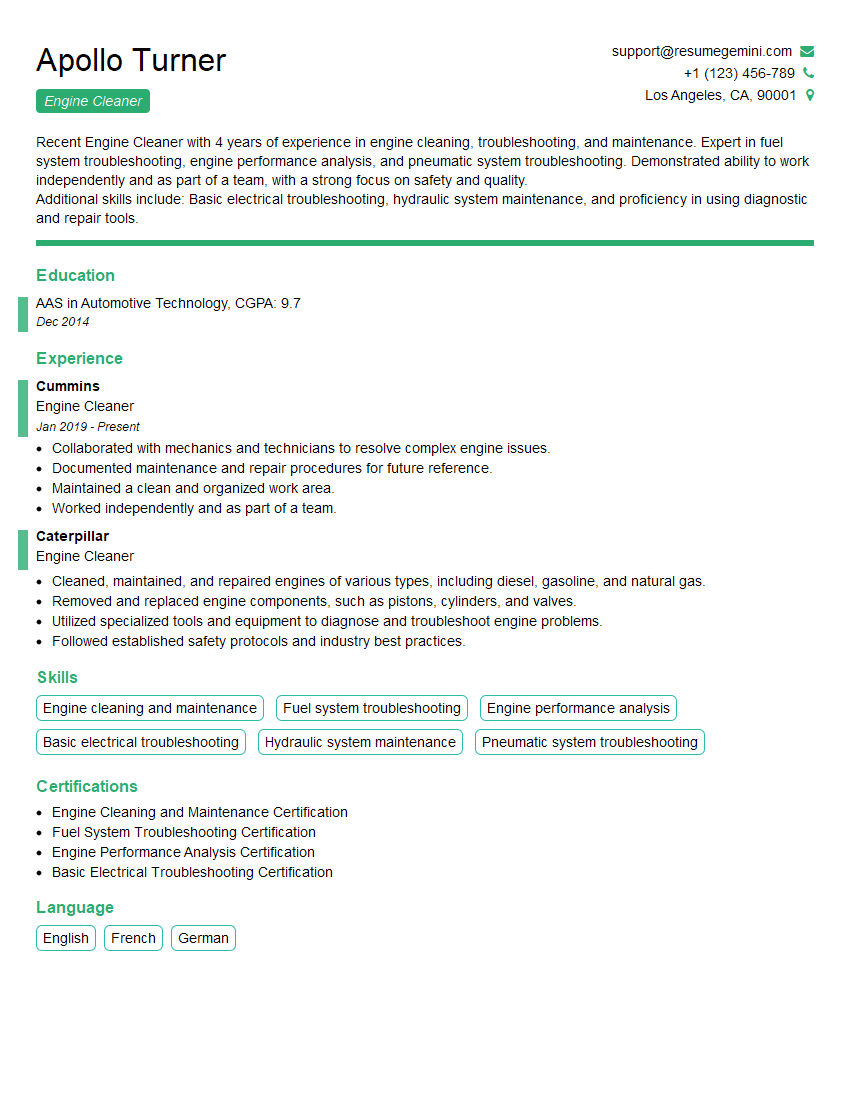
Are you gearing up for a career shift or aiming to ace your next interview? Look no further! We’ve curated a comprehensive guide to help you crack the interview for the coveted Engine Cleaner position. From understanding the key responsibilities to mastering the most commonly asked questions, this blog has you covered. So, buckle up and let’s embark on this journey together.
Acing the interview is crucial, but landing one requires a compelling resume that gets you noticed. Crafting a professional document that highlights your skills and experience is the first step toward interview success. ResumeGemini can help you build a standout resume that gets you called in for that dream job.






Essential Interview Questions For Engine Cleaner
1. What are the essential steps involved in effectively cleaning an engine?
– Step 1: Safety First: Ensure the vehicle is parked in a safe location and the engine is turned off. Allow the engine to cool down. – Step 2: Cover Components: Protect delicate components like the electrical system, carburetor, and alternator with plastic covers or towels. – Step 3: Remove Loose Debris: Use a rag or brush to remove loose dirt, leaves, or debris from the engine surface. – Step 4: Apply Degreaser: Spray a suitable degreaser onto the engine and allow it to penetrate for the specified time. – Step 5: Agitate and Scrub: Use a brush to gently agitate the degreaser and scrub off stubborn grime. – Step 6: Rinse Thoroughly: Use clean water to thoroughly rinse the degreaser and ensure no residue remains. – Step 7: Dry Components: Use compressed air or towels to dry the engine components and prevent corrosion.
2. What types of cleaning solutions are appropriate for engine cleaning and why?
– Water-based Degreasers: Eco-friendly and safe on most engine components, but may require more effort to remove heavy grease. – Solvent-based Degreasers: Powerful and effective for removing stubborn grease, but flammable and may require proper ventilation. – Foaming Degreasers: Create a thick foam that clings to surfaces and dissolves grease, making them suitable for complex engine parts. – Biodegradable Degreasers: Environmentally friendly and non-toxic, ideal for cleaning engines in sensitive areas.
3. How do you approach cleaning engines with different types of materials, such as aluminum, cast iron, and plastic?
– Aluminum: Use non-abrasive cleaners and avoid harsh chemicals that can damage the metal’s surface. – Cast Iron: Use heavy-duty degreasers and brushes to remove caked-on grease and rust. – Plastic: Use mild detergents and avoid harsh solvents that can weaken or deform the plastic.
4. What precautions should be taken to prevent damage to electrical components during engine cleaning?
– Cover all electrical components with plastic covers or towels. – Use a non-conductive spray nozzle when applying degreaser. – Avoid using high-pressure water spray that can penetrate electrical connections. – Ensure the engine is completely dry before reconnecting electrical components.
5. How do you handle and dispose of used cleaning solutions and waste materials safely?
– Dispose of cleaning solutions according to the manufacturer’s instructions and local regulations. – Wear appropriate protective gear, such as gloves and a mask, when handling waste materials. – Place used towels and rags in a designated waste container. – Ensure proper ventilation and avoid inhaling fumes from used cleaning solutions.
6. What signs indicate the need for a thorough engine cleaning?
– Visible dirt, grease, or oil accumulation on the engine. – Reduced engine performance, such as sluggish acceleration or decreased fuel efficiency. – Increased engine noise or vibrations. – Oil leaks or spills on the engine surface.
7. How often should engines be cleaned, and does the frequency vary depending on factors such as driving conditions?
– Regular engine cleaning is recommended every 3-6 months. – For vehicles driven in dusty or harsh conditions, more frequent cleaning may be necessary. – Engines exposed to frequent short trips or idling may require more regular cleaning due to increased condensation buildup.
8. Are there any innovative tools or techniques available for efficient engine cleaning?
– Ultrasonic cleaners: Use sound waves to gently dislodge dirt and grime from complex engine components. – Foam cleaning kits: Produce a thick foam that can cling to surfaces and dissolve grease. – Steam cleaning: Uses high-temperature steam to effectively remove dirt and oil buildup.
9. How do you keep up-to-date with the latest engine cleaning products and techniques?
– Attend industry conferences and workshops. – Read technical articles and journals. – Consult with experienced mechanics or automotive professionals. – Stay informed about new products and technologies through online research.
10. In addition to engine cleaning, what other maintenance tasks are crucial for maintaining optimal engine performance?
– Regular oil changes and filter replacements. – Air filter inspections and replacements. – Spark plug replacements. – Cooling system maintenance, including coolant flushes and hose inspections. – Fuel system cleaning and injector servicing.
Interviewers often ask about specific skills and experiences. With ResumeGemini‘s customizable templates, you can tailor your resume to showcase the skills most relevant to the position, making a powerful first impression. Also check out Resume Template specially tailored for Engine Cleaner.
Career Expert Tips:
- Ace those interviews! Prepare effectively by reviewing the Top 50 Most Common Interview Questions on ResumeGemini.
- Navigate your job search with confidence! Explore a wide range of Career Tips on ResumeGemini. Learn about common challenges and recommendations to overcome them.
- Craft the perfect resume! Master the Art of Resume Writing with ResumeGemini’s guide. Showcase your unique qualifications and achievements effectively.
- Great Savings With New Year Deals and Discounts! In 2025, boost your job search and build your dream resume with ResumeGemini’s ATS optimized templates.
Researching the company and tailoring your answers is essential. Once you have a clear understanding of the Engine Cleaner‘s requirements, you can use ResumeGemini to adjust your resume to perfectly match the job description.
Key Job Responsibilities
The Engine Cleaner is responsible for maintaining the cleanliness and functionality of engines and their components within a transportation, industrial, or automotive setting. The primary objective is to ensure optimal performance, prevent breakdowns, and enhance the lifespan of the equipment.
1. Cleaning and Degreasing
• Utilize appropriate cleaning agents and techniques to remove dirt, grease, and grime from engine surfaces.
• Disassemble and clean engine components, such as injectors, carburetors, and fuel filters.
2. Inspection and Monitoring
• Inspect engines for any signs of wear, damage, or leaks.
• Monitor engine performance and identify potential issues.
3. Maintenance and Repair
• Perform minor maintenance tasks, such as replacing spark plugs, air filters, and belts.
• Assist with major repairs and overhauls as needed.
4. Safety and Compliance
• Adhere to all safety protocols and regulations.
• Ensure that engines meet environmental and regulatory standards.
Interview Tips
Preparing for an Engine Cleaner interview requires a combination of technical knowledge and a professional approach. Here are some tips to help you ace the interview:
1. Research the Company and Position
• Familiarize yourself with the company’s industry, products, and services.
• Understand the specific responsibilities and expectations of the Engine Cleaner role.
2. Highlight Your Experience and Skills
• Emphasize your experience in cleaning and maintaining engines, including any certifications or training.
• Showcase your problem-solving skills and ability to work independently.
3. Prepare for Common Interview Questions
• Practice answering questions related to your technical abilities, such as:
- “Describe your experience with different engine cleaning methods.”
- “How do you identify and troubleshoot engine problems?”
• Prepare for behavioral questions, such as:
- “Tell me about a time when you had to overcome a challenge while cleaning an engine.”
- “How do you prioritize your tasks and manage your time effectively?”
4. Dress Professionally and Arrive on Time
• Present a professional appearance that reflects the industry standards.
• Arrive at the interview venue on time to demonstrate your punctuality and respect for the interviewer’s time.
Next Step:
Armed with this knowledge, you’re now well-equipped to tackle the Engine Cleaner interview with confidence. Remember, preparation is key. So, start crafting your resume, highlighting your relevant skills and experiences. Don’t be afraid to tailor your application to each specific job posting. With the right approach and a bit of practice, you’ll be well on your way to landing your dream job. Build your resume now from scratch or optimize your existing resume with ResumeGemini. Wish you luck in your career journey!