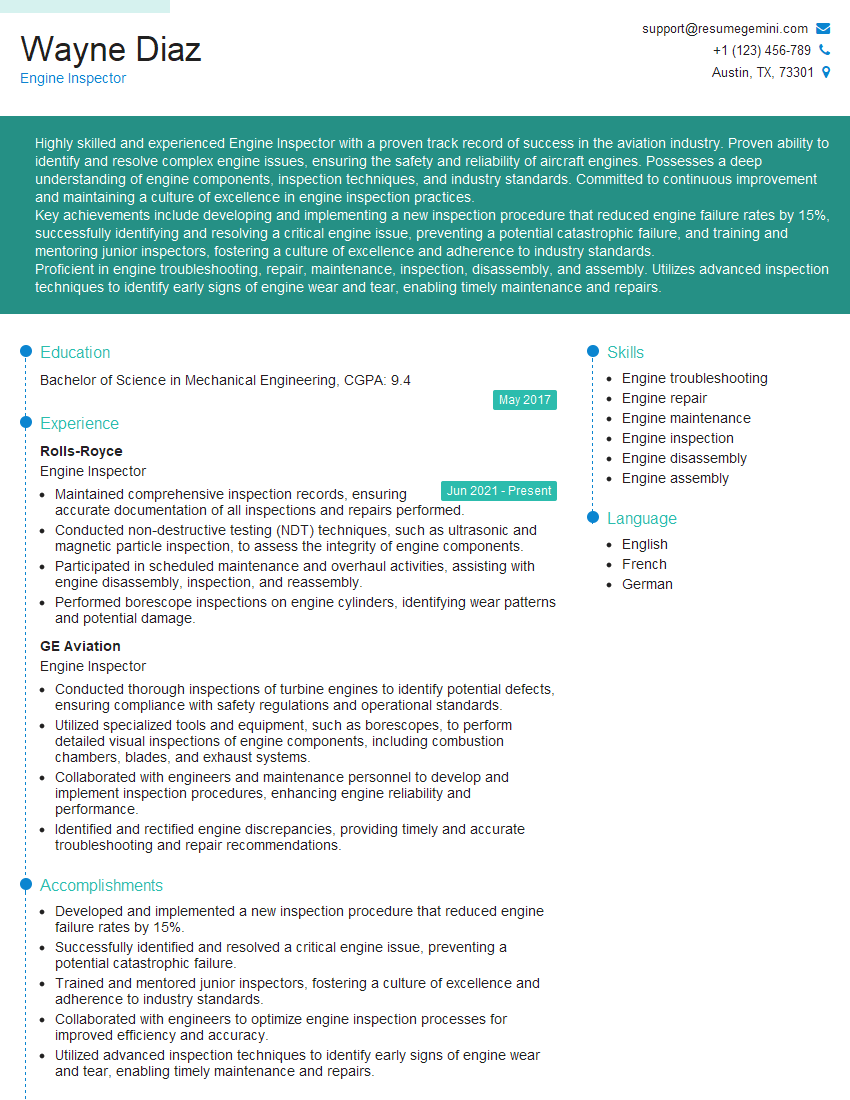
Are you gearing up for a career shift or aiming to ace your next interview? Look no further! We’ve curated a comprehensive guide to help you crack the interview for the coveted Engine Inspector position. From understanding the key responsibilities to mastering the most commonly asked questions, this blog has you covered. So, buckle up and let’s embark on this journey together.
Acing the interview is crucial, but landing one requires a compelling resume that gets you noticed. Crafting a professional document that highlights your skills and experience is the first step toward interview success. ResumeGemini can help you build a standout resume that gets you called in for that dream job.






Essential Interview Questions For Engine Inspector
1. Describe the role and responsibilities of an Engine Inspector.
As an Engine Inspector, I would be responsible for examining, diagnosing, and repairing various types of engines. My duties would include:
- Inspecting engines for wear, damage, or malfunction.
- Diagnosing engine problems using specialized tools and techniques.
- Repairing engines by replacing or repairing faulty components.
- Testing and evaluating engines to ensure proper operation.
- Maintaining accurate records of inspections, repairs, and test results.
2. Explain the different methods used to inspect engines.
Visual inspection:
- Examining the engine for obvious signs of damage, wear, or leaks.
- Using a flashlight to inspect dark areas or hidden components.
Engine diagnostics:
- Using diagnostic tools such as scanners, gauges, and meters to monitor engine performance.
- Analyzing engine data to identify potential problems.
Disassembly and inspection:
- Disassembling the engine to inspect internal components for wear, damage, or corrosion.
- Measuring clearances and tolerances to identify potential issues.
3. What are the most common engine problems you have encountered and how did you resolve them?
Throughout my experience as an Engine Inspector, I have encountered various engine problems. Some of the most common ones include:
- Engine overheating: This can be caused by a variety of factors such as a faulty cooling system, clogged radiator, or coolant leaks. To resolve this issue, I would inspect the entire cooling system for any blockages, leaks, or damaged components. I would also check the thermostat to ensure it is functioning properly.
- Oil leaks: Oil leaks can be caused by worn gaskets, damaged seals, or cracked components. To resolve this, I would inspect the engine for any visible signs of leaks. I would also use a leak detector tool to pinpoint the exact source of the leak and replace or repair the necessary components.
- Reduced engine power: This can be caused by various factors such as clogged fuel injectors, ignition problems, or mechanical issues. To diagnose this issue, I would use diagnostic tools to analyze engine performance data. I would also inspect the fuel system and ignition system for any potential problems.
4. What is your experience with using diagnostic tools to troubleshoot engine problems?
I have extensive experience using various diagnostic tools to troubleshoot engine problems. These tools allow me to:
- Retrieve engine data such as sensor readings, fault codes, and performance parameters.
- Analyze data to identify potential problems and pinpoint the root cause of the issue.
- Perform tests and calibrations to ensure proper engine operation.
- I am proficient in using a wide range of diagnostic tools, including:
- Scanners
- Code readers
- Multimeters
- Engine analyzers
5. What are the safety precautions you follow when working with engines?
When working with engines, it is crucial to adhere to strict safety precautions to prevent accidents and injuries. My primary safety measures include:
- Wearing appropriate safety gear such as gloves, safety glasses, and ear protection.
- Ensuring the work area is well-ventilated and free from potential hazards.
- Disconnecting the battery before performing any repairs or maintenance.
- Allowing the engine to cool down before handling any components.
- Using proper tools and equipment for the job.
- Following established safety protocols and procedures.
- Being aware of potential hazards such as hot surfaces, moving parts, and electrical components.
6. How do you stay updated with the latest engine technologies and advancements?
To stay abreast of the latest engine technologies and advancements, I engage in continuous learning and professional development. My strategies include:
- Attending industry conferences and workshops.
- Subscribing to technical journals and trade publications.
- Participating in online courses and webinars.
- Networking with other engine professionals.
- Exploring new technologies and innovations through research and experimentation.
7. What is your approach to diagnosing and repairing an engine that has multiple problems?
When diagnosing and repairing an engine with multiple problems, I follow a systematic and methodical approach:
- Initial inspection: I begin with a thorough visual inspection of the engine to identify any obvious problems or defects.
- Diagnostic testing: I use diagnostic tools to retrieve engine data, monitor sensor readings, and perform tests to pinpoint the root cause of each problem.
- Prioritizing repairs: I prioritize repairs based on the severity of the problem and its potential impact on engine operation.
- Repair and replacement: I repair or replace faulty components as necessary, ensuring that all parts meet the manufacturer’s specifications.
- Re-testing: After completing repairs, I re-test the engine to verify that all problems have been resolved and that it operates smoothly.
8. How do you handle situations where you encounter an engine problem that you have not encountered before?
When faced with an unfamiliar engine problem, I approach it with a combination of research and troubleshooting:
- Research: I consult technical manuals, online resources, and consult with experienced colleagues to gather information about the potential problem.
- Troubleshooting: I perform a series of tests and inspections to narrow down the possible causes of the problem.
- Seeking assistance: If necessary, I reach out to manufacturers, industry experts, or other professionals for guidance and support.
9. How do you ensure the quality and accuracy of your work as an Engine Inspector?
To ensure the quality and accuracy of my work, I adhere to the following practices:
- Thorough inspections: I conduct thorough inspections of engines, paying attention to every detail and potential problem area.
- Precision measurements: I use calibrated tools and instruments to ensure precise measurements and accurate assessments.
- Documentation: I maintain detailed records of all inspections, tests, and repairs performed, ensuring traceability and transparency.
- Continuous learning: I stay updated on industry best practices and emerging technologies to enhance my skills and knowledge.
10. What motivates you to excel as an Engine Inspector?
My passion for engines and problem-solving drives me to excel as an Engine Inspector. I find immense satisfaction in diagnosing and repairing complex engine problems, ensuring that engines operate efficiently and reliably.
Furthermore, I am committed to delivering exceptional service to my clients. By providing accurate and timely inspections and repairs, I contribute to the safety and optimal performance of their engines.
Interviewers often ask about specific skills and experiences. With ResumeGemini‘s customizable templates, you can tailor your resume to showcase the skills most relevant to the position, making a powerful first impression. Also check out Resume Template specially tailored for Engine Inspector.
Career Expert Tips:
- Ace those interviews! Prepare effectively by reviewing the Top 50 Most Common Interview Questions on ResumeGemini.
- Navigate your job search with confidence! Explore a wide range of Career Tips on ResumeGemini. Learn about common challenges and recommendations to overcome them.
- Craft the perfect resume! Master the Art of Resume Writing with ResumeGemini’s guide. Showcase your unique qualifications and achievements effectively.
- Great Savings With New Year Deals and Discounts! In 2025, boost your job search and build your dream resume with ResumeGemini’s ATS optimized templates.
Researching the company and tailoring your answers is essential. Once you have a clear understanding of the Engine Inspector‘s requirements, you can use ResumeGemini to adjust your resume to perfectly match the job description.
Key Job Responsibilities
Engine Inspectors, often certified, conduct inspections, testing, and repairs on car and truck engines or other mechanical equipment to evaluate their operating condition and performance. They adhere to safety regulations and maintain accurate records of all work completed.
1. Perform Inspections
Inspect engines, including internal components, for damage, wear, and other issues.
- Use specialized equipment, such as borescopes, to identify defects or issues.
- Test components using various tools and techniques to ensure proper functionality.
2. Conduct Repairs
Repair or replace damaged components, such as pistons, valves, and gaskets.
- Follow established procedures and industry standards to ensure quality and safety.
- Use specialized tools and equipment to perform necessary repairs.
3. Troubleshoot Issues
Identify and resolve problems with engines and related systems.
- Use diagnostic tools to identify the source of the problem.
- Develop and implement solutions to address issues efficiently.
4. Maintain Records
Maintain accurate records of inspections, repairs, and test results.
- Document all work performed, including materials used and time spent.
- Maintain legal and regulatory compliance by keeping detailed records.
Interview Tips
Preparing for an interview for an Engine Inspector position can enhance your chances of success. Here are some tips to guide you:
1. Research the Company
Gain a thorough understanding of the company’s history, products, and industry reputation. This will enable you to articulate your knowledge and interest during the interview.
- Visit the company’s website and social media pages.
- Read the company’s recent announcements and press releases.
2. Practice Answering Common Questions
Anticipate and prepare for questions related to your technical skills, experience, and problem-solving abilities. Consider the following sample questions:
- Tell me about your experience with engine inspections and repairs.
- How do you approach troubleshooting complex engine issues?
- Describe a time when you had to go above and beyond to resolve an issue with an engine.
3. Showcase Your Technical Skills
Highlight your abilities in engine inspection, repair, and troubleshooting techniques. Mention any relevant certifications or training you have obtained.
- Explain your proficiency in using specialized tools and equipment.
- Provide examples of successful repairs or troubleshooting cases that demonstrate your skills.
4. Emphasize Safety and Record-Keeping
Engine inspectors play a crucial role in ensuring the safety of engines and vehicles. Emphasize your commitment to safety regulations and industry standards.
- Describe your understanding of relevant safety protocols.
- Explain your experience in maintaining accurate and detailed records of inspections and repairs.
Next Step:
Now that you’re armed with interview-winning answers and a deeper understanding of the Engine Inspector role, it’s time to take action! Does your resume accurately reflect your skills and experience for this position? If not, head over to ResumeGemini. Here, you’ll find all the tools and tips to craft a resume that gets noticed. Don’t let a weak resume hold you back from landing your dream job. Polish your resume, hit the “Build Your Resume” button, and watch your career take off! Remember, preparation is key, and ResumeGemini is your partner in interview success.