





The competitive job market demands a resume that stands out and captivates the attention of recruiters and hiring managers. With ResumeGemini, you have the tools to unlock your dream job. Let’s delve into a comprehensive guide, featuring 10 essential steps, that will help you craft a resume that shines.
Researching Industry Standards and Job Requirements
Before you start writing, it’s crucial to research industry standards and the specific job requirements you’re targeting. This will give you a clear understanding of the skills, experience, and qualifications that potential employers are seeking.
- Explore industry websites, job boards, and professional association resources.
- Carefully review job descriptions to identify the essential and desirable qualifications.
- Network with professionals in your field to gather insights and learn about best practices.
Crafting a Compelling Headline and Summary
Your resume headline and summary are the first things recruiters see. They provide a snapshot of your professional identity and career goals. Make sure they are concise, attention-grabbing, and relevant to the job you’re applying for.
- Keep the headline brief, around 5-10 words, and use strong action verbs.
- Tailor your summary to each job application, highlighting the skills and experience that are most relevant to the role.
- Quantify your accomplishments whenever possible to demonstrate your impact.
Highlighting Relevant Skills and Experience
The skills and experience section is the heart of your resume. Here you should showcase your abilities, accomplishments, and areas of expertise. Be selective and only include information that is relevant to the job you’re applying for.
- Use bullet points to list your skills, both hard and soft skills.
- Provide specific examples and data to support your claims.
- Quantify your accomplishments using numbers and metrics to demonstrate your impact.
Using Action Verbs and Industry Buzzwords
Your resume should be written in a professional and action-oriented tone. Use strong action verbs that convey your accomplishments and skills. Additionally, incorporating industry-specific buzzwords can enhance your credibility and make your resume more relevant to recruiters.
- Refer to a thesaurus to find synonyms for common verbs and use more descriptive language.
- Research industry publications and online resources to identify relevant buzzwords and keywords.
- Use buzzwords sparingly to avoid sounding artificial or pretentious.
Tailoring Your Resume to Each Job Application
It’s essential to tailor your resume to each job application you submit. Take the time to read the job description carefully and identify the specific requirements and qualifications. Then, highlight the skills and experience that are most relevant to the role.
- Customize your resume headline and summary to match the job description.
- Rearrange the sections of your resume to emphasize the most relevant information.
- Use keywords from the job description throughout your resume.
Proofreading Carefully for Errors
A poorly proofread resume can damage your credibility and reduce your chances of landing the job. Before submitting your resume, take the time to carefully proofread it for any errors in grammar, spelling, or formatting.
- Read your resume aloud to identify any awkward phrasing or errors.
- Ask a friend, family member, or career counselor to review your resume and provide feedback.
- Use grammar and spell-checking software to catch any remaining errors.
Utilizing ATS-Friendly Templates
Many companies use Applicant Tracking Systems (ATS) to screen resumes. These systems scan resumes for keywords and specific criteria. By using an ATS-friendly template, you can increase your chances of passing the initial screening process.
- Choose a resume template that is clean, well-organized, and easy to read.
- Use a standard font size and typeface, such as Times New Roman, Arial, or Calibri.
- Avoid using graphics or images, as these can interfere with ATS scanning.
Seeking Professional Feedback for Improvement
Constructive feedback can help you refine your resume and make it even stronger. Consider seeking feedback from a career counselor, resume writer, or a trusted mentor in your field.
- Attend a resume workshop or webinar to learn best practices and get feedback from experts.
- Join online forums or communities where you can connect with other job seekers and professionals.
- Ask a friend or family member who has experience in your field to provide feedback on your resume.
Formatting for Impact and Visual Appeal
The visual presentation of your resume can impact how it is received. Use clear and concise formatting to make your resume easy to read and navigate. Pay attention to margins, font size, and spacing.
- Use a resume builder or template to ensure a professional and consistent look.
- Emphasize important information using bold or italics sparingly.
- Keep the font size consistent throughout the resume, except for the headline or summary which can be slightly larger.
Career Expert Tips:
- Select the ideal resume template to showcase your professional experience effectively.
- Master the art of resume writing to highlight your unique qualifications and achievements.
- Checkout the resume writing tips for guidance and best practices.
- Make your 2025 brighter with a new job. Build a powerful resume with ResumeGemini and save big, enjoy exclusive discounts on premium templates.
Frequently Asked Questions (FAQs)
How do I write a resume that stands out?
Crafting a standout resume requires meticulous attention to detail and strategic self-marketing. Implement these proven techniques:
- Tailor your resume to each job application: Research the company and position to identify relevant keywords and align your experience.
- Quantify your accomplishments: Use specific numbers and metrics to demonstrate the impact of your contributions. For instance, instead of stating “Managed a team,” quantify it as “Led a team of 10 engineers, resulting in a 20% increase in project delivery efficiency.”
- Use action verbs: Begin your bullet points with strong action verbs that convey your skills and responsibilities.
- Proofread carefully: Ensure your resume is free of grammatical errors, typos, and formatting inconsistencies.
- Seek feedback: Ask trusted individuals, such as mentors, colleagues, or career counselors, to review your resume and provide constructive criticism.
What are the most important sections to include on a resume?
While the specific sections may vary depending on your industry and experience level, these core elements are essential:
- Contact Information: Include your name, address, phone number, email address, and LinkedIn profile URL.
- Summary or Objective: Begin with a concise statement that highlights your skills, experience, and career goals.
- Skills: List your hard and soft skills, including technical proficiencies, industry-specific knowledge, and transferable abilities.
- Experience: Describe your previous roles in reverse chronological order, emphasizing your responsibilities, accomplishments, and quantifiable results.
- Education: Include your degrees, certifications, and relevant coursework.
- Additional Sections: Consider adding sections for awards, languages, extracurricular activities, and references as applicable.
How do I quantify my accomplishments and results?
Quantifying your accomplishments adds credibility and impact to your resume. Follow these steps:
- Identify your achievements: Start by listing your major accomplishments in each role.
- Determine metrics: For each accomplishment, determine the relevant metrics or data points that quantify your results.
- Use specific numbers: Incorporate specific numbers and percentages to convey the magnitude of your contributions.
- Highlight impact: Explain how your accomplishments benefited the organization or team.
What are some tips for tailoring my resume to specific job applications?
Customizing your resume for each job application demonstrates your interest in the specific role and company. Here are some tips:
- Research the company and position: Visit the company website, LinkedIn page, and industry publications to gather information about the organization and the role.
- Identify keywords: Review the job description carefully and identify keywords that describe the required skills and experience.
- Incorporate relevant skills and experience: Highlight your skills and experience that are directly relevant to the job requirements.
- Use specific examples: Provide specific examples from your previous roles that demonstrate your ability to perform the tasks required for the position.
- Proofread carefully: Ensure that your resume is free of errors and that it aligns seamlessly with the job description.
How can I proofread my resume effectively?
Proofreading your resume is crucial to ensure accuracy and professionalism. Follow these tips:
- Read aloud: Reading your resume aloud helps you identify any awkward phrasing or grammatical errors.
- Check for consistency: Ensure that your resume is consistent in terms of formatting, font, and style.
- Use a spell checker: Utilize a spell checker to identify and correct any spelling errors.
- Seek feedback: Ask a trusted friend, family member, or career counselor to review your resume and provide feedback.
What are the benefits of using ATS-friendly templates?
ATS (Applicant Tracking System) filters candidates’ resumes based on specific criteria. Using ATS-friendly templates ensures your resume is optimized for these systems:
- Improved visibility: ATS-friendly templates increase your resume’s visibility to potential employers by ensuring it is parsed correctly by the system.
- Increased chances of selection: Complying with ATS requirements increases your chances of passing the initial screening process and being considered for the position.
- Reduced time and effort: Utilizing pre-built ATS-friendly templates saves you time and effort in formatting and editing your resume.
How do I seek professional feedback on my resume?
Seeking feedback from professionals can enhance the quality of your resume:
- Career counselors: Career counselors provide personalized guidance on resume writing, tailoring, and job search strategies.
- Recruiters: Recruiters have extensive experience in reviewing resumes and can provide valuable insights into what employers look for.
- Industry experts: Reach out to professionals in your field for feedback on industry-specific language, keywords, and best practices.
- Online resume review services: These services offer professional feedback and critiques on your resume for a fee.
What formatting techniques can I use to enhance my resume’s visual appeal?
Effective formatting enhances your resume’s visual appeal and readability:
- Use clear and concise language: Avoid jargon and technical terms that may not be familiar to all readers.
- Use white space effectively: Leave adequate white space around your text to prevent clutter and improve readability.
- Choose a professional font: Opt for a professional and easy-to-read font such as Times New Roman, Arial, or Calibri.
- Use headings and subheadings: Break up your resume into logical sections using headings and subheadings.
- Highlight important information: Use bold, italics, or underlining to emphasize key skills, accomplishments, or awards.
- Use bullet points: Use bullet points to present information concisely and make your resume easier to skim.
- Keep it consistent: Maintain consistency in formatting throughout your resume, including font size, spacing, and alignment.
Next Step:
Unlock your dream job by creating a standout resume with ResumeGemini. Our user-friendly platform, ATS-friendly templates, and expert guidance will help you craft a resume that will captivate potential employers and land you the position you deserve.
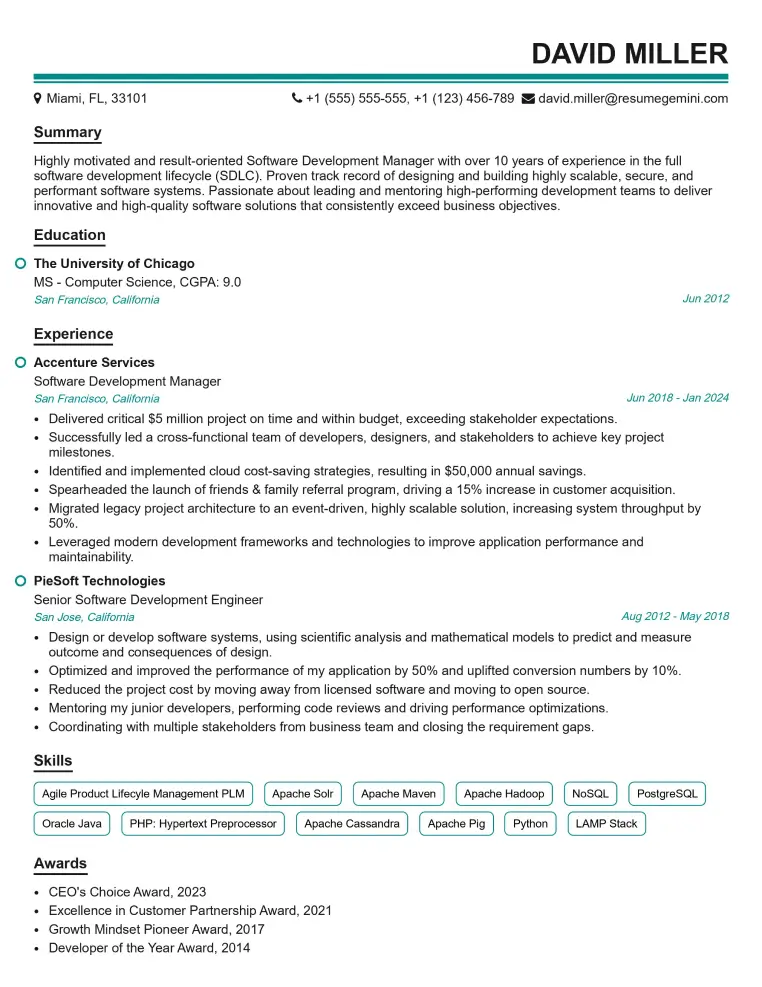
Elevate your job search with our premium resume templates. Here is an amazing resume template that can be used to build a professional and elegant resume. You can build a resume from scratch or revamp your existing resume. Impress hiring managers and secure your next opportunity.
- Top 50 Most Common Interview Questions
- The Psychology of a Great Resume: Hacks to Impress Recruiters
- What Mistakes to Avoid When Writing a Resume: A Comprehensive Guide
- Elevate Your Career with Expert Resume Building: Introducing ResumeGemini
- How to Write a Resume Using Google Gemini: Step-by-Step Guide