Are you a seasoned Piano Tuner seeking a new career path? Discover our professionally built Piano Tuner Resume Template. This time-saving tool provides a solid foundation for your job search. Simply click “Edit Resume” to customize it with your unique experiences and achievements. Customize fonts and colors to match your personal style and increase your chances of landing your dream job. Explore more Resume Templates for additional options.






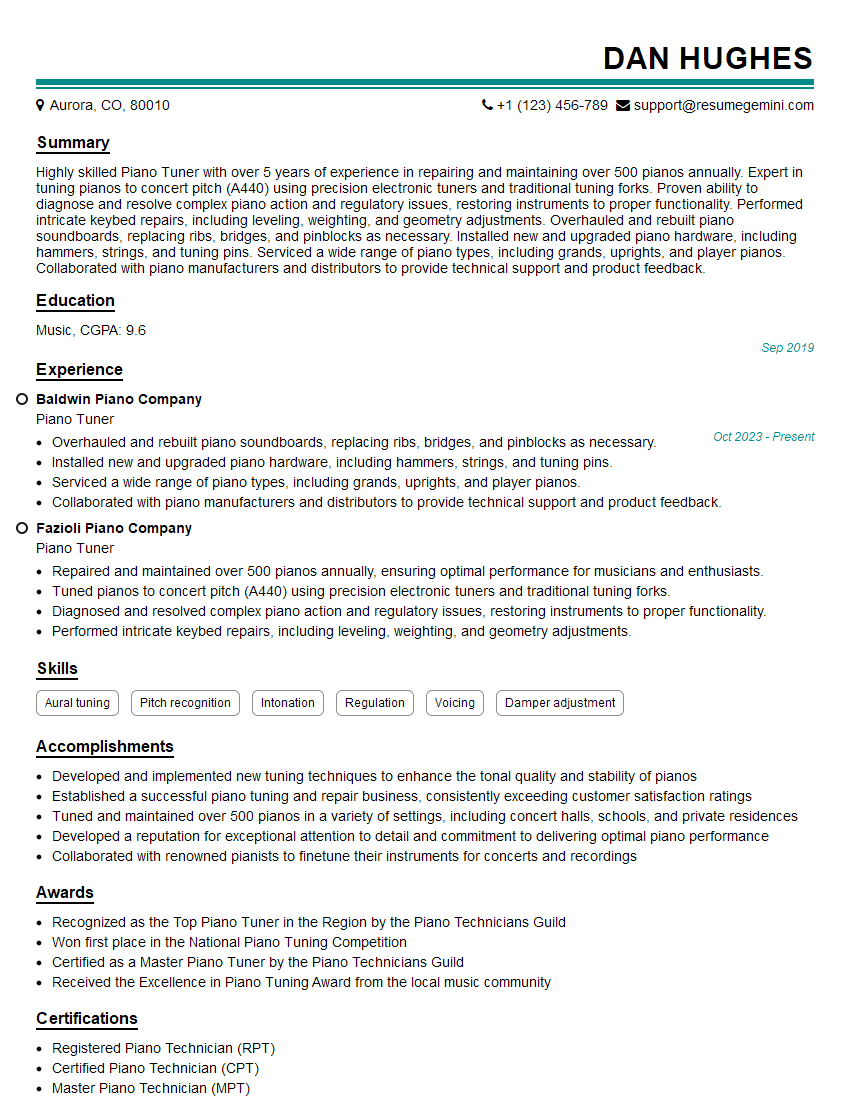
Dan Hughes
Piano Tuner
Summary
Highly skilled Piano Tuner with over 5 years of experience in repairing and maintaining over 500 pianos annually. Expert in tuning pianos to concert pitch (A440) using precision electronic tuners and traditional tuning forks. Proven ability to diagnose and resolve complex piano action and regulatory issues, restoring instruments to proper functionality. Performed intricate keybed repairs, including leveling, weighting, and geometry adjustments. Overhauled and rebuilt piano soundboards, replacing ribs, bridges, and pinblocks as necessary. Installed new and upgraded piano hardware, including hammers, strings, and tuning pins. Serviced a wide range of piano types, including grands, uprights, and player pianos. Collaborated with piano manufacturers and distributors to provide technical support and product feedback.
Education
Music
September 2019
Skills
- Aural tuning
- Pitch recognition
- Intonation
- Regulation
- Voicing
- Damper adjustment
Work Experience
Piano Tuner
- Overhauled and rebuilt piano soundboards, replacing ribs, bridges, and pinblocks as necessary.
- Installed new and upgraded piano hardware, including hammers, strings, and tuning pins.
- Serviced a wide range of piano types, including grands, uprights, and player pianos.
- Collaborated with piano manufacturers and distributors to provide technical support and product feedback.
Piano Tuner
- Repaired and maintained over 500 pianos annually, ensuring optimal performance for musicians and enthusiasts.
- Tuned pianos to concert pitch (A440) using precision electronic tuners and traditional tuning forks.
- Diagnosed and resolved complex piano action and regulatory issues, restoring instruments to proper functionality.
- Performed intricate keybed repairs, including leveling, weighting, and geometry adjustments.
Accomplishments
- Developed and implemented new tuning techniques to enhance the tonal quality and stability of pianos
- Established a successful piano tuning and repair business, consistently exceeding customer satisfaction ratings
- Tuned and maintained over 500 pianos in a variety of settings, including concert halls, schools, and private residences
- Developed a reputation for exceptional attention to detail and commitment to delivering optimal piano performance
- Collaborated with renowned pianists to finetune their instruments for concerts and recordings
Awards
- Recognized as the Top Piano Tuner in the Region by the Piano Technicians Guild
- Won first place in the National Piano Tuning Competition
- Certified as a Master Piano Tuner by the Piano Technicians Guild
- Received the Excellence in Piano Tuning Award from the local music community
Certificates
- Registered Piano Technician (RPT)
- Certified Piano Technician (CPT)
- Master Piano Technician (MPT)
- Accredited Piano Appraiser (APA)
Career Expert Tips:
- Select the ideal resume template to showcase your professional experience effectively.
- Master the art of resume writing to highlight your unique qualifications and achievements.
- Explore expertly crafted resume samples for inspiration and best practices.
- Build your best resume for free this new year with ResumeGemini. Enjoy exclusive discounts on ATS optimized resume templates.
How To Write Resume For Piano Tuner
- Highlight your skills and experience in a clear and concise manner.
- Provide specific examples of your work, such as the types of pianos you’ve serviced and the repairs you’ve performed.
- Showcase your knowledge of piano tuning and repair techniques.
- Proofread your resume carefully for any errors.
- Consider getting feedback from a professional resume writer.
Essential Experience Highlights for a Strong Piano Tuner Resume
- Tuning pianos to concert pitch (A440) using precision electronic tuners and traditional tuning forks
- Diagnosing and resolving complex piano action and regulatory issues
- Performing intricate keybed repairs, including leveling, weighting, and geometry adjustments
- Overhauling and rebuilding piano soundboards, replacing ribs, bridges, and pinblocks as necessary
- Installing new and upgraded piano hardware, including hammers, strings, and tuning pins
- Servicing a wide range of piano types, including grands, uprights, and player pianos
- Collaborating with piano manufacturers and distributors to provide technical support and product feedback
Frequently Asked Questions (FAQ’s) For Piano Tuner
What is the job of a piano tuner?
A piano tuner is responsible for tuning and maintaining pianos to ensure that they are in proper playing condition. This involves adjusting the tension of the strings to achieve the correct pitch, as well as making adjustments to the action and other mechanical components of the piano.
What skills are required to be a piano tuner?
Piano tuners need to have a good ear for music and be able to identify and match pitches accurately. They also need to be familiar with the mechanics of the piano and be able to make adjustments to the action, strings, and other components as needed.
What is the best way to learn how to tune a piano?
The best way to learn how to tune a piano is to find a qualified piano tuner and take lessons from them. There are also a number of online resources and books that can provide you with the basic information you need to get started.
How often should a piano be tuned?
Pianos should be tuned at least once a year, and more often if they are played frequently or in a humid environment.
How much does it cost to have a piano tuned?
The cost of having a piano tuned varies depending on the location, the type of piano, and the tuner’s experience. However, you can expect to pay between $100 and $200 for a basic tuning.
What are the benefits of having a piano tuned regularly?
Having your piano tuned regularly will help to improve its sound quality, keep it in good playing condition, and extend its lifespan.
Can I tune my piano myself?
While it is possible to tune your piano yourself, it is not recommended unless you have the proper training and experience. Attempting to tune your piano yourself can result in damage to the instrument.