Are you a seasoned Furniture Finisher seeking a new career path? Discover our professionally built Furniture Finisher Resume Template. This time-saving tool provides a solid foundation for your job search. Simply click “Edit Resume” to customize it with your unique experiences and achievements. Customize fonts and colors to match your personal style and increase your chances of landing your dream job. Explore more Resume Templates for additional options.






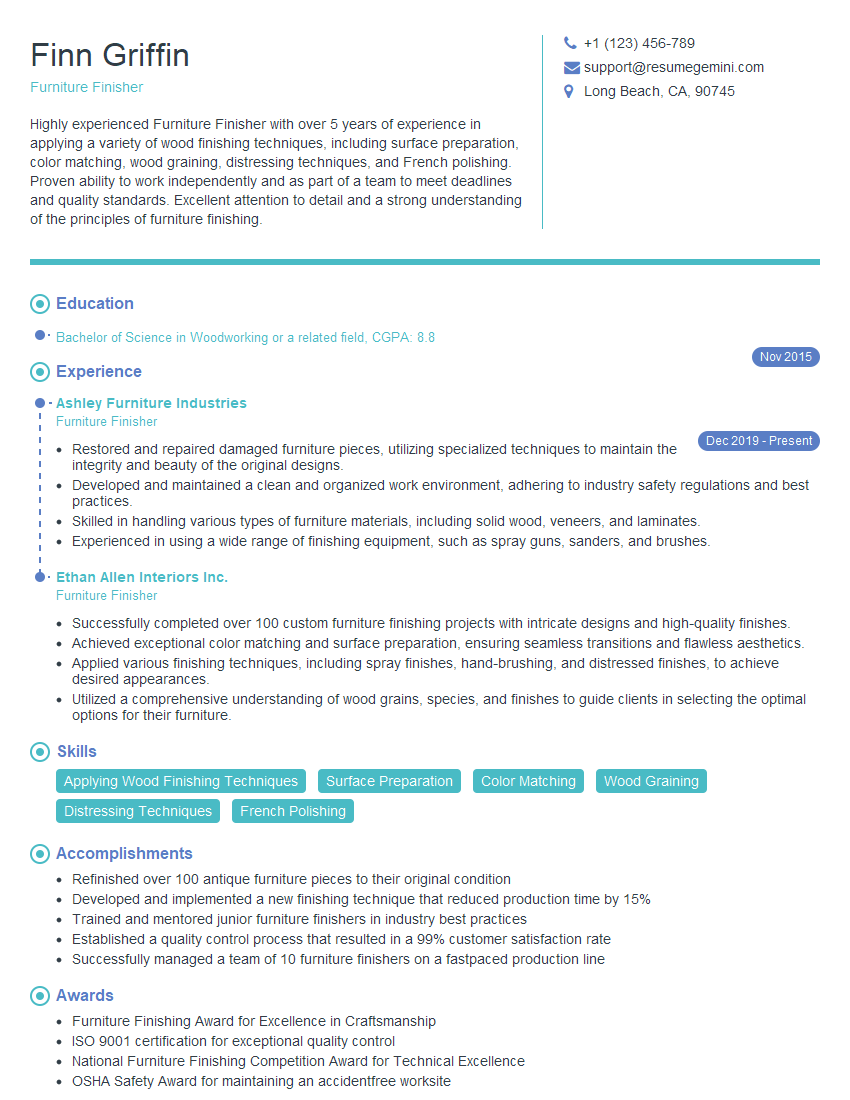
Finn Griffin
Furniture Finisher
Summary
Highly experienced Furniture Finisher with over 5 years of experience in applying a variety of wood finishing techniques, including surface preparation, color matching, wood graining, distressing techniques, and French polishing. Proven ability to work independently and as part of a team to meet deadlines and quality standards. Excellent attention to detail and a strong understanding of the principles of furniture finishing.
Education
Bachelor of Science in Woodworking or a related field
November 2015
Skills
- Applying Wood Finishing Techniques
- Surface Preparation
- Color Matching
- Wood Graining
- Distressing Techniques
- French Polishing
Work Experience
Furniture Finisher
- Restored and repaired damaged furniture pieces, utilizing specialized techniques to maintain the integrity and beauty of the original designs.
- Developed and maintained a clean and organized work environment, adhering to industry safety regulations and best practices.
- Skilled in handling various types of furniture materials, including solid wood, veneers, and laminates.
- Experienced in using a wide range of finishing equipment, such as spray guns, sanders, and brushes.
Furniture Finisher
- Successfully completed over 100 custom furniture finishing projects with intricate designs and high-quality finishes.
- Achieved exceptional color matching and surface preparation, ensuring seamless transitions and flawless aesthetics.
- Applied various finishing techniques, including spray finishes, hand-brushing, and distressed finishes, to achieve desired appearances.
- Utilized a comprehensive understanding of wood grains, species, and finishes to guide clients in selecting the optimal options for their furniture.
Accomplishments
- Refinished over 100 antique furniture pieces to their original condition
- Developed and implemented a new finishing technique that reduced production time by 15%
- Trained and mentored junior furniture finishers in industry best practices
- Established a quality control process that resulted in a 99% customer satisfaction rate
- Successfully managed a team of 10 furniture finishers on a fastpaced production line
Awards
- Furniture Finishing Award for Excellence in Craftsmanship
- ISO 9001 certification for exceptional quality control
- National Furniture Finishing Competition Award for Technical Excellence
- OSHA Safety Award for maintaining an accidentfree worksite
Certificates
- Furniture Refinishing Certification (AFR)
- Certified Furniture Finishing Professional (CFFP)
- Master Furniture Finisher (MFF)
- Certified Wood Grainer (CWG)
Career Expert Tips:
- Select the ideal resume template to showcase your professional experience effectively.
- Master the art of resume writing to highlight your unique qualifications and achievements.
- Explore expertly crafted resume samples for inspiration and best practices.
- Build your best resume for free this new year with ResumeGemini. Enjoy exclusive discounts on ATS optimized resume templates.
How To Write Resume For Furniture Finisher
- Highlight your skills and experience in wood finishing techniques, including surface preparation, color matching, wood graining, distressing techniques, and French polishing.
- Include examples of your work in your portfolio or resume to showcase your abilities.
- Demonstrate your attention to detail and commitment to quality by providing specific examples of your work.
- Tailor your resume to each job you apply for by highlighting the skills and experience that are most relevant to the position.
Essential Experience Highlights for a Strong Furniture Finisher Resume
- Apply a variety of wood finishing techniques, including surface preparation, color matching, wood graining, distressing techniques, and French polishing.
- Prepare wood surfaces for finishing by sanding, cleaning, and repairing imperfections.
- Match colors and create custom finishes to meet customer specifications.
- Use specialized tools and equipment to apply finishes to furniture pieces.
- Inspect finished pieces to ensure quality and adherence to standards.
- Maintain a clean and organized work area.
- Follow safety protocols and wear appropriate protective gear.
Frequently Asked Questions (FAQ’s) For Furniture Finisher
What are the key skills required to be a successful Furniture Finisher?
The key skills required to be a successful Furniture Finisher include surface preparation, color matching, wood graining, distressing techniques, and French polishing. Additionally, attention to detail, a strong work ethic, and the ability to work independently and as part of a team are essential.
What are the different types of wood finishing techniques?
There are a variety of wood finishing techniques, including surface preparation, color matching, wood graining, distressing techniques, and French polishing. Surface preparation involves preparing the wood surface for finishing by sanding, cleaning, and repairing imperfections. Color matching involves mixing and applying stains and dyes to achieve the desired color and finish. Wood graining involves creating the appearance of wood grain on a surface using specialized tools and techniques. Distressing techniques involve creating the appearance of aging or wear on a surface using specialized tools and techniques. French polishing involves applying a thin, clear finish to a wood surface using a brush and shellac.
What are the different types of furniture finishes?
There are a variety of furniture finishes, including lacquer, polyurethane, varnish, and shellac. Lacquer is a clear, hard finish that is often used on furniture that is exposed to heavy use. Polyurethane is a durable, water-resistant finish that is often used on furniture that is exposed to outdoor elements. Varnish is a clear, glossy finish that is often used on furniture that is not exposed to heavy use. Shellac is a natural, clear finish that is often used on furniture that is antique or delicate.
What are the different types of furniture finishing tools?
There are a variety of furniture finishing tools, including brushes, rollers, sprayers, and sanding tools. Brushes are used to apply finishes to small areas or to create detailed effects. Rollers are used to apply finishes to large areas quickly and evenly. Sprayers are used to apply finishes to large areas quickly and evenly. Sanding tools are used to prepare wood surfaces for finishing by sanding, cleaning, and repairing imperfections.
What are the different types of furniture finishing materials?
There are a variety of furniture finishing materials, including stains, dyes, and clear finishes. Stains are used to add color to wood surfaces. Dyes are used to add color to wood surfaces and to create transparent effects. Clear finishes are used to protect wood surfaces from wear and tear.
What is the best way to learn furniture finishing?
There are a variety of ways to learn furniture finishing, including taking classes, reading books, watching videos, and practicing on your own. Taking classes can provide you with the opportunity to learn from experienced furniture finishers and to practice your skills in a controlled environment. Reading books and watching videos can also provide you with valuable information and guidance. Practicing on your own can help you to develop your skills and to gain experience.
What are the career opportunities for Furniture Finishers?
Furniture Finishers can work in a variety of settings, including furniture factories, custom furniture shops, and restoration studios. They can also work as independent contractors. Furniture Finishers can advance their careers by becoming supervisors, managers, or owners of their own businesses.