Are you gearing up for a career shift or aiming to ace your next interview? Look no further! We’ve curated a comprehensive guide to help you crack the interview for the coveted Order Tracer position. From understanding the key responsibilities to mastering the most commonly asked questions, this blog has you covered. So, buckle up and let’s embark on this journey together.
Acing the interview is crucial, but landing one requires a compelling resume that gets you noticed. Crafting a professional document that highlights your skills and experience is the first step toward interview success. ResumeGemini can help you build a standout resume that gets you called in for that dream job.






Essential Interview Questions For Order Tracer
1. Explain the process of order tracing in detail?
Order tracing involves tracking the status of an order from the point of its placement to its final delivery. Here’s a breakdown of the process:
- Order Receipt: When an order is placed, it is received and processed by the order management system.
- Order Processing: The order undergoes various checks, including inventory availability, payment verification, and fraud detection.
- Order Confirmation: Upon successful processing, the customer receives an order confirmation, typically via email or SMS.
- Order Fulfillment: The order is then picked, packed, and shipped to the customer.
- Shipment Tracking: The customer can track the shipment status using a tracking number provided by the carrier.
- Delivery: The order is delivered to the customer’s specified address by the carrier.
- Post-Delivery: The order status is updated to “Delivered,” and the customer may receive a delivery confirmation.
2. How do you differentiate between successful and failed order tracing?
Understanding Success Criteria
- Accurate tracking information provided throughout the order lifecycle
- Real-time updates on order status
- Ability to identify and resolve any delays or issues
Identifying Failure Indicators
- Lack of tracking information or outdated status updates
- Inaccurate delivery estimates
- Inability to locate the order or its shipment
- Delays or disruptions without timely communication
3. Describe the key metrics used to measure the effectiveness of order tracing systems?
The effectiveness of order tracing systems is measured using various metrics:
- Order Tracking Accuracy: Percentage of orders with accurate tracking information throughout the process.
- Timeliness of Updates: Average time taken to update order status and provide real-time information.
- Customer Satisfaction: Feedback from customers on the ease and usefulness of the order tracking process.
- Order Resolution Time: Average time taken to resolve issues or delays related to order fulfillment.
- System Uptime: Percentage of time the order tracing system is operational and accessible to users.
4. Explain the importance of proactive communication in order tracing?
Proactive communication plays a crucial role in order tracing by:
- Building Customer Trust: Timely updates and transparency foster trust and confidence in the order fulfillment process.
- Managing Customer Expectations: Clear communication helps customers understand the order status, estimated delivery times, and any potential delays or issues.
- Reducing Customer Inquiries: Proactive communication helps prevent unnecessary inquiries by addressing common concerns and providing self-service tracking options.
- Improving Customer Experience: Effective communication enhances overall customer satisfaction by keeping them informed and engaged throughout the order lifecycle.
5. How do you handle exceptions or delays during order tracing?
When exceptions or delays occur during order tracing, I follow these steps:
- Identify the Root Cause: Investigate the reason for the delay or exception, whether it’s a carrier issue, inventory shortage, or any other factor.
- Communicate to the Customer: Inform the customer about the delay promptly and provide an estimated revised delivery time.
- Explore Alternative Solutions: Check for alternative shipping options or work with suppliers to expedite delivery if possible.
- Monitor and Update Regularly: Keep track of the exception status and provide regular updates to the customer until the issue is resolved.
- Document and Learn: Record the exception, its cause, and the resolution for future reference and process improvement.
6. Describe the role of technology in order tracing?
Technology plays a vital role in order tracing by:
- Automated Tracking: Order management systems and carrier integrations provide automated updates on order status and shipment tracking.
- Real-Time Updates: Mobile apps and online portals allow customers to track their orders in real-time.
- Proactive Notifications: Systems can send proactive email or SMS alerts for order status changes, delays, or estimated delivery times.
- Data Analytics: Order tracing data can be analyzed to identify patterns, improve processes, and enhance customer experiences.
- Integration with CRM: Order tracing systems can integrate with customer relationship management (CRM) systems to provide a comprehensive view of customer interactions.
7. What are the challenges you have faced in order tracing and how did you overcome them?
One of the challenges I encountered was dealing with a high volume of order inquiries during peak periods. To overcome this, I implemented automated order status updates and self-service tracking options, which significantly reduced the number of inquiries.
Another challenge was resolving cross-functional issues. I established clear communication channels and collaborated with teams across the supply chain to identify and resolve issues efficiently.
8. Explain your approach to continuous improvement in order tracing?
I believe in continuous improvement and regularly review order tracing processes to identify areas for optimization. I collect feedback from customers and internal stakeholders to understand pain points and make data-driven decisions.
I also keep up with industry best practices and new technologies to enhance the order tracing experience for customers.
9. Describe your experience in using specific order tracing tools or systems?
I have extensive experience in using various order tracing tools and systems, including:
- Order Management Systems (OMS): [List of OMS used]
- Carrier Integrations: [List of carrier integrations]
- Real-Time Tracking Platforms: [List of real-time tracking platforms used]
- Data Analytics Tools: [List of data analytics tools used]
I am proficient in leveraging these tools to enhance order visibility, improve customer communication, and optimize the order fulfillment process.
10. How do you stay updated on the latest trends and technologies in order tracing?
I stay updated on the latest trends and technologies in order tracing through the following channels:
- Industry Publications: [List of industry publications]
- Conferences and Webinars: [List of conferences and webinars attended]
- Online Courses: [List of online courses taken]
- Networking: [List of industry events and networking groups participated in]
By actively engaging in these channels, I ensure that my knowledge and skills remain current with the evolving landscape of order tracing.
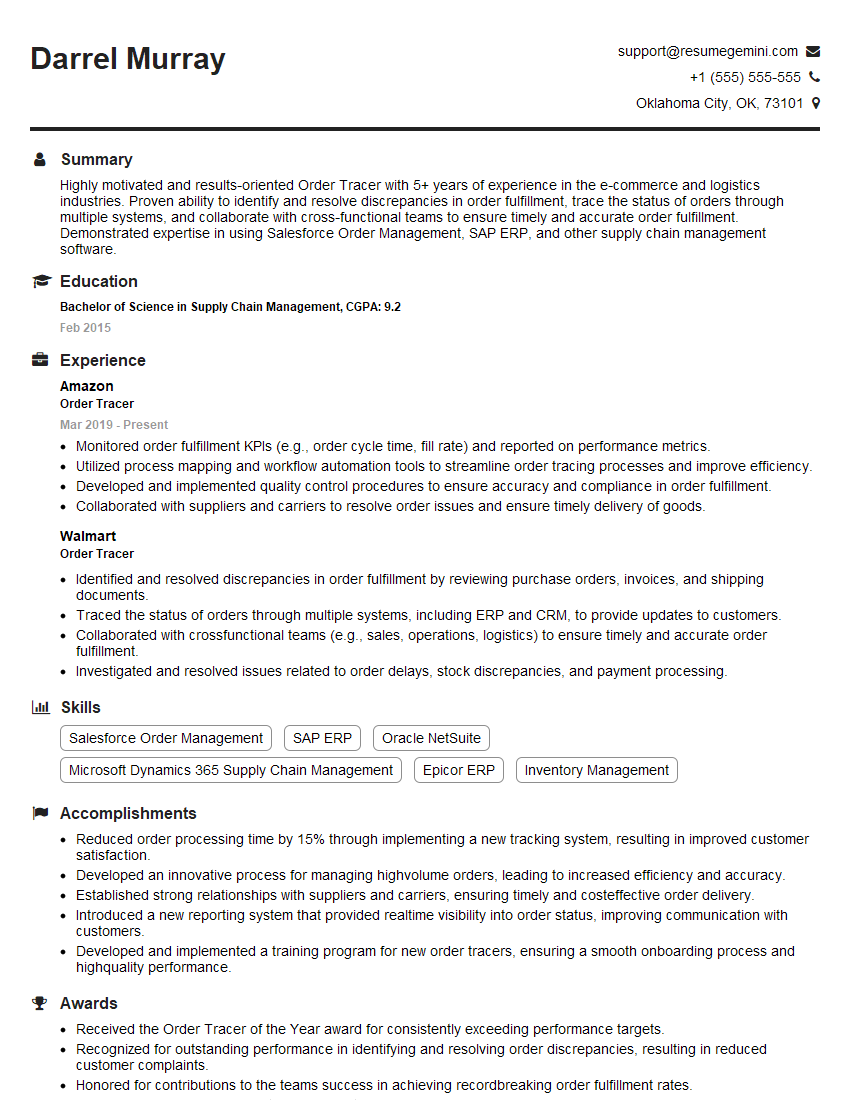
Interviewers often ask about specific skills and experiences. With ResumeGemini‘s customizable templates, you can tailor your resume to showcase the skills most relevant to the position, making a powerful first impression. Also check out Resume Template specially tailored for Order Tracer.
Career Expert Tips:
- Ace those interviews! Prepare effectively by reviewing the Top 50 Most Common Interview Questions on ResumeGemini.
- Navigate your job search with confidence! Explore a wide range of Career Tips on ResumeGemini. Learn about common challenges and recommendations to overcome them.
- Craft the perfect resume! Master the Art of Resume Writing with ResumeGemini’s guide. Showcase your unique qualifications and achievements effectively.
- Great Savings With New Year Deals and Discounts! In 2025, boost your job search and build your dream resume with ResumeGemini’s ATS optimized templates.
Researching the company and tailoring your answers is essential. Once you have a clear understanding of the Order Tracer‘s requirements, you can use ResumeGemini to adjust your resume to perfectly match the job description.
Key Job Responsibilities
Order Tracers are the guardians of order fulfillment, ensuring that customers receive their products on time and in perfect condition. As an Order Tracer, your responsibilities revolve around monitoring order progress, identifying potential delays, and proactively resolving any issues that may arise.
1. Order Tracking and Monitoring
Maintaining a close watch on every stage of the order lifecycle is crucial. From the moment an order is placed to its final delivery, you meticulously track its progress through the supply chain. Proactively monitoring for any deviations or potential delays allows you to take swift action and keep the order process moving smoothly.
2. Identifying and Resolving Order Issues
Like a skilled detective, you possess a keen eye for detecting order issues, no matter how small. When a potential delay or problem arises, you swiftly investigate the cause, identify the responsible parties, and initiate the necessary corrective actions. Your ability to quickly resolve issues and restore order flow is essential for maintaining customer satisfaction.
3. Customer Communication and Updates
Excellent communication skills are your secret weapon. You promptly inform customers of any order delays or changes, providing clear explanations and estimated delivery times. Your empathy and proactive updates help alleviate customer concerns and build trust in your company’s reliability.
4. Collaboration and Coordination
Seamless collaboration is key to your success. You work closely with other departments, including production, shipping, and customer service, to ensure cross-functional coordination. By maintaining open communication channels and sharing critical order information, you foster a collaborative environment that benefits the entire organization.
Interview Tips
Preparing for an Order Tracer interview is like embarking on a treasure hunt, where the prize is a coveted role in the supply chain world. To help you ace your interview and leave a lasting impression, here are some invaluable tips and tricks:
1. Research the Company and Position
Before setting foot in the interview room, arm yourself with knowledge about the company, its products or services, and the Order Tracer role. Visit the company website, study their social media presence, and tap into industry news to gain insights into their operations and values. Understanding the company’s culture and the specific requirements of the position will give you a competitive edge.
2. Highlight Relevant Skills and Experience
The interview is your stage to showcase your skills and experience as an Order Tracer. Clearly demonstrate how your ability to track orders, identify issues, and resolve problems aligns with the job responsibilities. Quantify your accomplishments and provide specific examples to illustrate your impact on order fulfillment and customer satisfaction. Consider using the STAR method (Situation, Task, Action, Result) to structure your answers and make them more compelling.
3. Emphasize Communication and Collaboration Skills
Exceptional communication and collaboration skills are highly sought-after qualities for Order Tracers. During the interview, emphasize your ability to communicate clearly and effectively with customers, colleagues, and other stakeholders. Highlight your expertise in using various communication channels, such as email, phone, and instant messaging. Additionally, showcase your experience in working collaboratively in cross-functional teams to resolve issues and achieve common goals.
4. Prepare Questions to Ask
Asking well- thought-out questions at the end of the interview demonstrates your interest in the position and the company. It also gives you an opportunity to clarify any uncertainties and gain valuable insights. Prepare questions that focus on the company’s growth plans, the role’s contribution to the organization, and opportunities for professional development. By actively engaging in the conversation, you show that you are genuinely interested in the role and the company’s future.
Next Step:
Armed with this knowledge, you’re now well-equipped to tackle the Order Tracer interview with confidence. Remember, preparation is key. So, start crafting your resume, highlighting your relevant skills and experiences. Don’t be afraid to tailor your application to each specific job posting. With the right approach and a bit of practice, you’ll be well on your way to landing your dream job. Build your resume now from scratch or optimize your existing resume with ResumeGemini. Wish you luck in your career journey!