Are you gearing up for a career shift or aiming to ace your next interview? Look no further! We’ve curated a comprehensive guide to help you crack the interview for the coveted Emergency Preparedness Coordinator position. From understanding the key responsibilities to mastering the most commonly asked questions, this blog has you covered. So, buckle up and let’s embark on this journey together
Acing the interview is crucial, but landing one requires a compelling resume that gets you noticed. Crafting a professional document that highlights your skills and experience is the first step toward interview success. ResumeGemini can help you build a standout resume that gets you called in for that dream job.






Essential Interview Questions For Emergency Preparedness Coordinator
1. How would you develop and implement an emergency preparedness plan for a large-scale event like a natural disaster?
- Conduct risk assessment and vulnerability analysis
- Establish emergency response teams and assign roles and responsibilities
- Develop clear communication and notification protocols
- Identify evacuation routes and shelter locations
- Provide training and drills for staff and volunteers
- Coordinate with external agencies and organizations
- Monitor and evaluate the effectiveness of the plan and make adjustments as needed
2. What are the key challenges you anticipate in coordinating disaster response and how would you overcome them?
Communication breakdowns
- Establish multiple communication channels, including satellite phones and social media
- Designate clear points of contact for each emergency response team
- Utilize communication protocols to minimize confusion
Lack of resources
- Partner with local businesses, non-profit organizations, and government agencies
- Identify and secure alternative sources of supplies, equipment, and personnel
- Develop a contingency plan for operating with limited resources
3. How would you ensure the continuity of essential services during an emergency?
- Identify critical services that must be maintained (e.g., healthcare, water supply)
- Develop backup plans for providing these services in the event of disruption
- Establish agreements with third-party providers to supplement internal resources
- Test and update continuity plans on a regular basis
4. What are your thoughts on the role of technology in emergency preparedness and response?
- Improves communication and coordination among emergency responders
- Enables real-time information sharing and situational awareness
- Provides tools for tracking resources and managing logistics
- Facilitates early warning systems and mass notifications
- Supports data analysis and decision-making
5. How do you stay updated on best practices and emerging trends in emergency management?
- Attend industry conferences and workshops
- Subscribe to professional journals and online resources
- Engage in networking and collaboration with other emergency management professionals
- Seek opportunities for continuing education and professional development
6. What are your strategies for assessing and mitigating risks associated with natural hazards in your area?
- Collaborate with local and state emergency management agencies to identify potential hazards
- Conduct vulnerability assessments to determine the impact of hazards on critical infrastructure and communities
- Develop mitigation plans to reduce the risk of damage and injury
- Implement public education and awareness campaigns to promote risk reduction measures
7. How would you manage the recovery and rebuilding process after a major disaster?
- Establish a recovery task force to coordinate efforts among government agencies, non-profit organizations, and community groups
- Assess the extent of damage and prioritize needs
- Provide assistance to affected individuals and businesses
- Facilitate the rebuilding and restoration of infrastructure
- Monitor progress and evaluate the effectiveness of recovery efforts
8. What are the ethical considerations that you take into account when making decisions during an emergency?
- Prioritizing the safety and well-being of individuals
- Balancing the need for efficiency with the need for fairness and equity
- Respecting the rights and privacy of individuals
- Ensuring transparency and accountability in decision-making
9. How would you work with media and the public during an emergency to ensure accurate and timely information is shared?
- Establish a media liaison to coordinate communication with journalists
- Prepare press releases and hold regular briefings to provide updates
- Use social media and other public channels to disseminate information
- Monitor media coverage and respond to inquiries in a timely manner
10. Can you describe a particularly challenging emergency situation you have managed in the past and how you overcame the obstacles?
- Describe the nature of the emergency and the challenges it presented
- Explain the steps you took to respond to the situation
- Highlight the strategies and techniques you used to overcome obstacles
- Discuss the lessons learned and how they have influenced your approach to emergency management
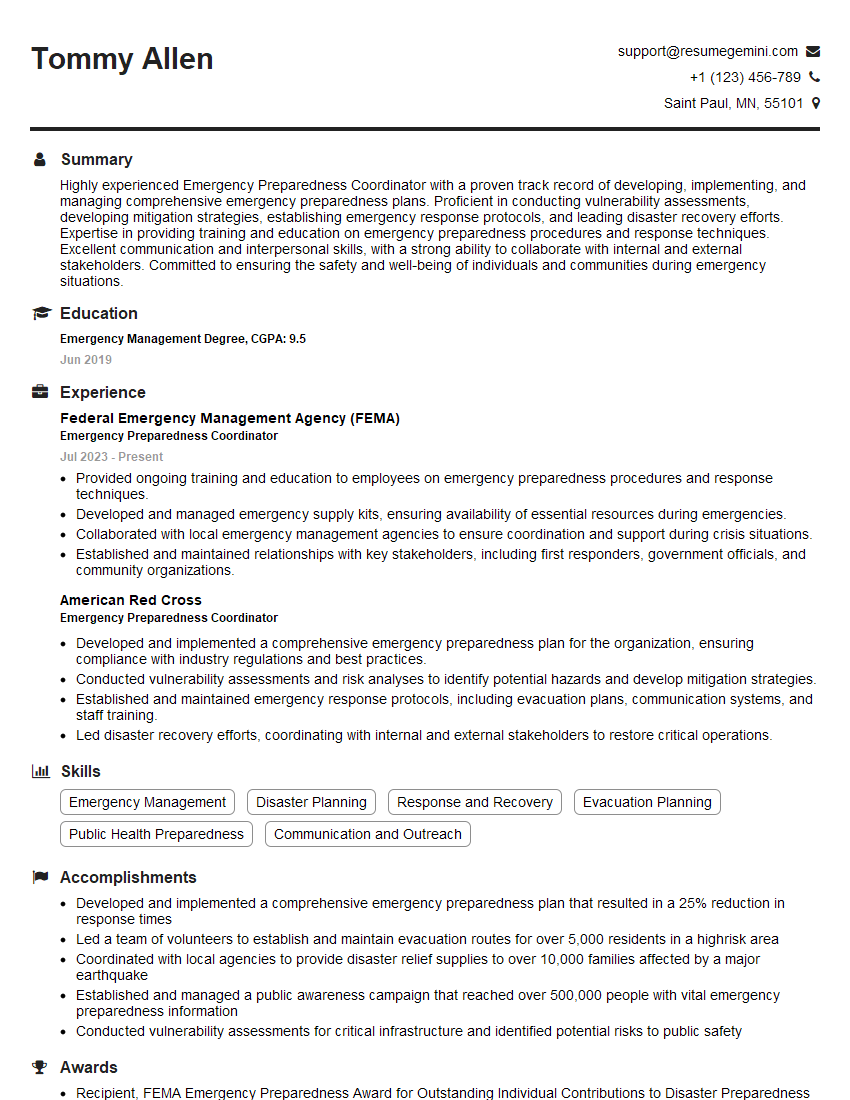
Interviewers often ask about specific skills and experiences. With ResumeGemini‘s customizable templates, you can tailor your resume to showcase the skills most relevant to the position, making a powerful first impression. Also check out Resume Template specially tailored for Emergency Preparedness Coordinator.
Career Expert Tips:
- Ace those interviews! Prepare effectively by reviewing the Top 50 Most Common Interview Questions on ResumeGemini.
- Navigate your job search with confidence! Explore a wide range of Career Tips on ResumeGemini. Learn about common challenges and recommendations to overcome them.
- Craft the perfect resume! Master the Art of Resume Writing with ResumeGemini’s guide. Showcase your unique qualifications and achievements effectively.
- Great Savings With New Year Deals and Discounts! In 2025, boost your job search and build your dream resume with ResumeGemini’s ATS optimized templates.
Researching the company and tailoring your answers is essential. Once you have a clear understanding of the Emergency Preparedness Coordinator‘s requirements, you can use ResumeGemini to adjust your resume to perfectly match the job description.
Key Job Responsibilities
The Emergency Preparedness Coordinator plays a pivotal role in safeguarding an organization and its stakeholders during emergencies. This individual is responsible for developing, implementing, and maintaining comprehensive emergency preparedness plans and protocols.
1. Emergency Planning and Coordination
Collaborate with multidisciplinary teams to develop and implement emergency response plans, ensuring alignment with regulatory requirements and industry best practices.
- Conduct thorough risk assessments to identify potential hazards and vulnerabilities.
- Establish clear communication channels and protocols for emergency response.
2. Training and Education
Provide comprehensive training programs to employees and stakeholders on emergency procedures, disaster response, and evacuation protocols.
- Develop tailored training modules based on specific roles and responsibilities.
- Organize regular drills and exercises to test and refine emergency plans.
3. Emergency Response Management
Coordinate and lead emergency response efforts during actual events, ensuring the safety and well-being of individuals and assets.
- Monitor emergency situations and activate appropriate response protocols.
- Liaise with external agencies, such as first responders and government officials, to coordinate assistance.
4. Recovery and Evaluation
Assist in post-emergency recovery efforts, including damage assessment, business continuity planning, and restoration of operations.
- Analyze incident data and identify areas for improvement in emergency preparedness and response.
- Provide recommendations to enhance organizational resilience and mitigate future risks.
Interview Tips
Preparing effectively for an interview is crucial to making a positive impression and showcasing your qualifications. Here are some tips and hacks to help you ace the interview for the Emergency Preparedness Coordinator position.
1. Research the Organization and Role
Thoroughly research the organization’s industry, mission, and any recent emergency events. This will demonstrate your interest and understanding of the context in which you will be working.
- Review the job description carefully to identify key responsibilities and qualifications.
- Consider the organization’s size, location, and potential hazards it may face.
2. Highlight Your Skills and Experience
Emphasize your relevant skills and experience in emergency preparedness, response, and recovery. Quantify your accomplishments whenever possible using specific metrics and examples.
- Showcase your ability to develop and implement emergency plans, conduct training, and manage response efforts.
- Mention any certifications or professional development courses you have completed.
3. Prepare for Common Interview Questions
Anticipate common interview questions and prepare thoughtful and concise answers. Practice your responses with a friend or family member for feedback.
- Explain your experience in emergency preparedness and response.
- Describe your approach to developing and implementing emergency plans.
4. Ask Insightful Questions
Asking thoughtful questions during the interview demonstrates your engagement and interest in the role. Prepare questions about the organization’s emergency preparedness program, recent drills or exercises, and opportunities for professional development.
- What are the organization’s top emergency preparedness priorities?
- How does the organization measure the effectiveness of its emergency preparedness program?
5. Dress Professionally and Be Punctual
Dress professionally and arrive on time for your interview. Non-verbal cues play a significant role in making a positive impression on the interviewer.
- Choose appropriate business attire that reflects the formality of the organization.
- Plan your route and arrive at the interview location with ample time to spare.
Next Step:
Now that you’re armed with the knowledge of Emergency Preparedness Coordinator interview questions and responsibilities, it’s time to take the next step. Build or refine your resume to highlight your skills and experiences that align with this role. Don’t be afraid to tailor your resume to each specific job application. Finally, start applying for Emergency Preparedness Coordinator positions with confidence. Remember, preparation is key, and with the right approach, you’ll be well on your way to landing your dream job. Build an amazing resume with ResumeGemini