Are you gearing up for a career shift or aiming to ace your next interview? Look no further! We’ve curated a comprehensive guide to help you crack the interview for the coveted Labor Relations Specialist position. From understanding the key responsibilities to mastering the most commonly asked questions, this blog has you covered. So, buckle up and let’s embark on this journey together.
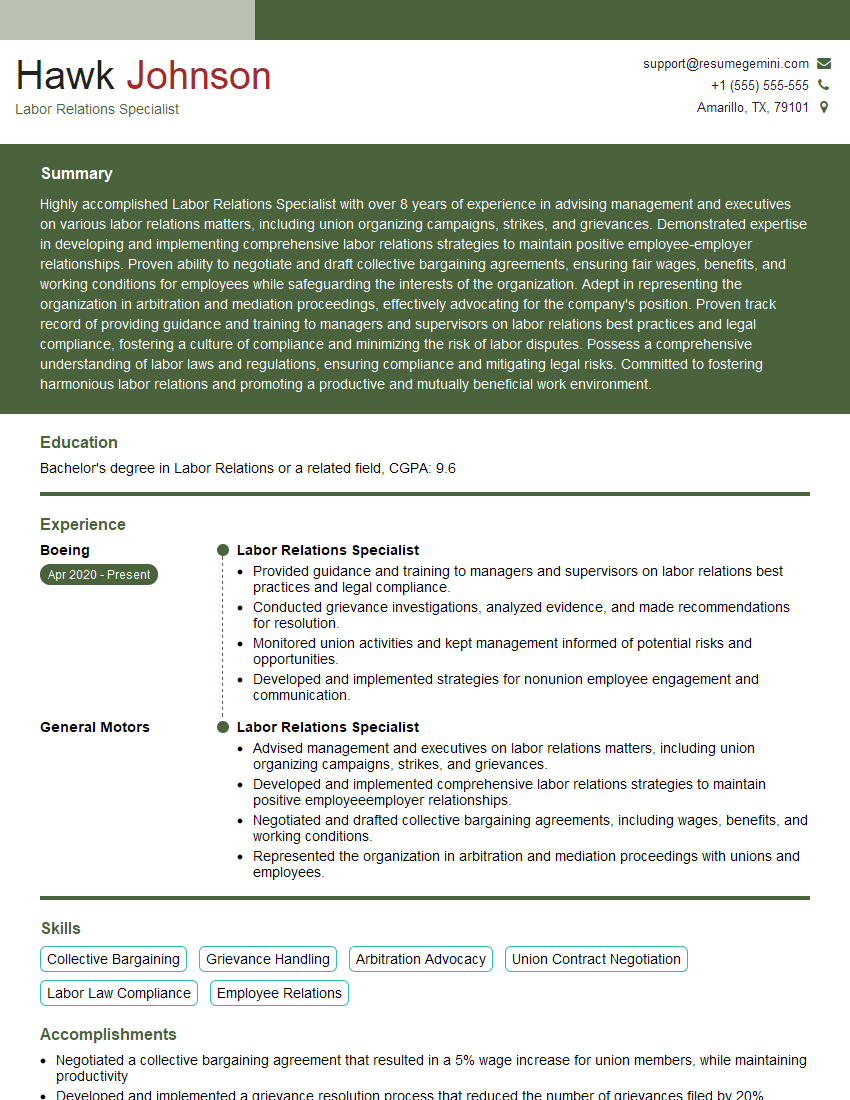
Acing the interview is crucial, but landing one requires a compelling resume that gets you noticed. Crafting a professional document that highlights your skills and experience is the first step toward interview success. ResumeGemini can help you build a standout resume that gets you called in for that dream job.






Essential Interview Questions For Labor Relations Specialist
1. How can you effectively manage and resolve labor disputes between employees and management?
- By maintaining open communication and fostering a spirit of mutual respect.
- By conducting thorough investigations and gathering all relevant information.
- By exploring various dispute resolution mechanisms, including mediation, arbitration, and litigation.
2. Describe your experience and understanding of the collective bargaining process.
Negotiation
- Prepare and participate in contract negotiations on behalf of management.
- Represent the organization’s interests while striving for mutually acceptable outcomes.
Grievance Handling
- Interpret and administer labor contracts and collective bargaining agreements.
- Investigate and resolve grievances filed by employees and unions.
3. How do you stay up-to-date on changes in labor laws and regulations, and how do you ensure that your organization remains compliant?
- Attend conferences, seminars, and workshops on labor law and industrial relations.
- Subscribe to industry publications and online resources for legal updates.
- Collaborate with legal counsel to interpret and implement changes in the regulatory landscape.
4. Can you elaborate on your experience in developing and implementing labor relations policies and procedures?
- Research best practices and industry standards for labor relations management.
- Draft and revise policies and procedures to ensure compliance with labor laws and promote harmonious labor relations.
- Train and educate employees and managers on the organization’s labor relations policies and procedures.
5. How do you build and maintain strong relationships with union representatives and employee groups?
- Foster open and respectful communication through regular meetings and discussions.
- Actively listen to the concerns and perspectives of union representatives and employees.
- Participate in joint initiatives and committees to address common interests.
6. Can you describe a recent labor dispute that you successfully resolved? What strategies did you employ, and what was the outcome?
- Facilitated a mediation process between management and the union.
- Identified and addressed the underlying causes of the dispute.
- Negotiated a mutually acceptable settlement that preserved labor harmony.
7. How do you handle situations where employee grievances escalate to arbitration?
- Prepare and present the organization’s case before an arbitrator.
- Advise management on the legal implications and potential outcomes of arbitration.
- Implement the arbitrator’s decision and ensure compliance with the terms of the award.
8. Describe your expertise in conducting labor relations audits.
- Review and analyze labor relations practices, policies, and procedures.
- Identify areas for improvement and provide recommendations to enhance labor relations effectiveness.
- Monitor implementation of audit recommendations to ensure continuous improvement.
9. How do you measure the effectiveness of your labor relations initiatives and programs?
- Track and analyze key metrics, such as grievance rates, absenteeism, and turnover.
- Conduct employee surveys to gauge satisfaction with labor relations practices.
- Compare industry benchmarks to identify areas for improvement.
10. What are some emerging trends in labor relations that you are aware of, and how are you preparing for their potential impact?
- Increased use of technology in labor relations, such as e-grievances and virtual negotiations.
- Growing emphasis on diversity, equity, and inclusion in the workplace.
- Continued focus on employee well-being and work-life balance.
Interviewers often ask about specific skills and experiences. With ResumeGemini‘s customizable templates, you can tailor your resume to showcase the skills most relevant to the position, making a powerful first impression. Also check out Resume Template specially tailored for Labor Relations Specialist.
Career Expert Tips:
- Ace those interviews! Prepare effectively by reviewing the Top 50 Most Common Interview Questions on ResumeGemini.
- Navigate your job search with confidence! Explore a wide range of Career Tips on ResumeGemini. Learn about common challenges and recommendations to overcome them.
- Craft the perfect resume! Master the Art of Resume Writing with ResumeGemini’s guide. Showcase your unique qualifications and achievements effectively.
- Great Savings With New Year Deals and Discounts! In 2025, boost your job search and build your dream resume with ResumeGemini’s ATS optimized templates.
Researching the company and tailoring your answers is essential. Once you have a clear understanding of the Labor Relations Specialist‘s requirements, you can use ResumeGemini to adjust your resume to perfectly match the job description.
Key Job Responsibilities
Labor Relations Specialists serve as key liaisons between management and employees, playing a crucial role in maintaining harmonious labor relations within an organization. Their primary responsibilities encompass:
1. Labor Relations Management
Overseeing the development and implementation of labor relations policies and procedures.
- Negotiating and administering collective bargaining agreements, ensuring compliance with labor laws.
- Resolving grievances, disputes, and arbitrations between management and employees or their union representatives.
2. Labor Market Analysis and Compliance
Conducting labor market research and analyzing industry trends to inform labor relations strategies.
- Monitoring compliance with labor laws, regulations, and industry best practices to mitigate risks and ensure legal adherence.
- Advising management on employment law and labor relations issues to navigate legal complexities.
3. Employee Relations Management
Fostering positive employee relations by promoting open communication and addressing employee concerns.
- Developing and implementing employee engagement programs to enhance morale, productivity, and retention.
- Handling employee complaints, grievances, and disciplinary matters to resolve issues fairly and promptly.
4. Training and Development
Providing training and development opportunities to management and employees on labor relations topics.
- Educating managers on effective labor relations practices, grievance handling, and dispute resolution techniques.
- Developing and delivering training programs for employees on workplace policies, labor rights, and union representation.
Interview Tips
Preparing thoroughly for a Labor Relations Specialist interview can significantly increase your chances of success. Remember these key tips:
1. Research the Company and Industry
Familiarize yourself with the organization, its labor relations history, and the industry in which it operates. This will enable you to tailor your answers to the specific context and demonstrate your knowledge.
- Visit the company website, LinkedIn page, and other relevant sources to gather information.
- Read industry news and articles to stay updated on current trends and best practices.
2. Highlight Your Skills and Experience
Emphasize your relevant skills and experiences that align with the key responsibilities of a Labor Relations Specialist.
- Demonstrate your knowledge of labor laws, collective bargaining, and dispute resolution.
- Showcase your ability to analyze labor market data, interpret contracts, and provide sound advice.
3. Be Prepared to Discuss Case Studies
Interviewers may ask you to discuss case studies or real-world examples of how you have handled labor relations issues. Prepare by recalling specific situations where you successfully resolved disputes, negotiated agreements, or managed employee relations.
- Use the STAR method to describe the situation, task, action, and result of your actions.
- Quantify your accomplishments whenever possible to highlight the impact of your work.
4. Ask Insightful Questions
Asking thoughtful questions during the interview demonstrates your interest and engagement. Prepare questions that delve into the organization’s labor relations strategies, employee relations initiatives, or any specific areas of interest.
- Avoid generic questions and focus on topics that show your understanding of the role and industry.
- Listen attentively to the interviewer’s responses and ask follow-up questions for clarification.
Next Step:
Armed with this knowledge, you’re now well-equipped to tackle the Labor Relations Specialist interview with confidence. Remember, a well-crafted resume is your first impression. Take the time to tailor your resume to highlight your relevant skills and experiences. And don’t forget to practice your answers to common interview questions. With a little preparation, you’ll be on your way to landing your dream job. So what are you waiting for? Start building your resume and start applying! Build an amazing resume with ResumeGemini.