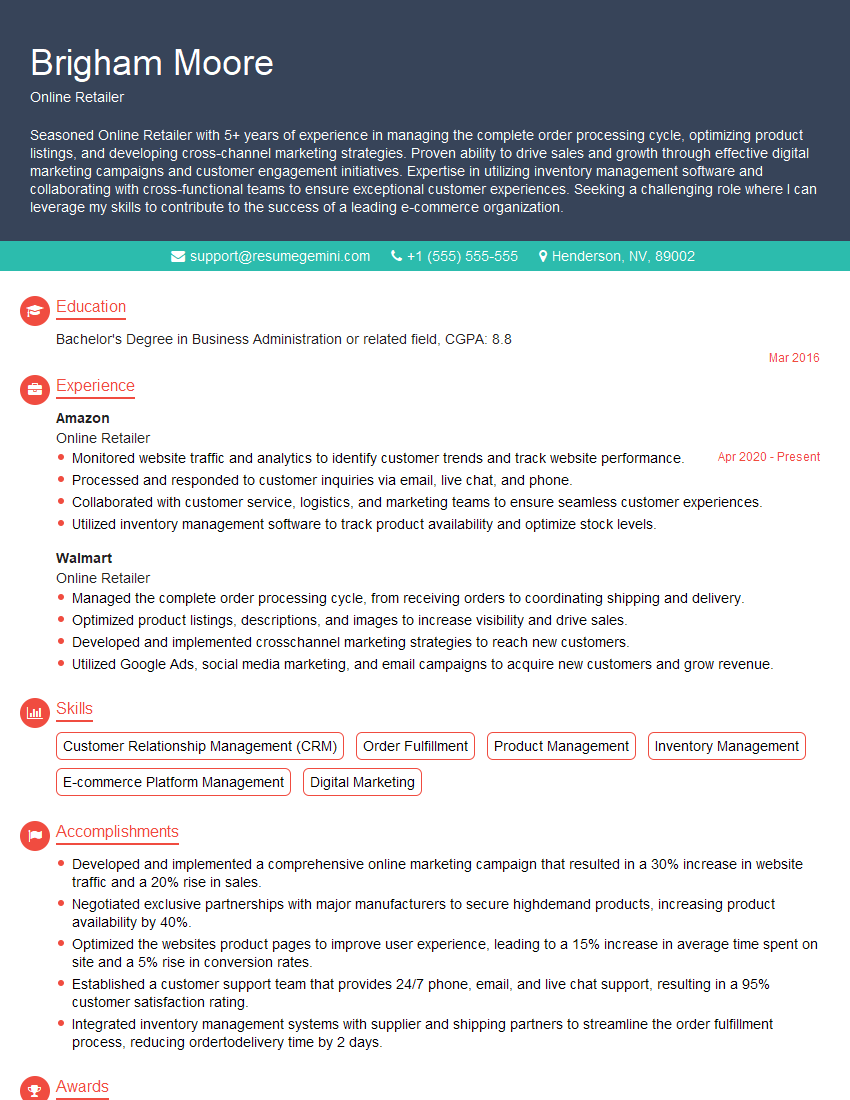
Are you gearing up for a career shift or aiming to ace your next interview? Look no further! We’ve curated a comprehensive guide to help you crack the interview for the coveted Online Retailer position. From understanding the key responsibilities to mastering the most commonly asked questions, this blog has you covered. So, buckle up and let’s embark on this journey together
Acing the interview is crucial, but landing one requires a compelling resume that gets you noticed. Crafting a professional document that highlights your skills and experience is the first step toward interview success. ResumeGemini can help you build a standout resume that gets you called in for that dream job.






Essential Interview Questions For Online Retailer
1. What is dropshipping and how does it differ from traditional retail?
Dropshipping is a retail fulfillment method where a store doesn’t keep the products it sells in stock. Instead, when a store sells a product using the dropshipping model, it purchases the item from a third party and has it shipped directly to the customer.
- Advantages of Dropshipping:
- No need to purchase and store inventory
- Lower overhead costs
- Access to a wider range of products
- Disadvantages of Dropshipping:
- Less control over product quality and shipping times
- Increased likelihood of stockouts
- Higher shipping costs for customers
2. Which e-commerce platforms are you familiar with?
Shopify
- An e-commerce platform designed specifically for online stores.
- Pros: Easy to use, wide range of templates and apps, scalable.
- Cons: Transaction fees, limited customization options.
WooCommerce
- A WordPress plugin that turns a WordPress site into an online store.
- Pros: Open source, highly customizable, wide range of plugins.
- Cons: Can be complex to set up, requires WordPress knowledge.
BigCommerce
- An e-commerce platform designed for large businesses and enterprise-level operations.
- Pros: Powerful features, robust API, scalable.
- Cons: Expensive, less user-friendly than other platforms.
3. How do you optimize product pages for search engines (SEO)?
- Keyword Optimization: Using relevant keywords in page titles, headings, and product descriptions.
- Meta Tags: Writing clear and informative meta titles and descriptions that accurately describe the product.
- Image Optimization: Using alt text to describe images and including keywords in image file names.
- Structured Data: Implementing schema markup to help search engines understand the content of product pages.
- Internal Linking: Linking to related products and categories within the website.
4. What is customer relationship management (CRM) and how do you use it in e-commerce?
Customer relationship management (CRM) is a process for managing interactions with customers and building strong relationships. In e-commerce, CRM is used to:
- Track customer purchases and preferences
- Provide personalized marketing and recommendations
- Resolve customer issues and improve customer satisfaction
- Build customer loyalty and increase repeat purchases
5. How do you handle customer complaints or negative reviews?
- Respond promptly and professionally: Acknowledge the complaint and apologize for any inconvenience.
- Listen actively and empathize: Show that you understand the customer’s perspective and concerns.
- Investigate and identify the root cause: Determine what caused the issue and take steps to resolve it.
- Offer a solution or compensation: Provide a satisfactory resolution to the customer’s complaint, such as a replacement product, refund, or discount.
- Follow up and monitor: Check in with the customer after the resolution to ensure they are satisfied and identify any areas for improvement.
6. How do you stay up-to-date with the latest trends in e-commerce?
- Industry Blogs and Publications: Reading blogs, articles, and white papers from industry experts.
- E-commerce Conferences and Events: Attending industry events to learn from speakers and network with other professionals.
- Online Courses and Certifications: Taking online courses or earning certifications to enhance knowledge and skills.
- Social Media: Following industry influencers and thought leaders on social media.
- Market Research and Data Analysis: Conducting market research and analyzing data to identify trends and opportunities.
7. What is your experience with paid advertising channels such as Google Shopping and Facebook Ads?
I have extensive experience in utilizing Google Shopping and Facebook Ads for e-commerce businesses. Here’s a summary of my expertise:
Google Shopping
- Created and optimized product feeds for maximum visibility
- Managed bidding strategies to achieve optimal return on investment (ROI)
- Analyzed performance data to identify areas for improvement
Facebook Ads
- Developed targeted advertising campaigns based on demographics, interests, and behaviors
- Used retargeting to re-engage potential customers
- Tracked and analyzed ad performance to optimize campaigns
8. How do you manage inventory and ensure product availability?
- Inventory Forecasting: Using data and historical trends to predict demand and maintain optimal inventory levels.
- Supplier Relationships: Establishing strong relationships with suppliers to ensure timely and reliable delivery.
- Inventory Management Software: Utilizing inventory management systems to track stock levels and automate reordering.
- Overstock Management: Implementing strategies to reduce overstocking, such as offering discounts or promotions.
- Backorder Management: Handling backorders professionally and communicating effectively with customers.
9. What are some of the key metrics you track to measure the performance of an online store?
- Conversion Rate: The percentage of visitors who make a purchase.
- Average Order Value: The average amount spent by customers on each order.
- Customer Lifetime Value: The total revenue generated by a customer over their lifetime.
- Traffic Sources: The channels through which customers are coming to the store.
- Bounce Rate: The percentage of visitors who leave the store after only viewing one page.
10. Are you comfortable with using data analytics to make business decisions?
Yes, I am proficient in using data analytics to inform my decision-making. I have experience with:
- Google Analytics: Analyzing website traffic, user behavior, and conversion data.
- CRM Data: Utilizing data from customer interactions to identify customer needs and trends.
- Sales Data: Analyzing sales data to identify patterns, optimize pricing, and forecast demand.
- A/B Testing: Conducting A/B tests to optimize website design, product pages, and marketing campaigns.
- Reporting and Visualization: Creating clear and informative reports and data visualizations to communicate insights to stakeholders.
Interviewers often ask about specific skills and experiences. With ResumeGemini‘s customizable templates, you can tailor your resume to showcase the skills most relevant to the position, making a powerful first impression. Also check out Resume Template specially tailored for Online Retailer.
Career Expert Tips:
- Ace those interviews! Prepare effectively by reviewing the Top 50 Most Common Interview Questions on ResumeGemini.
- Navigate your job search with confidence! Explore a wide range of Career Tips on ResumeGemini. Learn about common challenges and recommendations to overcome them.
- Craft the perfect resume! Master the Art of Resume Writing with ResumeGemini’s guide. Showcase your unique qualifications and achievements effectively.
- Great Savings With New Year Deals and Discounts! In 2025, boost your job search and build your dream resume with ResumeGemini’s ATS optimized templates.
Researching the company and tailoring your answers is essential. Once you have a clear understanding of the Online Retailer‘s requirements, you can use ResumeGemini to adjust your resume to perfectly match the job description.
Key Job Responsibilities
Online Retailers are accountable for the overall success of an e-commerce business. They play a pivotal role in managing online marketplaces, ensuring seamless customer experiences, and driving sales growth. Here are the key job responsibilities of an Online Retailer:
1. Managing Online Marketplace
Manage and maintain an online marketplace, ensuring its design, functionality, and user experience meet industry standards.
- Develop and implement strategies to optimize website traffic, conversion rates, and customer engagement.
- Monitor website performance, track key metrics, and make necessary adjustments to enhance user experience.
2. Product and Inventory Management
Manage product offerings, inventory levels, and pricing strategies to ensure customer satisfaction and profitability.
- Collaborate with suppliers and vendors to source and procure products, negotiate pricing, and manage inventory.
- Monitor inventory levels, set reorder points, and implement inventory control systems to prevent stockouts and overstocking.
3. Customer Service and Support
Provide exceptional customer service, resolving inquiries, addressing complaints, and building long-lasting customer relationships.
- Respond promptly and efficiently to customer inquiries via phone, email, live chat, and social media.
- Resolve customer issues and complaints in a timely and professional manner, maintaining a positive brand image.
4. Marketing and Sales
Develop and execute marketing and sales strategies to attract and convert customers.
- Conduct market research and identify target audience to tailor marketing campaigns accordingly.
- Create and implement digital marketing campaigns, including social media marketing, email marketing, and paid advertising.
Interview Tips
Preparing for an Online Retailer interview can be daunting, but with the right approach, you can showcase your skills and increase your chances of success.
1. Research the Company and Industry
Thoroughly research the company’s website, LinkedIn page, and industry publications to stay updated on recent developments. This will enable you to demonstrate your knowledge and interest in the company.
- Identify the company’s products or services, target market, and competitive landscape.
- Study industry trends, emerging technologies, and best practices to demonstrate expertise and adaptability.
2. Prepare for Common Interview Questions
Familiarize yourself with commonly asked interview questions and prepare thoughtful responses that highlight your skills and experience.
- Practice answering questions about your experience with e-commerce platforms, inventory management systems, and customer relationship management (CRM) tools.
- Prepare examples of successful marketing campaigns or customer service experiences you have managed.
3. Showcase Your Passion for Online Retail
Convey your enthusiasm for online retail and your understanding of the unique challenges and opportunities it presents.
- Discuss your personal experiences as an online shopper and share insights on how you would leverage that knowledge to enhance customer experiences.
- Present your ideas for innovative ways to increase sales, optimize website performance, or improve customer engagement.
4. Emphasize Your Soft Skills
Online Retailers require strong soft skills, such as communication, teamwork, and problem-solving. Highlight these skills throughout the interview.
- Provide examples of how you have effectively communicated with customers, resolved complex issues, and collaborated with team members.
- Demonstrate your ability to handle pressure, prioritize tasks, and meet deadlines in a fast-paced environment.
Next Step:
Now that you’re armed with a solid understanding of what it takes to succeed as a Online Retailer, it’s time to turn that knowledge into action. Take a moment to revisit your resume, ensuring it highlights your relevant skills and experiences. Tailor it to reflect the insights you’ve gained from this blog and make it shine with your unique qualifications. Don’t wait for opportunities to come to you—start applying for Online Retailer positions today and take the first step towards your next career milestone. Your dream job is within reach, and with a polished resume and targeted applications, you’ll be well on your way to achieving your career goals! Build your resume now with ResumeGemini.