Feeling lost in a sea of interview questions? Landed that dream interview for Brick Pointer but worried you might not have the answers? You’re not alone! This blog is your guide for interview success. We’ll break down the most common Brick Pointer interview questions, providing insightful answers and tips to leave a lasting impression. Plus, we’ll delve into the key responsibilities of this exciting role, so you can walk into your interview feeling confident and prepared.
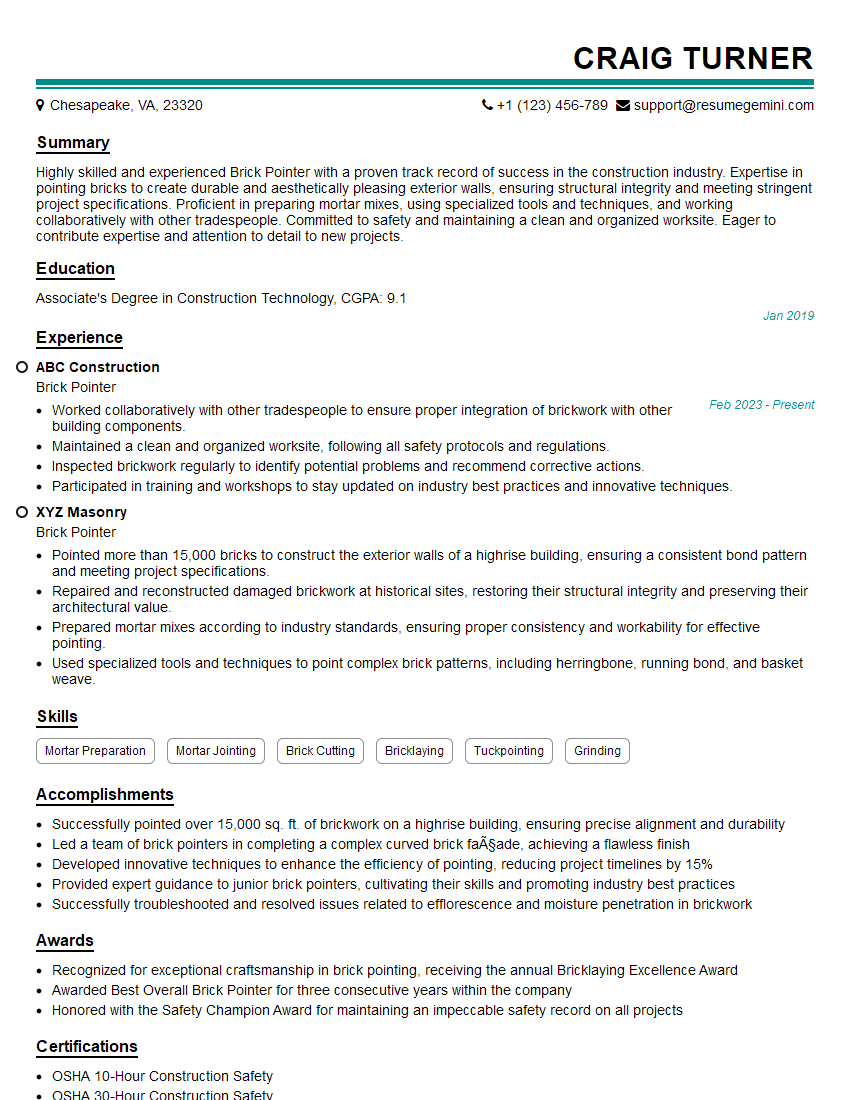
Acing the interview is crucial, but landing one requires a compelling resume that gets you noticed. Crafting a professional document that highlights your skills and experience is the first step toward interview success. ResumeGemini can help you build a standout resume that gets you called in for that dream job.






Essential Interview Questions For Brick Pointer
1. What are the different types of bricks used in construction, and what are their respective advantages and disadvantages?
There are various types of bricks used in construction, each with its own advantages and disadvantages:
- Clay Bricks: Durable, aesthetically pleasing, fire-resistant, but can be expensive and prone to cracking in cold climates.
- Concrete Bricks: Strong, versatile, and affordable, but can be heavy and have a rough texture.
- Sand-Lime Bricks: Lightweight, cost-effective, and fire-resistant, but less durable than clay bricks.
- Engineered Bricks: High-performance bricks with specific properties like high strength, low porosity, or insulation.
- Recycled Bricks: Sustainable and cost-saving, but may vary in quality and appearance.
2. Describe the process of laying bricks in a running bond pattern.
Brick Placement:
- Start in the corner and lay the first course of headers (bricks placed parallel to the wall).
- For the second course, alternate between stretchers (bricks placed perpendicular to the wall) and headers.
- Continue this pattern, overlapping the headers on alternating courses.
Bonding Techniques:
- “Flemish Bond”: Headers and stretchers alternate on each course, creating a checkerboard pattern.
- “Common Bond”: Headers are placed every five or six courses, providing strength and stability.
- “Stretcher Bond”: Only stretchers are used, resulting in a simple and durable pattern.
3. What are the key factors to consider when choosing the right mortar for a bricklaying project?
When selecting mortar for bricklaying, consider the following factors:
- Strength: Mortar should provide adequate strength to support the brickwork and resist structural loads.
- Workability: It should be easy to mix, apply, and adjust without losing its strength or bond.
- Durability: Mortar should withstand moisture, temperature changes, and other environmental conditions.
- Match to Brick Type: Certain mortars are specifically designed for compatibility with certain types of bricks.
- Cost: Mortar should be cost-effective while meeting the project’s requirements.
4. How do you ensure the accuracy and levelness of brickwork during construction?
- Use a Line Level: Stretch a string line to guide brick placement and ensure even courses.
- Employ Spirit Levels: Check the levelness of each brick and course both horizontally and vertically.
- Use Batten Boards: Place batten boards on top of completed courses to guide the laying of subsequent courses.
- Check Corners and Openings: Pay special attention to corners and openings to ensure square and plumb structures.
- Hire a Skilled Bricklayer: Experienced bricklayers use techniques and tools to ensure precision and accuracy.
5. Describe the techniques used to repair damaged brickwork.
- Brick Replacement: Remove damaged bricks and replace them with new ones of the same type and size.
- Repointing: Replace deteriorated mortar joints with fresh mortar to seal gaps and prevent water infiltration.
- Crack Stitching: Inject epoxy resin into cracks to stabilize and strengthen the brickwork.
- Grinding: Use a diamond grinder to level uneven bricks or remove excess mortar.
- Water Repellent Treatment: Apply a water repellent to protect repaired areas from moisture damage.
6. What safety precautions are essential when working with heavy construction equipment such as a brick saw?
- Wear Personal Protective Equipment (PPE): Use safety glasses, gloves, hearing protection, and dust masks.
- Secure the Brick Saw: Ensure the saw is securely mounted or stable on a level surface.
- Check Blades Regularly: Inspect blades for any damage or wear before each use.
- Use Proper Cutting Techniques: Cut bricks slowly and carefully, avoiding sudden movements or overexertion.
- Clear Debris and Maintain Workspace: Keep the work area clean and free of debris to prevent slips or falls.
7. Explain the importance of curing brickwork properly and the potential consequences of inadequate curing.
Curing is a crucial process that allows the mortar to fully set and develop its strength:
- Prevents Shrinkage and Cracking: Proper curing minimizes shrinkage and prevents cracking in the brickwork.
- Increases Strength and Durability: Ensures the mortar bonds properly with the bricks, resulting in increased strength and durability.
- Protects from Environmental Factors: Curing helps the mortar resist moisture penetration, freeze-thaw cycles, and other environmental factors.
- Inadequate Curing Consequences: Insufficient curing can lead to weaker mortar, increased water absorption, and potential structural failure.
8. What are some innovative or sustainable practices used in modern bricklaying?
- Interlocking Bricks: Bricks with interlocking joints, reducing the need for mortar and providing structural stability.
- Perforated Bricks: Bricks with holes or perforations, allowing for insulation and ventilation within the walls.
- Recycled Brick Aggregate: Using crushed recycled bricks as aggregate in new mortar, reducing waste and environmental impact.
- Prefabricated Brick Panels: Assemblies of prefabricated brick units that can be installed quickly and efficiently.
- Biodegradable Bonding Agents: Using plant-based or biodegradable bonding agents instead of traditional cement-based mortars.
9. How do you handle and resolve common problems encountered during bricklaying, such as uneven joints or chipped bricks?
- Uneven Joints: Adjust the mortar thickness or use shims to level joints and create a uniform appearance.
- Chipped Bricks: Replace damaged bricks or use a patching compound to fill in minor chips.
- Efflorescence: Utilize water repellents or breathable membranes to prevent salts from migrating to the brick surface.
- Cracks in Mortar: Repoint the affected joints with fresh mortar and use crack inhibitors to prevent further damage.
- Moisture Penetration: Ensure proper flashing and drainage systems are in place to prevent water infiltration.
10. What are your strengths and weaknesses as a Brick Pointer, and how do you plan to improve your skills?
Strengths:
- Proficient in various bricklaying techniques and bonding patterns.
- Attention to detail and commitment to quality workmanship.
- Excellent problem-solving and troubleshooting abilities.
- Strong work ethic and ability to work independently or as part of a team.
Weaknesses:
- Limited experience with complex or large-scale bricklaying projects.
- Need to improve my speed and efficiency while maintaining accuracy.
Improvement Plan:
- Seek opportunities to work on more challenging projects.
- Enroll in training programs or workshops to enhance my skills.
- Practice regularly to improve my speed and precision.
- Collaborate with experienced bricklayers to learn from their expertise.
Interviewers often ask about specific skills and experiences. With ResumeGemini‘s customizable templates, you can tailor your resume to showcase the skills most relevant to the position, making a powerful first impression. Also check out Resume Template specially tailored for Brick Pointer.
Career Expert Tips:
- Ace those interviews! Prepare effectively by reviewing the Top 50 Most Common Interview Questions on ResumeGemini.
- Navigate your job search with confidence! Explore a wide range of Career Tips on ResumeGemini. Learn about common challenges and recommendations to overcome them.
- Craft the perfect resume! Master the Art of Resume Writing with ResumeGemini’s guide. Showcase your unique qualifications and achievements effectively.
- Great Savings With New Year Deals and Discounts! In 2025, boost your job search and build your dream resume with ResumeGemini’s ATS optimized templates.
Researching the company and tailoring your answers is essential. Once you have a clear understanding of the Brick Pointer‘s requirements, you can use ResumeGemini to adjust your resume to perfectly match the job description.
Key Job Responsibilities
A Brick Pointer is responsible for the detailed finishing of brick or stonework, ensuring a clean and aesthetically pleasing appearance. The key job responsibilities include:1. Grouting
Mixing and applying grout between bricks or stones to fill gaps and create a smooth, even surface
- Matching grout color to brick or stone
- Cleaning excess grout and smoothing joints
2. Pointing
Applying mortar to joints between bricks or stones to create a weatherproof seal and enhance durability
- Selecting appropriate mortar type based on brick or stone characteristics
- Striking joints to create a specific pattern or finish
3. Tuckpointing
Repairing damaged or deteriorated mortar joints to restore structural integrity and prevent water penetration
- Inspecting joints for cracks or holes
- Removing old mortar and replacing with new
4. Cleaning
Cleaning brick or stone surfaces to remove dirt, efflorescence, or other contaminants
- Using appropriate cleaning methods (e.g., pressure washing, chemical cleaning)
- Protecting surrounding areas from damage
Interview Tips
To prepare for a Brick Pointer interview, consider the following tips:1. Research the Company and Position
Learn about the company’s history, values, and current projects
- Visit the company website and social media pages
- Review industry news and trends
2. Highlight Your Skills and Experience
Emphasize your experience in grouting, pointing, tuckpointing, and cleaning
- Quantify your accomplishments whenever possible (e.g., “Pointed over 100,000 bricks on a large commercial project”)
- Provide specific examples of your attention to detail and commitment to quality
3. Demonstrate Safety Knowledge
Discuss your knowledge of safety protocols and industry best practices
- Explain how you ensure your own safety and that of your colleagues
- Highlight your experience in using personal protective equipment (PPE)
4. Show Eagerness to Learn and Grow
Express your interest in learning new techniques and expanding your skills
- Mention any relevant courses or workshops you have attended
- Explain how continuous learning can benefit the company
5. Practice Your Answers
Prepare for common interview questions by practicing your responses
- Use the STAR method (Situation, Task, Action, Result) to structure your answers
- Seek feedback from friends or family to improve your delivery
Next Step:
Armed with this knowledge, you’re now well-equipped to tackle the Brick Pointer interview with confidence. Remember, preparation is key. So, start crafting your resume, highlighting your relevant skills and experiences. Don’t be afraid to tailor your application to each specific job posting. With the right approach and a bit of practice, you’ll be well on your way to landing your dream job. Build your resume now from scratch or optimize your existing resume with ResumeGemini. Wish you luck in your career journey!