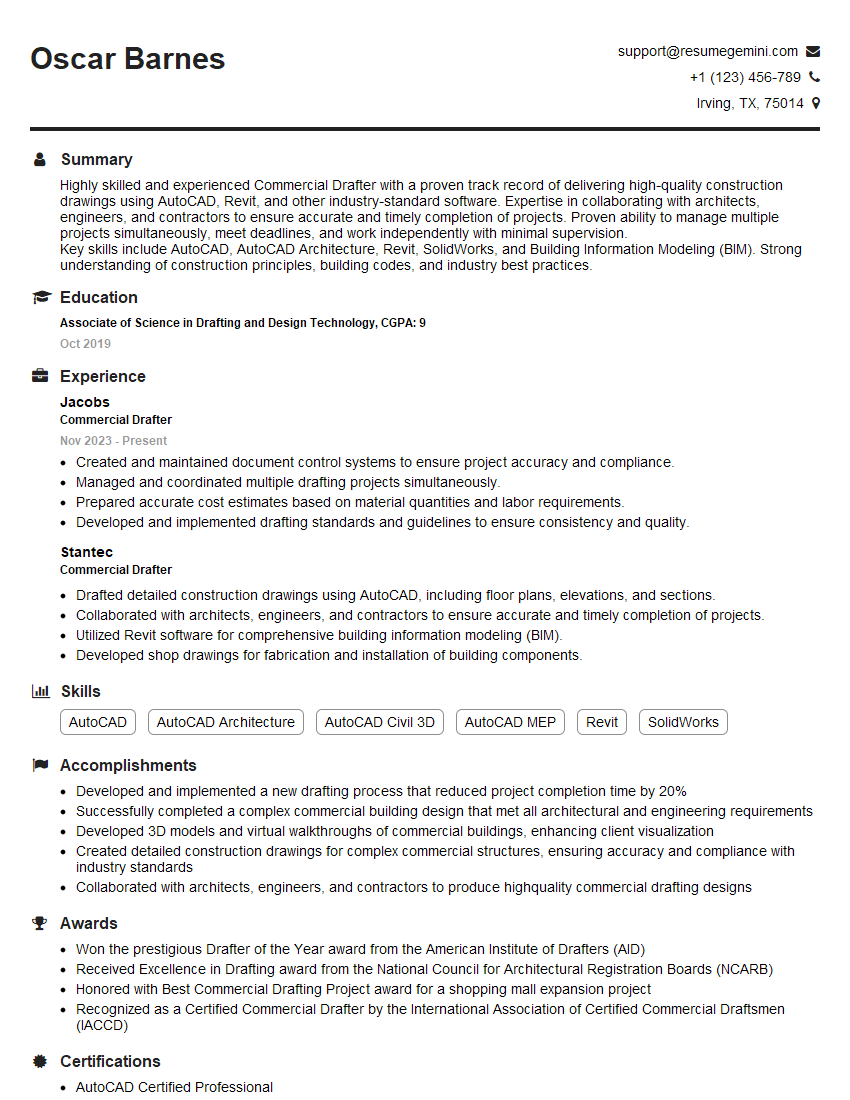
Are you gearing up for a career shift or aiming to ace your next interview? Look no further! We’ve curated a comprehensive guide to help you crack the interview for the coveted Commercial Drafter position. From understanding the key responsibilities to mastering the most commonly asked questions, this blog has you covered. So, buckle up and let’s embark on this journey together.
Acing the interview is crucial, but landing one requires a compelling resume that gets you noticed. Crafting a professional document that highlights your skills and experience is the first step toward interview success. ResumeGemini can help you build a standout resume that gets you called in for that dream job.






Essential Interview Questions For Commercial Drafter
1. Explain the process of creating a detailed construction drawing?
The process of creating a detailed construction drawing typically involves the following steps:
- Gathering project requirements: This includes understanding the design intent, building codes, and any specific client requests.
- Sketching and planning: Initial sketches are created to explore design ideas and determine the overall layout of the project.
- Developing construction documents: Detailed drawings are created, including floor plans, elevations, sections, and details, which provide all the necessary information for construction.
- Coordination with other project team members: The drafter collaborates with architects, engineers, and other professionals to ensure that the drawings are accurate and consistent with the overall design intent.
- Review and approval: The drawings are reviewed and approved by the client, architect, and/or engineer before being released for construction.
2. What software programs are you proficient in for commercial drafting?
CAD Software:
- AutoCAD
- Revit
- SketchUp
BIM Software:
- Navisworks
- Tekla Structures
Other Software:
- Microsoft Office Suite
- Bluebeam Revu
3. How do you ensure accuracy and precision in your drawings?
- Adhering to industry standards and best practices: Following established guidelines such as ANSI and ISO helps ensure consistency and accuracy.
- Using proper scaling and dimensions: Clearly indicating the scale and dimensions of objects in the drawings prevents errors and ensures proper construction.
- Employing digital tools for precision: CAD software allows for precise measurements and calculations, reducing the risk of human error.
- Regularly checking and reviewing drawings: Thoroughly reviewing the drawings at various stages helps identify and correct any potential errors.
- Seeking feedback and collaboration: Consulting with other team members and subject matter experts provides diverse perspectives and enhances accuracy.
4. Can you describe your experience with working on large-scale commercial projects?
In my previous role at [Company Name], I was involved in the drafting and design of several large-scale commercial projects, including:
- [Project Name]: A mixed-use development consisting of retail, office, and residential spaces. I was responsible for creating detailed construction drawings for the entire project, including floor plans, elevations, and sections.
- [Project Name]: A high-rise office building. I worked on the architectural and structural drawings, coordinating with engineers to ensure accuracy and compliance with building codes.
- [Project Name]: A healthcare facility expansion. I collaborated with a team of architects and engineers to design and draft the new patient care wing, ensuring that it met functional and regulatory requirements.
5. How do you stay up-to-date with the latest industry trends and technologies in commercial drafting?
- Attending industry conferences and workshops: Participating in conferences and workshops provides insights into new techniques, best practices, and emerging technologies.
- Reading industry publications: Regularly reviewing trade magazines, journals, and online articles keeps me informed about the latest trends and developments.
- Taking online courses and certifications: Pursuing additional training and certifications demonstrates my commitment to continuous learning and staying current with industry advancements.
- Participating in online forums and discussion groups: Engaging with other professionals in online communities allows me to exchange ideas and learn from their experiences.
- Networking with industry experts: Building relationships with professionals in the field provides access to valuable insights and knowledge.
6. What are the key differences between architectural drafting and commercial drafting?
- Building Design: Architectural drafting focuses primarily on designing aesthetics and functionality of buildings, while commercial drafting emphasizes the technical aspects of structures such as plumbing, HVAC, and electrical systems.
- Scale and Complexity: Commercial drawings tend to be more complex and detailed, involving larger-scale projects with numerous technical considerations.
- Code Compliance: Commercial drafters must have a thorough understanding of building codes and regulations to ensure compliance with industry standards.
- Collaboration and Coordination: Commercial drafting requires significant collaboration with other professionals such as architects, engineers, and contractors.
7. Can you explain the concept of dimensioning in commercial drafting?
- Definition: Dimensioning refers to the process of adding measurements and annotations to drawings to define the size, shape, and location of objects.
- Importance: Accurate dimensioning is crucial for precise construction and manufacturing.
- Types of Dimensioning: Various dimensioning methods exist, including linear, angular, and tolerance dimensioning.
- Standards and Practices: Industry standards such as ANSI and ISO govern dimensioning practices to ensure consistency and clarity.
- Software Tools: CAD software provides advanced tools for automated dimensioning, reducing the risk of errors and improving efficiency.
8. How do you handle revisions and changes to construction drawings?
- Communication: Clear communication with clients, architects, and engineers is key to understanding and implementing changes.
- Revision Control: Utilizing a systematic revision control system ensures that all changes are documented and tracked.
- Software Tools: CAD software allows for efficient editing and revision of drawings, facilitating quick updates.
- Coordination: Coordinating with team members prevents conflicts and ensures that all changes are incorporated consistently.
9. Can you describe the role of sustainability in commercial drafting?
- Energy Efficiency: Incorporating energy-efficient design principles, such as optimizing building envelope and lighting systems, to reduce energy consumption.
- Green Building Standards: Adhering to green building standards, like LEED, to promote sustainable practices and reduce environmental impact.
- Material Selection: Specifying sustainable building materials, such as recycled or renewable materials, to minimize environmental footprint.
- Water Conservation: Designing water-efficient plumbing fixtures and rainwater harvesting systems to reduce water usage.
10. What are your strengths and weaknesses as a commercial drafter?
Strengths:
- Technical Proficiency: Expertise in CAD software and commercial drafting techniques.
- Attention to Detail: Meticulous approach to accuracy and precision in drawings.
- Collaborative Mindset: Ability to work effectively with architects, engineers, and other team members.
- Code Knowledge: Strong understanding of building codes and regulations.
Weaknesses:
- Limited Experience in Specialized Areas: While proficient in general commercial drafting, may need additional experience in highly specialized areas.
- Time Management: Occasionally may struggle with managing multiple projects simultaneously under tight deadlines. However, actively working to improve time management skills.
Interviewers often ask about specific skills and experiences. With ResumeGemini‘s customizable templates, you can tailor your resume to showcase the skills most relevant to the position, making a powerful first impression. Also check out Resume Template specially tailored for Commercial Drafter.
Career Expert Tips:
- Ace those interviews! Prepare effectively by reviewing the Top 50 Most Common Interview Questions on ResumeGemini.
- Navigate your job search with confidence! Explore a wide range of Career Tips on ResumeGemini. Learn about common challenges and recommendations to overcome them.
- Craft the perfect resume! Master the Art of Resume Writing with ResumeGemini’s guide. Showcase your unique qualifications and achievements effectively.
- Great Savings With New Year Deals and Discounts! In 2025, boost your job search and build your dream resume with ResumeGemini’s ATS optimized templates.
Researching the company and tailoring your answers is essential. Once you have a clear understanding of the Commercial Drafter‘s requirements, you can use ResumeGemini to adjust your resume to perfectly match the job description.
Key Job Responsibilities
A Commercial Drafter is a crucial member of any architecture or engineering team, responsible for creating detailed technical drawings that guide the construction or renovation of commercial buildings.
1. Design and Drafting
Develop technical drawings, plans, and specifications for commercial buildings, ensuring accuracy and compliance with building codes and industry standards.
- Utilize CAD software to create detailed floor plans, elevations, sections, and construction details.
- Review and interpret architectural and engineering designs to create accurate drawings.
2. Collaboration and Communication
Collaborate closely with architects, engineers, and contractors to ensure that drawings meet project specifications and requirements.
- Communicate effectively with clients to understand their needs and preferences.
- Attend project meetings and site visits to gather information and provide updates.
3. Building Codes and Regulations
Maintain a thorough understanding of building codes, zoning regulations, and industry best practices.
- Ensure that drawings comply with applicable codes and regulations.
- Stay up-to-date on changes and updates to building standards.
4. Project Management
Manage multiple projects simultaneously, ensuring timely delivery of drawings and meeting project deadlines.
- Coordinate with other team members to track project progress and resolve issues.
- Maintain project files and documentation, ensuring proper record-keeping.
Interview Tips
Preparing for a Commercial Drafter interview requires a combination of technical knowledge, industry understanding, and strong communication skills.
1. Research the Company and Position
Thoroughly research the company’s culture, values, and recent projects to gain insights into their specific needs.
- Review the job description carefully to identify key responsibilities and required qualifications.
- Stay informed about industry trends and best practices to demonstrate your up-to-date knowledge.
2. Showcase Technical Skills
Highlight your proficiency in CAD software, such as AutoCAD or Revit, and provide specific examples of complex projects you have worked on.
- Prepare a portfolio or online gallery of your best drawings to demonstrate your skills.
- Be ready to discuss your understanding of building codes, zoning regulations, and industry standards.
3. Emphasize Communication and Collaboration
Emphasize your ability to work effectively as part of a team and communicate your ideas clearly.
- Provide examples of your collaboration with architects, engineers, and contractors on previous projects.
- Demonstrate your strong written and verbal communication skills, particularly in explaining technical concepts to non-technical stakeholders.
4. Highlight Project Management Abilities
Showcase your project management skills, including your ability to prioritize tasks, meet deadlines, and effectively manage multiple projects simultaneously.
- Describe your experience in coordinating with team members, addressing project challenges, and ensuring timely delivery of deliverables.
- Explain your understanding of project management methodologies and tools.
Next Step:
Armed with this knowledge, you’re now well-equipped to tackle the Commercial Drafter interview with confidence. Remember, preparation is key. So, start crafting your resume, highlighting your relevant skills and experiences. Don’t be afraid to tailor your application to each specific job posting. With the right approach and a bit of practice, you’ll be well on your way to landing your dream job. Build your resume now from scratch or optimize your existing resume with ResumeGemini. Wish you luck in your career journey!