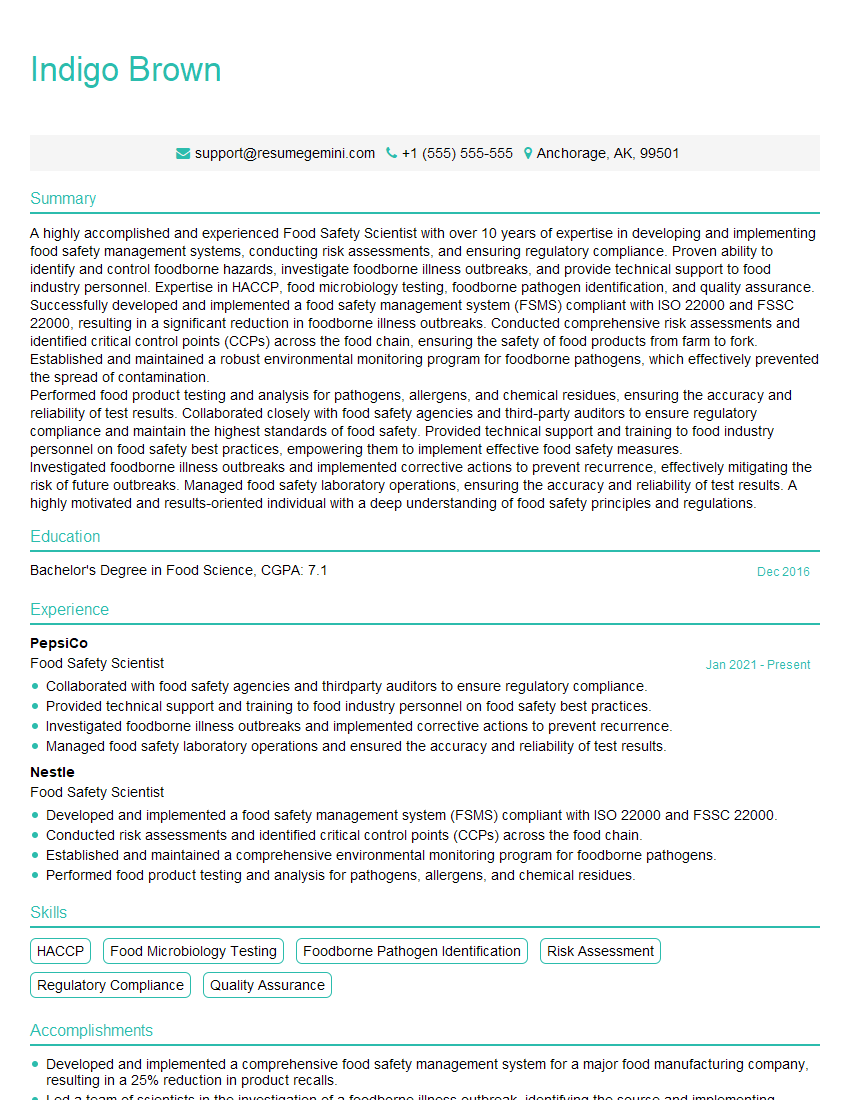
Feeling lost in a sea of interview questions? Landed that dream interview for Food Safety Scientist but worried you might not have the answers? You’re not alone! This blog is your guide for interview success. We’ll break down the most common Food Safety Scientist interview questions, providing insightful answers and tips to leave a lasting impression. Plus, we’ll delve into the key responsibilities of this exciting role, so you can walk into your interview feeling confident and prepared.
Acing the interview is crucial, but landing one requires a compelling resume that gets you noticed. Crafting a professional document that highlights your skills and experience is the first step toward interview success. ResumeGemini can help you build a standout resume that gets you called in for that dream job.






Essential Interview Questions For Food Safety Scientist
1. Describe the role of a Food Safety Scientist and explain how you meet the requirements for this position?
The primary role of a Food Safety Scientist is to ensure the safety of food products and processes. They work in collaboration with other professionals to develop and implement food safety programs, conduct risk assessments, and investigate foodborne illnesses. To be successful in this role, one needs to have a strong understanding of food science, microbiology, and chemistry as well as experience in developing and implementing food safety programs. Additionally, excellent communication and interpersonal skills are essential for effectively interacting with various stakeholders.
2. What are the key food safety hazards and how do you assess and control these hazards?
Identifying Food Safety Hazards
- Biological hazards (bacteria, viruses, parasites)
- Chemical hazards (pesticides, toxins, heavy metals)
- Physical hazards (glass, metal, plastic)
Assessing Food Safety Hazards
- Reviewing food safety data and scientific literature
- Conducting risk assessments to determine the likelihood and severity of hazards
Controlling Food Safety Hazards
- Developing and implementing food safety programs (e.g., HACCP, GMPs)
- Monitoring food production and processing to ensure compliance with food safety standards
- Investigating foodborne illnesses and outbreaks to identify and control hazards
3. What are the different types of food safety standards and regulations, and how do you ensure compliance with these standards?
Types of Food Safety Standards and Regulations
- Government regulations (e.g., FDA regulations, USDA regulations)
- Industry standards (e.g., HACCP, ISO 22000)
- Company-specific food safety programs
Ensuring Compliance with Food Safety Standards
- Developing and implementing food safety programs that meet or exceed regulatory requirements
- Conducting regular food safety audits and inspections to verify compliance
- Providing training to employees on food safety practices
- Maintaining documentation to demonstrate compliance
4. How do you stay up-to-date on the latest food safety research and trends?
- Attending industry conferences and workshops
- Reading scientific journals and trade publications
- Participating in professional organizations (e.g., IFT, IAFP)
- Networking with other food safety professionals
5. What are the ethical considerations in food safety science?
- Ensuring the safety of the food supply for consumers
- Protecting public health from foodborne illnesses
- Balancing food safety with other factors (e.g., cost, trade, consumer preferences)
- Communicating food safety risks and benefits transparently and effectively
6. How do you prioritize food safety risks and allocate resources to address these risks?
- Conducting risk assessments to determine the likelihood and severity of food safety hazards
- Considering the potential impact of foodborne illnesses on public health
- Evaluating the cost-effectiveness of different food safety interventions
- Allocating resources based on the level of risk and the potential impact of interventions
7. What are the challenges facing food safety professionals today?
- Emerging foodborne pathogens
- Globalization of the food supply
- Increasing consumer demand for safe and healthy food
- Climate change and its impact on food safety
8. Describe a situation where you successfully identified and resolved a food safety issue.
- Identify the food safety issue and the steps taken to investigate the issue
- Describe the root cause of the issue and the corrective actions implemented
- Explain the impact of the corrective actions on food safety and the business
9. What are your strengths and weaknesses as a Food Safety Scientist?
Strengths
- Strong technical knowledge in food science, microbiology, and chemistry
- Experience in developing and implementing food safety programs
- Excellent communication and interpersonal skills
Weaknesses
- Lack of experience in a specific area of food safety (e.g., seafood safety, produce safety)
- Working independently
10. Why are you interested in working for our company?
- Research the company’s food safety initiatives and reputation
- Express interest in the company’s products or services
- Highlight how your skills and experience align with the company’s needs
Interviewers often ask about specific skills and experiences. With ResumeGemini‘s customizable templates, you can tailor your resume to showcase the skills most relevant to the position, making a powerful first impression. Also check out Resume Template specially tailored for Food Safety Scientist.
Career Expert Tips:
- Ace those interviews! Prepare effectively by reviewing the Top 50 Most Common Interview Questions on ResumeGemini.
- Navigate your job search with confidence! Explore a wide range of Career Tips on ResumeGemini. Learn about common challenges and recommendations to overcome them.
- Craft the perfect resume! Master the Art of Resume Writing with ResumeGemini’s guide. Showcase your unique qualifications and achievements effectively.
- Great Savings With New Year Deals and Discounts! In 2025, boost your job search and build your dream resume with ResumeGemini’s ATS optimized templates.
Researching the company and tailoring your answers is essential. Once you have a clear understanding of the Food Safety Scientist‘s requirements, you can use ResumeGemini to adjust your resume to perfectly match the job description.
Key Job Responsibilities
Food Safety Scientists are responsible for ensuring the safety of food products by identifying, assessing, and controlling potential hazards and risks throughout the food production process.
1. Develop and Implement Food Safety Programs
Develop and implement comprehensive food safety programs, including Hazard Analysis and Critical Control Points (HACCP) plans, Good Manufacturing Practices (GMPs), and other regulatory programs.
- Conduct risk assessments to identify potential hazards and critical control points in the food production process.
- Establish monitoring and verification protocols to ensure food safety standards are met throughout the supply chain.
2. Conduct Microbial and Chemical Testing
Perform microbial and chemical testing on food products to ensure compliance with food safety regulations and standards.
- Utilize analytical methods to detect and quantify potential contaminants, such as pathogens, allergens, toxins, and residues.
- Interpret and evaluate test results to assess food safety and potential health risks.
3. Investigate and Resolve Food Safety Incidents
Investigate food safety incidents, such as product recalls, contaminations, and outbreaks, to determine the root cause and implement corrective actions.
- Collaborate with regulatory agencies, industry partners, and healthcare professionals to identify and contain threats to public health.
- Develop and implement preventive measures to minimize the likelihood of future incidents.
4. Provide Technical Support and Training
Provide technical support and training to food production facilities, food handlers, and consumers on food safety practices.
- Disseminate information on foodborne illnesses, risk factors, and best practices to prevent contamination and ensure food safety.
- Develop and deliver educational materials and training programs on food safety.
Interview Tips
To ace an interview for a Food Safety Scientist position, it is essential to prepare thoroughly by researching the company, the role, and the industry. Here are some tips to help you prepare effectively:
1. Research the Company and Industry
Familiarize yourself with the company’s food safety practices, values, and recent initiatives.
- Visit the company website, review press releases, and search for industry articles or news about the company’s food safety efforts.
- Research the food industry trends, regulatory landscape, and common challenges related to food safety.
2. Highlight Your Expertise
Emphasize your knowledge and experience in food safety science, including your understanding of HACCP principles, GMPs, and various testing methodologies.
- Provide specific examples of your contributions to food safety programs or incidents you have investigated.
- Discuss your research experience, publications, or presentations on food safety-related topics.
3. Demonstrate Your Problem-Solving Abilities
Highlight your analytical and problem-solving skills through examples of how you have identified, assessed, and resolved food safety issues.
- Describe a complex food safety challenge you faced and how you approached the investigation and developed a solution.
- Explain how you prioritize risks and allocate resources to mitigate potential threats.
4. Show Your Communication and Team Skills
Emphasize your ability to communicate scientific findings and recommendations clearly to both technical and non-technical audiences.
- Provide examples of how you have effectively collaborated with cross-functional teams, including food production professionals, regulatory authorities, and consumers.
- Discuss your experience in developing educational materials or delivering training programs on food safety.
5. Be Prepared for Technical Questions
Expect to be asked technical questions about food safety science, such as:
- Explain the principles of HACCP and how it is applied in food production.
- Describe different methods for detecting and quantifying foodborne pathogens.
- Discuss the role of food safety regulations and how they impact food production practices.
Next Step:
Armed with this knowledge, you’re now well-equipped to tackle the Food Safety Scientist interview with confidence. Remember, a well-crafted resume is your first impression. Take the time to tailor your resume to highlight your relevant skills and experiences. And don’t forget to practice your answers to common interview questions. With a little preparation, you’ll be on your way to landing your dream job. So what are you waiting for? Start building your resume and start applying! Build an amazing resume with ResumeGemini.