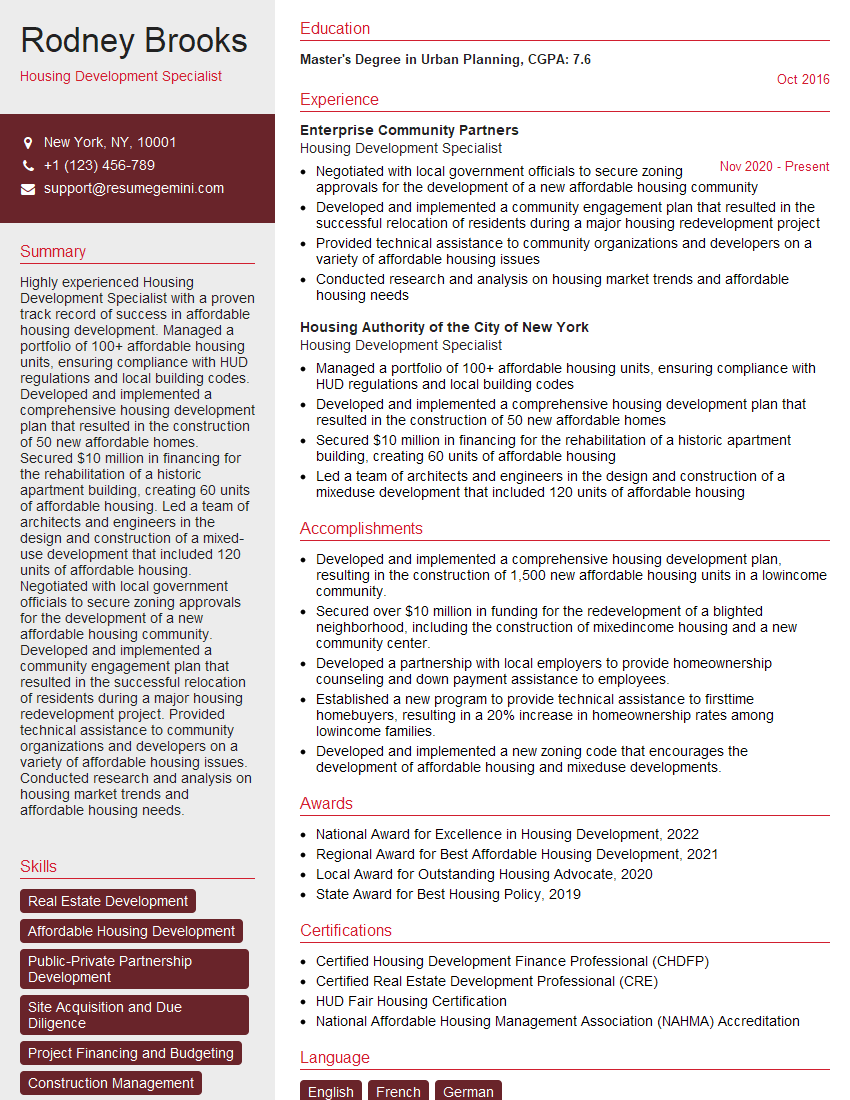
Are you gearing up for a career in Housing Development Specialist? Feeling nervous about the interview questions that might come your way? Don’t worry, you’re in the right place. In this blog post, we’ll dive deep into the most common interview questions for Housing Development Specialist and provide you with expert-backed answers. We’ll also explore the key responsibilities of this role so you can tailor your responses to showcase your perfect fit.
Acing the interview is crucial, but landing one requires a compelling resume that gets you noticed. Crafting a professional document that highlights your skills and experience is the first step toward interview success. ResumeGemini can help you build a standout resume that gets you called in for that dream job.






Essential Interview Questions For Housing Development Specialist
1. What are the key considerations when evaluating the feasibility of a housing development project?
- Market analysis: Assess the demand for housing in the target area, including demographics, income levels, and competition.
- Site analysis: Evaluate the physical characteristics of the site, such as size, topography, accessibility, and environmental factors.
- Financial analysis: Determine the project’s financial viability, including construction costs, operating expenses, and potential revenue.
- Regulatory analysis: Review zoning regulations, building codes, and environmental regulations to ensure compliance.
- Community engagement: Gather feedback and input from the local community to address concerns and build support.
2. How do you approach the design and planning of a housing development to meet the needs of different target populations?
Inclusive Design:
- Consider accessibility features such as ramps, elevators, and wider doorways for individuals with disabilities.
- Incorporate universal design principles to create spaces that are usable by people of all ages and abilities.
Age-Friendly Housing:
- Design units with features such as grab bars, non-slip flooring, and wider hallways for seniors.
- Provide amenities like community centers and accessible outdoor spaces.
Affordable Housing:
- Explore innovative construction techniques and financing options to reduce costs.
- Partner with non-profit organizations to provide subsidized housing for low-income families.
3. What are the best practices for managing the construction phase of a housing development project?
- Establish clear communication channels and expectations with contractors, architects, and workers.
- Implement quality control measures to ensure compliance with building codes and standards.
- Monitor progress regularly and track key milestones to stay on schedule and within budget.
- Establish safety protocols and conduct regular inspections to minimize risks.
- Coordinate with local authorities for inspections and permits.
4. How do you ensure sustainability in housing development projects?
- Use energy-efficient appliances, lighting, and building materials.
- Incorporate renewable energy sources such as solar panels or geothermal systems.
- Promote water conservation through low-flow fixtures and rainwater harvesting.
- Design buildings to maximize natural light and ventilation.
- Implement landscaping plans that use native species and reduce water consumption.
5. What are the latest trends and innovations in housing development that you believe will shape the industry?
- Smart home technology: Integration of devices and systems for convenience, security, and energy efficiency.
- Modular construction: Prefabricated building components for quicker and more cost-effective construction.
- Co-housing and shared living spaces: Alternative housing models that promote community and sustainability.
- Passive house design: Buildings with minimal energy consumption due to high insulation and airtightness.
- Green building certifications: Recognition of sustainable practices and environmental performance.
6. How do you stay updated on industry best practices and advancements in housing development?
- Attend conferences and workshops on housing policy, design, and technology.
- Read industry publications and research journals.
- Network with professionals in the field, such as architects, engineers, and contractors.
- Participate in professional organizations and certification programs.
- Utilize online resources and webinars for continuing education.
7. What are the challenges you have faced in previous housing development projects and how did you overcome them?
Describe specific challenges encountered and the strategies implemented to resolve them successfully.
- Budget constraints: Negotiated with contractors and explored alternative materials to reduce costs.
- Site constraints: Worked with engineers to design buildings that complied with zoning regulations and environmental considerations.
- Community resistance: Engaged with residents through meetings and public forums to address concerns and build support.
- Delayed permits: Proactively followed up with authorities and submitted documentation timely to expedite the process.
- Construction delays: Implemented a revised project schedule, increased crew size, and improved communication to catch up on lost time.
8. Can you describe a successful housing development project that you were involved in and highlight your contributions?
Provide specific details and metrics to demonstrate your impact.
- Developed a comprehensive plan that resulted in the construction of 200 affordable housing units.
- Secured funding from multiple sources, including government grants and private investors.
- Managed the construction phase, ensuring on-time delivery and within budget.
- Established partnerships with community organizations to provide support services to residents.
- The project received recognition for its innovative design and contribution to the local community.
9. How do you demonstrate your commitment to diversity, equity, and inclusion in housing development?
- Incorporate inclusive design principles into all projects to ensure accessibility and comfort for people of all backgrounds.
- Actively engage with diverse community stakeholders to gain perspectives and address specific needs.
- Partner with organizations that provide housing assistance to marginalized populations.
- Promote a work environment that values and respects individuals from all walks of life.
- Educate oneself on issues of social justice and fair housing practices.
10. What are your goals and aspirations as a Housing Development Specialist?
- Contribute to the creation of affordable, sustainable, and equitable housing solutions.
- Lead innovative projects that push the boundaries of housing design and development.
- Collaborate with diverse stakeholders to address the housing needs of the community.
- Stay abreast of emerging trends and advancements in the industry.
- Advance my knowledge and skills through professional development and continuing education.
Interviewers often ask about specific skills and experiences. With ResumeGemini‘s customizable templates, you can tailor your resume to showcase the skills most relevant to the position, making a powerful first impression. Also check out Resume Template specially tailored for Housing Development Specialist.
Career Expert Tips:
- Ace those interviews! Prepare effectively by reviewing the Top 50 Most Common Interview Questions on ResumeGemini.
- Navigate your job search with confidence! Explore a wide range of Career Tips on ResumeGemini. Learn about common challenges and recommendations to overcome them.
- Craft the perfect resume! Master the Art of Resume Writing with ResumeGemini’s guide. Showcase your unique qualifications and achievements effectively.
- Great Savings With New Year Deals and Discounts! In 2025, boost your job search and build your dream resume with ResumeGemini’s ATS optimized templates.
Researching the company and tailoring your answers is essential. Once you have a clear understanding of the Housing Development Specialist‘s requirements, you can use ResumeGemini to adjust your resume to perfectly match the job description.
Key Job Responsibilities
Housing Development Specialists play a crucial role in the development and execution of affordable housing projects. Their primary responsibilities include:
1. Needs Assessment and Feasibility Analysis
Conducting thorough market research and analysis to identify housing needs within the community.
- Assessing housing demographics, economic conditions, and community development trends.
- Evaluating potential sites for affordable housing development based on factors such as land use, zoning, transportation, and accessibility.
2. Project Planning and Development
Developing comprehensive housing project plans that outline the scope, objectives, timeline, and budget.
- Collaborating with architects, engineers, and contractors to design and oversee the construction of affordable housing units.
- Securing financing from public and private sources, including tax credits, grants, and loans.
3. Tenant Screening and Support
Establishing income eligibility criteria and screening potential tenants for affordable housing units.
- Providing ongoing support and resources to tenants, such as financial counseling, housing stability programs, and community engagement initiatives.
- Enforcing lease agreements and ensuring compliance with housing regulations.
4. Community Outreach and Engagement
Building relationships with community stakeholders, including residents, neighborhood associations, and local government agencies.
- Hosting community meetings and engaging in public outreach efforts to raise awareness about affordable housing needs.
- Advocating for policies that support affordable housing development and preservation.
Interview Tips
To ace an interview for a Housing Development Specialist position, it is essential to prepare thoroughly and demonstrate your skills and qualifications.
1. Research the Organization and Position
Thoroughly research the organization’s mission, values, and current housing development projects. Understand the specific role and responsibilities of the Housing Development Specialist position.
- Visit the organization’s website and social media pages to gather information about their work.
- Reach out to current or former employees for insights into the company culture and interview process.
2. Highlight Your Expertise and Experience
Emphasize your experience in affordable housing development, including your involvement in project planning, development, and tenant support.
- Quantify your accomplishments with specific examples and metrics to demonstrate your impact.
- Share case studies or success stories that highlight your ability to solve complex housing challenges.
3. Showcase Your Community Engagement Skills
Housing Development Specialists play a vital role in community engagement. Highlight your experience in building relationships with community stakeholders and advocating for affordable housing policies.
- Describe your involvement in community outreach programs, neighborhood partnerships, or advisory boards.
- Explain how you have effectively communicated the benefits of affordable housing development to the community.
4. Prepare Questions for the Interviewer
Asking thoughtful questions at the end of the interview shows your interest in the position and the organization.
- Inquire about the organization’s long-term goals for affordable housing development.
- Ask about the specific challenges and opportunities the Housing Development Specialist will face in this role.
Next Step:
Now that you’re armed with the knowledge of Housing Development Specialist interview questions and responsibilities, it’s time to take the next step. Build or refine your resume to highlight your skills and experiences that align with this role. Don’t be afraid to tailor your resume to each specific job application. Finally, start applying for Housing Development Specialist positions with confidence. Remember, preparation is key, and with the right approach, you’ll be well on your way to landing your dream job. Build an amazing resume with ResumeGemini