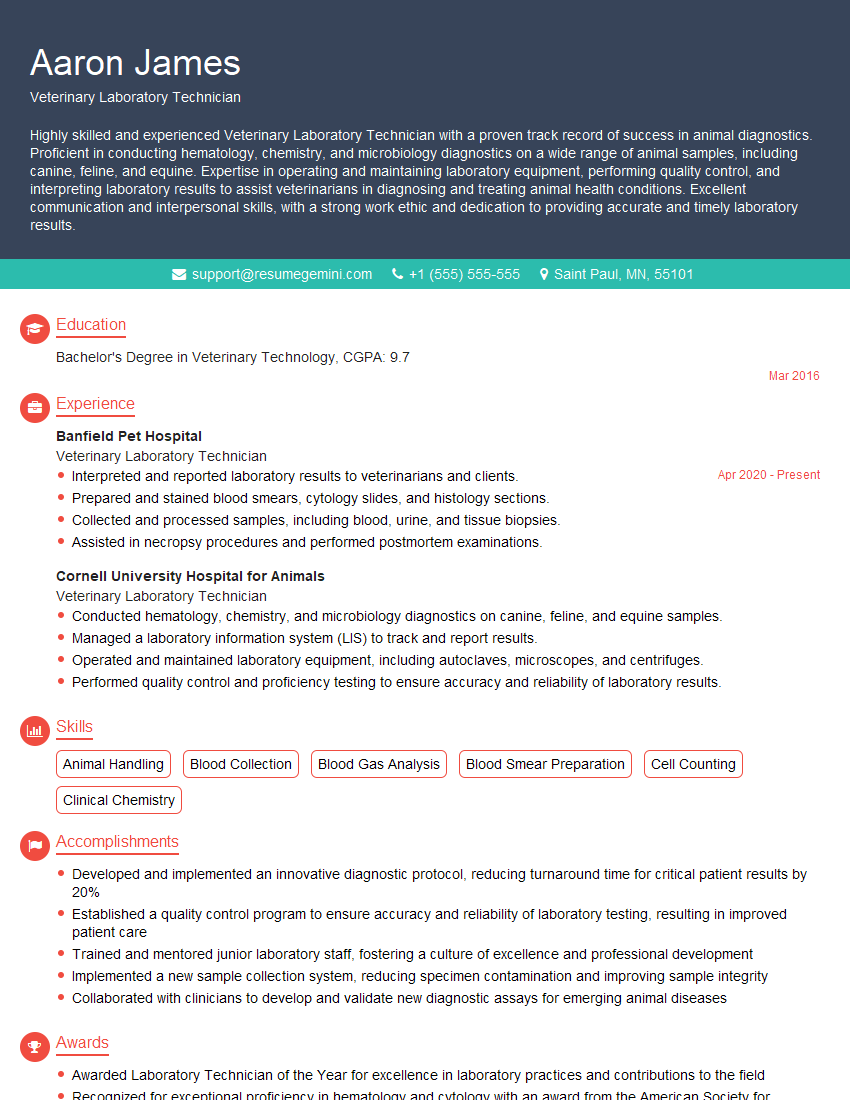
Are you gearing up for an interview for a Veterinary Laboratory Technician position? Whether you’re a seasoned professional or just stepping into the role, understanding what’s expected can make all the difference. In this blog, we dive deep into the essential interview questions for Veterinary Laboratory Technician and break down the key responsibilities of the role. By exploring these insights, you’ll gain a clearer picture of what employers are looking for and how you can stand out. Read on to equip yourself with the knowledge and confidence needed to ace your next interview and land your dream job!
Acing the interview is crucial, but landing one requires a compelling resume that gets you noticed. Crafting a professional document that highlights your skills and experience is the first step toward interview success. ResumeGemini can help you build a standout resume that gets you called in for that dream job.






Essential Interview Questions For Veterinary Laboratory Technician
1. How do you ensure the accuracy and reliability of laboratory results?
- Following standard operating procedures (SOPs) precisely.
- Regularly calibrating and maintaining laboratory equipment.
- Using appropriate controls and reference materials.
- Performing quality control checks throughout the testing process.
2. Can you describe your experience in performing hematology and serology assays?
Hematology
- Collecting and preparing blood samples.
- Operating hematology analyzers and interpreting results.
- Identifying and classifying blood cells.
Serology
- Performing ELISA and IFA assays.
- Interpreting serological results and identifying antibodies.
- Using serological techniques to diagnose and monitor diseases.
3. What are your skills in handling and culturing microorganisms?
- Using sterile techniques to prevent contamination.
- Selecting appropriate culture media for different microorganisms.
- Performing inoculation, incubation, and isolation techniques.
- Using microscopy and biochemical tests to identify microorganisms.
4. How do you stay updated on the latest advances in veterinary laboratory medicine?
- Attending conferences and workshops.
- Reading scientific journals and industry publications.
- Participating in online forums and discussions.
- Seeking continuing education opportunities.
5. Describe your experience in managing a veterinary laboratory?
- Ensuring compliance with regulatory standards and accreditation requirements.
- Supervising and training laboratory staff.
- Scheduling and coordinating laboratory operations.
- Managing budgets and equipment.
6. How do you ensure the confidentiality of patient information?
- Following HIPAA and other applicable privacy regulations.
- Restricting access to patient records to authorized personnel.
- Properly disposing of patient records when necessary.
- Educating staff on their roles and responsibilities in maintaining confidentiality.
7. What are some common challenges you have faced in a veterinary laboratory setting?
- Working with specialized equipment and reagents.
- Interpreting complex diagnostic results.
- Meeting tight deadlines and managing workload.
- Troubleshooting technical issues.
8. How do you handle working under pressure and in a team environment?
- Prioritizing tasks and managing time effectively.
- Communicating clearly and collaborating with colleagues.
- Maintaining a positive and professional demeanor.
- Seeking support and delegating tasks when necessary.
9. What are your career goals and how do you see this position fitting into those goals?
- Expressing enthusiasm for the veterinary field and laboratory medicine.
- Outlining specific goals, such as specializing in a particular area of laboratory work or pursuing a leadership role.
- Explaining how the position aligns with those goals and provides opportunities for growth and development.
10. Do you have any questions for me about the position or the laboratory?
- Asking questions about the specific responsibilities of the role.
- Inquiring about the laboratory’s equipment and resources.
- Seeking information about the company’s culture and values.
- Demonstrating an interest in the organization and its mission.
Interviewers often ask about specific skills and experiences. With ResumeGemini‘s customizable templates, you can tailor your resume to showcase the skills most relevant to the position, making a powerful first impression. Also check out Resume Template specially tailored for Veterinary Laboratory Technician.
Career Expert Tips:
- Ace those interviews! Prepare effectively by reviewing the Top 50 Most Common Interview Questions on ResumeGemini.
- Navigate your job search with confidence! Explore a wide range of Career Tips on ResumeGemini. Learn about common challenges and recommendations to overcome them.
- Craft the perfect resume! Master the Art of Resume Writing with ResumeGemini’s guide. Showcase your unique qualifications and achievements effectively.
- Great Savings With New Year Deals and Discounts! In 2025, boost your job search and build your dream resume with ResumeGemini’s ATS optimized templates.
Researching the company and tailoring your answers is essential. Once you have a clear understanding of the Veterinary Laboratory Technician‘s requirements, you can use ResumeGemini to adjust your resume to perfectly match the job description.
Key Job Responsibilities
Veterinary Laboratory Technicians are responsible for performing a variety of tasks in a laboratory setting, including:
1. Performing laboratory tests
Veterinary Laboratory Technicians perform a variety of laboratory tests on animal specimens, such as blood, urine, and feces, to diagnose and treat diseases.
- Prepare samples for testing.
- Operate and maintain laboratory equipment.
2. Monitoring and recording test results
Veterinary Laboratory Technicians monitor and record the results of laboratory tests and report them to veterinarians.
- Analyze test results.
- Maintain laboratory records.
3. Maintaining laboratory equipment
Veterinary Laboratory Technicians maintain laboratory equipment and ensure that it is functioning properly.
- Clean and calibrate equipment.
- Troubleshoot and repair equipment.
4. Assisting veterinarians
Veterinary Laboratory Technicians assist veterinarians with a variety of tasks, such as collecting samples, preparing animals for surgery, and monitoring animals during surgery.
- Assist with animal care.
- Prepare animals for surgery.
Interview Tips
Interviewing for a job can be a nerve-wracking experience, but there are a few things you can do to prepare and increase your chances of success. Here are a few tips:
1. Do your research
Before you go on an interview, it’s important to do your research on the company and the position you’re applying for. This will help you understand the company’s culture and what they’re looking for in a candidate. You can also use this information to tailor your answers to the interviewer’s questions.
- Visit the company’s website and social media pages.
- Read articles about the company and the industry.
2. Practice your answers
Once you’ve done your research, it’s time to practice your answers to common interview questions. This will help you feel more confident and prepared during the interview.
- Write out your answers to common interview questions.
- Practice answering questions out loud.
3. Be yourself
It’s important to be yourself during an interview. The interviewer wants to get to know the real you, so don’t try to be someone you’re not. Just be genuine and authentic, and let your personality shine through.
- Don’t try to be someone you’re not.
- Be genuine and authentic.
4. Follow up
After the interview, it’s important to follow up with the interviewer. This shows that you’re interested in the position and that you’re serious about getting the job.
- Send a thank-you note to the interviewer.
- Follow up with the interviewer a week or two after the interview.
Next Step:
Now that you’re armed with a solid understanding of what it takes to succeed as a Veterinary Laboratory Technician, it’s time to turn that knowledge into action. Take a moment to revisit your resume, ensuring it highlights your relevant skills and experiences. Tailor it to reflect the insights you’ve gained from this blog and make it shine with your unique qualifications. Don’t wait for opportunities to come to you—start applying for Veterinary Laboratory Technician positions today and take the first step towards your next career milestone. Your dream job is within reach, and with a polished resume and targeted applications, you’ll be well on your way to achieving your career goals! Build your resume now with ResumeGemini.