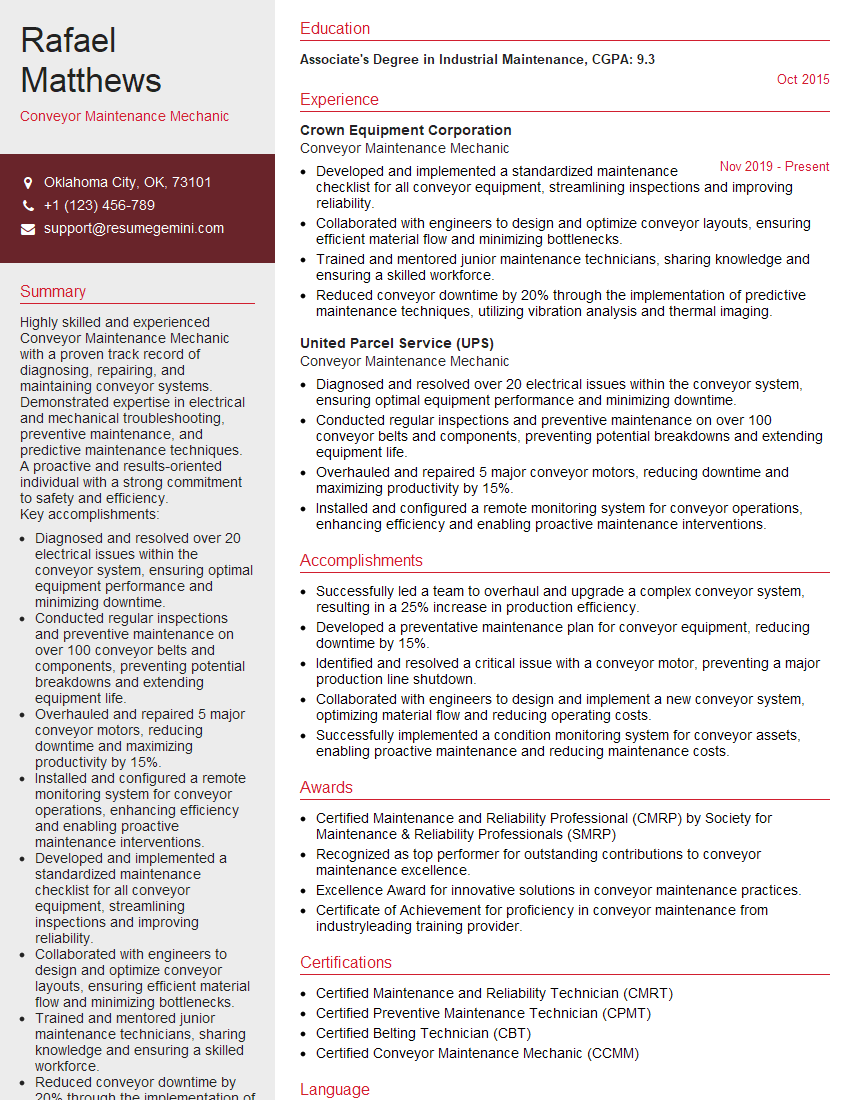
Are you gearing up for a career shift or aiming to ace your next interview? Look no further! We’ve curated a comprehensive guide to help you crack the interview for the coveted Conveyor Maintenance Mechanic position. From understanding the key responsibilities to mastering the most commonly asked questions, this blog has you covered. So, buckle up and let’s embark on this journey together.
Acing the interview is crucial, but landing one requires a compelling resume that gets you noticed. Crafting a professional document that highlights your skills and experience is the first step toward interview success. ResumeGemini can help you build a standout resume that gets you called in for that dream job.






Essential Interview Questions For Conveyor Maintenance Mechanic
1. What are the common types of conveyors and their applications?
The most common types of conveyors are:
- Belt conveyors: These are used to transport bulk materials such as coal, grain, and sand.
- Chain conveyors: These are used to transport items such as boxes, packages, and pallets.
- Screw conveyors: These are used to transport materials such as flour, sugar, and cement.
- Bucket elevators: These are used to transport materials such as coal, grain, and sand vertically.
2. Describe the process of installing and aligning a conveyor system.
Pre-installation
- Inspect the conveyor system and ensure all components are present and in good condition.
- Prepare the site by leveling the ground and installing foundation supports.
Installation
- Assemble the conveyor frame and install the drive and tail sections.
- Install the conveyor belt and tension it properly.
- Install the idlers and rollers to support the belt.
Alignment
- Use a laser alignment tool to align the pulleys and idlers.
- Adjust the tension of the belt to ensure it is tracking properly.
- Check the alignment regularly and make adjustments as needed.
3. Explain the different types of conveyor belts and their uses.
The most common types of conveyor belts are:
- Rubber belts: These are the most versatile type of belt and can be used in a wide range of applications.
- PVC belts: These are resistant to chemicals and oils and are often used in food processing and packaging industries.
- Steel belts: These are very durable and are often used in heavy-duty applications.
- Fabric belts: These are lightweight and flexible and are often used in light-duty applications.
4. What are the common maintenance tasks for conveyor systems?
Common maintenance tasks include:
- Inspecting the conveyor belt for damage and wear.
- Cleaning the conveyor belt and components.
- Lubricating the bearings and idlers.
- Adjusting the belt tension.
- Replacing worn or damaged components.
5. What are the safety precautions that should be taken when working on conveyor systems?
Safety precautions include:
- Lock out the conveyor before performing any maintenance or repairs.
- Wear appropriate safety gear, such as gloves, safety glasses, and a hard hat.
- Be aware of the pinch points and other hazards associated with conveyors.
- Never work on a conveyor while it is running.
- Follow all safety procedures and guidelines.
6. What are the common troubleshooting techniques for conveyor systems?
Common troubleshooting techniques include:
- Identifying the problem by observing the symptoms.
- Checking the conveyor components for damage or wear.
- Adjusting the conveyor settings or replacing worn or damaged components.
- Consulting with a conveyor specialist if the problem cannot be resolved.
7. What are the latest trends in conveyor technology?
Some of the latest trends in conveyor technology include:
- The use of more automated and intelligent systems.
- The development of more energy-efficient conveyors.
- The use of new materials and designs to improve conveyor performance.
- The integration of conveyors with other systems, such as robotics and warehouse management systems.
8. Describe a challenging conveyor maintenance or repair project that you have worked on.
I once worked on a project to repair a conveyor that was used to transport coal at a power plant. The conveyor had been damaged in a storm and the belt was torn. I had to remove the damaged section of the belt and replace it with a new one. I also had to realign the conveyor and make sure it was running smoothly. The project was challenging, but I was able to complete it successfully.
9. What is your experience with conveyor safety standards?
I am familiar with the Occupational Safety and Health Administration (OSHA) standards for conveyors. I have also completed training on conveyor safety from the National Institute for Occupational Safety and Health (NIOSH). I am committed to following all safety procedures and guidelines when working on conveyors.
10. How do you stay up-to-date on the latest conveyor maintenance techniques?
I stay up-to-date on the latest conveyor maintenance techniques by reading industry publications, attending trade shows, and participating in online forums. I also have a network of colleagues that I can reach out to for advice and information.
Interviewers often ask about specific skills and experiences. With ResumeGemini‘s customizable templates, you can tailor your resume to showcase the skills most relevant to the position, making a powerful first impression. Also check out Resume Template specially tailored for Conveyor Maintenance Mechanic.
Career Expert Tips:
- Ace those interviews! Prepare effectively by reviewing the Top 50 Most Common Interview Questions on ResumeGemini.
- Navigate your job search with confidence! Explore a wide range of Career Tips on ResumeGemini. Learn about common challenges and recommendations to overcome them.
- Craft the perfect resume! Master the Art of Resume Writing with ResumeGemini’s guide. Showcase your unique qualifications and achievements effectively.
- Great Savings With New Year Deals and Discounts! In 2025, boost your job search and build your dream resume with ResumeGemini’s ATS optimized templates.
Researching the company and tailoring your answers is essential. Once you have a clear understanding of the Conveyor Maintenance Mechanic‘s requirements, you can use ResumeGemini to adjust your resume to perfectly match the job description.
Key Job Responsibilities
Conveyor Maintenance Mechanics are responsible for ensuring that conveyor systems are operating efficiently and safely.
1. Inspect and Repair Conveyor Systems
Mechanics inspect conveyor systems to identify any potential problems. They look for worn or damaged components, misalignments, and other issues that could cause the system to fail.
2. Diagnose and Troubleshoot Problems
If a problem is identified, mechanics must diagnose the cause and find a solution. They may need to disassemble the system, replace components, or make adjustments.
3. Perform Maintenance Tasks
Mechanics perform regular maintenance tasks to keep conveyor systems running smoothly. These tasks may include lubrication, cleaning, and adjustments.
4. Follow Safety Procedures
Mechanics must follow all safety procedures when working on conveyor systems. They must wear appropriate safety gear and use tools and equipment properly.
Interview Tips
Conveyor Maintenance Mechanics are in high demand, so it’s important to be well-prepared for your interview.
1. Research the Company
Before your interview, take some time to research the company you’re applying to. This will help you understand the company’s culture and values, and demonstrate your interest in the position.
2. Practice Your Answers
Take some time before your interview to practice answering common interview questions. This will help you feel more confident and prepared during the interview.
3. Highlight Your Skills and Experience
Make sure to highlight your skills and experience that are relevant to the job. For example, if you have experience repairing conveyor systems, be sure to mention that in your interview.
4. Ask Questions
At the end of the interview, ask the interviewer some questions about the position and the company. This will show that you’re interested in the opportunity and that you’re eager to learn more.
Next Step:
Now that you’re armed with a solid understanding of what it takes to succeed as a Conveyor Maintenance Mechanic, it’s time to turn that knowledge into action. Take a moment to revisit your resume, ensuring it highlights your relevant skills and experiences. Tailor it to reflect the insights you’ve gained from this blog and make it shine with your unique qualifications. Don’t wait for opportunities to come to you—start applying for Conveyor Maintenance Mechanic positions today and take the first step towards your next career milestone. Your dream job is within reach, and with a polished resume and targeted applications, you’ll be well on your way to achieving your career goals! Build your resume now with ResumeGemini.