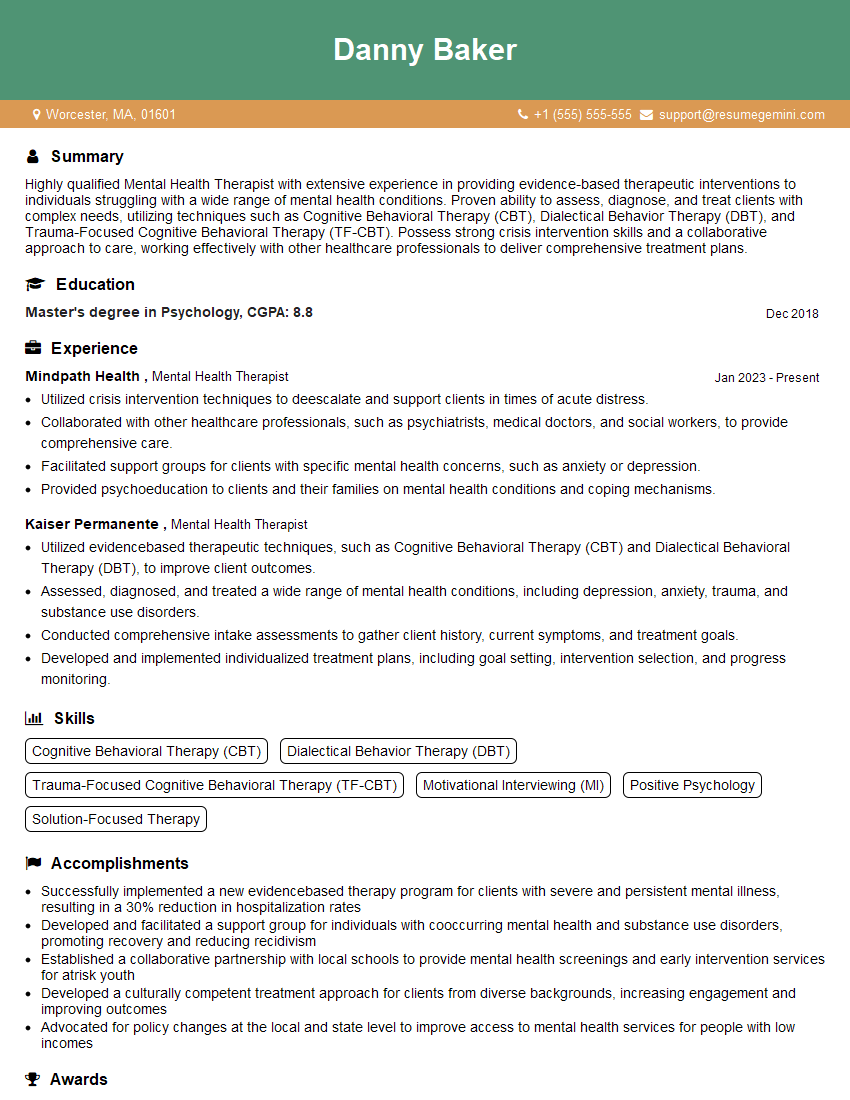
Are you gearing up for a career in Mental Health Therapist? Feeling nervous about the interview questions that might come your way? Don’t worry, you’re in the right place. In this blog post, we’ll dive deep into the most common interview questions for Mental Health Therapist and provide you with expert-backed answers. We’ll also explore the key responsibilities of this role so you can tailor your responses to showcase your perfect fit.
Acing the interview is crucial, but landing one requires a compelling resume that gets you noticed. Crafting a professional document that highlights your skills and experience is the first step toward interview success. ResumeGemini can help you build a standout resume that gets you called in for that dream job.






Essential Interview Questions For Mental Health Therapist
1. Describe the various therapeutic approaches you are familiar with and how you determine the best approach for a particular client?
- Cognitive-behavioral therapy (CBT): Focuses on identifying and changing negative thoughts and behaviors.
- Dialectical behavior therapy (DBT): Helps individuals regulate their emotions and improve interpersonal relationships.
- Client-centered therapy (CCT): Emphasizes empathy, unconditional positive regard, and active listening.
- Psychodynamic therapy: Explores unconscious motivations and conflicts that may be influencing current behavior.
- I select the most appropriate approach based on the client’s presenting issues, personality traits, and treatment goals.
2. How do you handle cases involving clients who are experiencing suicidal or homicidal ideation?
Risk Assessment
- Assess the client’s immediate risk by asking direct questions and gathering information about previous attempts or plans.
- Consult with a supervisor or other professionals if necessary.
Safety Planning
- Develop a safety plan with the client, outlining steps they can take to reduce risk, such as contacting a crisis hotline or removing potentially harmful objects.
- Encourage the client to share the safety plan with trusted individuals.
Ongoing Monitoring
- Monitor the client’s symptoms and progress regularly, adjusting the safety plan as needed.
- Provide support, empathy, and validation to the client.
3. What is your experience in working with clients who have experienced trauma?
I have extensive experience working with clients who have experienced trauma, including:
- Understanding the impact of trauma on individuals and their relationships.
- Providing trauma-informed care, using approaches such as trauma-focused cognitive behavioral therapy (TF-CBT) or eye movement desensitization and reprocessing (EMDR).
- Creating a safe and supportive environment where clients feel comfortable sharing their experiences.
4. How do you maintain confidentiality and protect client information?
- Adhere to ethical and legal guidelines, such as HIPAA and state regulations.
- Respect client boundaries and only share information with others on a need-to-know basis with the client’s consent.
- Use secure storage systems and encryption for electronic data.
- Handle client information with discretion and avoid discussing it in public areas.
5. How do you stay updated with the latest research and best practices in mental health?
- Attend conferences and workshops.
- Read professional journals and books.
- Participate in continuing education courses.
- Engage in peer supervision and networking with other therapists.
- Stay informed about new treatment modalities and interventions.
6. Describe a challenging case you have encountered and how you overcame the challenges?
In a challenging case, I worked with a client who presented with severe anxiety and depression. The client had experienced trauma in childhood and was struggling with flashbacks and nightmares. I used a combination of cognitive-behavioral therapy, EMDR, and mindfulness techniques to help the client process their trauma and develop coping mechanisms. Over time, the client’s symptoms significantly improved, and they were able to live a more fulfilling life.
7. How do you build rapport and establish a strong therapeutic relationship with clients?
- Actively listen and show empathy.
- Create a safe and non-judgmental environment.
- Respect client boundaries.
- Tailor treatment to the individual needs of each client.
- Foster a collaborative relationship where the client feels involved in the treatment process.
8. What are your strengths and weaknesses as a mental health therapist?
Strengths
- Strong clinical skills and a deep understanding of mental health conditions.
- Empathetic and compassionate.
- Excellent communication and interpersonal skills.
- Ability to establish strong therapeutic relationships.
- Commitment to providing evidence-based and ethical care.
Weaknesses
- Sometimes I can be too invested in my clients and their challenges.
- I am always seeking to improve and update my knowledge, so I spend a lot of time reading and researching.
9. Why are you interested in working in this specific mental health setting?
I am passionate about providing mental health services to underserved populations, particularly those who face barriers to accessing care. This setting allows me to use my skills and experience to make a meaningful impact on the lives of individuals and families in need.
10. What are your goals for professional development in the next five years?
- Obtain certification in a specialized area of mental health, such as trauma therapy or addiction counseling.
- Attend advanced training workshops to enhance my clinical skills.
- Conduct research on emerging mental health interventions.
- Present my work at conferences and contribute to the field of mental health through publications.
- Mentor and supervise junior therapists.
Interviewers often ask about specific skills and experiences. With ResumeGemini‘s customizable templates, you can tailor your resume to showcase the skills most relevant to the position, making a powerful first impression. Also check out Resume Template specially tailored for Mental Health Therapist.
Career Expert Tips:
- Ace those interviews! Prepare effectively by reviewing the Top 50 Most Common Interview Questions on ResumeGemini.
- Navigate your job search with confidence! Explore a wide range of Career Tips on ResumeGemini. Learn about common challenges and recommendations to overcome them.
- Craft the perfect resume! Master the Art of Resume Writing with ResumeGemini’s guide. Showcase your unique qualifications and achievements effectively.
- Great Savings With New Year Deals and Discounts! In 2025, boost your job search and build your dream resume with ResumeGemini’s ATS optimized templates.
Researching the company and tailoring your answers is essential. Once you have a clear understanding of the Mental Health Therapist‘s requirements, you can use ResumeGemini to adjust your resume to perfectly match the job description.
Key Job Responsibilities
Mental Health Therapists provide counseling and psychotherapy services to individuals, couples, families, and groups. Their key responsibilities include:
1. Assessment and Diagnosis
Conducting thorough assessments and evaluations to diagnose mental health conditions and determine appropriate treatment plans.
2. Treatment Planning and Implementation
Developing individualized treatment plans based on client needs and evidence-based practices. Implementing and monitoring therapy sessions, including individual therapy, group therapy, and family therapy.
3. Counseling and Psychotherapy
Using various therapeutic approaches, such as cognitive-behavioral therapy, psychodynamic therapy, and family systems therapy, to help clients improve their mental health and well-being.
4. Case Management
Documenting client progress and treatment plans. Collaborating with other healthcare professionals, such as psychiatrists, social workers, and physicians, to ensure comprehensive care.
5. Crisis Intervention
Responding to crisis situations, such as suicidal or homicidal thoughts and behaviors. Providing immediate support and crisis management.
Interview Tips
To ace your interview for a Mental Health Therapist position, follow these tips:
1. Research the Organization and Position
Familiarize yourself with the specific organization and their approach to mental health care. Understand the job responsibilities and qualifications required.
- Visit the organization’s website and read about their mission, values, and services.
- Check professional networking websites to connect with current or former employees and gain insights into the organization’s culture and work environment.
2. Highlight Relevant Experience and Skills
Emphasize your experience and skills that are most relevant to the job requirements. Quantify your accomplishments whenever possible.
- For example, instead of simply stating that you “provided therapy,” you could say “Provided individual and group therapy to over 50 clients, resulting in significant improvements in their symptom severity and quality of life.”
3. Showcase Your Therapeutic Approach
Be prepared to discuss your therapeutic approach and how it aligns with the organization’s values and treatment philosophy.
- Explain your understanding of different therapeutic modalities and how you tailor your approach to meet the needs of diverse clients.
4. Demonstrate Empathy and Cultural Sensitivity
Emphasize your ability to connect with clients from diverse backgrounds and perspectives. Demonstrate your understanding of cultural factors that may influence mental health.
- Share examples of how you have successfully worked with clients from different cultures and backgrounds.
5. Prepare for Common Interview Questions
Anticipate common interview questions and prepare thoughtful responses that demonstrate your knowledge, skills, and passion for mental health.
- Some common questions include “Tell me about your experience in crisis intervention” and “How do you handle ethical dilemmas in therapy?”
Next Step:
Now that you’re armed with interview-winning answers and a deeper understanding of the Mental Health Therapist role, it’s time to take action! Does your resume accurately reflect your skills and experience for this position? If not, head over to ResumeGemini. Here, you’ll find all the tools and tips to craft a resume that gets noticed. Don’t let a weak resume hold you back from landing your dream job. Polish your resume, hit the “Build Your Resume” button, and watch your career take off! Remember, preparation is key, and ResumeGemini is your partner in interview success.