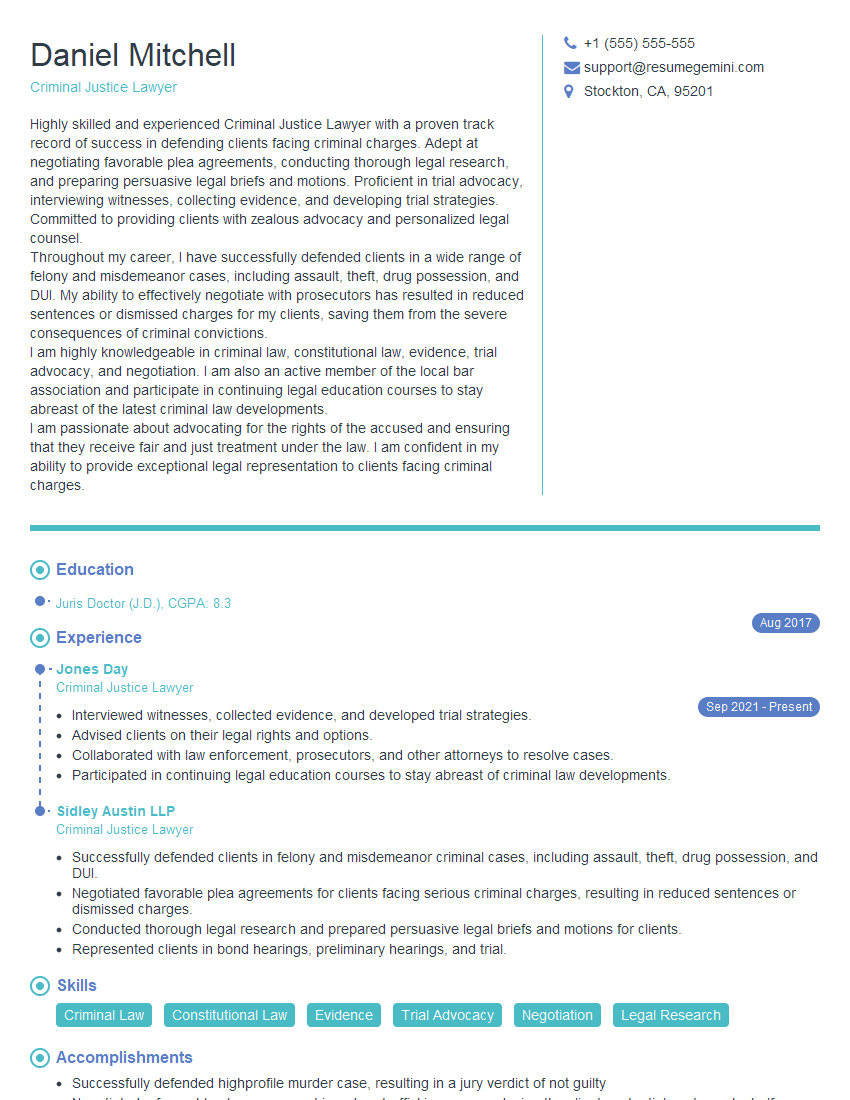
Are you gearing up for a career shift or aiming to ace your next interview? Look no further! We’ve curated a comprehensive guide to help you crack the interview for the coveted Criminal Justice Lawyer position. From understanding the key responsibilities to mastering the most commonly asked questions, this blog has you covered. So, buckle up and let’s embark on this journey together.
Acing the interview is crucial, but landing one requires a compelling resume that gets you noticed. Crafting a professional document that highlights your skills and experience is the first step toward interview success. ResumeGemini can help you build a standout resume that gets you called in for that dream job.






Essential Interview Questions For Criminal Justice Lawyer
1. Walk me through your experience handling a high-stakes criminal case. How did you develop your defense strategy and navigate the legal complexities?
- Describe the case, charges, and key evidence.
- Explain the legal research, case analysis, and strategy development.
- Discuss challenges and how you overcame them.
- Highlight your advocacy skills, persuasive arguments, and ability to effectively represent your client.
2. How do you stay up-to-date with the evolving legal landscape in criminal justice?
Continuing Education and Training
- Attend seminars, conferences, and workshops.
- Subscribe to legal journals and newsletters.
- Engage in self-directed learning and research.
Professional Organizations and Networking
- Join bar associations and criminal justice organizations.
- Network with colleagues and judges to exchange knowledge.
- Participate in pro bono work and legal aid clinics.
3. Describe a time when you successfully negotiated a plea bargain on behalf of a client. What strategies did you employ?
- Assess the strength of the prosecution’s case and identify potential weaknesses.
- Explore alternative sentencing options and consider the client’s goals.
- Negotiate with the prosecutor based on evidence, mitigating factors, and prior case law.
- Present a persuasive argument that benefits both the client and the justice system.
- Document the agreement carefully and ensure client understanding.
4. How do you handle cases involving complex scientific or technological evidence?
- Retain expert witnesses to interpret and explain technical evidence.
- Study scientific literature and consult with specialists to gain a deep understanding.
- Use visual aids, animations, and simulations to present evidence to the jury.
- Challenge the opposing side’s experts and present alternative interpretations.
- Educate the jury on complex concepts and guide their understanding.
5. Discuss the ethical considerations you face as a criminal defense attorney. How do you balance your client’s interests with your professional obligations?
- Maintain client confidentiality and loyalty.
- Adhere to ethical rules and professional standards.
- Advocate zealously for clients while respecting the integrity of the legal system.
- Consider the potential consequences of a guilty plea or trial.
- Withdraw from representation if necessary to avoid conflicts of interest or ethical dilemmas.
6. How do you approach cases involving victims of crime?
- Treat victims with compassion and respect.
- Understand the victim’s perspective and advocate for their rights.
- Balance the client’s defense strategy with victim sensitivity.
- Facilitate communication between the parties when appropriate.
- Respect the victim’s decision to participate or not in the proceedings.
7. Describe your strategies for cross-examining witnesses.
- Thoroughly prepare by reviewing witness statements and depositions.
- Develop a clear line of questioning to elicit desired information.
- Use leading questions when appropriate to impeach credibility.
- Pay attention to body language, tone of voice, and inconsistencies.
- Challenge the witness’s expertise, reliability, and motives.
8. How do you prepare for and present closing arguments?
- Summarize key evidence and legal arguments.
- Tailor the argument to the specific jury and case facts.
- Use persuasive language, emotional appeals, and rhetorical devices.
- Rehearse and practice your delivery to ensure clarity and impact.
- Address the jury’s potential biases and concerns.
9. Have you ever encountered a situation where you had to make a difficult decision in the best interests of your client? Explain your reasoning and the outcome.
10. Why are you passionate about criminal justice, and how does this passion influence your approach to lawyering?
- Share your motivations and interests in criminal justice.
- Explain how your passion fuels your dedication to clients and advocacy.
- Discuss how your passion shapes your perspective on the role of defense attorneys.
- Demonstrate your commitment to justice and equal access to the legal system.
Interviewers often ask about specific skills and experiences. With ResumeGemini‘s customizable templates, you can tailor your resume to showcase the skills most relevant to the position, making a powerful first impression. Also check out Resume Template specially tailored for Criminal Justice Lawyer.
Career Expert Tips:
- Ace those interviews! Prepare effectively by reviewing the Top 50 Most Common Interview Questions on ResumeGemini.
- Navigate your job search with confidence! Explore a wide range of Career Tips on ResumeGemini. Learn about common challenges and recommendations to overcome them.
- Craft the perfect resume! Master the Art of Resume Writing with ResumeGemini’s guide. Showcase your unique qualifications and achievements effectively.
- Great Savings With New Year Deals and Discounts! In 2025, boost your job search and build your dream resume with ResumeGemini’s ATS optimized templates.
Researching the company and tailoring your answers is essential. Once you have a clear understanding of the Criminal Justice Lawyer‘s requirements, you can use ResumeGemini to adjust your resume to perfectly match the job description.
Key Job Responsibilities
Criminal Justice Lawyers are responsible for defending clients who have been accused of crimes. They must be knowledgeable about criminal law and procedure, and they must be able to effectively advocate for their clients in court. Their duties include:
1. Meeting with clients to discuss their cases
Criminal Justice Lawyers must meet with their clients to discuss the charges against them, the evidence against them, and the possible defenses to those charges. They must also discuss the client’s goals for the case and explain the likely outcome.
2. Investigating the facts of the case
Criminal Justice Lawyers must investigate the facts of the case to determine the strength of the evidence against their client. This may involve interviewing witnesses, reviewing police reports, and examining physical evidence.
3. Filing motions and pleadings
Criminal Justice Lawyers must file motions and pleadings with the court on behalf of their clients. These documents may include requests for discovery, motions to suppress evidence, and motions for dismissal.
4. Negotiating with the prosecution
Criminal Justice Lawyers often negotiate with the prosecution to resolve a case without going to trial. This may involve plea bargaining or negotiating a diversion program.
5. Representing clients at trial
If a case cannot be resolved through negotiation, Criminal Justice Lawyers must represent their clients at trial. They will present evidence, examine witnesses, and argue on behalf of their clients.
Interview Tips
To ace an interview for a Criminal Justice Lawyer position, candidates should:
1. Research the firm and the position
Candidates should research the law firm they are interviewing with and the specific position they are applying for. This will help them understand the firm’s culture and the responsibilities of the position.
2. Prepare answers to common interview questions
Candidates should prepare answers to common interview questions, such as “Why are you interested in criminal law?” and “What is your experience with trial work?” They should also be prepared to discuss their skills and qualifications.
3. Dress professionally
Candidates should dress professionally for their interview. This means wearing a suit or business casual attire.
4. Be on time
Candidates should arrive for their interview on time. This shows that they are respectful of the interviewer’s time.
5. Be confident and enthusiastic
Candidates should be confident and enthusiastic during their interview. This will show the interviewer that they are passionate about criminal law and that they are eager to work for the firm.
Next Step:
Armed with this knowledge, you’re now well-equipped to tackle the Criminal Justice Lawyer interview with confidence. Remember, preparation is key. So, start crafting your resume, highlighting your relevant skills and experiences. Don’t be afraid to tailor your application to each specific job posting. With the right approach and a bit of practice, you’ll be well on your way to landing your dream job. Build your resume now from scratch or optimize your existing resume with ResumeGemini. Wish you luck in your career journey!