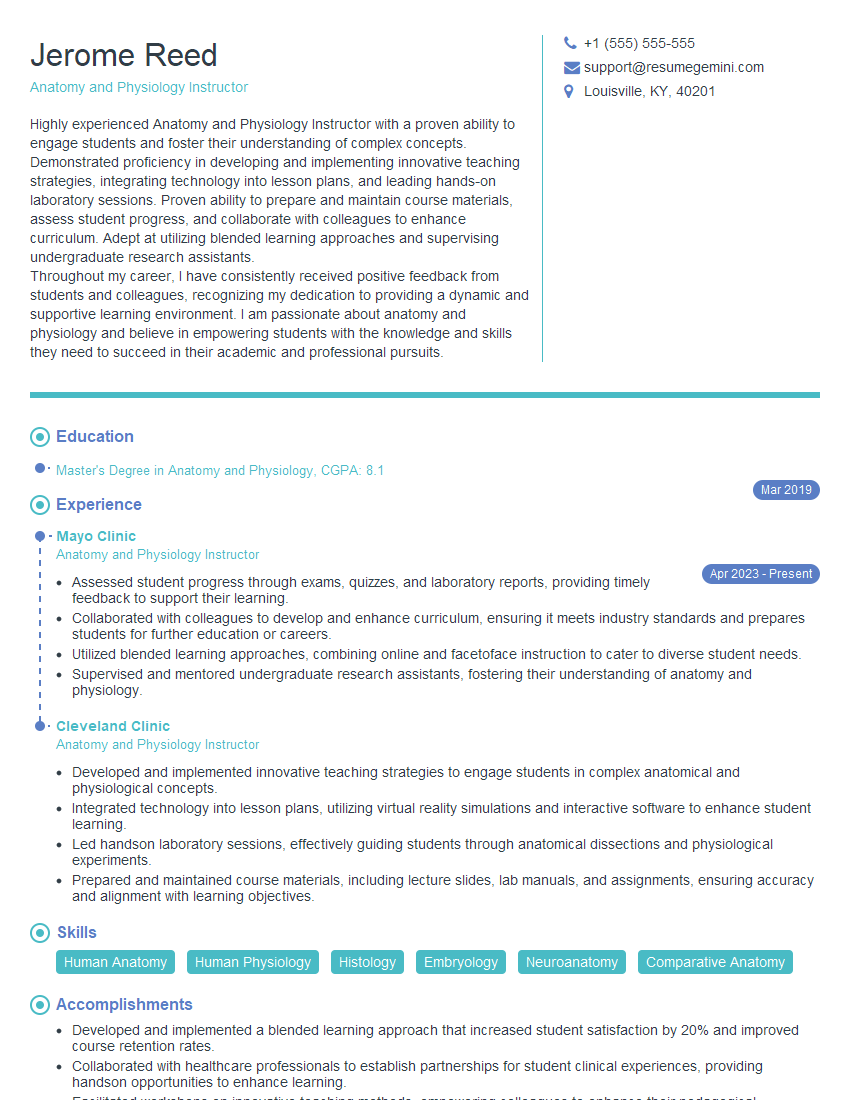
Feeling lost in a sea of interview questions? Landed that dream interview for Anatomy and Physiology Instructor but worried you might not have the answers? You’re not alone! This blog is your guide for interview success. We’ll break down the most common Anatomy and Physiology Instructor interview questions, providing insightful answers and tips to leave a lasting impression. Plus, we’ll delve into the key responsibilities of this exciting role, so you can walk into your interview feeling confident and prepared.
Acing the interview is crucial, but landing one requires a compelling resume that gets you noticed. Crafting a professional document that highlights your skills and experience is the first step toward interview success. ResumeGemini can help you build a standout resume that gets you called in for that dream job.






Essential Interview Questions For Anatomy and Physiology Instructor
1. Describe the major components of the skeletal system and their functions.
- Support and protection of soft tissues and organs
- Movement and locomotion
- Storage of minerals (e.g., calcium and phosphorus)
- Production of blood cells (in bone marrow)
2. Explain the anatomy and physiology of the respiratory system.
Upper Respiratory Tract
- Nose and nasal cavity: Filters and warms air
- Pharynx: Connects nasal cavity to larynx
- Larynx (voice box): Contains vocal cords
Lower Respiratory Tract
- Trachea: Conducts air to lungs
- Bronchi: Divide into smaller bronchioles
- Lungs: Gas exchange between air and blood
- Alveoli: Tiny air sacs where gas exchange occurs
3. Discuss the role of the endocrine system in maintaining homeostasis.
- Helps regulate metabolism, growth, reproduction, and other bodily functions
- Glands secrete hormones into the bloodstream
- Hormones target specific cells or tissues and regulate their activity
- Examples: Thyroid hormone (regulates metabolism), insulin (regulates blood sugar)
4. Describe the structure and function of the neuron.
- Cell body (soma): Contains nucleus and organelles
- Dendrites: Receive signals from other neurons
- Axon: Transmits signals away from cell body
- Synapse: Junction between neurons where signals are transmitted
5. Explain the physiological mechanisms responsible for muscle contraction.
- Sliding filament theory: Thin (actin) and thick (myosin) filaments slide past each other
- Calcium ions initiate contraction
- ATP (energy) is required for contraction
- Different types of muscle contractions: concentric, eccentric, isometric
6. Describe the anatomy and physiology of the cardiovascular system.
Heart
- Pump that circulates blood throughout the body
- Divided into four chambers: atria (receive blood) and ventricles (pump blood)
Blood Vessels
- Arteries: Carry blood away from heart
- Veins: Carry blood back to heart
- Capillaries: Tiny vessels where gas exchange occurs
7. Discuss the role of the liver in metabolism.
- Detoxifies and metabolizes drugs and toxins
- Stores and releases glucose (glycogen storage)
- Produces bile, which aids in digestion
- Synthesizes proteins, including coagulation factors
8. Explain the principles of homeostasis and how they are maintained in the human body.
- Homeostasis is the maintenance of stable internal conditions
- Negative feedback loops: Stimulus-response system that counteracts changes
- Positive feedback loops: Increase the original stimulus
- Examples: Body temperature regulation, blood glucose control
9. Describe the anatomy and physiology of the lymphatic system.
- Network of vessels and tissues that collects and returns fluid to the bloodstream
- Lymph nodes filter and destroy pathogens
- Lymphocytes (white blood cells) provide immune defenses
- Supports fluid balance and removes waste products
10. Explain the role of the kidneys in excreting waste products.
- Filter waste products from the blood
- Produce urine, which contains waste products and excess ions
- Regulate blood pressure, fluid balance, and electrolyte levels
- Produce hormones like erythropoietin (stimulates red blood cell production)
Interviewers often ask about specific skills and experiences. With ResumeGemini‘s customizable templates, you can tailor your resume to showcase the skills most relevant to the position, making a powerful first impression. Also check out Resume Template specially tailored for Anatomy and Physiology Instructor.
Career Expert Tips:
- Ace those interviews! Prepare effectively by reviewing the Top 50 Most Common Interview Questions on ResumeGemini.
- Navigate your job search with confidence! Explore a wide range of Career Tips on ResumeGemini. Learn about common challenges and recommendations to overcome them.
- Craft the perfect resume! Master the Art of Resume Writing with ResumeGemini’s guide. Showcase your unique qualifications and achievements effectively.
- Great Savings With New Year Deals and Discounts! In 2025, boost your job search and build your dream resume with ResumeGemini’s ATS optimized templates.
Researching the company and tailoring your answers is essential. Once you have a clear understanding of the Anatomy and Physiology Instructor‘s requirements, you can use ResumeGemini to adjust your resume to perfectly match the job description.
Key Job Responsibilities
Anatomy and Physiology Instructors play a pivotal role in educating and training students in the intricacies of human anatomy and physiology. Their primary responsibilities include:
1. Course Instruction
Imparting knowledge and understanding of anatomy and physiology concepts through lectures, discussions, laboratory sessions, and online platforms.
- Developing and delivering engaging lesson plans that align with course objectives.
- Utilizing various teaching methodologies to cater to diverse learning styles.
2. Laboratory Management
Overseeing laboratory sessions, ensuring students have access to necessary equipment and materials.
- Providing guidance and supervision to students during laboratory exercises.
- Maintaining laboratory safety standards and protocols.
3. Assessment and Evaluation
Evaluating student progress through exams, assignments, and presentations.
- Creating and administering assessments to measure student understanding.
- Providing constructive feedback to students to facilitate learning.
4. Curriculum Development
Collaborating with colleagues to develop and enhance the anatomy and physiology curriculum.
- Participating in curriculum planning and evaluation processes.
- Integrating new findings and research into the curriculum.
Interview Tips
Preparing for an interview as an Anatomy and Physiology Instructor requires meticulous preparation. Here are some essential tips to help you ace the interview:
1. Research the Institution and Position
Familiarize yourself with the institution’s mission, values, and academic programs. Thoroughly review the job description and identify the specific qualifications and expectations for the role.
2. Highlight Your Skills and Experience
Showcase your expertise in anatomy and physiology, emphasizing your teaching experience and any relevant laboratory skills. Quantify your accomplishments and provide specific examples to demonstrate your abilities.
3. Prepare for Common Interview Questions
Anticipate questions about your teaching philosophy, classroom management strategies, and experience integrating technology into instruction. Prepare thoughtful answers that align with the institution’s values and the requirements of the position.
4. Seek Feedback on Your Mock Interview
Practice your interview skills with a trusted friend, colleague, or career counselor. Get feedback on your body language, communication style, and the content of your answers. This will help you refine your presentation and build confidence.
5. Be Professional and Enthusiastic
Dress appropriately, arrive on time, and maintain a positive and professional demeanor throughout the interview. Show genuine interest in the position and the institution, and express your enthusiasm for teaching anatomy and physiology.
Next Step:
Now that you’re armed with interview-winning answers and a deeper understanding of the Anatomy and Physiology Instructor role, it’s time to take action! Does your resume accurately reflect your skills and experience for this position? If not, head over to ResumeGemini. Here, you’ll find all the tools and tips to craft a resume that gets noticed. Don’t let a weak resume hold you back from landing your dream job. Polish your resume, hit the “Build Your Resume” button, and watch your career take off! Remember, preparation is key, and ResumeGemini is your partner in interview success.