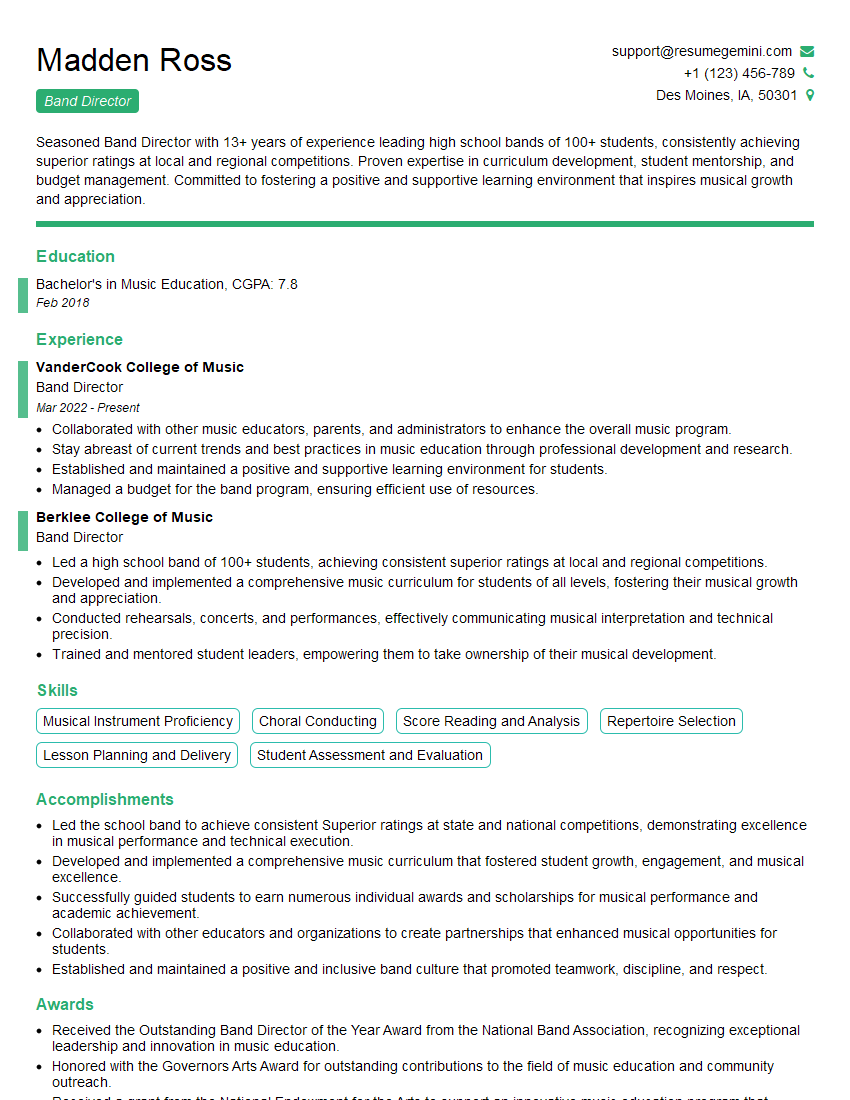
Feeling lost in a sea of interview questions? Landed that dream interview for Band Director but worried you might not have the answers? You’re not alone! This blog is your guide for interview success. We’ll break down the most common Band Director interview questions, providing insightful answers and tips to leave a lasting impression. Plus, we’ll delve into the key responsibilities of this exciting role, so you can walk into your interview feeling confident and prepared.
Acing the interview is crucial, but landing one requires a compelling resume that gets you noticed. Crafting a professional document that highlights your skills and experience is the first step toward interview success. ResumeGemini can help you build a standout resume that gets you called in for that dream job.






Essential Interview Questions For Band Director
1. How would you plan for a successful marching band season?
- Establish clear goals and objectives for the season.
- Develop a comprehensive rehearsal and training schedule.
- Secure funding and resources to support the program.
- Recruit and train a dedicated team of student musicians and staff.
- Foster a positive and supportive learning environment.
2. What are some strategies you use to motivate and inspire young musicians?
Building Relationships
- Get to know students on a personal level.
- Create a sense of community and belonging.
Setting Goals and Providing Feedback
- Help students set realistic goals.
- Provide regular and constructive feedback.
Making Music Fun and Engaging
- Choose music that students enjoy playing.
- Incorporate games and activities into rehearsals.
3. How do you develop and maintain a strong rapport with parents and the community?
- Communicate regularly with parents and the community.
- Be transparent and accountable for your work.
- Involve parents and the community in the band’s activities.
- Build relationships with local businesses and organizations.
- Be a positive role model for students and the community.
4. How do you incorporate music theory and history into your teaching?
- Teach music theory and history in a way that is relevant to students’ musical experience.
- Use music theory and history to help students understand the music they are playing.
- Incorporate music theory and history into performance assessments.
- Provide opportunities for students to explore music theory and history on their own.
- Partner with music history teachers to provide a more comprehensive learning experience.
5. How do you assess student learning and progress?
- Use a variety of assessment methods, such as observation, performance, and written assignments.
- Provide students with regular feedback on their progress.
- Use assessment data to inform instructional decisions.
- Collaborate with other teachers to assess student learning in a holistic manner.
- Use technology to enhance assessment practices.
6. How do you stay up-to-date on the latest trends and developments in music education?
- Attend professional development workshops and conferences.
- Read professional journals and books.
- Collaborate with other music educators.
- Experiment with new teaching methods and strategies.
- Attend concerts and performances.
7. What are some challenges you have faced as a Band Director, and how did you overcome them?
- Motivating students who are not interested in music.
- Dealing with discipline issues.
- Working with a limited budget.
- Recruiting and retaining qualified staff.
- Balancing the demands of teaching with the need for personal time.
8. What are your goals for the band program over the next five years?
- Increase student enrollment in the band program.
- Improve the quality of the band’s performances.
- Develop a more comprehensive music curriculum.
- Increase the band’s involvement in the community.
- Create a more positive and supportive learning environment for students.
9. What is your philosophy on music education?
- Music education should be accessible to all students.
- Music education should be fun and engaging.
- Music education should develop students’ creativity and critical thinking skills.
- Music education should help students develop a lifelong appreciation for music.
- Music education should prepare students for success in college and beyond.
10. Why are you interested in this position?
- Your qualifications and experience.
- Your passion for music education.
- Your commitment to student success.
- Your vision for the band program.
- Your excitement about the opportunity to work with the students and staff at this school.
Interviewers often ask about specific skills and experiences. With ResumeGemini‘s customizable templates, you can tailor your resume to showcase the skills most relevant to the position, making a powerful first impression. Also check out Resume Template specially tailored for Band Director.
Career Expert Tips:
- Ace those interviews! Prepare effectively by reviewing the Top 50 Most Common Interview Questions on ResumeGemini.
- Navigate your job search with confidence! Explore a wide range of Career Tips on ResumeGemini. Learn about common challenges and recommendations to overcome them.
- Craft the perfect resume! Master the Art of Resume Writing with ResumeGemini’s guide. Showcase your unique qualifications and achievements effectively.
- Great Savings With New Year Deals and Discounts! In 2025, boost your job search and build your dream resume with ResumeGemini’s ATS optimized templates.
Researching the company and tailoring your answers is essential. Once you have a clear understanding of the Band Director‘s requirements, you can use ResumeGemini to adjust your resume to perfectly match the job description.
Key Job Responsibilities
Band Directors provide leadership and instruction to school bands, overseeing musical education, performances, and overall program management.
1. Educational Leadership
Establish and implement lesson plans that align with educational standards and curriculum goals.
- Develop and deliver engaging and differentiated music instruction tailored to students’ abilities.
- Assess student progress regularly and provide constructive feedback to enhance musical development.
2. Performance Direction
Conduct and rehearse bands for various performances, including concerts, competitions, and community events.
- Select and prepare appropriate musical repertoire that showcases students’ talents and abilities.
- Motivate and inspire students to achieve their full potential as musicians and performers.
3. Program Management
Manage the administrative aspects of the band program, including budgeting, equipment acquisition, and scheduling.
- Collaborate with school administration, parents, and community members to support the band program.
- Maintain and repair musical instruments, equipment, and facilities.
4. Student Development
Foster a positive and inclusive learning environment that promotes musical growth and personal development.
- Mentor and guide students, encouraging their passion for music and the pursuit of excellence.
- Promote teamwork, discipline, and respect among band members.
Interview Tips
To ace the Band Director interview, prepare thoroughly and showcase your passion, expertise, and commitment to educational excellence.
1. Research the School and Program
Familiarize yourself with the school’s mission, values, and music program. This demonstrates your interest and dedication.
2. Prepare for Common Interview Questions
Expect questions about your teaching philosophy, experience, and plans for the band program. Prepare specific examples to highlight your skills.
- Example: “Describe your approach to differentiated instruction in music education.”
- Example: “Share a successful project or performance that you led with a previous band.”
3. Showcase Your Passion for Music
Convey your enthusiasm for music and your desire to inspire students to love and appreciate it.
4. Highlight Your Leadership and Communication Skills
Emphasize your ability to motivate and lead students, as well as your communication skills with parents, administrators, and the community.
- Example: “Describe a time when you successfully resolved a conflict within the band.”
- Example: “Explain how you would engage with parents and the community to support the band program.”
5. Dress Professionally and Arrive on Time
First impressions matter. Dress appropriately and arrive punctually to demonstrate your professionalism and respect for the interviewers.
Next Step:
Armed with this knowledge, you’re now well-equipped to tackle the Band Director interview with confidence. Remember, a well-crafted resume is your first impression. Take the time to tailor your resume to highlight your relevant skills and experiences. And don’t forget to practice your answers to common interview questions. With a little preparation, you’ll be on your way to landing your dream job. So what are you waiting for? Start building your resume and start applying! Build an amazing resume with ResumeGemini.