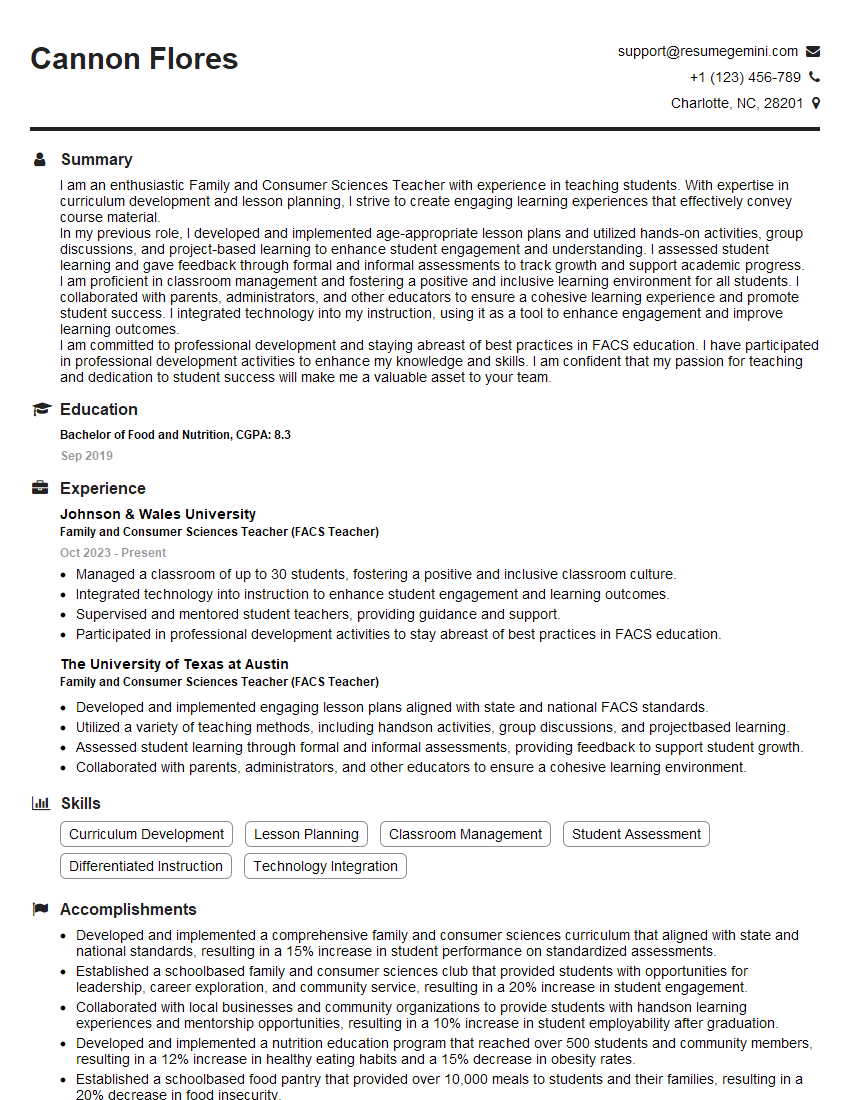
Are you gearing up for a career in Family and Consumer Sciences Teacher (FACS Teacher)? Feeling nervous about the interview questions that might come your way? Don’t worry, you’re in the right place. In this blog post, we’ll dive deep into the most common interview questions for Family and Consumer Sciences Teacher (FACS Teacher) and provide you with expert-backed answers. We’ll also explore the key responsibilities of this role so you can tailor your responses to showcase your perfect fit.
Acing the interview is crucial, but landing one requires a compelling resume that gets you noticed. Crafting a professional document that highlights your skills and experience is the first step toward interview success. ResumeGemini can help you build a standout resume that gets you called in for that dream job.






Essential Interview Questions For Family and Consumer Sciences Teacher (FACS Teacher)
1. Family and Consumer Sciences (FACS) is a broad field that covers many different topics. What are the core areas that you believe are most important for students to learn in your FACS class?
In my FACS class, I believe that the most important core areas for students to learn are:
- Nutrition and wellness: This includes teaching students about healthy eating habits, mindful eating, and how to prepare nutritious meals.
- Consumer education: This includes teaching students about financial literacy, budgeting, and how to make informed decisions as consumers.
- Family and relationships: This includes teaching students about healthy relationships, communication skills, and how to build strong families.
- Housing and interior design: This includes teaching students about home safety, interior design principles, and how to create a comfortable and functional living space.
- Textiles and apparel: This includes teaching students about different types of fabrics, sewing techniques, and how to care for clothing.
2. How do you create a positive and inclusive learning environment in your FACS classroom?
Creating a Respectful and Welcoming Space
- Establish clear expectations and rules for respectful behavior.
- Use inclusive language and avoid making assumptions about students’ backgrounds or experiences.
- Create a safe space for students to share their ideas and perspectives without fear of judgment.
Promoting Collaboration and Teamwork
- Encourage students to work together on projects and assignments.
- Facilitate group discussions and activities that foster collaboration and communication.
- Recognize and reward students for positive teamwork and contributions.
Addressing Diversity and Individual Needs
- Tailor instruction to meet the diverse learning styles and needs of students.
- Provide accommodations and support for students with disabilities or learning challenges.
- Celebrate the cultural diversity of students and incorporate their perspectives into lessons.
3. How do you assess student learning in FACS?
I use a variety of assessment methods in my FACS classroom, including:
- Formative assessments: These are informal assessments that I use to check for student understanding throughout the learning process. Some examples of formative assessments include quizzes, exit tickets, and class discussions.
- Summative assessments: These are formal assessments that I use to evaluate student learning at the end of a unit or course. Some examples of summative assessments include tests, projects, and presentations.
- Performance-based assessments: These assessments require students to demonstrate their skills and knowledge through hands-on activities. Some examples of performance-based assessments include cooking demonstrations, sewing projects, and interior design projects.
- Self-assessments: These assessments allow students to reflect on their own learning and identify areas where they need to improve. I often use self-assessments as a formative assessment tool.
- Peer assessments: These assessments allow students to evaluate each other’s work. I often use peer assessments as a formative assessment tool, but they can also be used as a summative assessment tool.
4. How do you stay up-to-date on the latest trends and best practices in FACS education?
I stay up-to-date on the latest trends and best practices in FACS education by:
- Attending conferences and workshops.
- Reading professional journals and books.
- Networking with other FACS teachers.
- Taking online courses and webinars.
- Incorporating new technologies and resources into my lessons.
5. How do you collaborate with parents and the community to support student learning in FACS?
I believe that collaboration with parents and the community is essential for supporting student learning in FACS. I collaborate with parents and the community in a variety of ways, including:
- Communicating with parents about their child’s progress and providing them with resources to support their child’s learning at home.
- Inviting parents to volunteer in the classroom and participate in special events.
- Partnering with community organizations to provide students with opportunities for hands-on learning experiences.
- Sharing information about FACS education with the community through presentations and workshops.
6. What are your strengths as a FACS teacher?
- I am passionate about FACS education and I believe that it is essential for preparing students for success in life.
- I have a strong understanding of the FACS content and I am able to present it in a way that is engaging and accessible to students.
- I am an effective communicator and I am able to build rapport with students and parents.
- I am a creative and innovative teacher and I am always looking for new ways to engage students and make learning fun.
- I am a collaborative teacher and I am always willing to work with other teachers, parents, and community members to support student learning.
7. What are your areas for growth as a FACS teacher?
- I would like to learn more about using technology in the FACS classroom.
- I would like to develop more strategies for differentiating instruction to meet the needs of all learners.
- I would like to learn more about working with students with special needs.
- I would like to develop more opportunities for students to engage in real-world learning experiences.
8. What are your goals for the future as a FACS teacher?
- I would like to continue to develop my skills as a FACS teacher and become a leader in FACS education.
- I would like to develop innovative and engaging FACS lessons and activities that inspire students to learn.
- I would like to help students develop the skills and knowledge they need to be successful in life.
- I would like to make a difference in the lives of my students and help them reach their full potential.
9. How do you handle challenging student behaviors in the FACS classroom?
Establishing Clear Expectations and Rules
- Set clear expectations for student behavior at the beginning of the year.
- Establish consequences for inappropriate behavior and follow through with them consistently.
Building Relationships with Students
- Get to know your students and build relationships with them.
- Be fair and respectful, even with students who are challenging.
- Listen to students’ perspectives and try to understand their motivations.
Using Positive Behavior Interventions and Supports (PBIS)
- Implement a PBIS system to reward positive behavior and reduce challenging behavior.
- Use positive language and reinforcement to encourage students to behave appropriately.
- Provide opportunities for students to earn privileges and rewards for good behavior.
10. In your opinion, what is the most important role of a FACS teacher?
I believe that the most important role of a FACS teacher is to prepare students for success in life.
FACS education provides students with the knowledge and skills they need to live healthy, productive, and fulfilling lives. FACS teachers help students develop essential life skills such as cooking, sewing, budgeting, and managing a household.
FACS teachers also help students develop important personal qualities such as independence, self-confidence, and creativity. By providing students with a well-rounded education, FACS teachers help them become successful members of society.
Interviewers often ask about specific skills and experiences. With ResumeGemini‘s customizable templates, you can tailor your resume to showcase the skills most relevant to the position, making a powerful first impression. Also check out Resume Template specially tailored for Family and Consumer Sciences Teacher (FACS Teacher).
Career Expert Tips:
- Ace those interviews! Prepare effectively by reviewing the Top 50 Most Common Interview Questions on ResumeGemini.
- Navigate your job search with confidence! Explore a wide range of Career Tips on ResumeGemini. Learn about common challenges and recommendations to overcome them.
- Craft the perfect resume! Master the Art of Resume Writing with ResumeGemini’s guide. Showcase your unique qualifications and achievements effectively.
- Great Savings With New Year Deals and Discounts! In 2025, boost your job search and build your dream resume with ResumeGemini’s ATS optimized templates.
Researching the company and tailoring your answers is essential. Once you have a clear understanding of the Family and Consumer Sciences Teacher (FACS Teacher)‘s requirements, you can use ResumeGemini to adjust your resume to perfectly match the job description.
Key Job Responsibilities
Family and Consumer Sciences (FACS) Teachers play a crucial role in educating students about essential life skills and preparing them for success in their personal, family, and work lives.
1. Curriculum Development and Instruction
Develop and implement engaging and relevant lesson plans aligned with state and national standards in FACS subject areas, including nutrition, culinary arts, consumer education, clothing and textiles, and family life education.
- Incorporate hands-on activities, projects, and real-life experiences to make learning practical and applicable.
- Use differentiated instruction strategies to cater to the diverse learning needs of students.
2. Classroom Management and Discipline
Establish and maintain a positive and inclusive learning environment that promotes respect, cooperation, and academic growth.
- Implement clear rules and expectations for student behavior.
- Effectively manage discipline issues in a fair and consistent manner.
3. Student Assessment and Evaluation
Assess student progress through a variety of methods, including tests, quizzes, projects, and portfolios.
- Provide timely and constructive feedback to help students improve their learning.
- Use assessment data to inform instruction and make data-driven decisions.
4. Collaboration and Communication
Collaborate with colleagues, parents, and community partners to support student learning and well-being.
- Attend professional development workshops and conferences to stay up-to-date on best practices in FACS education.
- Communicate effectively with parents to inform them about their child’s progress and address concerns.
5. Other Responsibilities
May also supervise student clubs or activities related to FACS, assist with special events, or serve on school committees.
- Serve as a positive role model and advocate for students.
- Maintain a safe and organized classroom environment.
Interview Tips
Preparing thoroughly for your FACS Teacher interview will increase your chances of making a great impression and securing the position. Here are some tips to help you succeed:
1. Research the School and Position
Familiarize yourself with the school’s mission, values, and FACS curriculum. Research the specific position you are applying for and the grade level you will be teaching.
- Visit the school’s website or social media pages to gather information about its culture and programs.
- Contact the school or district office to request any additional information about the position or interview process.
2. Practice Your Answers to Common Interview Questions
Prepare thoughtful responses to common interview questions such as: “Why are you interested in teaching FACS?” and “What are your strengths and weaknesses as a teacher?”.
- Use the STAR method (Situation, Task, Action, Result) to provide specific examples of your teaching experiences and accomplishments.
- Tailor your answers to the specific job requirements and the school’s needs.
3. Prepare Questions for the Interviewers
Asking thoughtful questions at the end of the interview shows that you are engaged and interested in the position.
- Prepare questions about the school’s FACS program, the student population, and the professional development opportunities available for teachers.
- Avoid asking questions about salary or benefits during the initial interview.
4. Dress Professionally and Arrive on Time
First impressions matter, so dress appropriately for the interview. Arrive on time and be prepared to present yourself professionally and confidently.
- Choose attire that is clean, pressed, and appropriate for a school setting.
- Allow ample time for travel and parking to avoid being late.
5. Follow Up After the Interview
Send a thank-you note to the interviewers within 24 hours of the interview. Reiterate your interest in the position and thank them for their time.
- Use the thank-you note to highlight any specific aspects of the interview that you particularly enjoyed or found relevant to your skills and experience.
- If you have any additional questions or clarifications, you can include them in the thank-you note.
Next Step:
Armed with this knowledge, you’re now well-equipped to tackle the Family and Consumer Sciences Teacher (FACS Teacher) interview with confidence. Remember, a well-crafted resume is your first impression. Take the time to tailor your resume to highlight your relevant skills and experiences. And don’t forget to practice your answers to common interview questions. With a little preparation, you’ll be on your way to landing your dream job. So what are you waiting for? Start building your resume and start applying! Build an amazing resume with ResumeGemini.