Are you gearing up for a career shift or aiming to ace your next interview? Look no further! We’ve curated a comprehensive guide to help you crack the interview for the coveted Emotional Support Teacher position. From understanding the key responsibilities to mastering the most commonly asked questions, this blog has you covered. So, buckle up and let’s embark on this journey together.
Acing the interview is crucial, but landing one requires a compelling resume that gets you noticed. Crafting a professional document that highlights your skills and experience is the first step toward interview success. ResumeGemini can help you build a standout resume that gets you called in for that dream job.






Essential Interview Questions For Emotional Support Teacher
1. Describe your understanding of the role and responsibilities of an Emotional Support Teacher?
As an Emotional Support Teacher, my role is to provide students with the emotional and behavioral support they need to succeed academically and socially. I work closely with students, parents, teachers, and administrators to create individualized plans that address each student’s unique needs. I use a variety of evidence-based practices to help students manage their emotions, develop coping mechanisms, and build resilience. I also provide consultation to teachers and parents on how to support students with emotional and behavioral challenges.
2. How would you approach a situation where a student is experiencing a traumatic event?
Collaboration and Assessment
- Collaborate with school counselors, administrators, and parents to assess the situation and determine the best course of action.
- Provide immediate support and comfort to the student.
Building Safety and Trust
- Create a safe and supportive environment where the student feels comfortable talking about their experiences.
- Establish trust by being patient, understanding, and non-judgmental.
Developing Coping Mechanisms
- Help the student develop healthy coping mechanisms to manage their emotions and reactions.
- Teach relaxation techniques, mindfulness strategies, and problem-solving skills.
3. How do you build and maintain positive relationships with students who may have challenging behaviors?
- Establish clear expectations and boundaries.
- Provide positive reinforcement for desired behaviors.
- Use empathy and understanding to connect with students on a personal level.
- Collaborate with parents and other professionals to provide a consistent and supportive environment.
4. What strategies do you use to promote self-regulation and emotional intelligence in students?
- Teach students about emotions and how to identify and manage them.
- Provide opportunities for students to practice self-regulation skills.
- Create a supportive and positive classroom environment.
- Collaborate with parents and other professionals to provide consistent support.
5. How do you assess and monitor student progress in emotional and behavioral support?
- Use a variety of assessment tools, such as observations, self-reports, and teacher ratings.
- Monitor student progress on a regular basis.
- Make adjustments to the support plan as needed.
- Collaborate with parents and other professionals to ensure that the student is making progress and receiving the appropriate support.
6. How do you maintain confidentiality and ethical boundaries in your work with students?
- Follow all applicable laws and regulations regarding confidentiality.
- Only share information with those who have a need to know.
- Obtain consent from parents or guardians before sharing any information.
- Avoid dual relationships with students.
7. How do you stay up-to-date on best practices in Emotional Support Teaching?
- Attend conferences and workshops.
- Read professional journals and books.
- Network with other professionals.
- Pursue further education.
8. What are your strengths and weaknesses as an Emotional Support Teacher?
Strengths:
- Strong understanding of child development and emotional and behavioral disorders.
- Excellent communication and interpersonal skills.
- Ability to create a safe and supportive learning environment.
- Passion for helping students succeed.
Weaknesses:
- Limited experience working with students with severe emotional and behavioral challenges.
- Need to improve time management skills.
9. How do you handle stress and maintain your own well-being as an Emotional Support Teacher?
- Set boundaries and limits.
- Practice self-care activities.
- Seek support from colleagues, supervisors, and family.
- Take breaks when needed.
10. What are your long-term career goals?
- Continue to develop my skills and knowledge as an Emotional Support Teacher.
- Pursue a leadership role in the field of emotional and behavioral support.
- Contribute to the research and development of best practices.
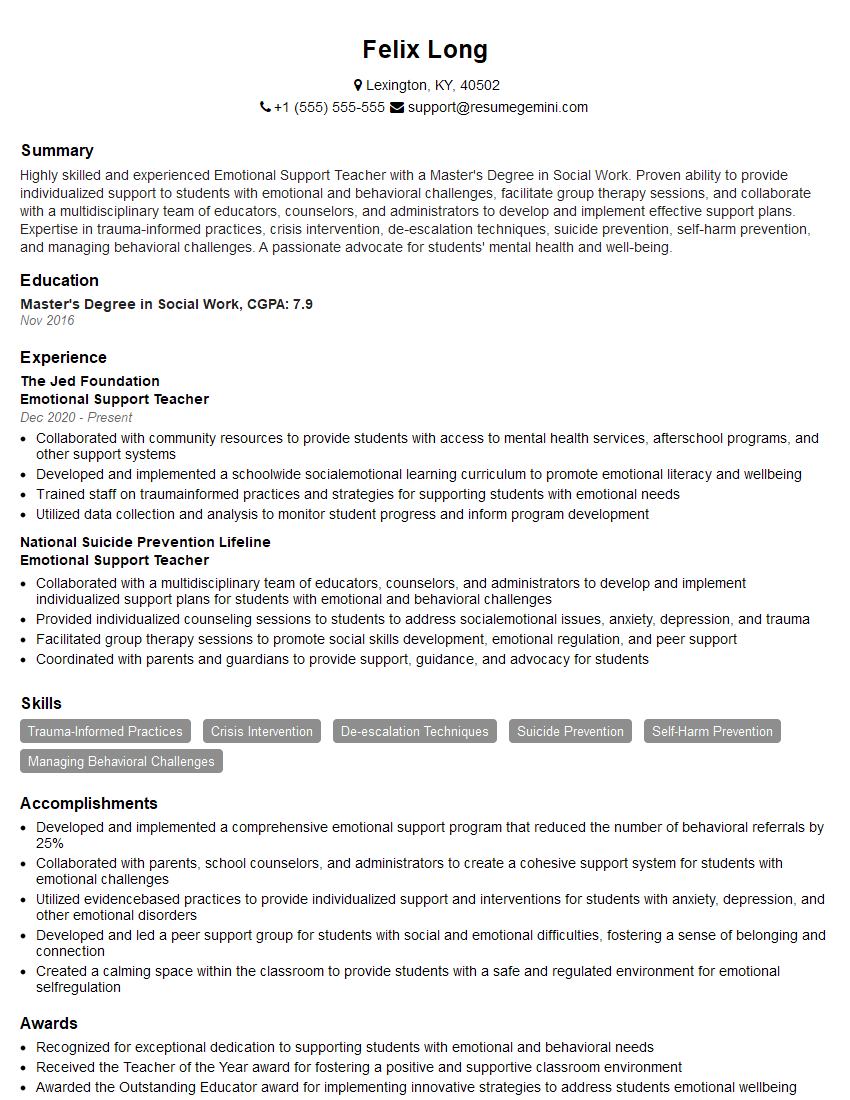
Interviewers often ask about specific skills and experiences. With ResumeGemini‘s customizable templates, you can tailor your resume to showcase the skills most relevant to the position, making a powerful first impression. Also check out Resume Template specially tailored for Emotional Support Teacher.
Career Expert Tips:
- Ace those interviews! Prepare effectively by reviewing the Top 50 Most Common Interview Questions on ResumeGemini.
- Navigate your job search with confidence! Explore a wide range of Career Tips on ResumeGemini. Learn about common challenges and recommendations to overcome them.
- Craft the perfect resume! Master the Art of Resume Writing with ResumeGemini’s guide. Showcase your unique qualifications and achievements effectively.
- Great Savings With New Year Deals and Discounts! In 2025, boost your job search and build your dream resume with ResumeGemini’s ATS optimized templates.
Researching the company and tailoring your answers is essential. Once you have a clear understanding of the Emotional Support Teacher‘s requirements, you can use ResumeGemini to adjust your resume to perfectly match the job description.
Key Job Responsibilities
Emotional Support Teachers play a vital role in educational settings, providing essential emotional and academic support to students facing emotional and behavioral challenges. Their key responsibilities encompass:
1. Assessing Student Needs
Evaluate students’ emotional and behavioral strengths and challenges to develop individualized support plans that address their unique needs.
- Conduct observations, interviews, and assessments to gather data on students’ emotional regulation, social skills, and academic performance.
- Collaborate with parents, school counselors, and other professionals to gather comprehensive information about students’ needs.
2. Facilitating Emotional Support
Provide a safe and supportive environment where students can express their emotions, develop coping mechanisms, and build resilience.
- Teach students emotional regulation techniques such as mindfulness, deep breathing, and visualization.
- Engage students in individual and group counseling sessions to address emotional concerns, social interactions, and family dynamics.
3. Academics Support
Support students’ academic progress by providing tailored instruction and accommodations that meet their individual needs.
- Modify lesson plans, assignments, and assessments to address students’ learning styles and abilities.
- Provide small-group or one-on-one tutoring to enhance students’ comprehension and skills.
4. Collaborating and Communication
Work closely with parents, school staff, and community agencies to ensure students receive comprehensive support.
- Attend and participate in student support team meetings to discuss student progress and goals.
- Keep parents informed of their child’s emotional and academic progress through regular communication and meetings.
Interview Preparation Tips
Preparing thoroughly for an Emotional Support Teacher interview is crucial to showcase your skills and demonstrate your passion for supporting students with emotional and behavioral needs.
1. Research the School and Position
Familiarize yourself with the school’s mission, values, and approach to supporting students with emotional needs. Research the specific job responsibilities and qualifications to tailor your answers accordingly.
2. Highlight Your Skills and Experience
Emphasize your understanding of emotional and behavioral challenges and your experience in providing support to students with these needs. Highlight your counseling skills, emotional regulation techniques, and innovative teaching strategies.
3. Showcase Your Compassion and Empathy
Demonstrate your compassion and empathy for students facing emotional difficulties. Share examples of how you have built rapport with students and created a safe and supportive learning environment.
4. Prepare for Specific Questions
Anticipate questions related to your experience in assessing student needs, developing individualized support plans, and collaborating with school staff and parents. Prepare specific examples to illustrate your skills and approach.
5. Be Professional and Enthusiastic
Present yourself professionally and maintain a positive and enthusiastic demeanor throughout the interview. Express your passion for supporting students with emotional needs and your commitment to making a difference in their lives.
Next Step:
Now that you’re armed with the knowledge of Emotional Support Teacher interview questions and responsibilities, it’s time to take the next step. Build or refine your resume to highlight your skills and experiences that align with this role. Don’t be afraid to tailor your resume to each specific job application. Finally, start applying for Emotional Support Teacher positions with confidence. Remember, preparation is key, and with the right approach, you’ll be well on your way to landing your dream job. Build an amazing resume with ResumeGemini