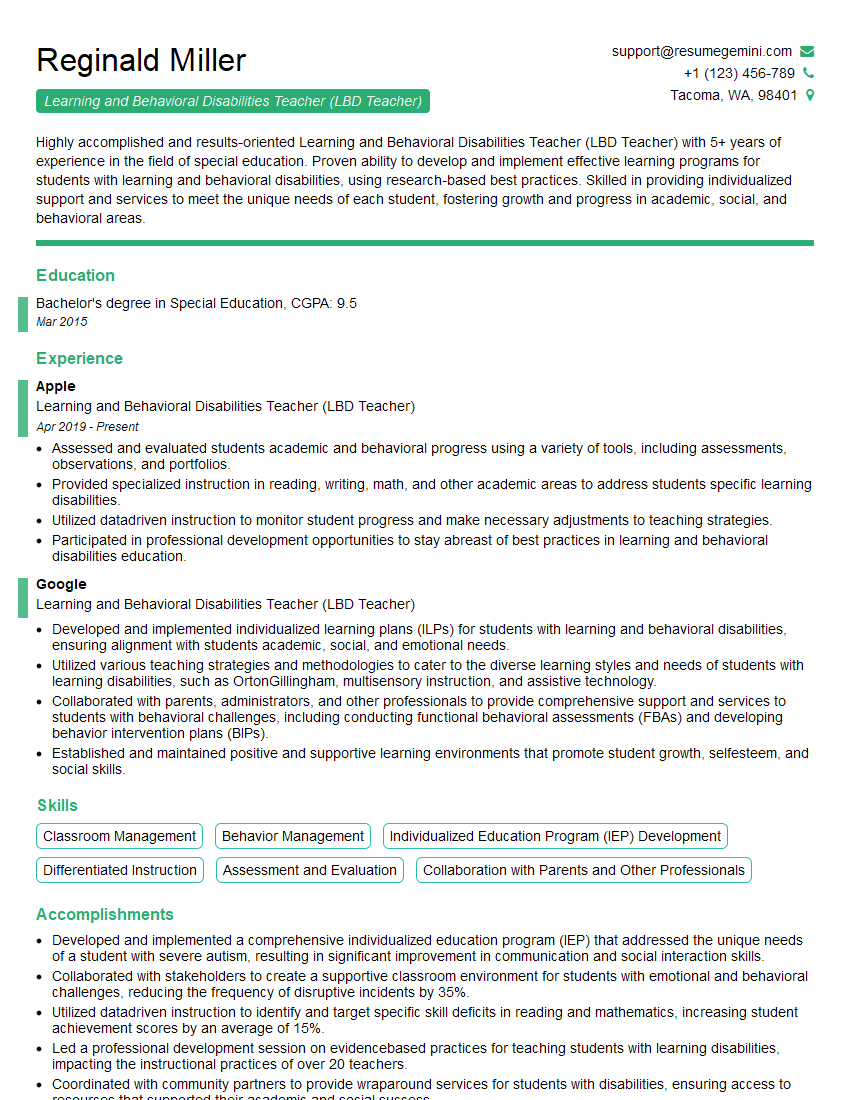
Ever felt underprepared for that crucial job interview? Or perhaps you’ve landed the interview but struggled to articulate your skills and experiences effectively? Fear not! We’ve got you covered. In this blog post, we’re diving deep into the Learning and Behavioral Disabilities Teacher (LBD Teacher) interview questions that you’re most likely to encounter. But that’s not all. We’ll also provide expert insights into the key responsibilities of a Learning and Behavioral Disabilities Teacher (LBD Teacher) so you can tailor your answers to impress potential employers.
Acing the interview is crucial, but landing one requires a compelling resume that gets you noticed. Crafting a professional document that highlights your skills and experience is the first step toward interview success. ResumeGemini can help you build a standout resume that gets you called in for that dream job.






Essential Interview Questions For Learning and Behavioral Disabilities Teacher (LBD Teacher)
1. How would you approach creating an individualized education program (IEP) for a student with learning and behavioral disabilities?
Real Candidate Answer:
- Collaborate with the student, parents, and other professionals to gather comprehensive information.
- Assess the student’s strengths, needs, and disabilities using multiple methods.
- Develop specific, measurable, and attainable goals and objectives.
- Create a curriculum and instructional plan that addresses the student’s individual needs.
- Establish a system for progress monitoring and evaluation.
2. Describe your experience in implementing evidence-based interventions for students with learning and behavioral disabilities. How do you stay updated on the latest research and best practices?
Data-Driven Instruction
- Utilize data from assessments and observations to tailor instruction.
- Adjust teaching strategies based on student progress and feedback.
Behavioral Interventions
- Positive Behavior Interventions and Supports (PBIS): Establish a structured system to prevent and respond to challenging behaviors.
- Functional Behavior Assessments (FBAs): Identify the underlying causes of problem behaviors and develop effective interventions.
- Attend professional development workshops and conferences.
- Read research journals and articles.
- Collaborate with other educators and professionals.
3. How do you assess the progress of students with learning and behavioral disabilities?
Real Candidate Answer:
- Utilize formal assessments (e.g., standardized tests, curriculum-based measures)
- Conduct ongoing observations and anecdotal records.
- Collect data on student engagement, behavior, and academic performance.
- Review student work samples.
- Engage in regular progress monitoring and progress reporting.
4. How do you collaborate with parents and families of students with learning and behavioral disabilities?
Real Candidate Answer:
- Establish open and respectful communication lines.
- Provide updates on student progress and set clear expectations.
- Actively listen to parents’ concerns and perspectives.
- Collaborate on IEP development and implementation.
- Provide resources and support to families.
5. How do you differentiate instruction for students with diverse learning needs and abilities?
Real Candidate Answer:
- Vary teaching methods (e.g., auditory, visual, kinesthetic).
- Provide multiple levels of support and scaffolding.
- Use flexible grouping strategies.
- Modify assignments and assessments based on student needs.
- Incorporate assistive technology.
6. How do you manage challenging behaviors in the classroom?
Real Candidate Answer:
- Establish clear rules and expectations.
- Implement positive behavior supports.
- Use de-escalation techniques.
- Collaborate with parents and other professionals.
- Maintain a safe and supportive learning environment.
7. How do you create a positive and supportive learning environment for students with learning and behavioral disabilities?
Real Candidate Answer:
- Establish a respectful and welcoming classroom culture.
- Foster a growth mindset.
- Provide opportunities for student success.
- Celebrate student achievements.
- Provide a safe space for students to express themselves.
8. What are some of the ethical and legal considerations when teaching students with learning and behavioral disabilities?
Real Candidate Answer:
- Maintain confidentiality.
- Avoid discrimination.
- Provide equal access to education.
- Follow IEP mandates.
- Uphold the rights of students and families.
9. How do you stay organized and plan effectively for teaching students with learning and behavioral disabilities?
Real Candidate Answer:
- Use a variety of organizational tools (e.g., lesson plans, checklists, student profiles).
- Set aside dedicated planning time.
- Collaborate with other professionals to coordinate services.
- Involve students in planning and decision-making.
10. What are your strengths and weaknesses as a Learning and Behavioral Disabilities Teacher?
Interviewee:
Strengths
- Expertise in special education and learning disabilities.
- Proven ability to differentiate instruction and meet individual student needs.
- Exceptional communication and collaboration skills.
Weaknesses
- Less experience in behavior management for severe challenging behaviors.
- Need to improve efficiency in lesson planning and time management.
Interviewers often ask about specific skills and experiences. With ResumeGemini‘s customizable templates, you can tailor your resume to showcase the skills most relevant to the position, making a powerful first impression. Also check out Resume Template specially tailored for Learning and Behavioral Disabilities Teacher (LBD Teacher).
Career Expert Tips:
- Ace those interviews! Prepare effectively by reviewing the Top 50 Most Common Interview Questions on ResumeGemini.
- Navigate your job search with confidence! Explore a wide range of Career Tips on ResumeGemini. Learn about common challenges and recommendations to overcome them.
- Craft the perfect resume! Master the Art of Resume Writing with ResumeGemini’s guide. Showcase your unique qualifications and achievements effectively.
- Great Savings With New Year Deals and Discounts! In 2025, boost your job search and build your dream resume with ResumeGemini’s ATS optimized templates.
Researching the company and tailoring your answers is essential. Once you have a clear understanding of the Learning and Behavioral Disabilities Teacher (LBD Teacher)‘s requirements, you can use ResumeGemini to adjust your resume to perfectly match the job description.
Key Job Responsibilities
Learning and Behavioral Disabilities Teachers (LBD Teachers) play a crucial role in providing specialized education to students with learning and behavioral challenges. Their primary responsibilities encompass:
1. Comprehensive Assessment and Plan Development
Conduct thorough assessments to identify students’ individual needs, strengths, and areas for improvement.
- Create individualized education plans (IEPs) or behavioral intervention plans (BIPs) that outline specific goals, interventions, and services to address each student’s specific needs.
- Monitor student progress and make necessary adjustments to plans based on data analysis.
2. Effective Instruction and Intervention
Design and deliver engaging and differentiated instruction that meets the unique learning styles and needs of students with LBD.
- Utilize evidence-based teaching methodologies, such as multi-sensory approaches, behavior modification techniques, and assistive technology.
- Implement specialized curricula and materials designed specifically for students with LBD.
3. Collaboration and Communication
Collaborate closely with parents, other educators, therapists, and administrators to ensure a cohesive approach to student education and support.
- Provide regular updates on student progress and engage in discussions about effective strategies.
- Attend meetings and participate in the development of school-wide policies and procedures related to LBD.
4. Professional Development and Advocacy
Continuously engage in professional development to stay abreast of best practices in LBD education.
- Advocate for students with LBD within the school system and the community.
- Participate in research and share knowledge to improve the educational experiences of students with LBD.
Interview Tips
To ace an interview for a Learning and Behavioral Disabilities Teacher position, follow these essential tips:
1. Research and Preparation
Thoroughly research the school district, the specific school, and the LBD program. Familiarize yourself with their educational philosophy and any unique initiatives.
- Practice common interview questions and prepare thoughtful responses that highlight your skills and experience in LBD education.
- Bring copies of your resume, portfolio, and any relevant documentation that demonstrates your qualifications.
2. Enthusiasm and Passion
Convey your passion for working with students with LBD and your commitment to creating a positive learning environment for them.
- Share examples of successful interventions or strategies you have employed in previous teaching experiences.
- Emphasize your belief in the potential of every student and your commitment to supporting their growth and development.
3. Collaboration and Communication
Highlight your strong collaboration and communication skills, both with students and their families, as well as with other educators and school staff.
- Provide examples of how you have effectively collaborated with parents to develop and implement individualized plans for students.
- Discuss your experience in working as part of an interdisciplinary team to provide comprehensive support to students with LBD.
4. Professional Development and Advocacy
Emphasize your commitment to ongoing professional development and your desire to stay abreast of best practices in LBD education.
- Describe recent workshops or conferences you have attended to enhance your knowledge and skills.
- Explain how you advocate for students with LBD within the school system and the community.
Next Step:
Now that you’re armed with the knowledge of Learning and Behavioral Disabilities Teacher (LBD Teacher) interview questions and responsibilities, it’s time to take the next step. Build or refine your resume to highlight your skills and experiences that align with this role. Don’t be afraid to tailor your resume to each specific job application. Finally, start applying for Learning and Behavioral Disabilities Teacher (LBD Teacher) positions with confidence. Remember, preparation is key, and with the right approach, you’ll be well on your way to landing your dream job. Build an amazing resume with ResumeGemini