





“The secret of getting ahead is getting started.” – Mark Twain
For mid-career professionals, crafting a compelling resume that effectively communicates your experience, skills, and value can be a daunting task. With decades of accomplishments and a wealth of knowledge to showcase, it’s crucial to approach your resume with a strategic mindset that highlights your unique strengths and aligns with the demands of the modern job market.
Highlight Your Expertise: Quantify and Showcase Your Accomplishments
In the fiercely competitive landscape of today’s job market, numbers speak louder than words. Quantify your accomplishments whenever possible, using specific metrics to demonstrate the tangible impact of your contributions. Instead of simply stating “Managed a team of engineers,” quantify your success by saying “Led a team of 10 engineers, resulting in a 25% increase in project completion rates.”
Use action verbs that convey the scope and impact of your responsibilities, such as “developed,” “implemented,” “managed,” “achieved,” and “exceeded.” These powerful verbs paint a vivid picture of your capabilities and leave a lasting impression on potential employers.
Craft a Compelling Summary: Distill Your Value in a Few Powerful Lines
Your resume summary is your golden opportunity to make a strong first impression and capture the attention of hiring managers. Use this concise statement to highlight your most relevant skills, experiences, and accomplishments that align with the specific job you’re applying for.
Keep your summary brief, typically 2-3 sentences, and tailor it to each job application. Use strong action verbs, quantify your accomplishments, and demonstrate your value proposition. For example, instead of saying “Seasoned marketing professional,” try “Results-oriented marketing executive with 10+ years of experience driving revenue growth and brand awareness.”
Target Your Skills: Align Your Resume with the Desired Job Description
Take the time to carefully review the job description for any specific skills or requirements that the employer is seeking. Match your skills accordingly, highlighting those that are most relevant to the role. Use industry-specific keywords and technical terms to showcase your expertise and make it easier for applicant tracking systems (ATS) to identify your resume as a suitable match.
Consider including a separate skills section on your resume, where you can list your technical proficiencies, software knowledge, and any other relevant abilities that may not fit naturally into your experience or summary sections.
Revamp Your Experience Section: Present Your Career Journey with Impact
Your experience section is the backbone of your resume, providing a chronological overview of your professional history. To make the most of this section, focus on presenting your career journey in a way that showcases your growth, accomplishments, and impact.
Highlight Key Responsibilities and Achievements
For each role you’ve held, list your key responsibilities and accomplishments using bullet points. Quantify your results whenever possible and use action verbs that convey the scope and impact of your work.
Use Strong Action Verbs
Action verbs are the workhorses of your resume, conveying the specific actions you took in your roles. Choose verbs that are strong, active, and relevant to the skills and experiences you’re highlighting. For example, instead of saying “Responsible for managing projects,” try “Managed a portfolio of projects, resulting in a 15% increase in project completion rates.”
Showcase Your Career Progression
Your resume should reflect your career progression and demonstrate how your skills and responsibilities have evolved over time. Use your experience section to highlight your growth and advancement, showcasing your ability to take on greater responsibilities and make a significant impact in your field.
Modernize Your Design: Refresh Your Resume’s Look and Feel for 2026
First impressions matter, and your resume is no exception. In 2026, it’s essential to have a modern, professional-looking resume that stands out from the crowd and showcases your attention to detail.
Consider using a professional resume template that is clean, easy to read, and visually appealing. Choose a font that is professional and easy on the eyes, such as Arial, Helvetica, or Times New Roman. Use headings and subheadings to organize your content and make it easy for hiring managers to scan your resume quickly.
Keep your resume concise and focused, typically around one page in length. Use white space effectively to create a visually appealing and easy-to-read document. Remember, your resume should be a reflection of your professionalism and attention to detail.
By following these expert tips, mid-career professionals can elevate their resumes to the next level, highlighting their experience, skills, and value in today’s competitive job market. Remember, your resume is your chance to make a lasting impression and secure that dream job. Invest time and effort into crafting a compelling and effective document that will showcase your unique strengths and propel your career forward.
For further assistance in creating a powerful resume that will help you stand out, consider using ResumeGemini. Our resume builder offers a wide range of professional templates, pre-built resume samples, and expert writing tips to help job seekers of all levels create resumes that get results.
Career Expert Tips:
- Select the ideal resume template to showcase your professional experience effectively.
- Master the art of resume writing to highlight your unique qualifications and achievements.
- Checkout the resume writing tips for guidance and best practices.
- Make your 2025 brighter with a new job. Build a powerful resume with ResumeGemini and save big, enjoy exclusive discounts on premium templates.
Frequently Asked Questions (FAQ’s)
How can I quantify my accomplishments on my resume?
Quantifying your accomplishments on your resume adds credibility and provides tangible evidence of your impact and contributions. To effectively quantify your accomplishments, follow these steps:
- Identify Key Performance Indicators (KPIs): Determine the specific metrics or benchmarks relevant to your role and responsibilities.
- Gather and Organize Data: Collect data from performance reviews, project reports, or other sources to support your claims.
- Use Specific Numbers: Express your accomplishments using precise and quantifiable terms, such as percentages, dollar amounts, or units of measurement.
- Connect to Impact: Highlight the tangible outcomes and benefits resulting from your efforts. Demonstrate how your actions contributed to business objectives or improved team performance.
What is the best way to write a compelling resume summary?
An effective resume summary serves as a concise and impactful introduction to your skills, experience, and career aspirations. To craft a compelling resume summary, consider the following tips:
- Start with a Strong Hook: Begin with a powerful statement that captures the reader’s attention and conveys your value proposition.
- Quantify Your Accomplishments: Include 1-2 quantifiable accomplishments that demonstrate your impact and contributions.
- Highlight Relevant Skills: List the most relevant skills and expertise that align with the job you’re applying for.
- Tailor to Each Position: Customize your resume summary for each specific job application to ensure it addresses the key requirements.
- Keep it Concise: Limit your resume summary to 3-4 sentences, approximately 100-150 words.
How do I tailor my resume to specific job descriptions?
Tailoring your resume to each job description is essential to increase your chances of making a positive impression. Follow these steps to effectively tailor your resume:
- Analyze the Job Description: Carefully read and identify the key skills, responsibilities, and qualifications required for the position.
- Use Relevant Keywords: Incorporate the specific keywords mentioned in the job description throughout your resume, including your skills, experience, and accomplishments.
- Highlight Transferable Skills: If you don’t have direct experience in all areas listed in the job description, emphasize transferable skills that are relevant to the role.
- Demonstrate Your Value: Use specific examples and quantify your accomplishments to show how you can contribute to the company and meet their needs.
- Proofread Carefully: After completing your tailored resume, proofread it thoroughly to ensure there are no errors and that it presents you professionally.
What are the key design elements I should consider for my resume?
The design of your resume plays a crucial role in making a positive impression. Consider the following key design elements:
- Use a Professional Template: Choose a template that is clean, modern, and easy to read. Avoid using unprofessional or outdated designs.
- Select a Readable Font: Use a font that is clear and legible, such as Arial, Calibri, or Georgia. Avoid using fancy or decorative fonts that may be difficult to read.
- Maintain White Space: Ensure there is sufficient white space on your resume, allowing for easy readability and preventing it from appearing cluttered.
- Use Section Headings: Organize your resume using clear and concise section headings, making it easy for the reader to scan and find relevant information.
- Emphasize Important Information: Use bolding, italics, or underlining to highlight important information, such as your name, contact details, and key skills.
How can I revamp my experience section to make it more impactful?
Revamping your experience section can significantly enhance the effectiveness of your resume. Follow these tips for a more impactful experience section:
- Use Active Language: Use strong action verbs and avoid passive language. This makes your accomplishments appear more dynamic and impressive.
- Quantify Your Results: Whenever possible, use numbers and metrics to quantify your accomplishments and demonstrate your impact.
- Use STAR Method: For each experience, use the STAR method to provide context and highlight your contributions: Situation, Task, Action, Result.
- Highlight Transferable Skills: If your previous roles were not directly relevant to the job you’re applying for, emphasize transferable skills that can be applied to the new role.
- Tailor to Each Position: Customize your experience section for each job application, highlighting the experiences most relevant to the specific position.
What are some tips for writing a mid-career resume?
A mid-career resume should effectively showcase your extensive experience and skills while highlighting your value to potential employers. Here are some tips:
- Focus on Accomplishments: Emphasize your accomplishments in previous roles and quantify them whenever possible.
- Highlight Transferable Skills: If you have experience in different industries or functions, highlight transferable skills that are relevant to your target roles.
- Consider a Functional Resume: A functional resume can be effective for mid-career professionals as it allows you to organize your skills and experience by categories.
- Use Keywords: Include relevant keywords throughout your resume to improve its visibility to recruiters and hiring managers using applicant tracking systems (ATS).
- Keep it Concise: While your resume should be comprehensive, aim to keep it within 1-2 pages to maintain focus and readability.
Next Step:
Take your resume to the next level with ResumeGemini. Our platform provides a step-by-step guide and access to premium, ATS-friendly resume templates that will help you create a standout resume that gets you noticed. Start building your winning resume today at ResumeGemini!
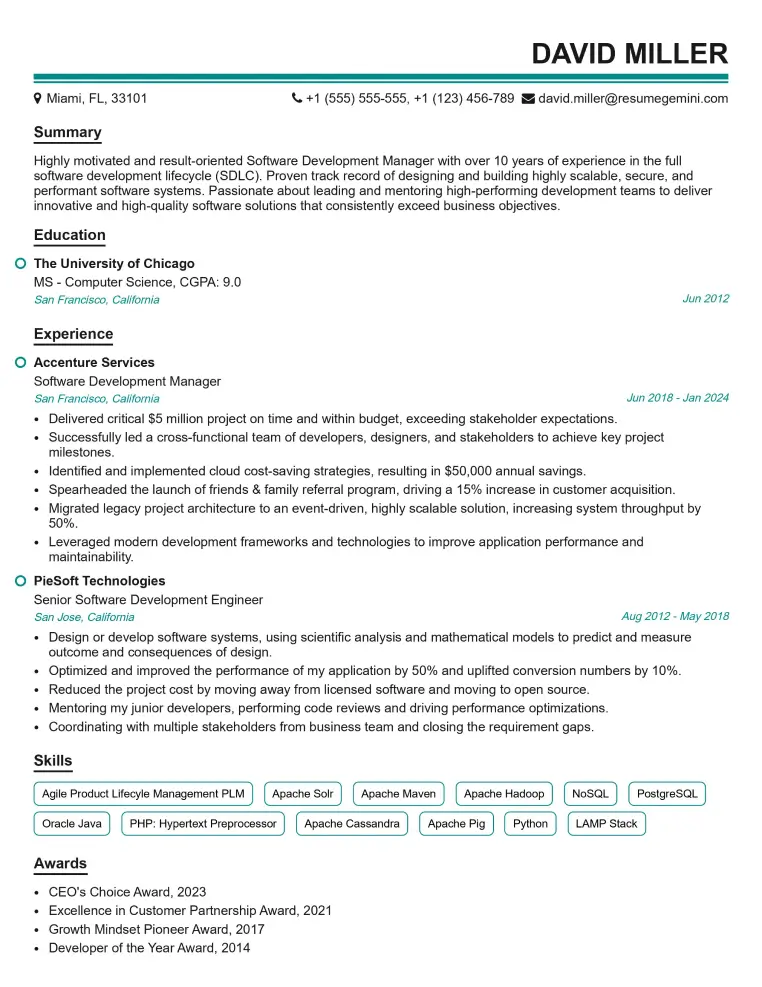
Elevate your job search with our premium resume templates. Here is an amazing resume template that can be used to build a professional and elegant resume. You can build a resume from scratch or revamp your existing resume. Impress hiring managers and secure your next opportunity.
- Top 50 Most Common Interview Questions
- The Psychology of a Great Resume: Hacks to Impress Recruiters
- What Mistakes to Avoid When Writing a Resume: A Comprehensive Guide
- Elevate Your Career with Expert Resume Building: Introducing ResumeGemini
- How to Write a Resume Using Google Gemini: Step-by-Step Guide