Ever felt underprepared for that crucial job interview? Or perhaps you’ve landed the interview but struggled to articulate your skills and experiences effectively? Fear not! We’ve got you covered. In this blog post, we’re diving deep into the Organic Gardening Teacher interview questions that you’re most likely to encounter. But that’s not all. We’ll also provide expert insights into the key responsibilities of a Organic Gardening Teacher so you can tailor your answers to impress potential employers.
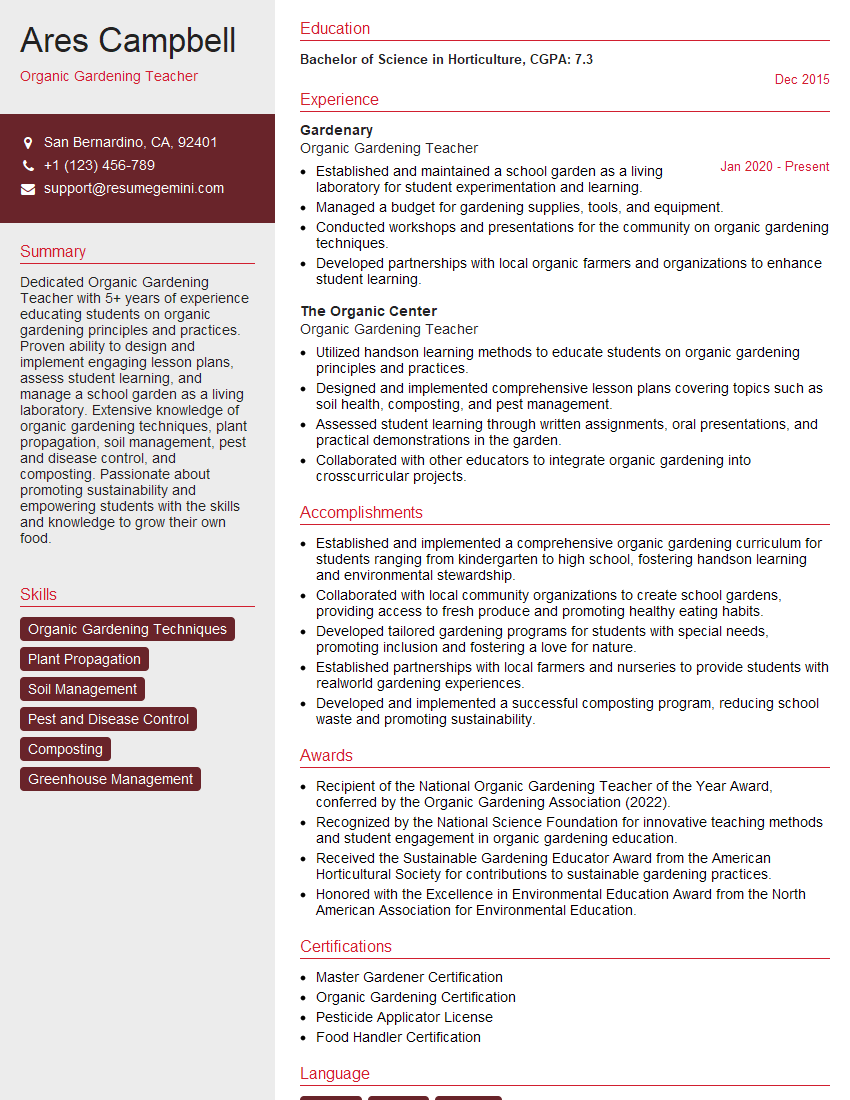
Acing the interview is crucial, but landing one requires a compelling resume that gets you noticed. Crafting a professional document that highlights your skills and experience is the first step toward interview success. ResumeGemini can help you build a standout resume that gets you called in for that dream job.






Essential Interview Questions For Organic Gardening Teacher
1. What are the fundamental principles of organic gardening?
- Cultivating a healthy soil ecosystem that supports diverse microorganisms.
- Utilizing natural fertilizers like compost, manure, and crop rotations to enrich the soil.
- Encouraging biodiversity by planting companion plants and attracting beneficial insects.
- Managing pests and diseases through natural methods such as beneficial insects, crop rotation, and disease-resistant varieties.
- Minimizing the use of synthetic pesticides and fertilizers to preserve the soil’s health and ecological balance.
2. Describe the different methods of soil preparation in organic gardening.
Tilling and Cultivating
- Turning the soil to loosen it and improve aeration.
- Incorporating organic matter to enhance soil structure and fertility.
No-Till Gardening
- Minimizing soil disturbance to preserve its microbial communities.
- Covering the soil with mulch to suppress weeds and retain moisture.
Raised Beds
- Building elevated beds filled with amended soil to improve drainage and extend the growing season.
- Facilitating easier access and maintenance of plants.
3. Explain the role of microorganisms in organic gardening.
- Decompose organic matter, releasing nutrients for plant uptake.
- Improve soil structure and water retention capacity.
- Suppress plant diseases by producing antimicrobial substances.
- Enhance nutrient availability through symbiotic relationships with plants.
- Promote plant growth and vigor by producing plant hormones and growth regulators.
4. Discuss the importance of crop rotation in organic gardening.
- Breaks pest and disease cycles by planting different crops in the same location each year.
- Improves soil health by diversifying the microbial population and preventing nutrient depletion.
- Enhances plant growth by rotating nitrogen-fixing crops with heavy feeders.
- Reduces the need for synthetic fertilizers by incorporating nitrogen-fixing legumes into the rotation.
- Attracts beneficial insects that support overall garden health.
5. How do you deal with pests and diseases in organic gardening?
- Utilizing natural pest control methods like beneficial insects, companion planting, and crop rotation.
- Applying organic pesticides derived from natural sources, such as neem oil or insecticidal soap.
- Growing disease-resistant varieties and practicing cultural techniques that promote plant health.
- Maintaining a balanced ecosystem that supports beneficial organisms.
- Monitoring the garden regularly to detect and address pest and disease issues promptly.
6. Explain the concept of companion planting in organic gardening.
- Planting different species together to enhance growth and benefit each other.
- Repelling pests by releasing certain scents or attracting beneficial insects.
- Improving soil health by fixing nitrogen or providing nutrients.
- Maximizing space by using vertical trellises or planting compact varieties.
- Creating a more visually appealing and diverse garden.
7. Describe the process of composting and its benefits in organic gardening.
- Decomposing organic materials, such as food scraps and yard waste, to create a nutrient-rich soil amendment.
- Enhancing soil fertility by providing essential nutrients.
- Improving soil structure and water retention capacity.
- Suppressing plant diseases by reducing pathogens.
- Promoting beneficial soil microorganisms.
8. How do you incorporate sustainability into your organic gardening practices?
- Conserving water through efficient irrigation methods and drought-tolerant plants.
- Using renewable energy sources, such as solar panels or windmills, to power equipment.
- Minimizing waste by composting and recycling organic materials.
- Promoting biodiversity by attracting wildlife and planting native species.
- Educating others about sustainable organic gardening practices.
9. Describe your experience in teaching organic gardening to students or other individuals.
I have a proven track record of successfully teaching organic gardening concepts and practices to various audiences. I have conducted workshops, classes, and individual sessions for students of all ages, community groups, and aspiring gardeners. I tailor my teaching style to meet the specific needs and interests of my students.
10. What are your methods for assessing student learning in your organic gardening classes?
- Observing students during hands-on activities and demonstrations.
- Administering quizzes and exams to test knowledge and comprehension.
- Assigning written assignments, such as garden plans or project reports.
- Encouraging student participation in discussions and presentations.
- Providing constructive feedback and ongoing support to enhance learning.
Interviewers often ask about specific skills and experiences. With ResumeGemini‘s customizable templates, you can tailor your resume to showcase the skills most relevant to the position, making a powerful first impression. Also check out Resume Template specially tailored for Organic Gardening Teacher.
Career Expert Tips:
- Ace those interviews! Prepare effectively by reviewing the Top 50 Most Common Interview Questions on ResumeGemini.
- Navigate your job search with confidence! Explore a wide range of Career Tips on ResumeGemini. Learn about common challenges and recommendations to overcome them.
- Craft the perfect resume! Master the Art of Resume Writing with ResumeGemini’s guide. Showcase your unique qualifications and achievements effectively.
- Great Savings With New Year Deals and Discounts! In 2025, boost your job search and build your dream resume with ResumeGemini’s ATS optimized templates.
Researching the company and tailoring your answers is essential. Once you have a clear understanding of the Organic Gardening Teacher‘s requirements, you can use ResumeGemini to adjust your resume to perfectly match the job description.
Key Job Responsibilities
An Organic Gardening Teacher is responsible for educating individuals about the principles and practices of organic gardening. They play a vital role in promoting sustainable and healthy gardening techniques.
1. Teaching and Curriculum Development
Develop and deliver lesson plans, workshops, and presentations on various aspects of organic gardening.
- Cover topics such as soil health, composting, seed starting, pest and disease management, and harvesting techniques.
- Create and maintain teaching materials, including handouts, online resources, and demonstration gardens.
2. Student Support and Assessment
Provide guidance and support to students throughout their learning journey.
- Answer questions, provide feedback, and assess students’ progress.
- Develop and administer assessments to measure students’ understanding of organic gardening principles.
3. Research and Best Practices
Stay up-to-date on the latest research and best practices in organic gardening.
- Attend workshops, conferences, and webinars to expand knowledge and skills.
- Collaborate with other experts in the field to share and learn innovative techniques.
4. Outreach and Community Engagement
Participate in outreach programs and events to promote organic gardening in the community.
- Lead guided tours, host workshops, and give presentations at local schools, community centers, and gardening clubs.
- Collaborate with local businesses and organizations to promote sustainable gardening practices.
Interview Tips
Preparing thoroughly for an interview can significantly increase your chances of success. Here are some tips to help you ace your interview for an Organic Gardening Teacher position:
1. Research the Organization and Position
Familiarize yourself with the organization’s mission, values, and goals, as well as the specific requirements of the position.
- Visit the organization’s website and read any available materials about their gardening programs.
- Review the job description carefully and identify the key skills and experiences required.
2. Showcase Your Passion and Expertise
Demonstrate your enthusiasm for organic gardening and your in-depth knowledge of its principles and practices.
- Share examples of your experience in organic gardening, including any projects or volunteer work.
- Highlight your understanding of soil health, composting, and sustainable pest and disease management.
3. Prepare for Common Interview Questions
Practice answering common interview questions to build confidence and demonstrate your preparedness.
- Be ready to discuss your teaching philosophy and experience, highlighting your ability to engage students.
- Prepare examples of how you have motivated and inspired others in the field of organic gardening.
4. Bring a Portfolio and Testimonials
If possible, bring a portfolio showcasing your lesson plans, teaching materials, or examples of student work.
- Testimonials from previous students or colleagues can also be valuable.
- These materials provide tangible evidence of your skills and experience.
5. Dress Professionally and Be Punctual
First impressions matter, so dress professionally and arrive on time for your interview.
- Choose clothing that is appropriate for the organization’s culture and the nature of the position.
- Being punctual shows respect for the interviewer’s time and demonstrates your professionalism.
Next Step:
Armed with this knowledge, you’re now well-equipped to tackle the Organic Gardening Teacher interview with confidence. Remember, a well-crafted resume is your first impression. Take the time to tailor your resume to highlight your relevant skills and experiences. And don’t forget to practice your answers to common interview questions. With a little preparation, you’ll be on your way to landing your dream job. So what are you waiting for? Start building your resume and start applying! Build an amazing resume with ResumeGemini.