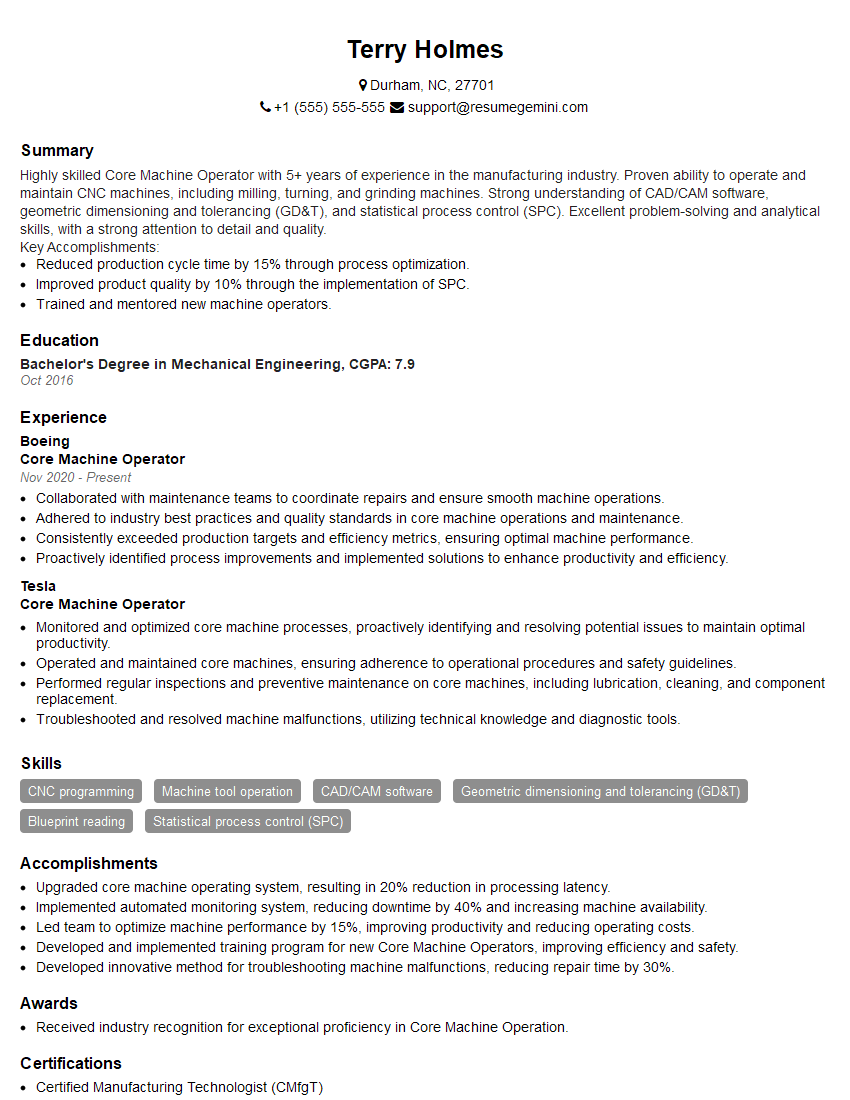
Feeling lost in a sea of interview questions? Landed that dream interview for Core Machine Operator but worried you might not have the answers? You’re not alone! This blog is your guide for interview success. We’ll break down the most common Core Machine Operator interview questions, providing insightful answers and tips to leave a lasting impression. Plus, we’ll delve into the key responsibilities of this exciting role, so you can walk into your interview feeling confident and prepared.
Acing the interview is crucial, but landing one requires a compelling resume that gets you noticed. Crafting a professional document that highlights your skills and experience is the first step toward interview success. ResumeGemini can help you build a standout resume that gets you called in for that dream job.






Essential Interview Questions For Core Machine Operator
1. Describe the key responsibilities of a Core Machine Operator?
As a Core Machine Operator, my primary responsibilities would involve:
- Operating and maintaining core machines, ensuring smooth and efficient production.
- Monitoring machine performance, identifying and resolving any issues promptly.
- Adhering to safety protocols and maintaining a clean and organized work area.
- Collaborating with other team members to support production goals.
- Keeping accurate records of machine operations and production data.
2. What are the different types of core machines you have operated? Describe their functions.
Plunger Machine
- Produces cores using a plunger to push molten metal into a mold.
- Used for high-volume production of small, intricate cores.
Blower Machine
- Creates cores using a high-pressure stream of air to blow sand into a mold.
- Suitable for large, complex cores.
Shell Machine
- Produces cores using a heated metal pattern to cure a resin-coated sand mix.
- Provides high dimensional accuracy and smooth surface finish.
3. How do you ensure the accuracy of core dimensions and prevent casting defects?
Ensuring core accuracy and preventing casting defects involve the following steps:
- Regularly calibrating and maintaining core machines.
- Using high-quality sand and binders that meet specifications.
- Inspecting cores before and after the curing process to identify any deviations.
- Adjusting machine settings as needed to achieve the desired dimensions.
- Following proper storage procedures to prevent core distortion or damage.
4. What are the essential safety precautions to observe when operating core machines?
Operating core machines safely requires strict adherence to the following precautions:
- Wearing appropriate personal protective equipment, including gloves, safety glasses, and earplugs.
- Keeping the work area clean and free of tripping hazards.
- Ensuring that all guards and safety devices are in place and operational.
- Never attempting to clear jams or make adjustments while the machine is running.
- Following proper lockout/tagout procedures when performing maintenance or repairs.
5. How do you troubleshoot common core machine problems, such as sand sticking or core breakage?
Troubleshooting common core machine problems involves:
- Identifying the source of the problem through observation and experience.
- Checking for issues such as incorrect sand moisture content, worn parts, or improper machine settings.
- Making adjustments to the machine or replacing faulty components.
- Consulting with supervisors or maintenance personnel if the problem is beyond my expertise.
6. Describe your experience in maintaining core machines, including preventive maintenance and repairs.
My maintenance experience includes:
- Performing regular inspections and lubrication.
- Replacing worn parts, such as belts, hoses, and filters.
- Troubleshooting electrical and mechanical issues.
- Coordinating with maintenance personnel for major repairs.
7. How do you stay updated on the latest developments and best practices in core making?
I stay updated on core making advancements through:
- Attending industry conferences and workshops.
- Reading trade publications and technical articles.
- Consulting with experts and vendors.
- Exploring online resources and forums.
8. How do you handle working in a fast-paced production environment with strict deadlines?
In a fast-paced production environment, I manage deadlines by:
- Prioritizing tasks based on urgency.
- Efficiently allocating time and resources.
- Maintaining open communication with colleagues and supervisors.
- Seeking assistance when necessary.
9. How do you contribute to continuous improvement and efficiency in the core making process?
My contributions to continuous improvement include:
- Identifying areas for optimization.
- Suggesting process improvements.
- Implementing new technologies and techniques.
- Sharing knowledge and best practices with colleagues.
10. How do you maintain a positive and collaborative work environment?
I foster a positive work environment by:
- Communicating effectively with colleagues and supervisors.
- Providing support and assistance to others.
- Respecting different perspectives and opinions.
- Promoting a culture of teamwork and collaboration.
Interviewers often ask about specific skills and experiences. With ResumeGemini‘s customizable templates, you can tailor your resume to showcase the skills most relevant to the position, making a powerful first impression. Also check out Resume Template specially tailored for Core Machine Operator.
Career Expert Tips:
- Ace those interviews! Prepare effectively by reviewing the Top 50 Most Common Interview Questions on ResumeGemini.
- Navigate your job search with confidence! Explore a wide range of Career Tips on ResumeGemini. Learn about common challenges and recommendations to overcome them.
- Craft the perfect resume! Master the Art of Resume Writing with ResumeGemini’s guide. Showcase your unique qualifications and achievements effectively.
- Great Savings With New Year Deals and Discounts! In 2025, boost your job search and build your dream resume with ResumeGemini’s ATS optimized templates.
Researching the company and tailoring your answers is essential. Once you have a clear understanding of the Core Machine Operator‘s requirements, you can use ResumeGemini to adjust your resume to perfectly match the job description.
Key Job Responsibilities
Core Machine Operators are responsible for the safe and efficient operation of core machines in a foundry. Their key responsibilities include:
1. Machine Operation
Operating and monitoring core machines, including hot box, cold box, and shell core machines
- Setting up and adjusting machine parameters
- Loading and unloading core boxes
- Monitoring core production and quality
2. Maintenance and Troubleshooting
Performing routine maintenance and troubleshooting on core machines
- Identifying and resolving operational issues
- Cleaning and lubricating machines
- Replacing worn or damaged parts
3. Safety and Quality Control
Ensuring the safe and efficient operation of core machines
- Following safety procedures
- Monitoring core quality and taking corrective action
- Maintaining a clean and organized work area
4. Production Planning and Scheduling
Assisting in production planning and scheduling
- Estimating core production times
- Coordinating with other departments
- Ensuring timely delivery of cores
Interview Tips
Preparing for an interview for a Core Machine Operator position requires a combination of technical knowledge and preparation. Here are some tips to help you ace the interview:
1. Research the Company and the Position
Take the time to research the company you are applying to and the specific Core Machine Operator position. This will give you a better understanding of the company’s culture, values, and the specific responsibilities of the role.
- Visit the company website
- Review the job description carefully
- Look for news articles or social media posts about the company
2. Practice Your Answers to Common Interview Questions
There are several common interview questions that you are likely to be asked, such as “Tell me about yourself” or “Why are you interested in this position?”. It is helpful to practice your answers to these questions in advance so that you can deliver them confidently and clearly.
- Prepare a brief introduction that highlights your skills and experience
- Explain why you are interested in the position and the company
- Describe your experience with core machines and foundry operations
3. Be Prepared to Talk About Your Safety and Quality Control Experience
Safety and quality control are of paramount importance in foundry operations. During the interview, the employer will want to know about your experience in these areas. Be prepared to discuss your knowledge of safety procedures, your ability to identify and resolve quality issues, and your commitment to maintaining a safe and efficient work environment.
- Provide examples of your experience with safety procedures
- Explain how you have identified and resolved quality issues in the past
- Discuss your commitment to safety and quality control
4. Ask Questions
Asking questions at the end of the interview shows that you are interested in the position and the company. It also gives you an opportunity to learn more about the role and the company’s culture.
- Ask about the company’s growth plans
- Inquire about opportunities for training and development
- Ask about the company’s safety record and quality control procedures
Next Step:
Armed with this knowledge, you’re now well-equipped to tackle the Core Machine Operator interview with confidence. Remember, a well-crafted resume is your first impression. Take the time to tailor your resume to highlight your relevant skills and experiences. And don’t forget to practice your answers to common interview questions. With a little preparation, you’ll be on your way to landing your dream job. So what are you waiting for? Start building your resume and start applying! Build an amazing resume with ResumeGemini.