Feeling lost in a sea of interview questions? Landed that dream interview for Jockey but worried you might not have the answers? You’re not alone! This blog is your guide for interview success. We’ll break down the most common Jockey interview questions, providing insightful answers and tips to leave a lasting impression. Plus, we’ll delve into the key responsibilities of this exciting role, so you can walk into your interview feeling confident and prepared.
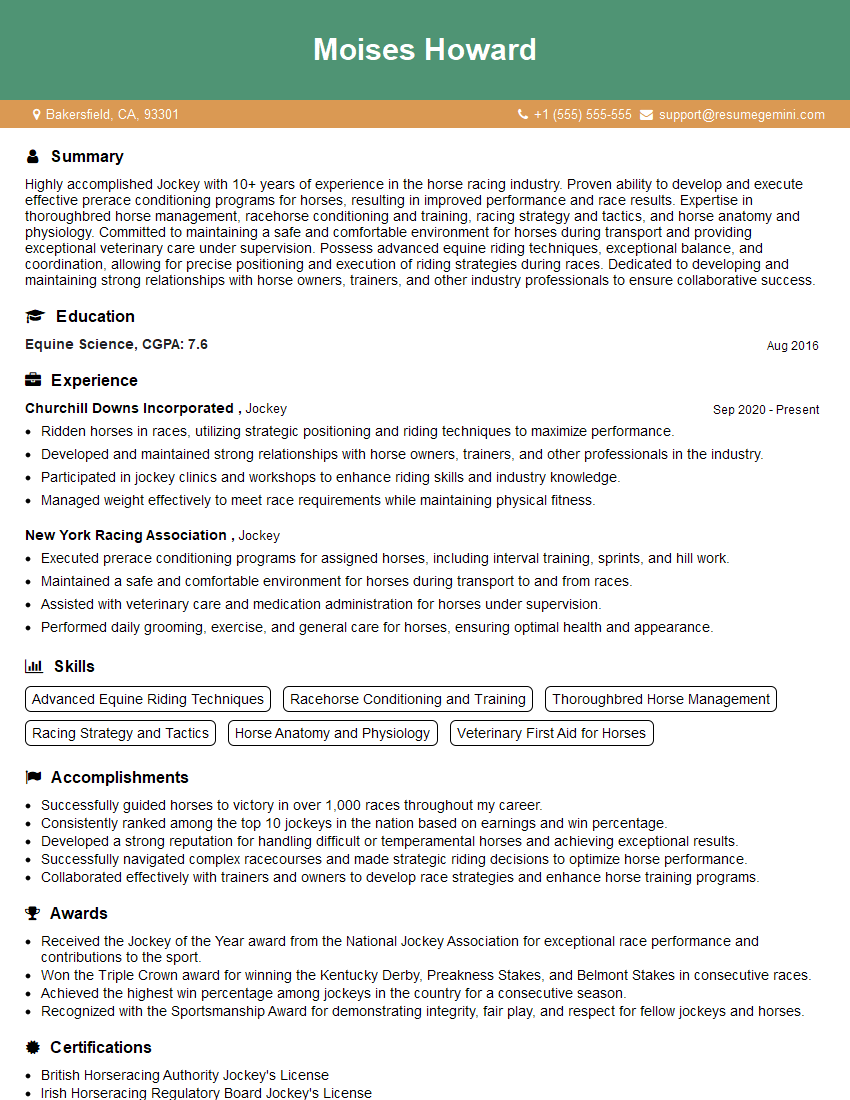
Acing the interview is crucial, but landing one requires a compelling resume that gets you noticed. Crafting a professional document that highlights your skills and experience is the first step toward interview success. ResumeGemini can help you build a standout resume that gets you called in for that dream job.






Essential Interview Questions For Jockey
1. How do you stay updated with the latest trends in horse riding and racing?
- Attend industry conferences and seminars
- Read equestrian magazines and journals
- Follow experts and influencers on social media
- Network with other jockeys and trainers
- Participate in online forums and discussion groups
2. What are the key factors you consider when assessing a horse’s fitness and readiness for a race?
Physical factors
- Body weight and muscle mass
- Cardiovascular health
- Muscle tone and flexibility
- Hoof and leg condition
- Coat quality
Mental factors
- Temperament and behavior
- Training progress
- Past performance
- Response to pressure
- Ability to focus and concentrate
Track conditions
- Surface type and condition
- Weather conditions
- Distance and configuration of the race
3. Describe your approach to developing a winning race strategy.
- Study the race conditions and competition
- Analyze the horse’s strengths and weaknesses
- Consider the jockey’s style and experience
- Formulate a plan for the start, pace, and finish
- Adjust the strategy as needed during the race
4. How do you handle pressure and make quick decisions in high-stakes races?
- Stay calm and focused under pressure
- Trust in my training and preparation
- Make decisions based on sound judgment
- Communicate effectively with the trainer
- Learn from past experiences
5. What are your strengths and weaknesses as a jockey?
- Excellent horsemanship skills
- Strong tactical knowledge
- Ability to handle pressure
- Excellent communication skills
- Proven track record of success
- Limited experience with certain breeds or disciplines
- Can be too aggressive at times
- Need to improve weight management
Strengths
Weaknesses
6. How do you ensure the horse’s safety and well-being during races and training sessions?
- Follow all safety protocols and industry best practices
- Monitor the horse’s condition and behavior closely
- Provide adequate rest and nutrition
- Seek veterinary attention promptly when necessary
- Protect the horse from injury or illness
7. What are the ethical implications of horse racing and how do you navigate them?
- Ensure the horse’s welfare is prioritized
- Adhere to anti-doping regulations
- Maintain integrity and fairness in competition
- Promote responsible gambling practices
- Respect the traditions and culture of horse racing
8. How do you maintain your physical fitness and mental well-being as a jockey?
- Regular exercise and training
- Healthy diet and nutrition
- Adequate sleep and rest
- Injury prevention and rehabilitation
- Stress management techniques
- Emotional regulation
- Support from family and friends
- Seeking professional help when needed
Physical fitness
Mental well-being
9. What are your career goals and aspirations as a jockey?
- Win major races and championships
- Represent my country in international competitions
- Become a respected and admired jockey in the industry
- Mentor and train aspiring jockeys
- Contribute to the advancement of horse racing
10. Why are you interested in this particular jockey position?
- The reputation of the trainer and stable
- The quality of the horses in training
- The opportunity to compete at a high level
- The chance to learn from experienced professionals
- The location and facilities of the training center
Interviewers often ask about specific skills and experiences. With ResumeGemini‘s customizable templates, you can tailor your resume to showcase the skills most relevant to the position, making a powerful first impression. Also check out Resume Template specially tailored for Jockey.
Career Expert Tips:
- Ace those interviews! Prepare effectively by reviewing the Top 50 Most Common Interview Questions on ResumeGemini.
- Navigate your job search with confidence! Explore a wide range of Career Tips on ResumeGemini. Learn about common challenges and recommendations to overcome them.
- Craft the perfect resume! Master the Art of Resume Writing with ResumeGemini’s guide. Showcase your unique qualifications and achievements effectively.
- Great Savings With New Year Deals and Discounts! In 2025, boost your job search and build your dream resume with ResumeGemini’s ATS optimized templates.
Researching the company and tailoring your answers is essential. Once you have a clear understanding of the Jockey‘s requirements, you can use ResumeGemini to adjust your resume to perfectly match the job description.
Key Job Responsibilities
Jockeys play a pivotal role in the world of horse racing. They possess exceptional skills that enable them to guide their mounts to victory.
1. Ride and Guide Horses
Jockeys skillfully ride and guide racehorses during competitions. They possess the ability to control the horse’s speed, direction, and overall performance through careful handling of the reins, whip, and body language.
2. Maintain Physical Fitness
Maintaining optimal physical fitness is crucial for jockeys. Racing requires strength, agility, and endurance. Jockeys must undergo regular exercise and training to ensure they are in top condition for competitions.
3. Study and Analyze Race Conditions
To excel in races, jockeys thoroughly study and analyze race conditions, including the track surface, weather conditions, and the strengths and weaknesses of both the horse and competitors.
4. Follow Race Instructions
Jockeys closely follow instructions provided by trainers and owners. They execute strategies and tactics during races to optimize the horse’s performance and increase their chances of victory.
Interview Tips
Preparing thoroughly for an interview is essential for aspiring jockeys. By following these tips and practicing your responses, you can confidently showcase your abilities and increase your chances of impressing potential employers.
1. Research the Racecourse and Industry
Demonstrate your knowledge of the racecourse where you’re applying and the horse racing industry in general. Research the history, recent events, and key players to show your genuine interest and understanding of the field.
2. Highlight Relevant Skills and Experience
Emphasize your riding skills, physical fitness, and ability to study and analyze race conditions. Quantify your experience whenever possible, providing specific examples of successful races or training achievements.
3. Practice Answering Common Interview Questions
Prepare for common interview questions such as “Why do you want to become a jockey?” and “What are your strengths and weaknesses as a rider?” Rehearse your answers to ensure they are clear, concise, and demonstrate your passion for horse racing.
4. Dress Professionally and Arrive Punctually
First impressions matter. Dress professionally for your interview, arriving on time and in a well-groomed manner. This shows respect for the interviewer and the profession.
Next Step:
Armed with this knowledge, you’re now well-equipped to tackle the Jockey interview with confidence. Remember, preparation is key. So, start crafting your resume, highlighting your relevant skills and experiences. Don’t be afraid to tailor your application to each specific job posting. With the right approach and a bit of practice, you’ll be well on your way to landing your dream job. Build your resume now from scratch or optimize your existing resume with ResumeGemini. Wish you luck in your career journey!