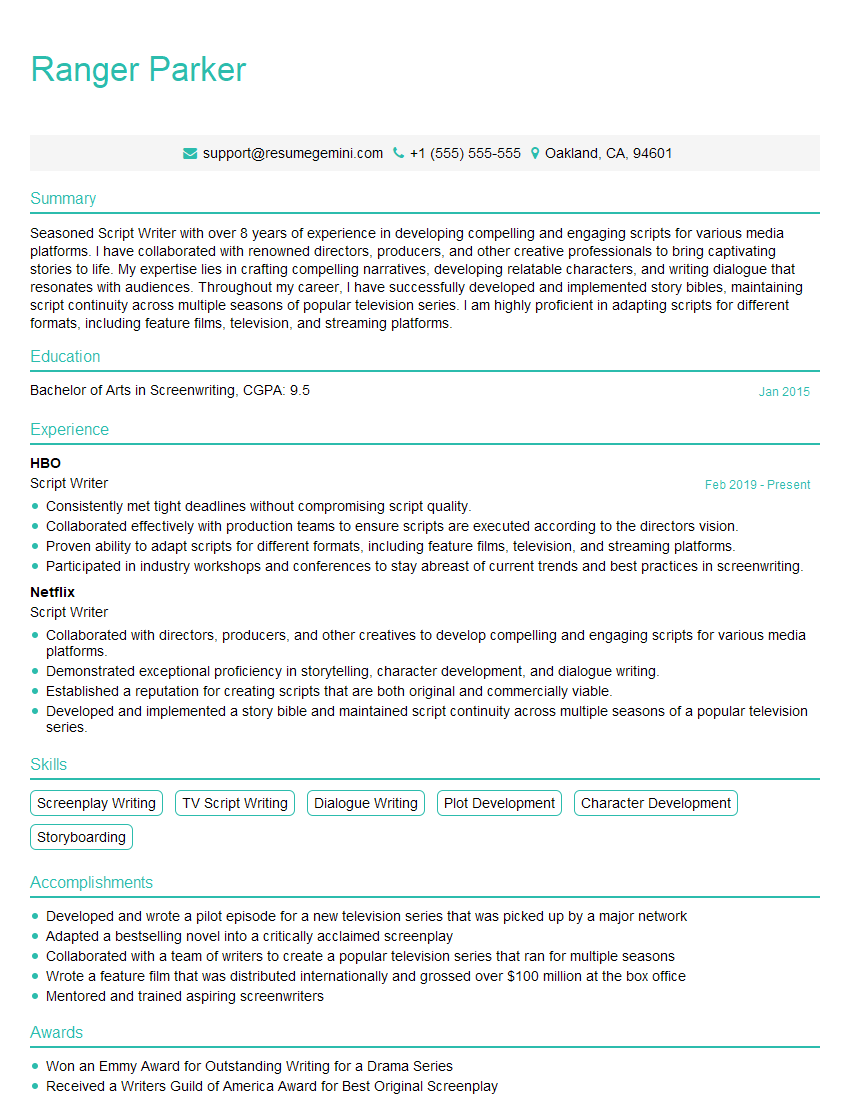
Ever felt underprepared for that crucial job interview? Or perhaps you’ve landed the interview but struggled to articulate your skills and experiences effectively? Fear not! We’ve got you covered. In this blog post, we’re diving deep into the Script Writer interview questions that you’re most likely to encounter. But that’s not all. We’ll also provide expert insights into the key responsibilities of a Script Writer so you can tailor your answers to impress potential employers.
Acing the interview is crucial, but landing one requires a compelling resume that gets you noticed. Crafting a professional document that highlights your skills and experience is the first step toward interview success. ResumeGemini can help you build a standout resume that gets you called in for that dream job.






Essential Interview Questions For Script Writer
1. What is the difference between a screenplay and a teleplay?
- A screenplay is written for a film, while a teleplay is written for television.
- A screenplay is typically longer than a teleplay, as it includes more detail and description.
- A teleplay is more likely to include commercial breaks, while a screenplay does not.
2. What are the key elements of a screenplay?
structure
- The beginning, middle, and end
- The inciting incident
- The rising action
- The climax
- The falling action
- The resolution
character
- The protagonist
- The antagonist
- The supporting cast
theme
- The central idea or message of the story
dialogue
- The words spoken by the characters
3. What are some of the most important things to keep in mind when writing a screenplay?
- Keep the story simple and focused.
- Develop your characters in depth.
- Write strong dialogue.
- Use cinematic techniques to create a visual experience.
- Follow the rules of screenwriting.
4. What are some of the challenges of writing a screenplay?
- Coming up with a good story idea
- Developing believable characters
- Writing strong dialogue
- Structuring the story in a way that keeps the audience engaged
- Formatting the screenplay according to industry standards
5. What are some of the most common mistakes that screenwriters make?
- Writing a story that is too complex or convoluted.
- Creating characters that are not believable or relatable.
- Writing dialogue that is stilted or unnatural.
- Structuring the story in a way that is confusing or unsatisfying.
- Formatting the screenplay in a way that is unprofessional or difficult to read.
6. What are some of the best ways to improve your screenwriting skills?
- Read screenplays
- Write screenplays
- Get feedback on your screenplays
- Attend screenwriting workshops or classes
- Study the craft of screenwriting
7. What are some of the most important qualities of a successful screenwriter?
- Creativity
- Discipline
- Persistence
- A love of film
- A strong work ethic
8. What are some of the most common genres of screenplays?
- Action
- Comedy
- Drama
- Horror
- Romance
- Science fiction
- Thriller
- Western
9. What are some of the most important things to consider when adapting a book into a screenplay?
- The structure of the book
- The characters in the book
- The theme of the book
- The tone of the book
- The audience for the book
10. What are some of the most common challenges that screenwriters face when working with directors?
- Different visions for the project
- Ego clashes
- Creative differences
- Budget constraints
- Time constraints
Interviewers often ask about specific skills and experiences. With ResumeGemini‘s customizable templates, you can tailor your resume to showcase the skills most relevant to the position, making a powerful first impression. Also check out Resume Template specially tailored for Script Writer.
Career Expert Tips:
- Ace those interviews! Prepare effectively by reviewing the Top 50 Most Common Interview Questions on ResumeGemini.
- Navigate your job search with confidence! Explore a wide range of Career Tips on ResumeGemini. Learn about common challenges and recommendations to overcome them.
- Craft the perfect resume! Master the Art of Resume Writing with ResumeGemini’s guide. Showcase your unique qualifications and achievements effectively.
- Great Savings With New Year Deals and Discounts! In 2025, boost your job search and build your dream resume with ResumeGemini’s ATS optimized templates.
Researching the company and tailoring your answers is essential. Once you have a clear understanding of the Script Writer‘s requirements, you can use ResumeGemini to adjust your resume to perfectly match the job description.
Key Job Responsibilities
Script Writers are responsible for translating ideas and concepts into compelling and engaging written content for various mediums such as films, television, plays, and video games. Their key responsibilities include:
1. Story Development
Collaborate with directors, producers, and other creatives to develop compelling story ideas.
- Craft engaging plots, characters, and dialogue.
- Ensure continuity and consistency throughout the script.
2. Writing and Editing
Write and revise scripts based on storyboards and outlines.
- Utilize storytelling techniques and cinematic devices to convey the intended message and emotions.
- Proofread and edit scripts for accuracy, clarity, and flow.
3. Collaboration and Communication
Collaborate with actors, directors, and other crew members to ensure the script is effectively executed.
- Attend rehearsals and production meetings to provide input and guidance.
- Communicate effectively with diverse stakeholders, including cast, crew, and executives.
4. Research and Adaptation
Conduct research to ensure scripts are accurate and authentic.
- Adapt literary works, historical events, or other source materials for screenwriting.
- Consult with experts and subject matter specialists as needed.
Interview Tips
Preparing thoroughly for a Script Writer interview can significantly increase your chances of success. Here are some tips and hacks to help you ace the interview:
1. Research the Company and the Position
Familiarize yourself with the company’s history, values, and current projects.
- Research the specific role and its responsibilities to gain a clear understanding of the expectations.
- Visit the company’s website and social media platforms to gather insights into their culture and recent developments.
2. Showcase Your Writing Ability
Be prepared to discuss your writing portfolio and demonstrate your storytelling skills.
- Bring samples of your best work that showcase your versatility and range.
- Be able to articulate your writing process and explain how you develop compelling characters and narratives.
3. Practice Answering Common Interview Questions
Prepare for common interview questions related to your writing experience, process, and career goals.
- Research typical interview questions for Script Writers and practice your responses.
- Consider preparing specific examples that highlight your strengths and skills.
4. Be Enthusiastic and Professional
Demonstrate your passion for storytelling and your commitment to the craft.
- Dress professionally and arrive on time for your interview.
- Be polite and respectful to everyone you encounter throughout the interview process.
Next Step:
Armed with this knowledge, you’re now well-equipped to tackle the Script Writer interview with confidence. Remember, preparation is key. So, start crafting your resume, highlighting your relevant skills and experiences. Don’t be afraid to tailor your application to each specific job posting. With the right approach and a bit of practice, you’ll be well on your way to landing your dream job. Build your resume now from scratch or optimize your existing resume with ResumeGemini. Wish you luck in your career journey!