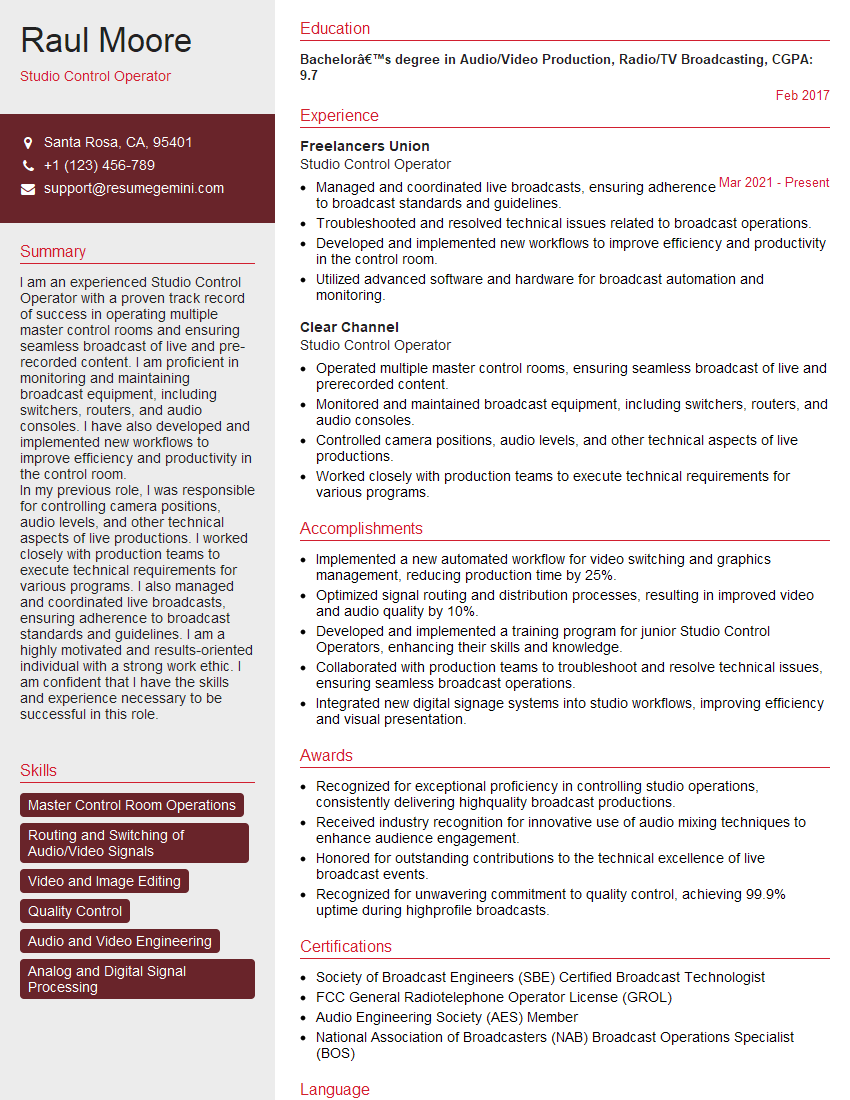
Are you gearing up for an interview for a Studio Control Operator position? Whether you’re a seasoned professional or just stepping into the role, understanding what’s expected can make all the difference. In this blog, we dive deep into the essential interview questions for Studio Control Operator and break down the key responsibilities of the role. By exploring these insights, you’ll gain a clearer picture of what employers are looking for and how you can stand out. Read on to equip yourself with the knowledge and confidence needed to ace your next interview and land your dream job!
Acing the interview is crucial, but landing one requires a compelling resume that gets you noticed. Crafting a professional document that highlights your skills and experience is the first step toward interview success. ResumeGemini can help you build a standout resume that gets you called in for that dream job.






Essential Interview Questions For Studio Control Operator
1. How would you troubleshoot an audio issue if there is a drop in audio levels during a live broadcast?
- Check the audio source to ensure the signal is present.
- Inspect all audio cables and connections for loose or damaged components.
- Verify the settings on the audio mixer and ensure they are correct.
- Monitor the audio levels and adjust as necessary to maintain a consistent level.
- If the issue persists, consult with the audio engineer for further assistance.
2. Describe your experience with operating a video switcher.
Input and Output Management
- Selecting and switching between multiple video sources.
- Managing video inputs and outputs to ensure seamless transitions.
- Monitoring video signals and adjusting levels as required.
Effects and Graphics Control
- Applying transitions and effects to enhance visual presentation.
- Inserting logos, graphics, and lower thirds into the video stream.
- Creating and managing multi-layer compositions.
3. How do you handle multiple live feeds simultaneously?
- Monitor all incoming feeds and ensure they are stable and within specifications.
- Coordinate with the production team to prioritize feeds and adjust switching accordingly.
- Utilize multi-view monitoring to keep track of all feeds and make informed decisions.
- Communicate effectively with the technical crew to resolve any technical issues promptly.
- Maintain a calm and focused demeanor under pressure to ensure seamless switching.
4. What is your understanding of the SMPTE timecode and how do you use it?
- Describe the structure and purpose of the SMPTE timecode.
- Explain how you use timecode to synchronize multiple devices and maintain accurate timing during live broadcasts.
- Discuss the importance of timecode accuracy and how you ensure it is maintained throughout the production process.
5. How do you stay up-to-date with the latest broadcast technology advancements?
- Attend industry conferences and workshops.
- Read trade publications and online resources.
- Network with other professionals in the field.
- Seek opportunities to experiment with new technologies and equipment.
- Stay informed about industry best practices and standards.
6. Have you worked with closed captioning systems?
- Describe your experience with closed captioning systems.
- Explain how you ensure the accuracy and timeliness of closed captions.
- Discuss the importance of closed captioning for accessibility and the legal requirements surrounding its implementation.
7. How do you prioritize tasks and manage your workload in a fast-paced environment?
- Identify the most critical tasks and focus on completing them first.
- Break down complex tasks into smaller, manageable steps.
- Delegate responsibilities to other team members when appropriate.
- Use technology to streamline workflows and improve efficiency.
- Stay organized and maintain a clear understanding of project timelines.
8. Can you explain the concept of audio gain staging and how you apply it in your work?
- Describe the principles of audio gain staging.
- Explain how proper gain staging helps optimize audio quality.
- Discuss the techniques you use to achieve optimal audio levels throughout the signal chain.
9. What are the key differences between SDI and HDMI signals, and when would you use each?
- Compare the technical characteristics of SDI and HDMI signals.
- Explain the advantages and limitations of each type of signal.
- Discuss the factors that influence the choice between SDI and HDMI for specific applications.
10. Describe your experience with non-linear editing software.
- Name the non-linear editing software you are proficient in.
- Describe your workflow for editing and assembling video content.
- Explain how you use non-linear editing software to enhance the visual storytelling process.
Interviewers often ask about specific skills and experiences. With ResumeGemini‘s customizable templates, you can tailor your resume to showcase the skills most relevant to the position, making a powerful first impression. Also check out Resume Template specially tailored for Studio Control Operator.
Career Expert Tips:
- Ace those interviews! Prepare effectively by reviewing the Top 50 Most Common Interview Questions on ResumeGemini.
- Navigate your job search with confidence! Explore a wide range of Career Tips on ResumeGemini. Learn about common challenges and recommendations to overcome them.
- Craft the perfect resume! Master the Art of Resume Writing with ResumeGemini’s guide. Showcase your unique qualifications and achievements effectively.
- Great Savings With New Year Deals and Discounts! In 2025, boost your job search and build your dream resume with ResumeGemini’s ATS optimized templates.
Researching the company and tailoring your answers is essential. Once you have a clear understanding of the Studio Control Operator‘s requirements, you can use ResumeGemini to adjust your resume to perfectly match the job description.
Key Job Responsibilities
A Studio Control Operator plays a crucial role in the production of broadcast media, ensuring the smooth and seamless operation of the control room. Their primary responsibilities include:
1. Equipment Operation
Operates various studio equipment, including cameras, audio mixers, video switchers, and lighting consoles, to produce high-quality broadcasts.
- Calibrates and maintains broadcast equipment to ensure optimal performance.
- Troubleshoots and resolves technical issues promptly to minimize disruptions.
2. Program Control
Manages the flow of the broadcast, including switching between camera angles, audio sources, and graphics.
- Follows production cues and instructions to execute seamless transitions.
- Coordinates with production personnel to ensure the delivery of a polished and engaging broadcast.
3. Audio Mixing
Mixes and balances audio levels from various sources, such as microphones, music, and sound effects.
- Adjusts equalization, compression, and other audio parameters to enhance clarity and impact.
- Monitors audio levels to prevent distortion or feedback.
4. Lighting Control
Sets up and operates lighting equipment to create the desired atmosphere and enhance the visual impact of the broadcast.
- Collaborates with lighting designers to determine optimal lighting arrangements.
- Adjusts lighting intensity, color temperature, and direction to achieve the desired effects.
Interview Tips
To ace your interview for a Studio Control Operator position, follow these preparation tips:
1. Research the Position
- Familiarize yourself with the specific responsibilities of a Studio Control Operator at the company you’re applying to.
- Research the company’s production process and the equipment they use.
2. Highlight Relevant Skills
- Emphasize your technical proficiency in operating broadcast equipment, including cameras, audio mixers, and lighting consoles.
- Showcase your ability to work under pressure and handle multiple tasks simultaneously.
3. Practice Problem-Solving
- Prepare for questions that test your problem-solving abilities in a studio environment.
4. Show Your Passion
- Express your enthusiasm for the broadcast industry and explain why you’re passionate about working as a Studio Control Operator.
Next Step:
Armed with this knowledge, you’re now well-equipped to tackle the Studio Control Operator interview with confidence. Remember, a well-crafted resume is your first impression. Take the time to tailor your resume to highlight your relevant skills and experiences. And don’t forget to practice your answers to common interview questions. With a little preparation, you’ll be on your way to landing your dream job. So what are you waiting for? Start building your resume and start applying! Build an amazing resume with ResumeGemini.