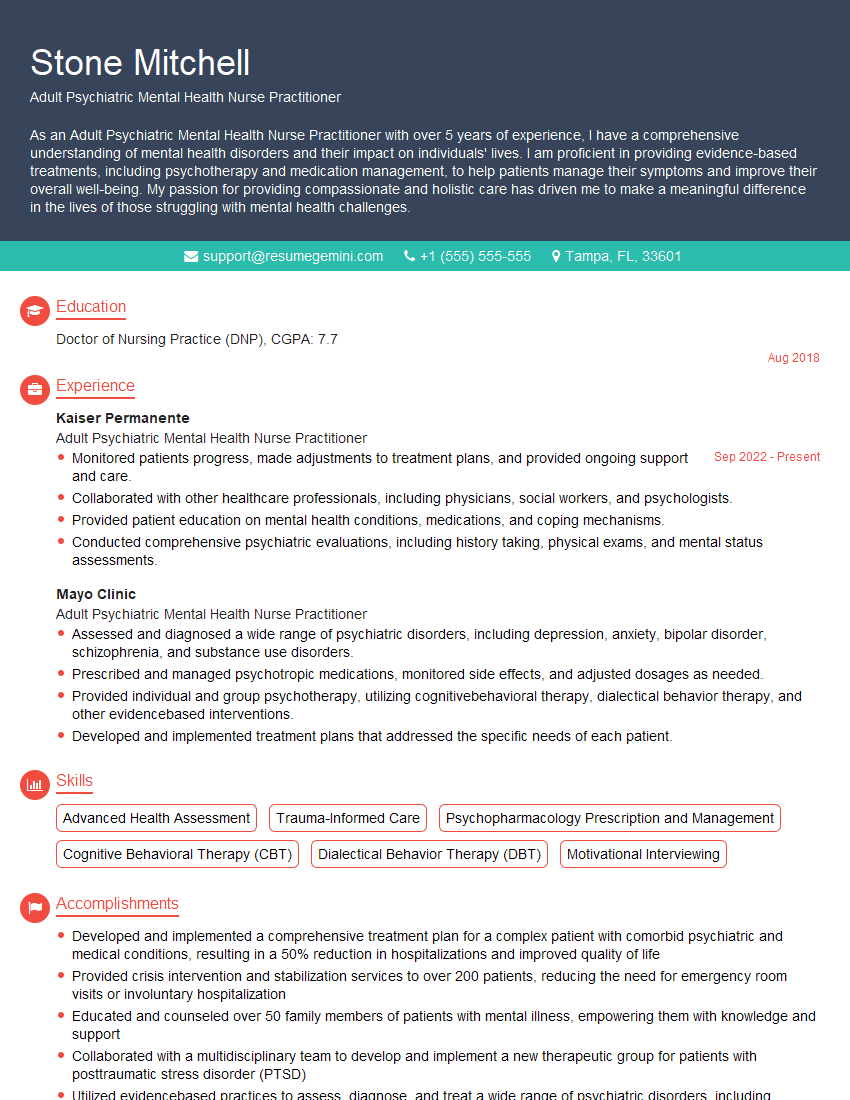
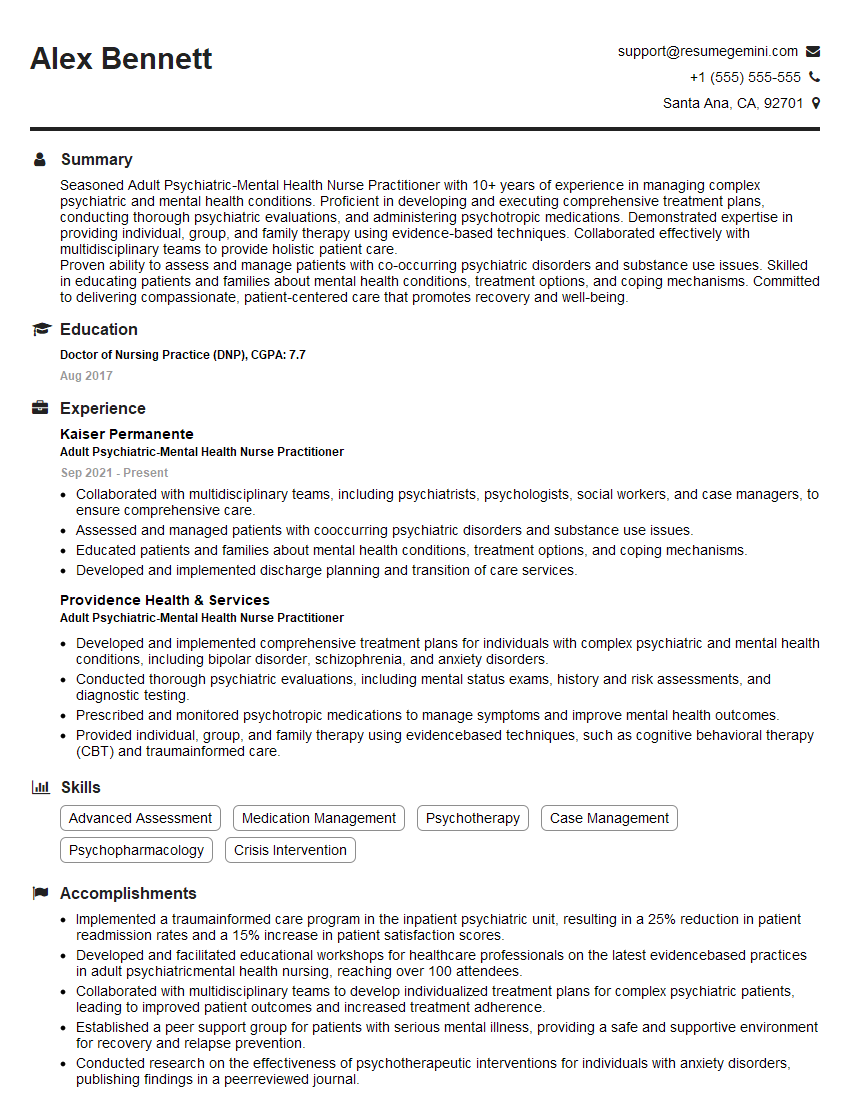
Feeling lost in a sea of interview questions? Landed that dream interview for Adult Psychiatric Mental Health Nurse Practitioner but worried you might not have the answers? You’re not alone! This blog is your guide for interview success. We’ll break down the most common Adult Psychiatric Mental Health Nurse Practitioner interview questions, providing insightful answers and tips to leave a lasting impression. Plus, we’ll delve into the key responsibilities of this exciting role, so you can walk into your interview feeling confident and prepared.
Acing the interview is crucial, but landing one requires a compelling resume that gets you noticed. Crafting a professional document that highlights your skills and experience is the first step toward interview success. ResumeGemini can help you build a standout resume that gets you called in for that dream job.






Essential Interview Questions For Adult Psychiatric Mental Health Nurse Practitioner
1. Describe the key elements of a comprehensive mental health assessment for an adult patient.
A comprehensive mental health assessment for an adult patient typically includes the following key elements:
- A detailed patient history, including personal, family, and medical history
- A physical examination
- A mental status examination
- A review of the patient’s current symptoms
- An assessment of the patient’s risk for suicide or violence
- A diagnosis
- A treatment plan
2. What is the difference between a psychiatrist and a psychiatric mental health nurse practitioner?
Psychiatrists and psychiatric mental health nurse practitioners (PMHNPs) are both mental health professionals who can diagnose and treat mental illness. However, there are some key differences between the two professions:
Psychiatrists
- Have a medical degree (MD or DO) and have completed a residency in psychiatry.
- Are licensed to prescribe medications.
- Can provide psychotherapy.
Psychiatric Mental Health Nurse Practitioners
- Have a master’s degree in nursing (MSN) and have completed a post-master’s certificate or Doctor of Nursing Practice (DNP) in psychiatric mental health nursing.
- Are licensed to prescribe medications in most states.
- Can provide psychotherapy.
3. What are the most common mental health disorders seen in adults?
The most common mental health disorders seen in adults include:
- Depression
- Anxiety disorders
- Bipolar disorder
- Schizophrenia
- Substance use disorders
4. What are the different treatment options for mental health disorders?
The different treatment options for mental health disorders include:
- Medication
- Psychotherapy
- Hospitalization
- Self-help groups
5. What are the ethical considerations in treating patients with mental illness?
The ethical considerations in treating patients with mental illness include:
- Confidentiality
- Informed consent
- Competency
- Least restrictive treatment
- End-of-life care
6. What are the challenges and rewards of working as a psychiatric mental health nurse practitioner?
The challenges of working as a psychiatric mental health nurse practitioner include:
- The high prevalence of mental illness
- The stigma associated with mental illness
- The limited access to mental health care
- The high burnout rate among mental health professionals
The rewards of working as a psychiatric mental health nurse practitioner include:
- The opportunity to make a difference in the lives of patients
- The challenge of working with a complex and fascinating population
- The opportunity to learn and grow as a professional
7. Describe your experience in working with patients with co-occurring mental health and substance use disorders.
I have worked with patients with co-occurring mental health and substance use disorders for the past 5 years. I have a strong understanding of the challenges that these patients face, and I am experienced in providing them with the care that they need. I have worked with patients with a variety of mental health and substance use disorders, including depression, anxiety, bipolar disorder, schizophrenia, and alcohol and drug addiction. I have also worked with patients who are homeless, have a history of trauma, or have other complex needs. I am confident in my ability to provide these patients with the comprehensive care that they need to achieve their recovery goals.
8. How do you stay up-to-date on the latest advances in psychiatric mental health nursing practice?
I stay up-to-date on the latest advances in psychiatric mental health nursing practice by reading journals, attending conferences, and taking continuing education courses. I am also a member of several professional organizations, such as the American Psychiatric Nurses Association and the International Society for Psychiatric-Mental Health Nurses. These organizations provide me with access to the latest research and best practices in the field.
9. What are your strengths and weaknesses as a psychiatric mental health nurse practitioner?
My strengths as a psychiatric mental health nurse practitioner include my strong clinical skills, my ability to build rapport with patients, and my commitment to providing compassionate care. I am also a team player and I am always willing to go the extra mile to help my patients. One of my weaknesses is that I can sometimes be too idealistic, and I may not always be realistic about what I can achieve. I am also still relatively new to the field, and I am still learning about the different aspects of psychiatric mental health nursing practice.
10. Why are you interested in working in this particular setting?
I am interested in working in this particular setting because I am passionate about providing mental health care to adults. I believe that everyone deserves access to quality mental health care, regardless of their income, race, or ethnicity. I am also drawn to the challenges of working with this population, and I am confident that I can make a difference in the lives of my patients.
Interviewers often ask about specific skills and experiences. With ResumeGemini‘s customizable templates, you can tailor your resume to showcase the skills most relevant to the position, making a powerful first impression. Also check out Resume Template specially tailored for Adult Psychiatric Mental Health Nurse Practitioner.
Career Expert Tips:
- Ace those interviews! Prepare effectively by reviewing the Top 50 Most Common Interview Questions on ResumeGemini.
- Navigate your job search with confidence! Explore a wide range of Career Tips on ResumeGemini. Learn about common challenges and recommendations to overcome them.
- Craft the perfect resume! Master the Art of Resume Writing with ResumeGemini’s guide. Showcase your unique qualifications and achievements effectively.
- Great Savings With New Year Deals and Discounts! In 2025, boost your job search and build your dream resume with ResumeGemini’s ATS optimized templates.
Researching the company and tailoring your answers is essential. Once you have a clear understanding of the Adult Psychiatric Mental Health Nurse Practitioner‘s requirements, you can use ResumeGemini to adjust your resume to perfectly match the job description.
Key Job Responsibilities
Adult Psychiatric Mental Health Nurse Practitioners (PMHNPs) provide mental health care to adults aged 18 and older. They have a wide range of responsibilities, including:
1. Assessment and Diagnosis
PMHNPs assess patients to determine their mental health needs and diagnose mental disorders. They gather information through interviews, physical examinations, and psychological testing.
- Conduct comprehensive psychiatric evaluations, including medical history, symptom assessment, mental status exam, and risk assessment.
- Diagnose mental disorders according to the Diagnostic and Statistical Manual of Mental Disorders (DSM-5).
2. Treatment Planning
PMHNPs develop and implement treatment plans for patients. They may prescribe medications, provide psychotherapy, and refer patients to other services.
- Develop individualized treatment plans based on the patient’s needs and diagnosis.
- Prescribe and manage psychiatric medications, including antidepressants, antipsychotics, and mood stabilizers.
3. Psychotherapy
PMHNPs provide psychotherapy to patients. They use a variety of techniques, such as cognitive-behavioral therapy, interpersonal therapy, and psychodynamic therapy.
- Provide individual, group, and family therapy to address mental health issues.
- Use evidence-based therapies to improve patient outcomes.
4. Consultation and Collaboration
PMHNPs consult with other healthcare professionals, such as physicians, psychologists, and social workers. They also collaborate with families and caregivers.
- Collaborate with other healthcare providers to ensure continuity of care.
- Provide consultation and education to family members and caregivers.
Interview Tips
Interviewing for a job as an Adult Psychiatric Mental Health Nurse Practitioner can be a challenging but rewarding experience. Here are a few tips to help you ace your interview:
1. Research the Organization
Before your interview, take some time to research the organization you are applying to. This will help you understand their mission, values, and culture. You can find information about the organization on their website, social media pages, and Glassdoor.
- Visit the organization’s website to learn about their history, mission, and services.
- Read articles and reviews about the organization to get an understanding of their reputation.
2. Practice Your Answers
It is important to practice your answers to common interview questions. This will help you feel more confident and prepared during your interview. Some common questions you may be asked include:
- Tell me about your experience as a PMHNP.
- What are your strengths and weaknesses as a PMHNP?
- Why are you interested in working for this organization?
3. Be Yourself
It is important to be yourself during your interview. The interviewer wants to get to know the real you, so don’t try to be someone you’re not. Be honest, genuine, and enthusiastic.
- Share your passion for working with individuals with mental health challenges.
- Highlight your skills and experience that make you a good fit for the position.
4. Follow Up
After your interview, it is important to follow up with the interviewer. This shows that you are interested in the position and that you appreciate their time.
- Send a thank-you note to the interviewer within 24 hours of your interview.
- If you have any questions, feel free to ask them in your thank-you note.
Next Step:
Now that you’re armed with the knowledge of Adult Psychiatric Mental Health Nurse Practitioner interview questions and responsibilities, it’s time to take the next step. Build or refine your resume to highlight your skills and experiences that align with this role. Don’t be afraid to tailor your resume to each specific job application. Finally, start applying for Adult Psychiatric Mental Health Nurse Practitioner positions with confidence. Remember, preparation is key, and with the right approach, you’ll be well on your way to landing your dream job. Build an amazing resume with ResumeGemini