Feeling lost in a sea of interview questions? Landed that dream interview for Optical Manager but worried you might not have the answers? You’re not alone! This blog is your guide for interview success. We’ll break down the most common Optical Manager interview questions, providing insightful answers and tips to leave a lasting impression. Plus, we’ll delve into the key responsibilities of this exciting role, so you can walk into your interview feeling confident and prepared.
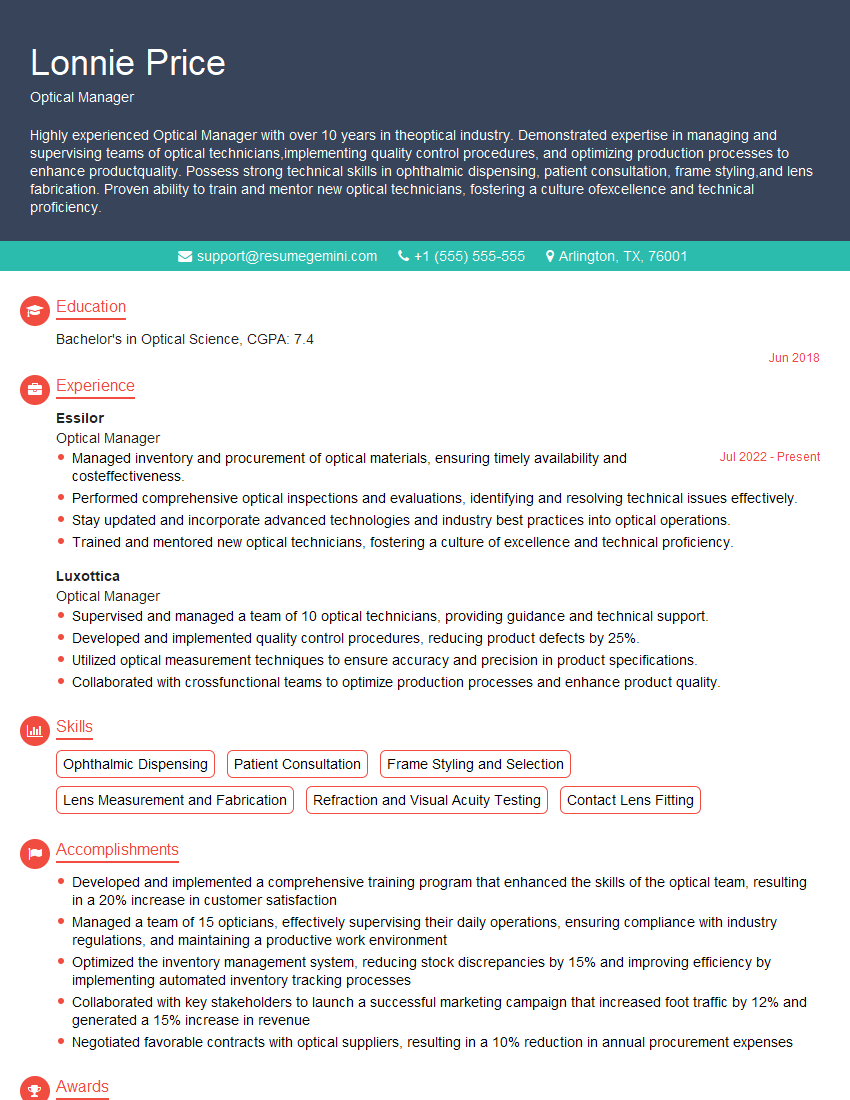
Acing the interview is crucial, but landing one requires a compelling resume that gets you noticed. Crafting a professional document that highlights your skills and experience is the first step toward interview success. ResumeGemini can help you build a standout resume that gets you called in for that dream job.






Essential Interview Questions For Optical Manager
1. What are the key responsibilities of an Optical Manager?
As an Optical Manager, my primary responsibilities include:
- Managing the daily operations of the optical department
- Supervising and training staff
- Ensuring customer satisfaction and providing excellent care
- Maintaining accurate inventory and ordering supplies
- Staying up-to-date on industry trends and best practices
2. How do you handle customer complaints and resolve conflicts?
Dealing with Customer Complaints
- Acknowledge and empathize with the customer’s concerns
- Listen attentively to understand their perspective
- Gather all relevant information to investigate the complaint
Conflict Resolution
- Create a calm and respectful environment for discussion
- Foster open communication and active listening
- Explore different solutions and work towards a mutually acceptable outcome
3. What are the latest trends in optical technology and how do you stay updated?
The optical industry is constantly evolving with new technologies emerging regularly. To stay updated, I actively engage in:
- Attending industry conferences and workshops
- Reading industry publications and journals
- Networking with other optical professionals
- Participating in continuing education programs
4. How do you ensure that your staff is providing high-quality patient care?
Maintaining high-quality patient care is paramount. I employ several strategies to ensure my staff delivers exceptional service:
- Regular training and performance evaluations
- Providing ongoing support and mentorship
- Establishing clear expectations and guidelines
- Encouraging teamwork and collaboration
- Implementing quality control measures and customer feedback surveys
5. How do you manage inventory and control costs in the optical department?
Effective inventory management is crucial for cost control. I implement the following practices:
- Regular inventory audits and stocktakes
- Using inventory management software
- Establishing reorder points and safety stock levels
- Negotiating favorable prices with suppliers
- Exploring cost-saving alternatives while maintaining quality
6. How do you assess the performance of your optical department and identify areas for improvement?
Regular performance assessments are essential for continuous improvement. I utilize various methods:
- Key performance indicators (KPIs), such as customer satisfaction, sales, and efficiency
- Customer feedback surveys and reviews
- Staff performance evaluations
- Mystery shopper programs
- Industry benchmarks and best practices
7. How do you motivate and retain your staff in a competitive job market?
Staff motivation and retention are critical for a successful optical department. I create a positive and supportive work environment through:
- Recognition and rewards for exceptional performance
- Opportunities for professional development and growth
- Competitive compensation and benefits
- Flexible work schedules and employee perks
- Fostering a culture of teamwork and collaboration
8. How do you manage and prioritize multiple projects and tasks effectively?
Effective time management is essential for managing multiple projects. I prioritize tasks based on:
- Urgency and importance
- Project deadlines and dependencies
- Staff availability and workload
I use project management tools and techniques, such as Gantt charts and task lists, to stay organized. I also delegate responsibilities and collaborate with team members to ensure timely completion.
9. How do you stay organized and manage the administrative responsibilities of the optical department?
Organization is key for efficient operations. I maintain a well-organized workspace and utilize technology tools, such as:
- Electronic health records (EHRs)
- Inventory management software
- Appointment scheduling systems
- Communication platforms
I also establish clear procedures and workflows to ensure smooth and efficient operations.
10. Describe a situation where you had to make a difficult decision as an Optical Manager. How did you approach the situation and what was the outcome?
In a previous role, I faced a difficult decision regarding a staff member who was underperforming. After carefully considering the situation, I decided to provide additional training and support.
I met with the staff member regularly to discuss their progress and provide constructive feedback. I also provided them with opportunities for professional development. As a result of this approach, the staff member’s performance improved significantly, and they became a valuable asset to the team.
Interviewers often ask about specific skills and experiences. With ResumeGemini‘s customizable templates, you can tailor your resume to showcase the skills most relevant to the position, making a powerful first impression. Also check out Resume Template specially tailored for Optical Manager.
Career Expert Tips:
- Ace those interviews! Prepare effectively by reviewing the Top 50 Most Common Interview Questions on ResumeGemini.
- Navigate your job search with confidence! Explore a wide range of Career Tips on ResumeGemini. Learn about common challenges and recommendations to overcome them.
- Craft the perfect resume! Master the Art of Resume Writing with ResumeGemini’s guide. Showcase your unique qualifications and achievements effectively.
- Great Savings With New Year Deals and Discounts! In 2025, boost your job search and build your dream resume with ResumeGemini’s ATS optimized templates.
Researching the company and tailoring your answers is essential. Once you have a clear understanding of the Optical Manager‘s requirements, you can use ResumeGemini to adjust your resume to perfectly match the job description.
Key Job Responsibilities
Optical Managers are responsible for overseeing the day-to-day operations of optical departments within retail, healthcare, or manufacturing settings. They ensure that customers receive exceptional optical care and products, while maintaining profitability and compliance with industry regulations.
1. Customer Service and Sales
Build strong customer relationships by providing personalized optical solutions tailored to their needs and preferences.
- Conduct thorough eye examinations and determine appropriate corrective measures.
- Advise customers on lens materials, frame styles, and coatings.
- Coordinate the manufacturing and delivery of eyeglasses, contact lenses, and ophthalmic devices.
2. Inventory Management
Maintain optimal inventory levels to meet customer demand while minimizing waste.
- Forecast future demand based on historical data and industry trends.
- Place orders with suppliers, negotiate pricing, and manage vendor relationships.
- Implement inventory control systems to track inventory levels, minimize shrinkage, and ensure product quality.
3. Financial Management
Monitor expenses, track sales performance, and maintain profitability.
- Analyze financial data to identify areas for cost optimization.
- Develop and implement marketing strategies to attract new customers and increase revenue.
- Prepare and present financial reports to management.
4. Staff Management
Lead and motivate a team of opticians, optometrists, and other staff members.
- Hire, train, and develop staff to ensure exceptional customer service.
- Delegate responsibilities, provide feedback, and conduct performance evaluations.
- Foster a positive and collaborative work environment.
Interview Tips
To ace an Optical Manager interview, candidates should prepare thoroughly and demonstrate their expertise in the field. Here are some essential interview tips:
1. Research the Company and Industry
Familiarize yourself with the company’s mission, values, and recent developments. Research industry trends and advancements to demonstrate your knowledge and interest.
2. Practice Your Answers
Prepare thoughtful responses to common interview questions related to optical management. Rehearse your answers to ensure they are concise, relevant, and highlight your skills.
3. Quantify Your Achievements
Use specific metrics and data to quantify your accomplishments in previous roles. This will provide tangible evidence of your contributions and impact.
4. Showcase Your Leadership and Communication Skills
Highlight your ability to lead and motivate a team. Provide examples of how you have effectively communicated with customers, staff, and other stakeholders.
5. Demonstrate Your Passion for Optics
Express your genuine interest in the optical field and explain how your passion drives your success. Share examples of how you have stayed up-to-date with advancements in technology and patient care.
6. Prepare Questions for the Interviewer
Asking thoughtful questions demonstrates your engagement and interest in the position. Prepare questions related to the company’s growth strategy, industry outlook, or the specific challenges and opportunities of the role.
Next Step:
Armed with this knowledge, you’re now well-equipped to tackle the Optical Manager interview with confidence. Remember, a well-crafted resume is your first impression. Take the time to tailor your resume to highlight your relevant skills and experiences. And don’t forget to practice your answers to common interview questions. With a little preparation, you’ll be on your way to landing your dream job. So what are you waiting for? Start building your resume and start applying! Build an amazing resume with ResumeGemini.