Feeling lost in a sea of interview questions? Landed that dream interview for Psychiatric Nursing Aide but worried you might not have the answers? You’re not alone! This blog is your guide for interview success. We’ll break down the most common Psychiatric Nursing Aide interview questions, providing insightful answers and tips to leave a lasting impression. Plus, we’ll delve into the key responsibilities of this exciting role, so you can walk into your interview feeling confident and prepared.
Acing the interview is crucial, but landing one requires a compelling resume that gets you noticed. Crafting a professional document that highlights your skills and experience is the first step toward interview success. ResumeGemini can help you build a standout resume that gets you called in for that dream job.






Essential Interview Questions For Psychiatric Nursing Aide
1. What are your responsibilities as a Psychiatric Nursing Aide?
- Assisting patients with activities of daily living, such as bathing, dressing, and eating.
- Monitoring patients’ behavior and reporting any changes to the nurse.
- Providing emotional support and companionship to patients.
2. What are the most important qualities of a Psychiatric Nursing Aide?
Communication Skills
- Being able to communicate effectively with patients and their families.
- Understanding body language and verbal cues.
Empathy and Compassion
- Being able to understand and empathize with patients’ feelings.
- Providing emotional support and reassurance.
Patience and Flexibility
- Being able to work with patients who may be difficult or challenging.
- Adapting to changing situations and patient needs.
3. What are some of the challenges you face as a Psychiatric Nursing Aide?
- Dealing with patients who are aggressive or violent.
- Working with patients who have difficult or challenging behaviors.
- Providing care to patients who are suicidal or homicidal.
4. What are your strategies for de-escalating aggressive or violent patients?
- Remaining calm and non-confrontational.
- Using verbal de-escalation techniques, such as active listening and empathy.
- Setting clear limits and boundaries.
5. What are your strategies for dealing with patients who are suicidal or homicidal?
- Assessing the patient’s risk for suicide or homicide.
- Developing a safety plan with the patient.
- Reporting the patient’s risk to the nurse.
6. What are your strategies for providing care to patients with difficult or challenging behaviors?
- Developing a care plan that is tailored to the patient’s individual needs.
- Using positive reinforcement and encouragement.
- Collaborating with the patient’s treatment team.
7. What are your strategies for providing emotional support to patients?
- Being present and attentive to patients.
- Listening to patients’ concerns and providing empathy.
- Encouraging patients to talk about their feelings.
8. What are your strategies for working with patients’ families?
- Providing information and support to families.
- Listening to families’ concerns and providing empathy.
- Collaborating with families to develop a care plan.
9. What are your continuing education goals?
- Attending workshops and conferences on psychiatric nursing.
- Reading professional journals and articles.
- Completing online courses.
10. Why are you interested in working as a Psychiatric Nursing Aide?
- I am passionate about helping people, and I believe that my skills and experience would make me a valuable member of your team.
- I am particularly interested in working with patients who have mental illness, and I believe that I can make a difference in their lives.
- I am confident that I can provide compassionate and effective care to your patients.
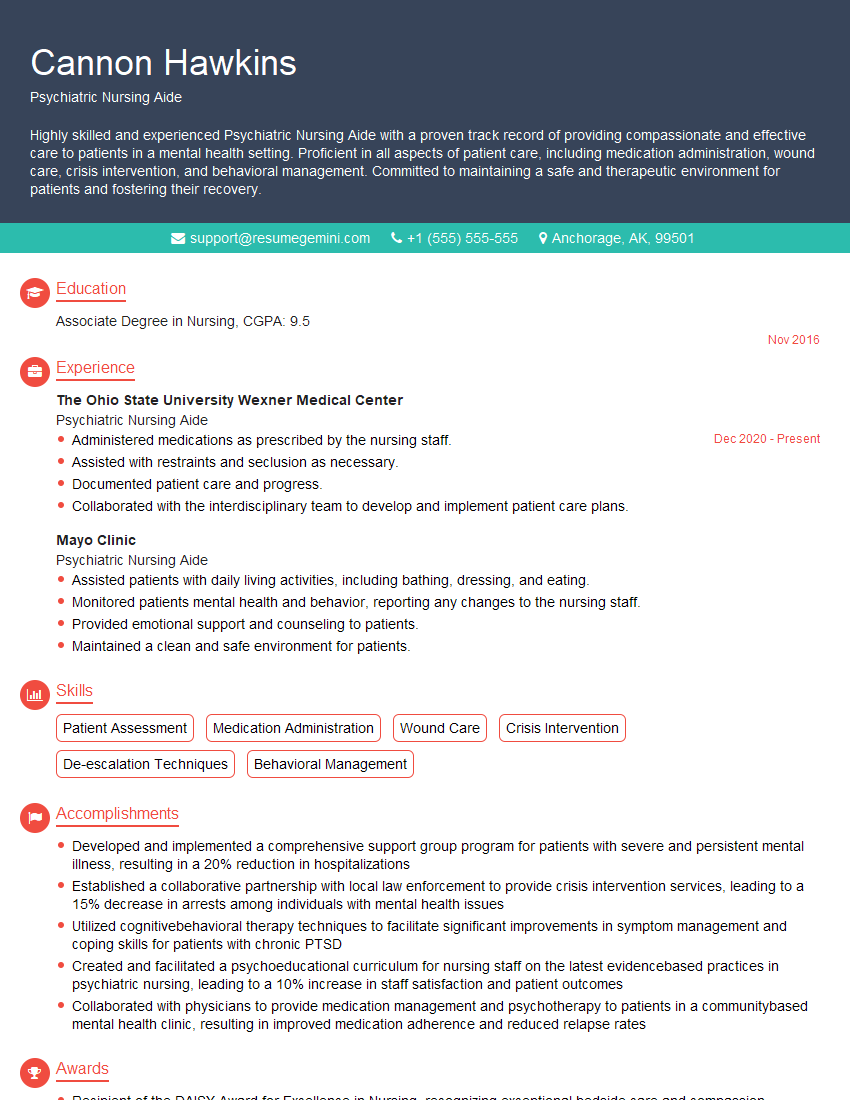
Interviewers often ask about specific skills and experiences. With ResumeGemini‘s customizable templates, you can tailor your resume to showcase the skills most relevant to the position, making a powerful first impression. Also check out Resume Template specially tailored for Psychiatric Nursing Aide.
Career Expert Tips:
- Ace those interviews! Prepare effectively by reviewing the Top 50 Most Common Interview Questions on ResumeGemini.
- Navigate your job search with confidence! Explore a wide range of Career Tips on ResumeGemini. Learn about common challenges and recommendations to overcome them.
- Craft the perfect resume! Master the Art of Resume Writing with ResumeGemini’s guide. Showcase your unique qualifications and achievements effectively.
- Great Savings With New Year Deals and Discounts! In 2025, boost your job search and build your dream resume with ResumeGemini’s ATS optimized templates.
Researching the company and tailoring your answers is essential. Once you have a clear understanding of the Psychiatric Nursing Aide‘s requirements, you can use ResumeGemini to adjust your resume to perfectly match the job description.
Key Job Responsibilities
Psychiatric Nursing Aides play a crucial role in providing care and support to individuals with mental illness or emotional disturbances. Their responsibilities include:
1. Patient Care
Monitor patients’ physical and mental health, observing for changes in behavior, mood, and appearance.
- Assist with personal hygiene, including bathing, grooming, and dressing.
- Administer medications as prescribed.
2. Safety and Security
Ensure the safety of patients, staff, and the environment by:
- Observing patients for potential risks, such as suicidal or violent behavior.
- Maintaining a calm and therapeutic environment.
3. Communication and Documentation
Communicate effectively with patients, families, staff, and other healthcare professionals.
- Maintain accurate and up-to-date patient records.
- Participate in treatment planning and interdisciplinary team meetings.
4. Therapeutic Interventions
Provide therapeutic interventions to support patients’ recovery:
- Engage in active listening, empathy, and validation.
- Facilitate group therapy sessions and activities.
- Assist with cognitive-behavioral therapy and other therapeutic techniques.
Interview Tips
Preparing for an interview as a Psychiatric Nursing Aide requires not only understanding the job responsibilities but also demonstrating empathy, compassion, and professional demeanor.
1. Research and Preparation
Thoroughly research the facility you are applying to, its mission, and the services it provides.
- Review common interview questions and practice your answers.
- Prepare questions to ask the interviewer, demonstrating your interest in the position and the organization.
2. Showcase Your Skills and Experience
Highlight your experience working with individuals with mental health conditions.
- Provide specific examples of how you have provided compassionate and effective care.
- Emphasize your skills in de-escalation, crisis management, and therapeutic interventions.
3. Demonstrate Empathy and Compassion
Convey your genuine care and concern for individuals with mental illness.
- Share stories that illustrate your empathy, patience, and non-judgmental approach.
- Explain how you establish therapeutic relationships and build trust with patients.
4. Professionalism and Confidentiality
Maintain a professional demeanor throughout the interview.
- Dress appropriately and arrive on time.
- Respect the confidentiality of patient information and demonstrate ethical behavior.
- Be prepared to discuss your understanding of HIPAA regulations and patient privacy.
Next Step:
Now that you’re armed with interview-winning answers and a deeper understanding of the Psychiatric Nursing Aide role, it’s time to take action! Does your resume accurately reflect your skills and experience for this position? If not, head over to ResumeGemini. Here, you’ll find all the tools and tips to craft a resume that gets noticed. Don’t let a weak resume hold you back from landing your dream job. Polish your resume, hit the “Build Your Resume” button, and watch your career take off! Remember, preparation is key, and ResumeGemini is your partner in interview success.