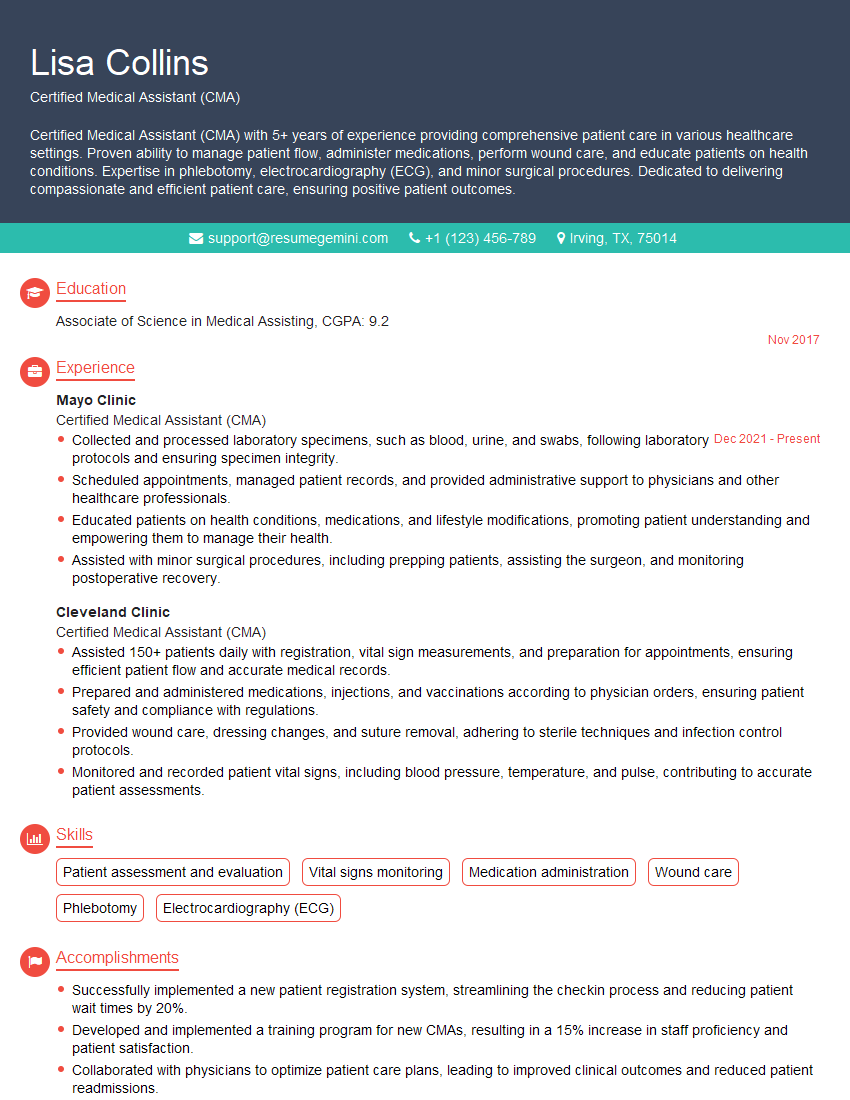
Are you gearing up for a career shift or aiming to ace your next interview? Look no further! We’ve curated a comprehensive guide to help you crack the interview for the coveted Certified Medical Assistant (CMA) position. From understanding the key responsibilities to mastering the most commonly asked questions, this blog has you covered. So, buckle up and let’s embark on this journey together
Acing the interview is crucial, but landing one requires a compelling resume that gets you noticed. Crafting a professional document that highlights your skills and experience is the first step toward interview success. ResumeGemini can help you build a standout resume that gets you called in for that dream job.






Essential Interview Questions For Certified Medical Assistant (CMA)
1. How would you assist a patient with diabetes in managing their blood sugar levels?
In my experience working as a CMA, I have assisted numerous patients with diabetes in managing their blood sugar levels. I typically start by asking the patient about their current insulin regimen and glucose monitoring practices. I then provide education on diet, exercise, and medication adherence. I may also demonstrate how to use a blood glucose meter and inject insulin. Finally, I work with the patient to develop a personalized management plan that meets their individual needs.
2. What is your approach to providing patient education?
Using Clear and Simple Language
- I make sure to use clear and simple language that the patient can easily understand.
- I avoid using medical jargon and acronyms that may not be familiar to the patient.
Tailoring Information to the Patient’s Needs
- I tailor the information I provide to the patient’s individual needs and learning style.
- I take into account the patient’s age, education level, and cultural background.
3. How do you handle difficult or uncooperative patients?
When dealing with difficult or uncooperative patients, I remain calm and professional at all times. I listen to their concerns and try to understand their perspective. I then try to find a way to address their concerns and provide the care they need. If the patient is still uncooperative, I may need to involve a supervisor or other healthcare professional to help resolve the issue.
4. What is your experience with using electronic health records (EHRs)?
I have experience using several different EHR systems in both inpatient and outpatient settings. I am proficient in using EHRs to document patient encounters, order tests, and prescribe medications. I am also familiar with using EHRs to track patient progress and communicate with other healthcare providers.
5. What are your thoughts on the future of healthcare?
I believe that the future of healthcare will involve a greater use of technology to improve the quality and efficiency of care. I am excited about the potential of telehealth, artificial intelligence, and other technologies to improve patient outcomes and reduce costs.
6. What are your strengths and weaknesses as a CMA?
Strengths
- Excellent clinical skills
- Strong communication and interpersonal skills
- Ability to work independently and as part of a team
Weaknesses
- Limited experience with some specialized medical procedures
- Still developing my knowledge of some areas of medicine
7. Why are you interested in working as a CMA in our clinic?
I am interested in working as a CMA in your clinic because I am impressed by your commitment to providing high-quality patient care. I am also excited about the opportunity to work with your team of experienced and dedicated healthcare professionals.
8. What are your salary expectations?
My salary expectations are in line with the market rate for CMAs with my experience and qualifications. I am willing to negotiate a salary that is fair and competitive.
9. Are you available to work weekends and holidays?
Yes, I am available to work weekends and holidays. I understand that these are busy times for the clinic, and I am happy to help out whenever needed.
10. Do you have any questions for me?
Yes, I do have a few questions. First, I would like to know more about the specific duties and responsibilities of the CMA position in your clinic. Second, I would like to know more about the clinic’s policies and procedures regarding patient care.
Interviewers often ask about specific skills and experiences. With ResumeGemini‘s customizable templates, you can tailor your resume to showcase the skills most relevant to the position, making a powerful first impression. Also check out Resume Template specially tailored for Certified Medical Assistant (CMA).
Career Expert Tips:
- Ace those interviews! Prepare effectively by reviewing the Top 50 Most Common Interview Questions on ResumeGemini.
- Navigate your job search with confidence! Explore a wide range of Career Tips on ResumeGemini. Learn about common challenges and recommendations to overcome them.
- Craft the perfect resume! Master the Art of Resume Writing with ResumeGemini’s guide. Showcase your unique qualifications and achievements effectively.
- Great Savings With New Year Deals and Discounts! In 2025, boost your job search and build your dream resume with ResumeGemini’s ATS optimized templates.
Researching the company and tailoring your answers is essential. Once you have a clear understanding of the Certified Medical Assistant (CMA)‘s requirements, you can use ResumeGemini to adjust your resume to perfectly match the job description.
Key Job Responsibilities
Certified Medical Assistants (CMAs) are healthcare professionals who provide a wide range of administrative, clinical, and patient care services in various medical settings.
1. Patient Care
CMAs perform various patient care tasks, including:
- Taking vital signs (blood pressure, temperature, pulse, respiration)
- Collecting and preparing specimens for laboratory tests
- Assisting with physical examinations
- Providing wound care
- Administering medications (as directed by a physician)
2. Administrative Tasks
CMAs also handle various administrative responsibilities, such as:
- Maintaining patient medical records
- Scheduling appointments
- Answering phones and emails
- Processing insurance claims
- Ordering supplies
3. Clinical Support
CMAs provide clinical support to healthcare professionals, including:
- Assisting with patient examinations and procedures
- Preparing patients for surgery
- Monitoring patients after surgery
- Providing patient education
- Performing electrocardiograms (ECGs)
4. Communication and Interpersonal Skills
CMAs must possess strong communication and interpersonal skills, as they interact with patients, healthcare professionals, and family members on a daily basis.
- Communicating effectively with patients and their families
- Collaborating with healthcare professionals
- Maintaining a professional and compassionate demeanor
- Providing patients with emotional support
- Maintaining confidentiality
Interview Tips
Preparing thoroughly for a CMA interview is crucial for making a positive impression on potential employers. Here are some tips:
1. Research the Organization
Before the interview, take time to research the healthcare organization you’re applying to. Learn about their mission, values, and the specific services they provide. This knowledge will help you demonstrate your interest in the organization and align your skills with their needs.
- Visit the organization’s website
- Read about their services and patient population
- Check social media platforms for updates and announcements
2. Practice Common Interview Questions
Anticipate and prepare for common interview questions. Practice answering them aloud, focusing on highlighting your relevant skills, experiences, and qualifications. Consider using the STAR method (Situation, Task, Action, Result) to structure your responses effectively.
- “Tell me about yourself.” (Highlight your CMA certification, relevant work experience, and why you’re interested in the role.)
- “Why are you interested in working for our organization?” (Relate your research and passion for their mission.)
- “Describe a situation where you provided exceptional patient care.” (Use the STAR method to present a specific example.)
3. Emphasize Transferable Skills
If you don’t have direct CMA experience, emphasize transferable skills from other healthcare or customer service roles. Highlight your ability to work efficiently in a fast-paced environment, prioritize tasks, and communicate effectively.
- Medical terminology knowledge
- Patient care experience (e.g., volunteering in a hospital)
- Excellent organizational and time management skills
4. Prepare Questions for the Interviewer
Preparing thoughtful questions for the interviewer demonstrates your engagement and interest in the position. It also gives you an opportunity to clarify details and gain insights into the organization’s culture and expectations.
- “What are the most important qualities you’re looking for in a CMA?”
- “What are the growth and advancement opportunities within the organization?”
- “Can you describe the work environment and team dynamics?”
5. Professional Appearance and Attitude
First impressions matter, so dress professionally and arrive on time for the interview. Maintain a positive and enthusiastic attitude throughout the meeting. Demonstrate confidence in your abilities and a willingness to contribute to the team.
- Wear business casual attire
- Be punctual and respectful
- Smile and make eye contact
Next Step:
Armed with this knowledge, you’re now well-equipped to tackle the Certified Medical Assistant (CMA) interview with confidence. Remember, preparation is key. So, start crafting your resume, highlighting your relevant skills and experiences. Don’t be afraid to tailor your application to each specific job posting. With the right approach and a bit of practice, you’ll be well on your way to landing your dream job. Build your resume now from scratch or optimize your existing resume with ResumeGemini. Wish you luck in your career journey!