





In today’s data-driven world, data analysts are in high demand. If you’re a data analyst looking to land your dream job in 2026, you need a resume that stands out from the crowd. Here are six winning resume tips to help you do just that:
Optimize Your Resume for ATS (Applicant Tracking Systems)
Most companies use Applicant Tracking Systems (ATS) to screen resumes. These systems scan resumes for specific keywords and phrases to identify the most qualified candidates. To make sure your resume gets noticed, be sure to include relevant keywords and phrases in your resume. You can find these keywords and phrases by researching the job descriptions you’re applying for.
Showcase Your Technical Proficiency with Quantifiable Metrics
As a data analyst, you need to be able to demonstrate your technical proficiency. The best way to do this is to use quantifiable metrics in your resume. For example, instead of saying “I have experience with data analysis,” you could say “I have experience with data analysis and have used my skills to increase sales by 15%.”
Master the Art of Storytelling with Impactful Data-Driven Narratives
Data analysis is all about telling a story. When you’re writing your resume, be sure to use data-driven narratives to highlight your accomplishments. For example, instead of saying “I have experience with data analysis,” you could say “I have experience with data analysis and have used my skills to increase sales by 15%. This increase in sales resulted in a 10% increase in profits.”
Highlight Your Industry-Specific Expertise and Knowledge
If you’re applying for a data analyst job in a specific industry, be sure to highlight your industry-specific expertise and knowledge. For example, if you’re applying for a data analyst job in the healthcare industry, you could mention your experience with healthcare data analysis. You could also mention any certifications or training you have in healthcare data analysis.
Present Your Projects and Accomplishments with Clarity and Conciseness
When you’re listing your projects and accomplishments on your resume, be sure to do so with clarity and conciseness. Use bullet points to list your accomplishments and be sure to use action verbs. For example, instead of saying “I have experience with data analysis,” you could say “I have experience with data analysis and have used my skills to increase sales by 15%.”
Tailor Your Resume to Each Specific Job Application
Finally, be sure to tailor your resume to each specific job application. Take the time to read the job description carefully and identify the skills and experience that the employer is looking for. Then, be sure to highlight those skills and experience in your resume.
By following these tips, you can create a resume that will help you land your dream job as a data analyst in 2026. Just be sure to use ResumeGemini to create your resume and you’ll be well on your way to success.
Career Expert Tips:
- Select the ideal resume template to showcase your professional experience effectively.
- Master the art of resume writing to highlight your unique qualifications and achievements.
- Checkout the resume writing tips for guidance and best practices.
- Make your 2025 brighter with a new job. Build a powerful resume with ResumeGemini and save big, enjoy exclusive discounts on premium templates.
Frequently Asked Questions (FAQ’s)
What are the essential elements of a strong data analyst resume?
A stand-out data analyst resume comprises a compelling and data-driven narrative that showcases your proficiency in handling complex data structures, utilizing advanced statistical techniques, and delivering impactful insights. Ensure you include the following crucial elements:
- A concise and engaging professional summary that highlights your key skills and experience, immediately capturing the recruiter’s attention.
- A well-structured employment history section that outlines your responsibilities and accomplishments in previous data analyst roles, quantifying your results with specific metrics whenever possible.
- A comprehensive skills section that showcases your technical proficiency in data analysis tools, programming languages, and statistical techniques.
- A dedicated project section that effectively presents your data analysis projects, detailing the problem statement, methodology, and outcomes.
- A relevant education section that lists your academic credentials, including your degree in data science, statistics, or a related field.
How can I effectively demonstrate my technical skills and experience?
Demonstrating your technical skills and experience is paramount in a data analyst resume. Consider employing the following strategies:
- Utilize industry-specific buzzwords and keywords throughout your resume to align with potential job requirements.
- Quantify your accomplishments with specific metrics, showcasing the tangible impact of your data analysis efforts.
- Highlight your proficiency in data analysis tools, such as SQL, Python, R, and Tableau, along with your experience in statistical techniques, like regression analysis and machine learning.
- Incorporate a dedicated “Technical Skills” section to succinctly list your core competencies.
How do I craft a compelling data-driven narrative that showcases my abilities?
Crafting a compelling data-driven narrative is crucial to set your resume apart. Consider these tips:
- Start with a strong objective statement that encapsulates your career aspirations and value proposition.
- Utilize action verbs and specific examples to describe your data analysis projects and accomplishments, emphasizing the outcomes and impact you achieved.
- Incorporate numbers, statistics, and metrics throughout your resume to support your claims and demonstrate your data-driven approach.
- Showcase your ability to identify trends, draw insights, and make data-informed recommendations.
What industry-specific keywords and phrases should I incorporate?
Tailoring your resume to specific industries and job roles is essential. Research industry-specific keywords and phrases that align with the positions you are targeting. Consider the following tips:
- Identify keywords related to the industry you are applying to, such as healthcare, finance, or retail.
- Incorporate these keywords into your resume summary, skills section, and project descriptions.
- Utilize industry-specific jargon and terminology to demonstrate your knowledge and expertise.
- Research company-specific keywords by visiting their website and reviewing job postings.
How do I present my projects and accomplishments in a concise and impactful way?
Highlighting your data analysis projects and accomplishments is a key aspect of your resume. Follow these tips to present them effectively:
- Use the STAR method (Situation, Task, Action, Result) to describe your projects, providing context, outlining your responsibilities, and quantifying your outcomes.
- Prioritize your projects based on their relevance to the job you are applying for.
- Include a dedicated “Projects” section to showcase your most significant data analysis initiatives.
- For each project, clearly state the problem statement, the methodology you employed, and the results you achieved.
- Utilize bullet points and concise language to ensure clarity and impact.
What are the common mistakes to avoid when writing a data analyst resume?
Avoiding common mistakes is essential for a polished and effective data analyst resume. Consider the following pitfalls:
- Overusing buzzwords and technical jargon without providing context or examples.
- Including irrelevant or outdated information that does not align with the job requirements.
- Failing to tailor your resume to specific job applications, resulting in a generic and unfocused document.
- Neglecting to proofread your resume carefully, leading to errors in grammar, spelling, or formatting.
- Underselling your accomplishments and failing to quantify your results with specific metrics.
How do I tailor my resume to specific job applications and stand out from other candidates?
Tailoring your resume to each job application is crucial to increase your chances of success. Follow these steps:
- Carefully review the job description and identify the key requirements and responsibilities.
- Highlight the skills and experiences in your resume that align with the job requirements.
- Use industry-specific keywords and phrases to match the job description.
- Quantify your accomplishments and provide specific examples to demonstrate your value.
- Customize your resume summary and objective statement to align with the specific job you are applying for.
What are the best practices for highlighting my data visualization and presentation skills?
Showcasing your data visualization and presentation skills is crucial for data analysts. Follow these best practices:
- Include a dedicated section in your resume to highlight your proficiency in data visualization tools, such as Tableau, Power BI, and Google Data Studio.
- Showcase your ability to present complex data in a clear and visually appealing manner.
- Use charts, graphs, and other visual elements to illustrate your findings and insights.
- Quantify the impact of your data visualizations, demonstrating how they have improved decision-making or communication within organizations.
- Consider including a portfolio or examples of your data visualization work to provide tangible evidence of your skills.
Next Step:
Maximize your resume’s impact with ResumeGemini, the leading ATS-friendly resume builder. Craft a standout resume tailored to the job you desire. Our platform provides expert guidance, industry-specific content examples, and customizable templates to help you showcase your data analyst skills effectively. Don’t settle for an ordinary resume. Elevate your job search with ResumeGemini today!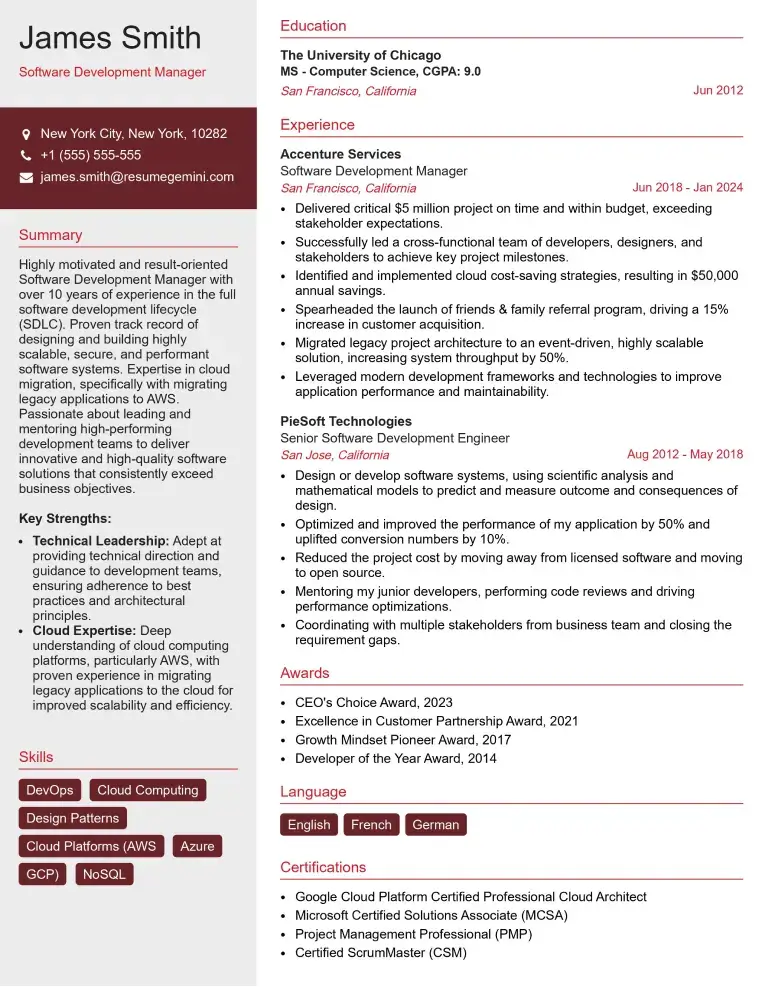
Elevate your job search with our premium resume templates. Here is an amazing resume template that can be used to build a professional and elegant resume. You can build a resume from scratch or revamp your existing resume. Impress hiring managers and secure your next opportunity.
- Top 50 Most Common Interview Questions
- The Psychology of a Great Resume: Hacks to Impress Recruiters
- What Mistakes to Avoid When Writing a Resume: A Comprehensive Guide
- Elevate Your Career with Expert Resume Building: Introducing ResumeGemini
- Crafting Your First Impression: How To Make Free Resume Online For Freshers