





Embarking on a career transition is an audacious pursuit, a leap of faith that requires determination and a well-crafted resume to guide your journey. This comprehensive guide will empower you with the tools and strategies to craft a resume that effectively bridges the gap between your current experience and your dream career.
Craft a Resume that Transitions You into Your Dream Career
Your resume is a roadmap of your skills, experience, and aspirations. To effectively transition into your dream career, your resume must reflect your transferable skills, highlight your passion for your new field, and convey your readiness for the challenges ahead.
- Leverage transferable skills: Identify the skills you’ve acquired in your previous roles that are relevant to your desired field. These may include communication, problem-solving, leadership, or technical proficiencies.
- Emphasize your passion: Infuse your resume with enthusiasm for your new career path. Share experiences, projects, or volunteer work that demonstrate your commitment to your chosen field.
- Tailor to specific industries and job titles: Research the industry and specific job titles you’re targeting. Tailor your resume to highlight the skills and experience that align with their requirements.
Identify and Highlight Transferable Skills for Career Transitions
Transferable skills are abilities that are applicable across multiple industries and job roles. By identifying and highlighting your transferable skills, you can demonstrate your adaptability and value to potential employers.
- Communication: Written and verbal communication skills are essential in almost every field.
- Problem-solving: The ability to analyze problems and develop effective solutions is highly sought after.
- Teamwork: The ability to collaborate effectively in team environments is crucial.
- Adaptability: The ability to embrace change and learn new skills quickly is a valuable asset.
- Technical skills: Proficiency in specific software or programming languages may be transferable to other industries.
Quantify Your Accomplishments and Value in Different Fields
Quantifying your accomplishments adds credibility and impact to your resume. Use specific metrics and data to demonstrate the tangible results you’ve achieved in your previous roles.
- Use numbers: For example, instead of saying “Managed projects,” say “Managed projects that resulted in a 15% increase in revenue.”
- Highlight results: Focus on the impact and outcomes of your work, rather than just describing your responsibilities.
- Use industry-specific metrics: Use metrics that are relevant to the industry you’re targeting.
Tailor Your Resume to Target Specific Industries and Job Titles
A tailored resume is a targeted resume. By customizing your resume to each industry and job title you apply for, you increase your chances of making a strong impression.
- Research the industry: Understand the industry’s trends, challenges, and key players.
- Analyze job descriptions: Carefully review job descriptions to identify the specific skills, experience, and qualifications required.
- Highlight relevant skills: Emphasize the skills and experience in your resume that are most relevant to the job you’re applying for.
Create a Compelling Personal Statement that Captivates Hiring Managers
Your personal statement is a prime opportunity to make a personal connection with the hiring manager and showcase your passion for your new career path.
- Keep it brief: Aim for a concise and impactful personal statement of around 3-5 sentences.
- Start with a hook: Begin with a strong statement or anecdote that grabs attention.
- Express your passion: Share your motivations and why you’re excited about the new career you’re pursuing.
- Highlight your unique value: Explain how your skills, experience, and passion make you a valuable asset to the company.
Network and Seek Referrals for Career-Changing Opportunities
Networking is a powerful tool for career changers. Attend industry events, connect with professionals in your field, and seek referrals from your contacts.
- Attend industry events: Conferences, workshops, and meetups are great opportunities to meet potential employers and learn about job openings.
- Connect with professionals: Reach out to individuals in your desired field via LinkedIn or email and express your interest in learning more about their career journey.
- Seek referrals: Ask your contacts if they know of any job openings or are willing to refer you for positions.
Showcase Your Passion and Commitment to Your New Career Path
Throughout your resume and networking efforts, it’s essential to convey your passion and commitment to your new career path. This enthusiasm will captivate hiring managers and demonstrate your determination to succeed.
- Share your story: Explain your reasons for pursuing a career change and how your previous experience has prepared you for this new path.
- Seek opportunities to volunteer: Offer your time and skills to organizations or projects related to your new career field.
- Stay updated on industry trends: Attend webinars, read industry publications, and engage in online discussions to demonstrate your commitment to continuous learning.
Transitioning into a new career is a challenging but rewarding endeavor. By following these strategies and leveraging the tools available on ResumeGemini, you can create a resume that will showcase your skills, passion, and determination. Remember, the journey to your dream career begins with a well-crafted resume that effectively conveys your aspirations. Embrace the challenge, seize the opportunities, and forge a path towards the career you truly desire.
Career Expert Tips:
- Select the ideal resume template to showcase your professional experience effectively.
- Master the art of resume writing to highlight your unique qualifications and achievements.
- Checkout the resume writing tips for guidance and best practices.
- Make your 2025 brighter with a new job. Build a powerful resume with ResumeGemini and save big, enjoy exclusive discounts on premium templates.
Frequently Asked Questions (FAQ’s)
How can I make my resume stand out as a career switcher?
As a career switcher, it is important to tailor your resume specifically to the industry and role you are applying for. Highlight your transferable skills and experience, and quantify your accomplishments whenever possible. Use keywords from the job description to ensure your resume is relevant to the position. Additionally, consider creating a targeted cover letter for each job you apply for, which showcases your enthusiasm for the role and how your skills align with the company’s needs.
What are the key elements of a strong resume for career switchers?
A strong resume for career switchers includes a clear and concise objective statement that highlights your career goals and relevant skills. It also includes a detailed work history, emphasizing transferable skills and quantifying accomplishments. Education and certifications should be listed prominently, followed by any relevant awards or honors. Finally, a strong resume is well-organized, error-free, and visually appealing.
How can I highlight my transferable skills and experience effectively?
To highlight your transferable skills and experience effectively, focus on identifying skills that are relevant to the position you are applying for, regardless of the industry you previously worked in. Use action verbs and specific examples to demonstrate how you have used these skills in your previous roles. Quantifying your accomplishments with metrics and data can also help to showcase the impact of your work.
What are some common challenges faced by career switchers in today’s job market?
Career switchers often face challenges in today’s job market, including a lack of directly relevant experience, ageism, and competition from candidates with more traditional backgrounds. Additionally, career switchers may need to take on lower-level positions or accept lower salaries to gain experience in their new field.
How can I network and seek referrals for career-changing job openings?
Networking and seeking referrals can be effective strategies for career switchers. Attend industry events, join professional organizations, and connect with people on LinkedIn. Reach out to your friends, family, and former colleagues to see if they know of any open positions. You can also use online job boards and search engines to find job openings that may not be advertised publicly.
What are some tips for crafting a compelling personal statement for a career switcher?
When crafting a compelling personal statement for a career switcher, focus on highlighting your transferable skills, passion for the new field, and reasons for making the career change. Be specific and provide examples of how your skills and experience can benefit the company. Keep your personal statement concise and error-free, and tailor it to each job you apply for.
How can I optimize my resume for ATS and HR systems for better visibility?
To optimize your resume for ATS and HR systems, use a standard font and font size, and avoid using graphics or images. Use keywords from the job description throughout your resume, and tailor your resume to each specific job you apply for. Keep your resume concise and well-organized, and proofread carefully for any errors.
Next Step:
If you’re ready to break into your dream career, ResumeGemini can help you create a resume that will make you stand out from the competition. With our library of professionally designed templates, you can create a resume that is both visually appealing and informative. Our easy-to-use builder makes it quick and easy to add your content, and our expert resume writers are here to help you every step of the way. So why wait? Sign up for a free account today and start building your new resume!
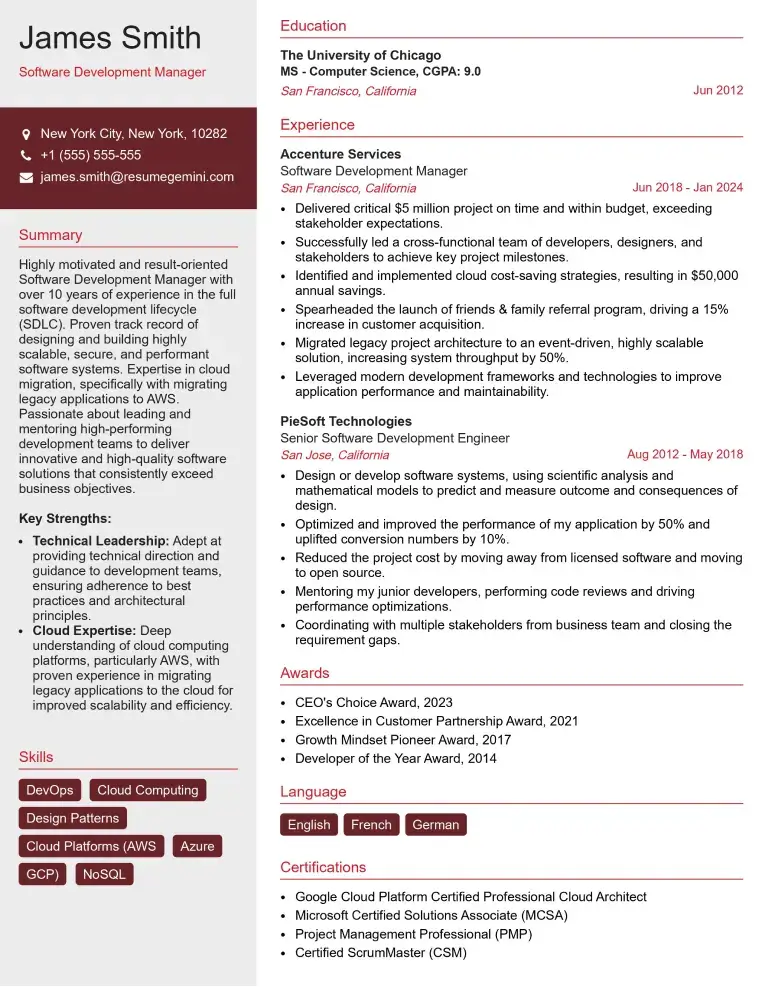
Elevate your job search with our premium resume templates. Here is an amazing resume template that can be used to build a professional and elegant resume. You can build a resume from scratch or revamp your existing resume. Impress hiring managers and secure your next opportunity.
- Top 50 Most Common Interview Questions
- The Psychology of a Great Resume: Hacks to Impress Recruiters
- What Mistakes to Avoid When Writing a Resume: A Comprehensive Guide
- Elevate Your Career with Expert Resume Building: Introducing ResumeGemini
- Crafting Your First Impression: How To Make Free Resume Online For Freshers