





Unlocking your career potential starts with crafting a high-impact resume that showcases your skills, experience, and value to potential employers. In today’s competitive job market, your resume is more than just a document – it’s a strategic tool that can open doors to new opportunities and accelerate your career growth.
The Art of Tailoring: Craft a Resume for Each Job Application
Gone are the days when you could send out a generic resume for every job opening. Employers today expect resumes that are tailored specifically to the position and company they’re applying for. Here’s how to do it:
- Read the job description carefully: Identify the key skills, experience, and qualifications that the employer is seeking. Use these keywords throughout your resume, but avoid keyword stuffing.
- Highlight relevant experience: Focus on showcasing your experiences that are most relevant to the target job. Use specific examples and quantify your accomplishments whenever possible.
- Customize your resume header: Your resume header should include your name, contact information, and a brief professional summary. Tailor your summary to the specific job you’re applying for, highlighting your skills and experience that are most relevant to the position.
Quantify Your Accomplishments: Showcase Your Impact with Numbers
Numbers speak louder than words. When describing your accomplishments on your resume, use specific metrics and quantifiable results whenever possible. This will help employers quickly and easily assess your impact and contributions.
For example, instead of saying “Increased sales,” you could say “Increased monthly sales by 25%, exceeding targets by 10%.”
Powerhouse Keywords: Optimize Your Resume for Job Searcher Algorithms
Most employers use Applicant Tracking Systems (ATS) to screen resumes. These systems use algorithms to search for specific keywords that are relevant to the job opening. To optimize your resume for ATS, include relevant keywords in your resume content, headings, and subheadings.
You can use online tools like Google Keyword Planner to research relevant keywords for your industry and job title.
Visual Storytelling: Capture Attention with Eye-Catching Design Elements
Your resume is not just about words – it’s also about visual presentation. Use visually appealing design elements to make your resume stand out and capture the employer’s attention.
- Use white space effectively: White space helps break up text and makes your resume easier to read.
- Incorporate color sparingly: Use color to highlight important sections or headings, but avoid using too much color as it can be distracting.
- Use fonts wisely: Choose fonts that are easy to read and professional. Avoid using fancy or decorative fonts.
Proofreading Perfection: Ensure a Flawless Resume That Stands Out
A resume with errors can be a major turn-off for employers. Before submitting your resume, carefully proofread it for any errors in grammar, spelling, or punctuation.
You can also ask a friend, family member, or colleague to review your resume and provide feedback. A fresh pair of eyes can help you spot errors that you may have overlooked.
By following these tips, you can create a high-impact resume that will help you stand out from the competition and unlock your career potential. ResumeGemini offers a range of premium resume templates that are ATS-friendly and visually appealing. Our easy-to-use online editor makes it simple to create a resume that will impress employers and help you land your dream job.
Career Expert Tips:
- Select the ideal resume template to showcase your professional experience effectively.
- Master the art of resume writing to highlight your unique qualifications and achievements.
- Checkout the resume writing tips for guidance and best practices.
- Make your 2025 brighter with a new job. Build a powerful resume with ResumeGemini and save big, enjoy exclusive discounts on premium templates.
Frequently Asked Questions (FAQs)
How can I tailor my resume to different job applications?
Tailoring your resume to each job application is crucial to showcase your relevant skills and experience. Here are some tips:
- Carefully review the job description and identify the essential qualifications.
- Highlight keywords from the job description in your resume, particularly in your skills section and work experience.
- Customize your resume by including specific examples of how your skills and experience align with the job requirements.
- Consider rearranging your resume to emphasize the most relevant information for the specific job.
- Proofread your resume thoroughly to ensure it is error-free and well-presented.
What is the best way to quantify my accomplishments on my resume?
Quantifying your accomplishments on your resume helps demonstrate the tangible impact of your work and showcases your value to potential employers. Here’s how to do it effectively:
- Use specific numbers and metrics to measure your results whenever possible.
- Avoid vague or general statements; instead, provide concrete examples with quantifiable data.
- Use action verbs and highlight your contributions clearly.
- For instance, instead of saying “Managed a team,” write “Led a team of 10 engineers, resulting in a 20% increase in project efficiency.”
- Proofread your resume carefully to ensure accuracy in your quantified accomplishments.
How do I choose the right keywords to optimize my resume?
Including relevant keywords in your resume is essential for optimizing it for applicant tracking systems (ATS) and improving its visibility to potential employers. Here’s how to choose the right keywords:
- Identify relevant keywords from job descriptions and industry-specific sources.
- Use a resume builder with an ATS scanner to suggest keywords relevant to your field.
- Use keywords naturally throughout your resume, including in your skills section, work experience, and summary.
- Avoid keyword stuffing; instead, focus on incorporating keywords that genuinely describe your skills and experience.
- Proofread your resume carefully to ensure that keywords are used correctly and within context.
Can I use visual elements to make my resume more engaging?
While resumes should generally maintain a professional and formal tone, incorporating visual elements can enhance its visual appeal and make it more engaging. Here’s how to use visuals effectively:
- Use color sparingly and professionally to highlight important sections or information.
- Consider using icons or graphics to represent skills or experience visually.
- Incorporate charts or graphs to showcase your accomplishments or career progression.
- Ensure that visual elements align with your brand and career goals.
- Proofread your resume carefully to ensure that visual elements are used appropriately and do not compromise readability.
How do I proofread my resume effectively to avoid errors?
Proofreading your resume thoroughly is crucial to ensure its accuracy and professionalism. Here’s how to proofread effectively:
- Take a break from writing your resume and come back to it later with fresh eyes.
- Read your resume aloud to identify any errors in grammar, spelling, or punctuation.
- Use a grammar and spell checker, but don’t rely on them entirely.
- Ask a friend, family member, or colleague to review your resume for errors.
- Proofread both the digital and printed versions of your resume carefully.
What are the common mistakes to avoid when writing a resume?
To ensure your resume makes a strong impression, it’s important to avoid common mistakes. Here are some pitfalls to watch out for:
- Using generic or vague language; instead, be specific and results-oriented.
- Including irrelevant information or hobbies that are not related to the job you’re applying for.
- Making your resume too long or too short; aim for a concise and tailored document.
- Using poor formatting or design that makes your resume difficult to read.
- Including false or misleading information; always be honest and accurate in your resume.
How often should I update my resume?
It’s advisable to update your resume regularly to keep it relevant and reflective of your current skills and experience. Here’s a general guideline:
- Update your resume every 6-12 months, even if you’re not actively job searching.
- Make significant updates or revisions when you acquire new skills, complete projects, or change jobs.
- Review your resume before applying for new positions to ensure it’s tailored to the specific job requirements.
- Regularly monitor industry trends and adjust your resume accordingly to stay competitive.
What are the best practices for formatting a professional resume?
Formatting your resume professionally is essential for creating a visually appealing and easy-to-read document. Here are some best practices:
- Use a clear and consistent font throughout your resume, such as Arial, Calibri, or Times New Roman.
- Use appropriate font sizes (typically 11-12 points for body text and 14-16 points for headings).
- Maintain consistent margins and spacing throughout your resume.
- Use bold or italics sparingly to highlight important information.
- Keep your resume concise and visually balanced, avoiding clutter or excessive white space.
Next Step:
Unlock your career potential with a high-impact resume that stands out from the crowd. ResumeGemini offers premium, ATS-friendly, customizable resume templates that will help you create a powerful tool for career advancement and success. With over 3.6 million content examples, step-by-step guidance, and expert tips, ResumeGemini empowers you to showcase your skills and experience in the best possible light. Don’t settle for an average resume; take the next step towards your dream job with ResumeGemini today!
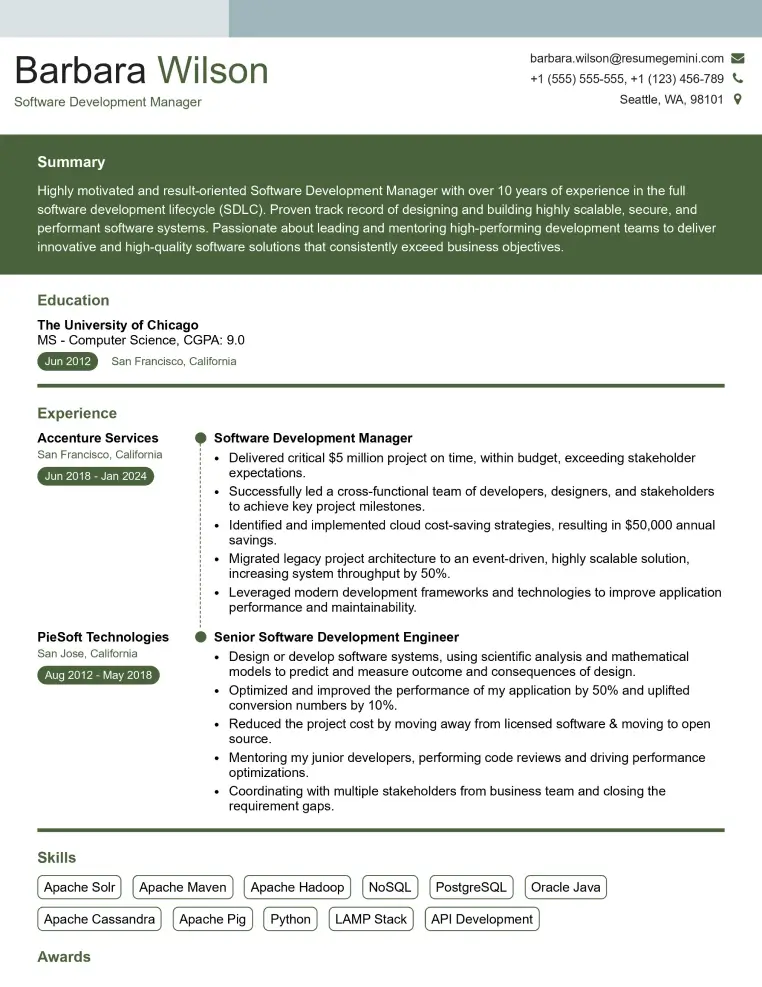
Elevate your job search with our premium resume templates. Here is an amazing resume template that can be used to build a professional and elegant resume. You can build a resume from scratch or revamp your existing resume. Impress hiring managers and secure your next opportunity.
- Top 50 Most Common Interview Questions
- The Psychology of a Great Resume: Hacks to Impress Recruiters
- What Mistakes to Avoid When Writing a Resume: A Comprehensive Guide
- Elevate Your Career with Expert Resume Building: Introducing ResumeGemini
- Crafting Your First Impression: How To Make Free Resume Online For Freshers