Feeling lost in a sea of interview questions? Landed that dream interview for Academic Advisor but worried you might not have the answers? You’re not alone! This blog is your guide for interview success. We’ll break down the most common Academic Advisor interview questions, providing insightful answers and tips to leave a lasting impression. Plus, we’ll delve into the key responsibilities of this exciting role, so you can walk into your interview feeling confident and prepared.
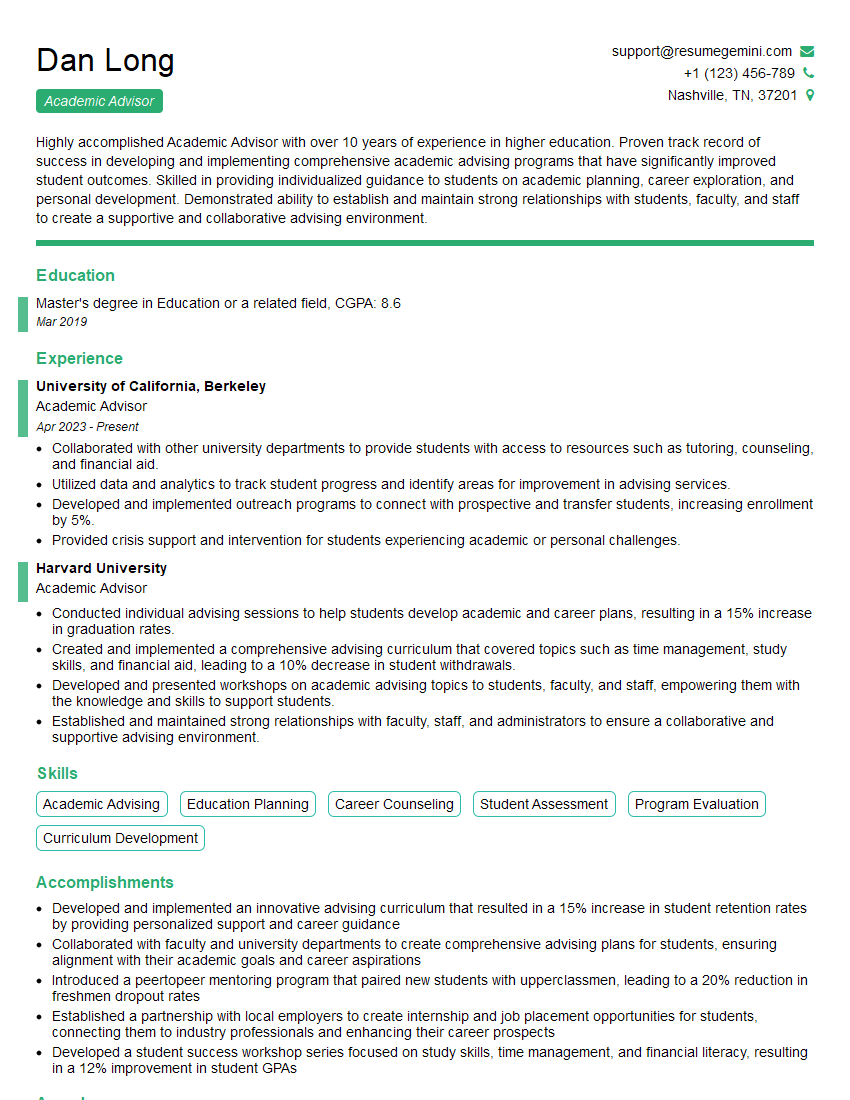
Acing the interview is crucial, but landing one requires a compelling resume that gets you noticed. Crafting a professional document that highlights your skills and experience is the first step toward interview success. ResumeGemini can help you build a standout resume that gets you called in for that dream job.






Essential Interview Questions For Academic Advisor
1. Describe your understanding of the role of an Academic Advisor and how you believe your skills and experience align with the requirements of this position?
As an Academic Advisor, I am responsible for providing guidance and support to students in their academic journey. My role involves advising students on course selection, academic planning, program requirements, and career exploration. I also assist students with personal and financial challenges that may impact their academic success. I am passionate about helping students achieve their academic and personal goals, and I believe that my skills and experience make me an ideal candidate for this position.
2. How do you stay up-to-date on academic policies, procedures, and curriculum changes that impact students?
Attending Workshops and Training
- Attend workshops and training sessions offered by the institution to stay abreast of the latest changes in academic policies and procedures.
Collaborating with Faculty and Staff
- Collaborate with faculty and staff to gather insights into curriculum changes and other academic developments that may affect students.
Utilizing University Resources
- Stay informed by regularly reviewing university websites, bulletins, and other resources that provide information on academic policies and curriculum updates.
3. Provide an example of a time when you successfully resolved a complex academic issue for a student. What was the issue, and how did you approach resolving it?
During my previous role as an Academic Advisor, I encountered a student who was struggling with academic probation. The student had failed several courses and was at risk of being dismissed from the university. I met with the student to discuss their situation and to develop a plan to help them improve their academic performance. We worked together to identify the root causes of the student’s academic difficulties, which included personal challenges and a lack of effective study skills. I provided the student with resources and support to address these challenges, such as tutoring, counseling, and academic planning workshops. I also met with the student regularly to monitor their progress and to provide encouragement. Through our collaborative efforts, the student was able to improve their academic performance and avoid academic dismissal.
4. Discuss your strategies for fostering a positive and supportive learning environment for students from diverse backgrounds.
- Create a welcoming and inclusive classroom environment where all students feel respected and valued.
- Use a variety of teaching methods and materials to accommodate different learning styles.
- Provide opportunities for students to interact with each other and to share their perspectives.
- Be sensitive to cultural differences and to the challenges that students from diverse backgrounds may face.
- Encourage students to seek help when they need it and to connect them with appropriate resources.
5. How do you assess student learning and provide feedback that is meaningful and actionable?
- Use a variety of assessment methods, such as exams, quizzes, papers, and presentations, to assess student learning.
- Provide students with timely and specific feedback on their work.
- Help students to understand their strengths and weaknesses.
- Work with students to develop strategies for improving their learning.
6. Can you provide an example of a time when you had to deal with a difficult or challenging student? How did you handle the situation and what was the outcome?
During my previous role as an Academic Advisor, I encountered a student who was consistently disruptive in class. The student would often talk over other students, make inappropriate comments, and refuse to participate in class activities. I met with the student to discuss their behavior and to set clear expectations for their conduct in class. I also provided the student with resources to help them improve their behavior, such as counseling and anger management workshops. I continued to meet with the student regularly to monitor their progress and to provide support. Eventually, the student’s behavior improved and they were able to participate successfully in class.
7. How do you stay organized and manage your time effectively as an Academic Advisor?
- Use a variety of tools and techniques to stay organized, such as calendars, to-do lists, and task management software.
- Prioritize tasks and allocate time effectively to ensure that all responsibilities are met.
- Delegate tasks to others when appropriate.
- Take breaks throughout the day to avoid burnout.
8. What is your understanding of FERPA and how does it impact your work as an Academic Advisor?
- FERPA is a federal law that protects the privacy of student educational records.
- Academic Advisors must be familiar with FERPA and its requirements.
- Advisors must only release student information to authorized individuals.
- Advisors must obtain student consent before releasing any information.
9. How do you handle confidential student information and what are the ethical considerations you keep in mind when working with students?
- Handle confidential student information with care and discretion.
- Only disclose information on a need-to-know basis.
- Obtain student consent before releasing any information.
- Be aware of the ethical implications of working with students.
- Maintain professional boundaries with students.
10. How do you evaluate the effectiveness of your advising services and make improvements based on feedback?
- Collect feedback from students on a regular basis.
- Use feedback to identify areas for improvement.
- Make changes to advising services based on feedback.
- Evaluate the effectiveness of changes made.
Interviewers often ask about specific skills and experiences. With ResumeGemini‘s customizable templates, you can tailor your resume to showcase the skills most relevant to the position, making a powerful first impression. Also check out Resume Template specially tailored for Academic Advisor.
Career Expert Tips:
- Ace those interviews! Prepare effectively by reviewing the Top 50 Most Common Interview Questions on ResumeGemini.
- Navigate your job search with confidence! Explore a wide range of Career Tips on ResumeGemini. Learn about common challenges and recommendations to overcome them.
- Craft the perfect resume! Master the Art of Resume Writing with ResumeGemini’s guide. Showcase your unique qualifications and achievements effectively.
- Great Savings With New Year Deals and Discounts! In 2025, boost your job search and build your dream resume with ResumeGemini’s ATS optimized templates.
Researching the company and tailoring your answers is essential. Once you have a clear understanding of the Academic Advisor‘s requirements, you can use ResumeGemini to adjust your resume to perfectly match the job description.
Key Job Responsibilities
Academic Advisors play a crucial role in supporting students’ academic journey. Their key responsibilities include:
1. Advising and Guiding Students
Academic Advisors provide comprehensive academic advice to students, including course selection, program planning, and graduation requirements. They help students navigate academic policies and procedures and develop personalized academic plans that align with their educational goals.
- Provide guidance on course selection and sequencing
- Assist with academic planning and scheduling
- Explain academic policies and procedures
- Help students identify academic resources and support services
2. Monitoring Student Progress
Academic Advisors track students’ academic progress and identify any areas where they may need additional support. They monitor students’ grades, attendance, and overall academic performance.
- Review students’ transcripts and academic records
- Identify students at risk of academic difficulties
- Provide early intervention to support struggling students
- Make referrals to other university services as needed
3. Career and Graduate School Planning
Academic Advisors assist students in exploring career options and planning for graduate school. They provide information about career paths, job markets, and graduate school application processes.
- Discuss career goals and aspirations with students
- Provide information about career fields and job markets
- Help students develop resumes, cover letters, and interview skills
- Advise on graduate school selection and application processes
4. Supporting Student Success
Academic Advisors go beyond academic advising to provide holistic support to students. They build relationships with students, offer encouragement, and connect them with campus resources.
- Provide emotional support and guidance
- Connect students with university services such as counseling, tutoring, and disability services
- Advocate for students’ needs and interests
- Help students develop self-advocacy and problem-solving skills
Interview Tips
To ace the interview and demonstrate your qualifications for the role of Academic Advisor, consider these tips:
1. Research the Institution and Position
Familiarize yourself with the institution’s academic offerings, student population, and strategic priorities. Research the specific responsibilities and expectations of the Academic Advisor position you are applying for.
- Visit the institution’s website
- Review the job description thoroughly
- Speak to current or former students or faculty members
2. Highlight Your Advising Experience
Emphasize your experience in academic advising, including your ability to provide guidance and support to students. Quantify your accomplishments and provide specific examples of how you have helped students succeed academically and personally.
- Describe your experience in advising students on course selection, academic planning, and career exploration
- Provide examples of how you have helped students overcome academic challenges or make informed decisions
- Highlight your ability to connect students with campus resources and advocate for their needs
3. Demonstrate Your Communication and Interpersonal Skills
Academic Advisors require strong communication and interpersonal skills to build rapport with students and effectively guide them. Highlight your ability to listen actively, ask thoughtful questions, and convey information clearly.
- Share examples of how you have built strong relationships with students
- Demonstrate your ability to communicate complex information in a relatable way
- Highlight your empathy and understanding of students’ diverse needs
4. Emphasize Your Commitment to Student Success
Academic Advisors are passionate about supporting student success. Express your commitment to helping students achieve their academic and personal goals. Highlight your dedication to providing individualized guidance and creating a supportive learning environment.
- Share your personal experiences or stories that demonstrate your passion for working with students
- Explain how your approach to advising goes beyond academic matters and focuses on the whole student
- Highlight your belief in equity and inclusion and your commitment to supporting students from diverse backgrounds
Next Step:
Now that you’re armed with the knowledge of Academic Advisor interview questions and responsibilities, it’s time to take the next step. Build or refine your resume to highlight your skills and experiences that align with this role. Don’t be afraid to tailor your resume to each specific job application. Finally, start applying for Academic Advisor positions with confidence. Remember, preparation is key, and with the right approach, you’ll be well on your way to landing your dream job. Build an amazing resume with ResumeGemini