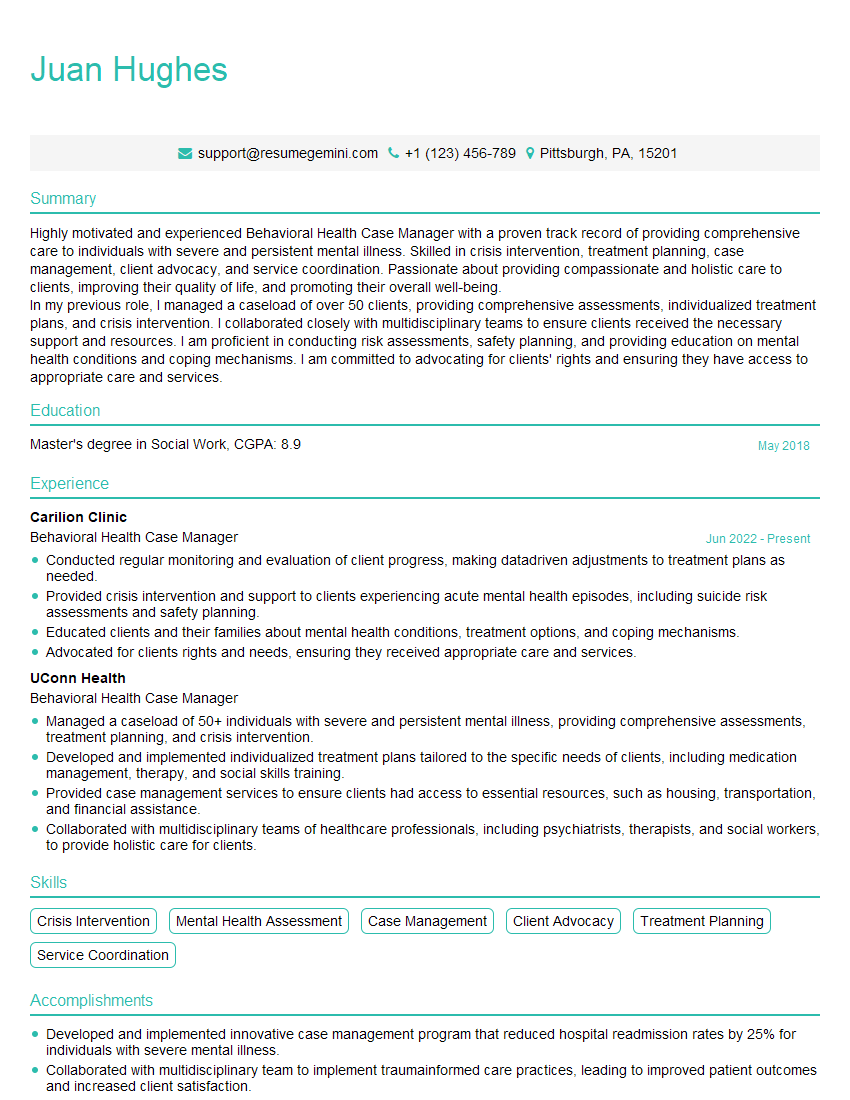
Are you gearing up for a career in Behavioral Health Case Manager? Feeling nervous about the interview questions that might come your way? Don’t worry, you’re in the right place. In this blog post, we’ll dive deep into the most common interview questions for Behavioral Health Case Manager and provide you with expert-backed answers. We’ll also explore the key responsibilities of this role so you can tailor your responses to showcase your perfect fit.
Acing the interview is crucial, but landing one requires a compelling resume that gets you noticed. Crafting a professional document that highlights your skills and experience is the first step toward interview success. ResumeGemini can help you build a standout resume that gets you called in for that dream job.






Essential Interview Questions For Behavioral Health Case Manager
1. Describe the key responsibilities of a Behavioral Health Case Manager.
As a Behavioral Health Case Manager, I would be responsible for:
- Conducting comprehensive assessments of clients’ mental health needs.
- Developing and implementing individualized treatment plans.
- Providing crisis counseling and support.
- Coordinating care with other professionals, such as therapists, psychiatrists, and social workers.
- Advocating for clients’ rights and needs.
2. What are the essential skills and qualities of a successful Behavioral Health Case Manager?
Interpersonal skills
- Excellent communication and listening skills.
- Empathy and compassion.
- Cultural sensitivity.
Clinical skills
- Strong understanding of mental health disorders and treatment modalities.
- Ability to conduct assessments and diagnose clients.
- Experience in developing and implementing treatment plans.
Case management skills
- Ability to coordinate care with other professionals.
- Strong organizational and time management skills.
- Experience in working with diverse populations.
3. How would you approach working with a client who is experiencing a mental health crisis?
When working with a client who is experiencing a mental health crisis, I would first try to establish a rapport with them and create a safe and supportive environment. I would then assess their needs and determine the best course of action. This may involve providing crisis counseling, referring them to a mental health professional, or assisting them in getting admitted to a hospital.
4. What are some of the challenges you have faced as a Behavioral Health Case Manager, and how did you overcome them?
One of the biggest challenges I have faced as a Behavioral Health Case Manager is working with clients who are resistant to treatment. I have learned to be patient and understanding with these clients and to work with them at their own pace. I have also found it helpful to collaborate with other professionals who can provide support and guidance.
5. How do you stay up-to-date on the latest developments in behavioral health?
I stay up-to-date on the latest developments in behavioral health by reading professional journals, attending conferences, and participating in continuing education courses. I am also a member of several professional organizations, which provides me with access to resources and networking opportunities.
6. What are your strengths and weaknesses as a Behavioral Health Case Manager?
Some of my strengths as a Behavioral Health Case Manager include my strong clinical skills, my ability to work with diverse populations, and my commitment to providing compassionate care. My weakness is that I am sometimes too idealistic and I can get discouraged when I am unable to help a client achieve their goals.
7. Why are you interested in working as a Behavioral Health Case Manager with our organization?
I am interested in working as a Behavioral Health Case Manager with your organization because I am impressed with your commitment to providing high-quality care to clients. I am also excited about the opportunity to work with a team of dedicated professionals who are passionate about making a difference in the lives of others.
8. What are your salary expectations?
My salary expectations are in line with the industry average for Behavioral Health Case Managers with my experience and qualifications. I am confident that I can bring value to your organization and I am willing to negotiate a salary that is fair and equitable.
9. Are you available to work overtime or on weekends?
I am available to work overtime or on weekends if necessary. I understand that the needs of clients can change and I am committed to providing the best possible care.
10. Do you have any questions for me?
I do have a few questions for you. I am interested in learning more about the specific needs of the clients you serve and how I can best support them. I am also interested in learning more about the team I would be working with and the opportunities for professional development.
Interviewers often ask about specific skills and experiences. With ResumeGemini‘s customizable templates, you can tailor your resume to showcase the skills most relevant to the position, making a powerful first impression. Also check out Resume Template specially tailored for Behavioral Health Case Manager.
Career Expert Tips:
- Ace those interviews! Prepare effectively by reviewing the Top 50 Most Common Interview Questions on ResumeGemini.
- Navigate your job search with confidence! Explore a wide range of Career Tips on ResumeGemini. Learn about common challenges and recommendations to overcome them.
- Craft the perfect resume! Master the Art of Resume Writing with ResumeGemini’s guide. Showcase your unique qualifications and achievements effectively.
- Great Savings With New Year Deals and Discounts! In 2025, boost your job search and build your dream resume with ResumeGemini’s ATS optimized templates.
Researching the company and tailoring your answers is essential. Once you have a clear understanding of the Behavioral Health Case Manager‘s requirements, you can use ResumeGemini to adjust your resume to perfectly match the job description.
Key Job Responsibilities
A Behavioral Health Case Manager plays a crucial role in providing comprehensive care to individuals with mental health and substance abuse issues. The key responsibilities of this position encompass:
1. Assessment and Evaluation
Conduct comprehensive assessments to determine the client’s needs, strengths, and challenges.
- Gather information through interviews, observation, and record reviews.
- Develop individualized treatment plans based on the assessment findings.
2. Care Planning and Coordination
Formulate and implement comprehensive care plans that address the client’s specific needs.
- Coordinate services with other healthcare professionals, such as therapists, psychiatrists, and medical providers.
- Monitor client progress and make necessary adjustments to the care plan.
3. Case Management Services
Provide ongoing support and assistance to clients throughout their treatment.
- Assist clients with accessing resources, such as housing, employment, and education.
- Advocate for clients’ rights and ensure their needs are met.
- Provide crisis intervention and support during emergencies.
4. Documentation and Reporting
Maintain accurate and detailed records of client interactions, interventions, and outcomes.
- Generate reports and communicate progress to stakeholders, including healthcare providers, family members, and insurance companies.
5. Collaboration and Communication
Collaborate effectively with other professionals within the healthcare system.
- Build strong relationships with clients, their families, and other healthcare providers.
- Communicate clearly and effectively, both verbally and in writing.
Interview Tips
To ace your interview for a Behavioral Health Case Manager position, consider these preparation tips:
1. Research the Organization and Role
Familiarize yourself with the organization’s mission, values, and the specific responsibilities of the Behavioral Health Case Manager role.
- Visit the organization’s website and social media pages.
- Review the job description thoroughly and identify the key requirements.
2. Highlight Your Skills and Experience
Showcase your relevant skills and experience in your resume and interview responses.
- Quantify your accomplishments whenever possible to demonstrate your impact.
- Use specific examples to illustrate your abilities in assessment, case management, and collaboration.
3. Practice Your Answers
Prepare for common interview questions and practice your responses. This will help you feel confident and articulate during the interview.
- Anticipate questions about your experience in working with individuals with mental health or substance abuse issues.
- Prepare responses that demonstrate your understanding of the person-centered approach to care.
4. Be Prepared to Talk About Your Passion for the Work
Hiring managers want to know that you are passionate about helping individuals with mental health and substance abuse issues.
- Share your personal experiences or motivations for pursuing this career.
- Emphasize your commitment to providing compassionate and evidence-based care.
Next Step:
Now that you’re armed with a solid understanding of what it takes to succeed as a Behavioral Health Case Manager, it’s time to turn that knowledge into action. Take a moment to revisit your resume, ensuring it highlights your relevant skills and experiences. Tailor it to reflect the insights you’ve gained from this blog and make it shine with your unique qualifications. Don’t wait for opportunities to come to you—start applying for Behavioral Health Case Manager positions today and take the first step towards your next career milestone. Your dream job is within reach, and with a polished resume and targeted applications, you’ll be well on your way to achieving your career goals! Build your resume now with ResumeGemini.