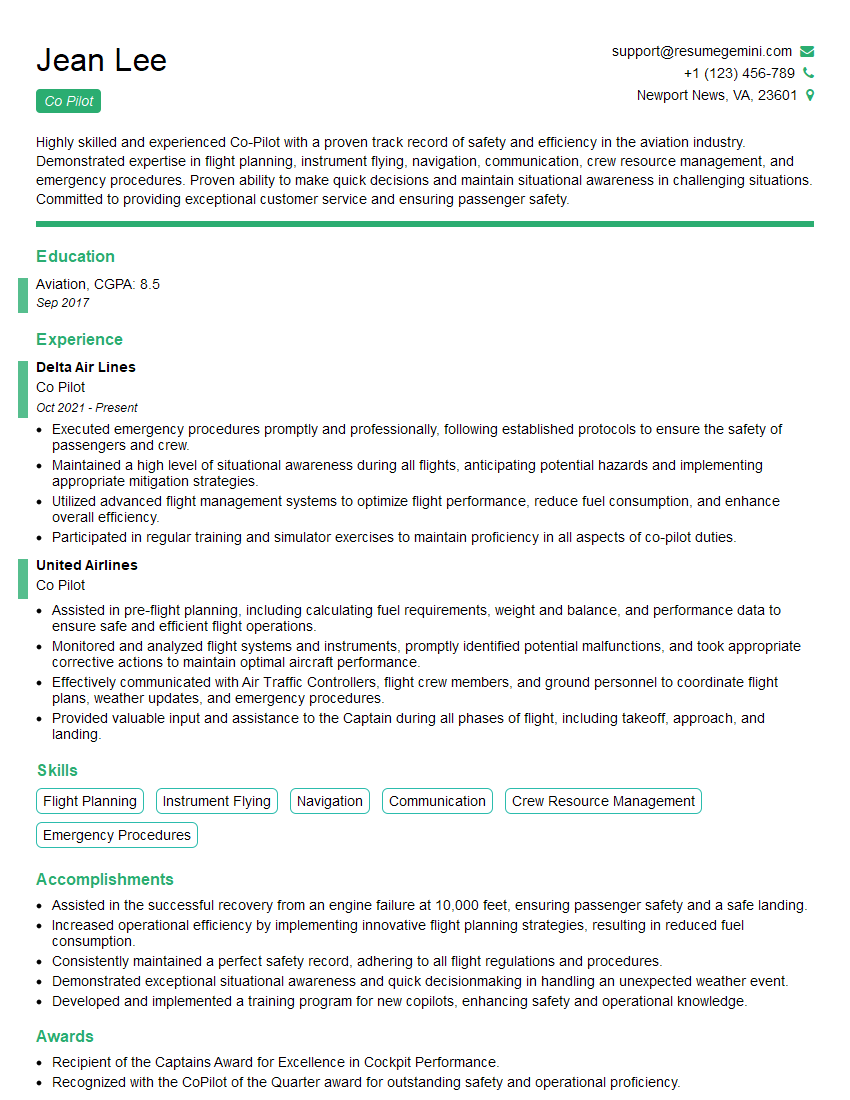
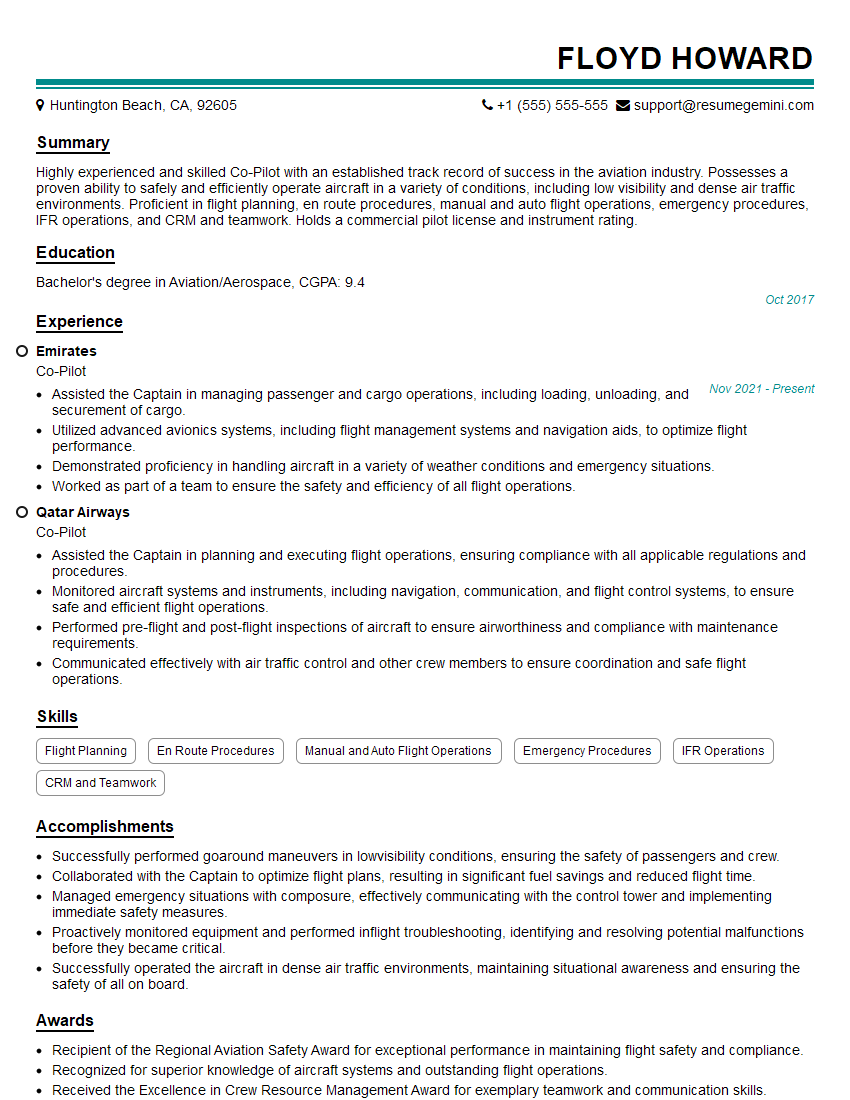
Are you gearing up for a career in Co Pilot? Feeling nervous about the interview questions that might come your way? Don’t worry, you’re in the right place. In this blog post, we’ll dive deep into the most common interview questions for Co Pilot and provide you with expert-backed answers. We’ll also explore the key responsibilities of this role so you can tailor your responses to showcase your perfect fit.
Acing the interview is crucial, but landing one requires a compelling resume that gets you noticed. Crafting a professional document that highlights your skills and experience is the first step toward interview success. ResumeGemini can help you build a standout resume that gets you called in for that dream job.






Essential Interview Questions For Co Pilot
1. Explain in detail about the pre-flight briefing?
During a pre-flight briefing, the Captain and First Officer discuss the flight in detail, including:
- Reviewing the flight plan and weather forecast
- Discussing any special procedures or considerations for the flight
- Assigning roles and responsibilities for the flight
- Ensuring that all necessary equipment is functioning properly
- Briefing the cabin crew on any relevant information
2. Describe the role and responsibilities of a Co-Pilot?
Cockpit Operations:
- Assisting the Captain in operating the aircraft
- Monitoring flight instruments and systems
- Communicating with air traffic control and other aircraft
Flight Planning and Navigation:
- Assisting in flight planning and route selection
- Operating navigation systems and ensuring accurate flight tracking
- Monitoring weather conditions and making adjustments as necessary
3. How do you prioritize tasks and manage workload during a flight?
To prioritize tasks and manage workload effectively, I follow these steps:
- Identify essential tasks that must be completed immediately
- Delegate tasks to the Captain or cabin crew when possible
- Use checklists and automation to streamline tasks
- Communicate effectively with the Captain and other crew members
- Stay alert and prepared for unexpected situations
4. Describe your experience with aircraft systems, including navigation, communication, and electrical systems?
- Proficient in operating navigation systems such as GPS, INS, and VOR
- Skilled in using communication systems, including VHF, HF, and satellite communications
- Familiar with aircraft electrical systems, including generators, batteries, and wiring
- Capable of troubleshooting and resolving minor system malfunctions
5. How do you handle emergencies and unexpected situations during a flight?
- Remain calm and assess the situation quickly
- Follow established emergency procedures and checklists
- Communicate clearly with the Captain and other crew members
- Take decisive action to resolve the emergency
- Document the incident and report it to the appropriate authorities
6. Describe your experience with simulators and how you use them to improve your flying skills?
- Regularly participate in simulator training to practice normal and emergency procedures
- Use simulators to enhance situational awareness and decision-making skills
- Identify areas for improvement and work on developing specific skills
- Stay up-to-date with industry best practices and simulator technology
7. How do you stay informed about industry regulations, safety procedures, and best practices?
- Regularly review aviation publications and industry news
- Attend industry conferences and workshops
- Participate in company-sponsored training and development programs
- Stay connected with other pilots and aviation professionals
8. Describe a situation where you had to work effectively as part of a team to resolve an issue during a flight.
During a recent flight, we encountered a pressurization issue shortly after takeoff. The Captain and I worked together to diagnose the problem, isolate the affected system, and implement the appropriate emergency procedures. We communicated clearly throughout the process, ensured the safety of the passengers, and resolved the issue without further incident.
9. Discuss your experience with performance-based navigation (PBN) and its benefits?
- Familiar with using PBN procedures to optimize flight efficiency and reduce fuel consumption
- Proficient in operating Required Navigation Performance (RNP) and Area Navigation (RNAV) systems
- Appreciative of the benefits of PBN, including improved accuracy, reduced workload, and enhanced safety
10. How do you maintain your knowledge and skills as a Co-Pilot?
- Regularly participate in continuing education and training programs
- Stay up-to-date with technological advancements and industry best practices
- Engage in self-study and research to expand my knowledge base
- Seek feedback from senior pilots and mentors to identify areas for improvement
Interviewers often ask about specific skills and experiences. With ResumeGemini‘s customizable templates, you can tailor your resume to showcase the skills most relevant to the position, making a powerful first impression. Also check out Resume Template specially tailored for Co Pilot.
Career Expert Tips:
- Ace those interviews! Prepare effectively by reviewing the Top 50 Most Common Interview Questions on ResumeGemini.
- Navigate your job search with confidence! Explore a wide range of Career Tips on ResumeGemini. Learn about common challenges and recommendations to overcome them.
- Craft the perfect resume! Master the Art of Resume Writing with ResumeGemini’s guide. Showcase your unique qualifications and achievements effectively.
- Great Savings With New Year Deals and Discounts! In 2025, boost your job search and build your dream resume with ResumeGemini’s ATS optimized templates.
Researching the company and tailoring your answers is essential. Once you have a clear understanding of the Co Pilot‘s requirements, you can use ResumeGemini to adjust your resume to perfectly match the job description.
Key Job Responsibilities
A Co-Pilot is second-in-command on a flight deck and assists the Captain in the safe operation of the aircraft. They play a crucial role in maintaining the safety and efficiency of flights.
1. Assist the Captain
The Co-Pilot works closely with the Captain and carries out duties as directed, including:
- Operating aircraft systems and equipment
- Monitoring flight instruments and navigation systems
2. Monitoring and Managing Systems
The Co-Pilot is responsible for monitoring and managing various aircraft systems and ensuring their proper functioning, including:
- Power plant systems
- Electrical systems
3. Flight Planning and Preparation
The Co-Pilot assists the Captain in flight planning and preparation, including:
- Calculating fuel requirements
- Obtaining weather briefings
4. Communication
The Co-Pilot is responsible for maintaining clear and effective communication with air traffic control, other aircraft, and ground personnel.
- Transmitting and receiving messages
- Following instructions
Interview Tips
Preparing well for a Co-Pilot interview is essential to showcase your skills, experience, and passion for aviation. Here are some tips to help you ace the interview:
1. Research the Airline and Position
Thoroughly research the airline you are applying to, including its history, culture, fleet, and routes. This demonstrates your interest and enthusiasm for the company.
- Review the job description carefully and identify the key responsibilities and qualifications.
- Tailor your resume and cover letter to highlight your relevant skills and experience.
2. Practice Common Interview Questions
Anticipate and prepare answers to common interview questions related to your skills, experience, and motivation for becoming a Co-Pilot.
- Examples include: “Tell us about your experience in aviation,” “Why are you interested in this position,” and “What are your strengths and weaknesses as a pilot?”
3. Highlight Your Technical Expertise
Emphasize your knowledge of aircraft systems, navigation, meteorology, and aviation regulations.
- Provide specific examples of your experience in operating and monitoring aircraft systems.
- Demonstrate your understanding of flight planning, weather analysis, and decision-making.
4. Showcase Your Teamwork and Communication Skills
Highlight your ability to work effectively with others, especially in a cockpit environment.
- Describe your experience in coordinating with Captains, flight attendants, and ground personnel.
- Emphasize your communication skills, including your ability to listen, interpret, and respond clearly and effectively.
Next Step:
Now that you’re armed with interview-winning answers and a deeper understanding of the Co Pilot role, it’s time to take action! Does your resume accurately reflect your skills and experience for this position? If not, head over to ResumeGemini. Here, you’ll find all the tools and tips to craft a resume that gets noticed. Don’t let a weak resume hold you back from landing your dream job. Polish your resume, hit the “Build Your Resume” button, and watch your career take off! Remember, preparation is key, and ResumeGemini is your partner in interview success.