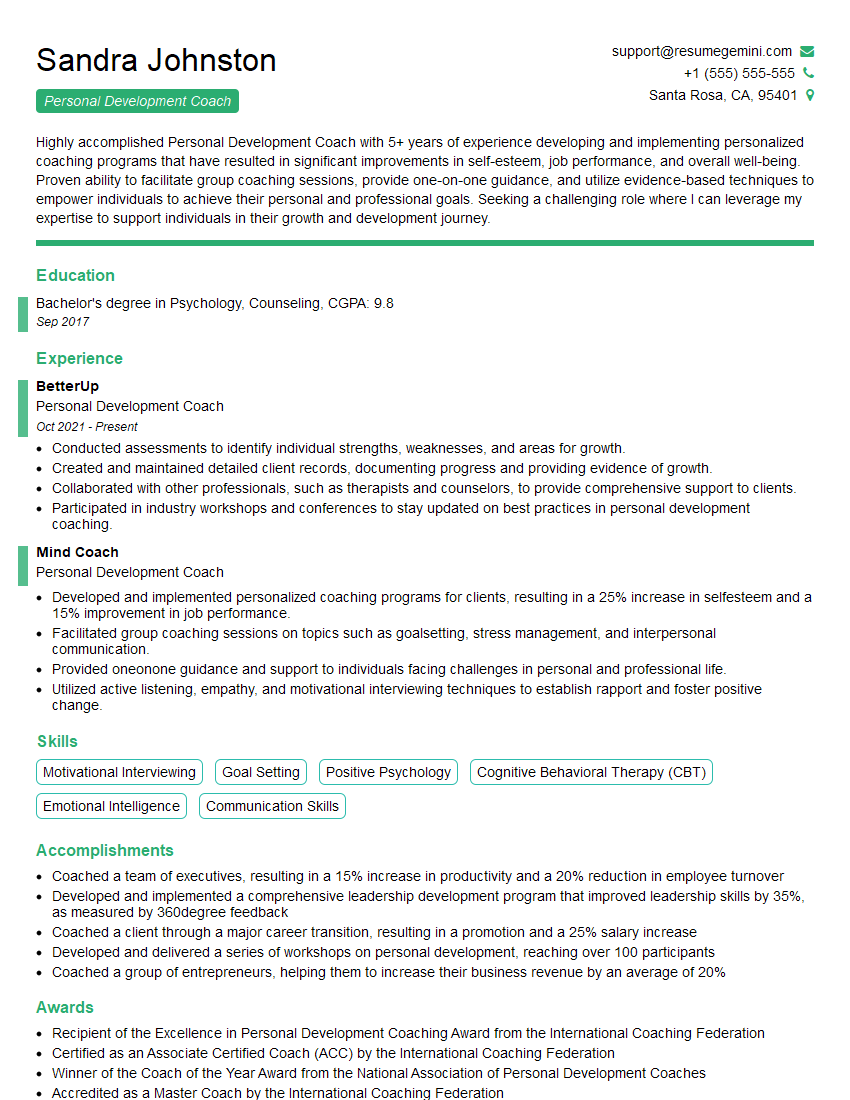
Are you gearing up for a career shift or aiming to ace your next interview? Look no further! We’ve curated a comprehensive guide to help you crack the interview for the coveted Personal Development Coach position. From understanding the key responsibilities to mastering the most commonly asked questions, this blog has you covered. So, buckle up and let’s embark on this journey together
Acing the interview is crucial, but landing one requires a compelling resume that gets you noticed. Crafting a professional document that highlights your skills and experience is the first step toward interview success. ResumeGemini can help you build a standout resume that gets you called in for that dream job.






Essential Interview Questions For Personal Development Coach
1. How do you assess a client’s needs and goals?
I employ a comprehensive approach to assess client needs and goals. I begin by conducting an intake session where I gather information through open-ended questions, active listening, and observations. This initial assessment helps me understand the client’s current situation, challenges, strengths, and aspirations.
2. What coaching methods and techniques do you use to facilitate client development?
Active Listening and Reflection
- Pay close attention to what clients say and observe their body language.
- Reflect on and summarize clients’ thoughts and emotions to demonstrate understanding.
Goal Setting and Action Planning
- Collaborate with clients to establish clear, specific, and achievable goals.
- Develop action plans that outline steps clients can take to reach their objectives.
3. How do you handle clients who are resistant to change or lack motivation?
When encountering clients who are resistant to change or lack motivation, I approach the situation with empathy and understanding. I recognize that resistance often stems from fear of the unknown or a lack of clarity. I take the following steps:
- Explore the underlying reasons for resistance and help clients identify any potential barriers.
- Reframe the situation and present change as an opportunity for growth and development.
- Provide support and encouragement while holding clients accountable for their actions.
4. How do you measure the effectiveness of your coaching interventions?
I believe in tracking progress and using data to measure the effectiveness of my coaching interventions. I use a combination of qualitative and quantitative methods:
- Client feedback: I regularly gather feedback from clients to assess their satisfaction and progress towards goals.
- Assessments and self-reflections: Clients complete assessments and self-reflections to track their progress and identify areas for improvement.
- Goal achievement: We monitor clients’ progress towards their specific goals and celebrate successes.
5. What ethical considerations do you prioritize in your coaching practice?
I adhere to the highest ethical standards in my coaching practice. I am committed to:
- Confidentiality: Maintaining client privacy and protecting their information.
- Non-judgmental stance: Creating a safe and supportive environment where clients feel valued and respected.
- Avoiding conflicts of interest: Disclosing any potential conflicts and managing them appropriately.
6. How do you stay updated with the latest best practices in personal development coaching?
Staying abreast of the latest best practices is essential for my professional development. I engage in ongoing learning through:
- Continuing education: Attending workshops, webinars, and conferences to expand my knowledge and skills.
- Research and reading: Exploring academic journals, books, and online resources to stay informed about emerging trends and research findings.
- Networking and peer support: Connecting with other personal development coaches to share best practices and learn from their experiences.
7. How do you build rapport and establish trust with clients?
Building rapport and trust with clients is paramount for successful coaching. I foster these connections through:
- Active listening: Paying full attention to clients, understanding their concerns, and validating their emotions.
- Empathy: Putting myself in clients’ shoes and understanding their perspectives.
- Respect for diversity: Valuing and respecting clients’ unique backgrounds, values, and beliefs.
8. How do you handle situations where clients face setbacks or challenges?
Setbacks and challenges are an inherent part of personal development. When clients encounter these obstacles, I adopt the following approach:
- Acknowledge the difficulty: Recognize the client’s feelings and avoid dismissing their struggles.
- Explore underlying causes: Help clients identify the root causes of the setback and understand their triggers.
- Develop coping mechanisms: Collaborate with clients to develop strategies for managing challenges effectively.
- Foster resilience: Encourage clients to learn from their experiences and build emotional resilience.
9. How do you manage your time and prioritize tasks effectively?
Effective time management is crucial for a successful coaching practice. I employ the following strategies:
- Goal-oriented planning: Setting clear goals and prioritizing tasks based on their importance and urgency.
- Time blocking: Allocating specific time slots for different tasks to minimize distractions and optimize productivity.
- Delegation: Identifying tasks that can be delegated to support staff or colleagues.
- Technology utilization: Leveraging technology to automate tasks and improve efficiency.
10. What are your strengths and weaknesses as a personal development coach?
Strengths
- Strong interpersonal skills: Building rapport and trust with clients.
- Active listening and empathy: Understanding client needs and perspectives.
- Goal-oriented approach: Helping clients set and achieve their objectives.
Weaknesses
- Limited experience in specific industry niches: Willingness to learn and expand my knowledge.
- Balancing time commitments: Managing a busy schedule while providing clients with quality support.
Interviewers often ask about specific skills and experiences. With ResumeGemini‘s customizable templates, you can tailor your resume to showcase the skills most relevant to the position, making a powerful first impression. Also check out Resume Template specially tailored for Personal Development Coach.
Career Expert Tips:
- Ace those interviews! Prepare effectively by reviewing the Top 50 Most Common Interview Questions on ResumeGemini.
- Navigate your job search with confidence! Explore a wide range of Career Tips on ResumeGemini. Learn about common challenges and recommendations to overcome them.
- Craft the perfect resume! Master the Art of Resume Writing with ResumeGemini’s guide. Showcase your unique qualifications and achievements effectively.
- Great Savings With New Year Deals and Discounts! In 2025, boost your job search and build your dream resume with ResumeGemini’s ATS optimized templates.
Researching the company and tailoring your answers is essential. Once you have a clear understanding of the Personal Development Coach‘s requirements, you can use ResumeGemini to adjust your resume to perfectly match the job description.
Key Job Responsibilities
A Personal Development Coach is a professional who helps clients identify and achieve their personal growth goals. They provide support, guidance, and motivation to individuals as they work to improve their self-awareness, relationships, careers, and overall well-being.
1. Assess Client Needs
Meet with clients to understand their unique needs, goals, and challenges. Conduct assessments and interviews to gather information about their current situation and identify areas for growth. Develop personalized coaching plans tailored to each client’s individual needs.
2. Facilitate Self-Discovery and Goal-Setting
Help clients explore their values, beliefs, and aspirations. Guide them in setting realistic and meaningful goals that align with their long-term vision. Empower clients to take ownership of their personal development journey.
3. Provide Support and Motivation
Offer ongoing support and encouragement throughout the coaching process. Maintain regular contact with clients to track progress, celebrate accomplishments, and address challenges. Act as a sounding board and provide a safe and confidential space for clients to share their thoughts and feelings.
4. Develop Strategies for Personal Growth
Collaborate with clients to develop practical strategies for achieving their goals. Introduce tools and techniques, such as mindfulness, journaling, and visualization. Guide clients in implementing these strategies in their daily lives to foster lasting change.
5. Monitor Progress and Adjust Plans
Regularly assess clients’ progress and make adjustments to coaching plans as needed. Provide feedback and insights to help clients stay on track and maximize their outcomes. Celebrate successes and re-evaluate goals to ensure continued alignment with clients’ evolving needs.
Interview Tips
1. Research the Company and Role
Thoroughly research the company and the specific role you are applying for. This demonstrates your interest and preparation, and it allows you to tailor your answers to the company’s needs and the position’s requirements.
2. Prepare for Common Interview Questions
Practice answering common interview questions such as “Tell me about yourself,” “Why are you interested in this role?”, and “What are your strengths and weaknesses?”. Prepare specific examples of your experience and skills that align with the job requirements.
3. Highlight Your Coaching Skills
Emphasize your coaching skills, such as active listening, empathy, and the ability to build rapport. Describe experiences where you effectively guided individuals through personal growth and development.
4. Demonstrate Your Understanding of Personal Development
Discuss your understanding of personal development models, theories, and best practices. Explain how you incorporate these concepts into your coaching approach.
5. Be Professional and Enthusiastic
Dress professionally and arrive on time for your interview. Maintain a positive and enthusiastic attitude throughout the interview. Ask thoughtful questions to show your engagement and interest in the role.
6. Practice Self-Reflection
Reflect on your own personal development journey and how it has shaped your approach to coaching. Share examples of how you have applied personal development principles in your own life and the impact it has had on your growth.
7. Seek Feedback and Practice
Ask for feedback on your interview performance from a friend, mentor, or career coach. Practice your answers and seek opportunities to refine your communication skills.
8. Follow Up
Send a thank-you email to the interviewer within 24 hours of the interview. Express your appreciation and reiterate your interest in the role. Inquire about next steps or provide any additional information that you feel would be beneficial.
Next Step:
Now that you’re armed with interview-winning answers and a deeper understanding of the Personal Development Coach role, it’s time to take action! Does your resume accurately reflect your skills and experience for this position? If not, head over to ResumeGemini. Here, you’ll find all the tools and tips to craft a resume that gets noticed. Don’t let a weak resume hold you back from landing your dream job. Polish your resume, hit the “Build Your Resume” button, and watch your career take off! Remember, preparation is key, and ResumeGemini is your partner in interview success.