Are you gearing up for a career shift or aiming to ace your next interview? Look no further! We’ve curated a comprehensive guide to help you crack the interview for the coveted Phlebotomist position. From understanding the key responsibilities to mastering the most commonly asked questions, this blog has you covered. So, buckle up and let’s embark on this journey together
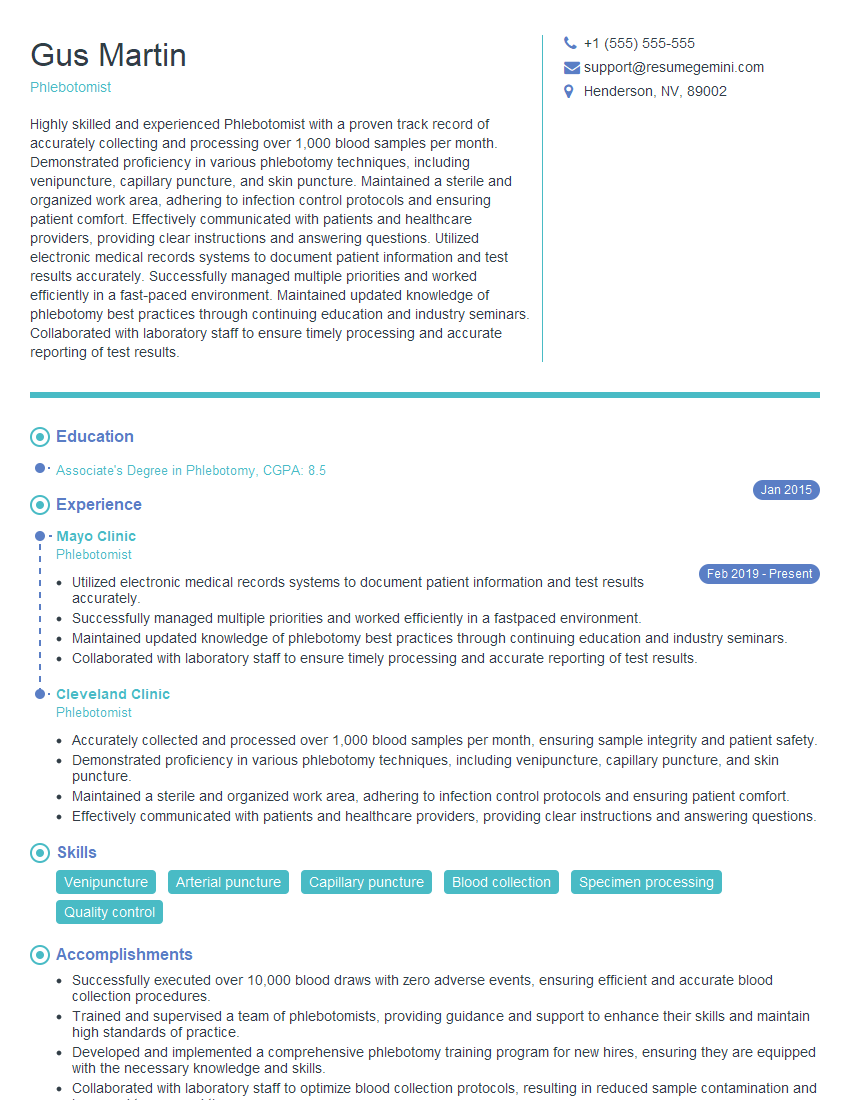
Acing the interview is crucial, but landing one requires a compelling resume that gets you noticed. Crafting a professional document that highlights your skills and experience is the first step toward interview success. ResumeGemini can help you build a standout resume that gets you called in for that dream job.






Essential Interview Questions For Phlebotomist
1. Explain the proper steps for venipuncture?
- Patient identification: Verify the patient’s identity using two forms of identification.
- Site selection: Choose a suitable puncture site based on anatomical landmarks, vein visibility, and skin condition.
- Preparation: Apply a tourniquet and clean the puncture site with an antiseptic.
- Insertion: Insert the needle at a 15-30 degree angle into the vein.
- Blood collection: Collect the required blood volume into a labeled tube or syringe.
- Withdrawal: Release the tourniquet, remove the needle, and apply pressure to the puncture site.
2. Describe the different types of blood collection tubes and their uses?
Serum Tubes
- Red-top tubes: Used for serum separation, contain no additives.
- Gold-top tubes: Contain a clot activator, used for serum separation and STAT testing.
Plasma Tubes
- Green-top tubes: Contain heparin, used for plasma separation.
- Lavender-top tubes: Contain EDTA, used for blood counts.
Other Tubes
- Blue-top tubes: Contain sodium citrate, used for coagulation studies.
- Gray-top tubes: Contain fluoride, used for glucose testing.
3. How do you handle a patient who is anxious or has a fear of needles?
- Empathize and reassure: Acknowledge the patient’s feelings and reassure them that the procedure is safe.
- Explain the process: Provide clear and concise instructions about the venipuncture procedure.
- Distraction techniques: Engage the patient in conversation or have them hold a stress ball.
- Positioning: Position the patient comfortably and support their arm during the procedure.
4. What are the signs and symptoms of a vasovagal reaction?
- Lightheadedness
- Dizziness
- Nausea
- Sweating
- Rapid pulse
- Loss of consciousness
5. How do you maintain confidentiality and protect patient privacy?
- HIPAA compliance: Adhere to all HIPAA regulations and guidelines.
- Secure handling of specimens: Properly label and transport specimens with patient identifiers.
- Limited access to records: Only authorized personnel should have access to patient medical records.
- Confidentiality agreements: Ensure that all staff members have signed confidentiality agreements.
6. What is your understanding of quality control in phlebotomy?
- Accuracy: Ensuring that blood collection and analysis results are accurate and reliable.
- Timeliness: Processing and reporting results within established turnaround times.
- Validation: Verifying the performance and calibration of equipment used for blood collection.
- Training: Providing comprehensive training to staff to minimize errors.
7. How do you ensure patient safety during blood collection?
- Proper identification: Verify patient identity to prevent specimen mix-ups.
- Sterile technique: Use sterile equipment and follow aseptic technique to avoid infections.
- Monitor for complications: Observe patients for signs of vasovagal reactions or other adverse events.
- Proper disposal of sharps: Dispose of used needles and other sharps safely to prevent injuries.
8. Describe your experience with handling pediatric patients?
- Calming techniques: Use age-appropriate methods to calm and reassure children.
- Proper restraint: Assist with holding or restraining children safely during the procedure.
- Site selection: Choose puncture sites that are accessible and comfortable for children.
- Smaller needle sizes: Use smaller needle gauges to minimize discomfort.
9. What is the importance of proper specimen handling and storage?
- Preservation of sample integrity: Ensuring that blood samples are not contaminated or altered during handling.
- Accurate test results: Proper storage minimizes sample degradation and ensures accurate test results.
- Patient safety: Preventing transmission of infectious diseases or errors in blood transfusion.
10. How would you respond if a patient asks you about the results of their blood test?
- Confidentiality: Explain that test results are confidential and should be discussed with their physician.
- Refer to physician: Provide contact information for the patient’s physician and encourage them to reach out with any questions.
- Provide general information: If appropriate, provide general information about the test being performed, but avoid discussing specific results.
Interviewers often ask about specific skills and experiences. With ResumeGemini‘s customizable templates, you can tailor your resume to showcase the skills most relevant to the position, making a powerful first impression. Also check out Resume Template specially tailored for Phlebotomist.
Career Expert Tips:
- Ace those interviews! Prepare effectively by reviewing the Top 50 Most Common Interview Questions on ResumeGemini.
- Navigate your job search with confidence! Explore a wide range of Career Tips on ResumeGemini. Learn about common challenges and recommendations to overcome them.
- Craft the perfect resume! Master the Art of Resume Writing with ResumeGemini’s guide. Showcase your unique qualifications and achievements effectively.
- Great Savings With New Year Deals and Discounts! In 2025, boost your job search and build your dream resume with ResumeGemini’s ATS optimized templates.
Researching the company and tailoring your answers is essential. Once you have a clear understanding of the Phlebotomist‘s requirements, you can use ResumeGemini to adjust your resume to perfectly match the job description.
Key Job Responsibilities
A Phlebotomist is a healthcare professional who is responsible for drawing blood from patients for laboratory testing. This can be a challenging and rewarding career that offers opportunities to make a real difference in the lives of others.
1. Drawing Blood Samples
The primary responsibility of a Phlebotomist is to draw blood samples from patients. This can be done through a variety of methods, including venipuncture, capillary puncture, and arterial puncture. Phlebotomists must be able to accurately and safely draw blood from patients of all ages and conditions.
2. Preparing Blood Samples
Once blood samples have been drawn, Phlebotomists are responsible for preparing them for laboratory testing. This may involve centrifuging the samples to separate the plasma from the red blood cells, or preparing slides for microscopic examination.
3. Patient Care
Phlebotomists must also provide excellent patient care. This includes explaining the procedure to patients, making them comfortable, and answering any questions that they may have. Phlebotomists must also be able to recognize and respond to signs of distress in patients.
4. Quality Control
Phlebotomists are responsible for ensuring the quality of the blood samples that they collect. This includes checking the samples for hemolysis, contamination, and other errors. Phlebotomists must also maintain accurate records of all blood samples that they collect.
Interview Tips
Preparing for an interview for a Phlebotomist position can be daunting, but there are a few things you can do to increase your chances of success.
1. Research the Company and Position
Before you go to your interview, take some time to research the company and the position you are applying for. This will help you to understand the company’s culture and values, as well as the specific requirements of the job.
2. Practice Answering Common Interview Questions
There are several common interview questions that you are likely to be asked, such as “Why are you interested in this position?” and “What are your strengths and weaknesses?”. Take some time to practice answering these questions in a clear and concise manner.
3. Be Prepared to Talk About Your Experience
The interviewer will likely ask you about your experience in the field. Be prepared to discuss your skills and accomplishments, and how they relate to the requirements of the job.
4. Be Yourself
The most important thing is to be yourself and to let your personality shine through. The interviewer will be able to tell if you are being genuine, and they will be more likely to hire someone who they believe is a good fit for the company.
Next Step:
Armed with this knowledge, you’re now well-equipped to tackle the Phlebotomist interview with confidence. Remember, a well-crafted resume is your first impression. Take the time to tailor your resume to highlight your relevant skills and experiences. And don’t forget to practice your answers to common interview questions. With a little preparation, you’ll be on your way to landing your dream job. So what are you waiting for? Start building your resume and start applying! Build an amazing resume with ResumeGemini.