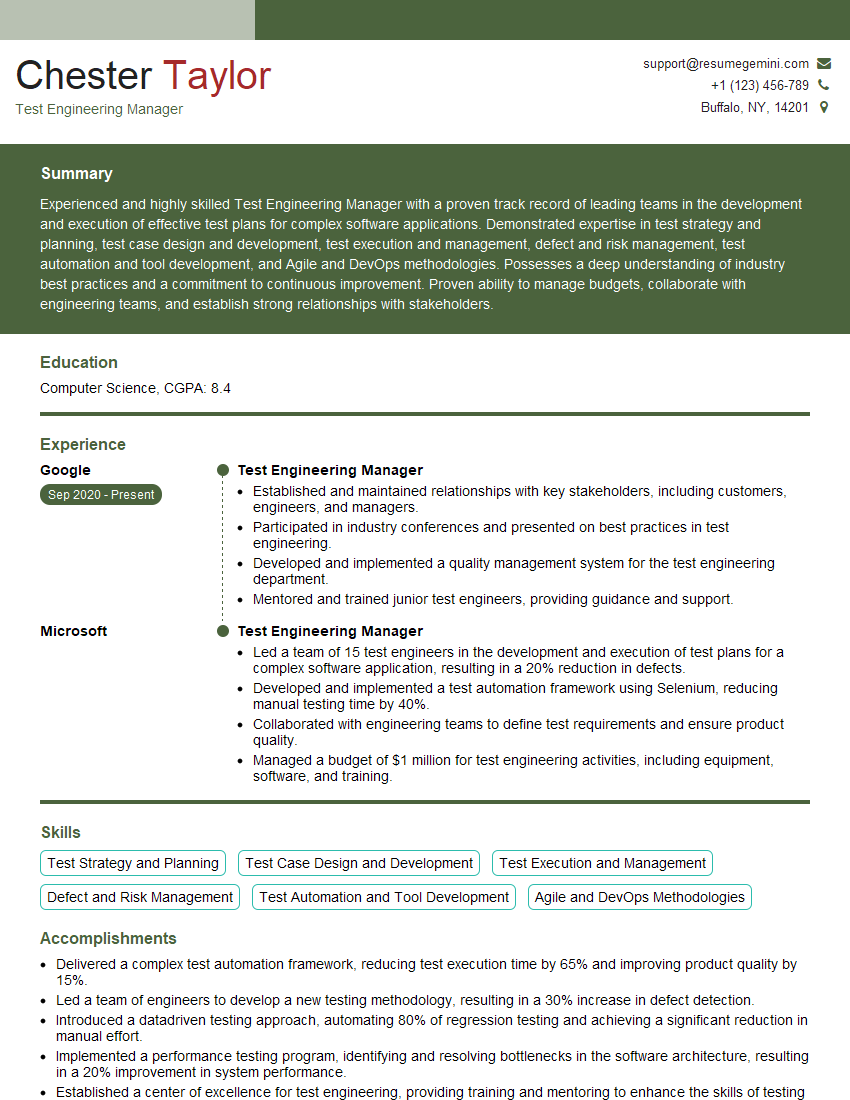
Ever felt underprepared for that crucial job interview? Or perhaps you’ve landed the interview but struggled to articulate your skills and experiences effectively? Fear not! We’ve got you covered. In this blog post, we’re diving deep into the Test Engineering Manager interview questions that you’re most likely to encounter. But that’s not all. We’ll also provide expert insights into the key responsibilities of a Test Engineering Manager so you can tailor your answers to impress potential employers.
Acing the interview is crucial, but landing one requires a compelling resume that gets you noticed. Crafting a professional document that highlights your skills and experience is the first step toward interview success. ResumeGemini can help you build a standout resume that gets you called in for that dream job.






Essential Interview Questions For Test Engineering Manager
1. Discuss your experience in managing and leading a team of test engineers?
- Managed and led a team of 10+ test engineers responsible for quality assurance of a complex software product.
- Provided technical guidance and mentorship to team members, ensuring they had the skills and knowledge to perform their roles effectively.
- Developed and implemented testing strategies, processes, and standards to ensure the highest levels of software quality.
- Collaborated closely with development and product teams to ensure testing aligned with business objectives and user needs.
2. How do you prioritize and allocate resources for testing activities to ensure optimal coverage and efficiency?
- Introduced a risk-based testing approach, focusing on critical functionality and areas with potential impact on user satisfaction.
- Developed a test plan template that clearly defined test objectives, scope, and resource allocation for each test cycle.
- Employed automated testing tools to streamline repetitive tasks and increase efficiency.
- Established a test environment that provided scalability and flexibility to handle varying testing needs.
3. Describe your approach to managing and mitigating testing risks, including the establishment of risk criteria and risk mitigation strategies.
- Identified and analyzed potential risks based on historical data, stakeholder feedback, and industry best practices.
- Established risk criteria to prioritize risks based on their severity, likelihood, and impact.
- Developed and implemented risk mitigation strategies, such as additional testing, code reviews, and stakeholder involvement.
- Regularly monitored and evaluated risks, making adjustments as needed to ensure effective risk management.
4. Discuss your experience with test automation, including the selection, implementation, and maintenance of test automation frameworks and tools.
- Led the evaluation and selection of a test automation framework that met the project’s specific needs and technical requirements.
- Developed and implemented a standardized automation testing process, ensuring consistency and efficiency.
- Trained and mentored team members on test automation best practices and techniques.
- Established a robust maintenance plan to ensure the automation framework remained up-to-date and aligned with evolving product requirements.
5. Describe your experience with developing and implementing testing metrics and KPIs (Key Performance Indicators) to measure testing effectiveness and efficiency.
- Established a comprehensive set of testing metrics, including test coverage, defect density, and testing cycle time.
- Developed KPIs that measured the effectiveness of testing activities and the contribution to overall product quality.
- Regularly analyzed and reported on testing metrics to identify areas for improvement and demonstrate the value of testing.
- Presented testing metrics to stakeholders, providing insights into testing progress and product quality.
6. Discuss your experience with stakeholder management and communication, particularly in the context of testing.
- Established and maintained strong relationships with stakeholders, including developers, product managers, and business analysts.
- Effectively communicated testing plans, results, and risk assessments to stakeholders, ensuring alignment and buy-in.
- Facilitated stakeholder involvement in testing activities, such as test planning and defect reviews.
- Proactively addressed stakeholder concerns and provided timely updates on testing progress.
7. Describe your experience with agile testing, including the implementation of agile testing practices and the integration of testing into agile development life cycles.
- Led the transition to agile testing, implementing test-driven development (TDD), continuous integration (CI), and continuous testing (CT) practices.
- Integrated testing into agile sprints, ensuring testing activities aligned with development cycles and user stories.
- Established automated testing pipelines that provided rapid feedback to development teams.
- Collaborated with developers to define acceptance criteria and ensure testing aligned with product requirements.
8. Describe your experience with performance testing, including the design, execution, and analysis of performance tests.
- Designed and executed comprehensive performance tests to evaluate the scalability, stability, and responsiveness of software products.
- Analyzed performance test results, identified performance bottlenecks, and recommended optimizations.
- Collaborated with development teams to implement performance improvements and ensure the product met performance requirements.
- Established performance testing standards and best practices to ensure consistent and reliable testing.
9. Describe your experience with security testing, including the identification, analysis, and mitigation of security vulnerabilities.
- Conducted security risk assessments to identify potential vulnerabilities in software products.
- Performed penetration testing and vulnerability scanning to exploit identified vulnerabilities and assess their impact.
- Developed and implemented security testing plans and strategies to mitigate security risks.
- Collaborated with development and security teams to address security vulnerabilities and ensure the product met security standards.
10. Describe your experience with test strategy and planning, including the development and implementation of test plans and the definition of test scope and objectives.
- Developed and implemented comprehensive test strategies that aligned with overall project goals and business objectives.
- Defined test scope and objectives, ensuring testing activities covered critical functionality and user requirements.
- Created detailed test plans that outlined test cases, test environments, and expected results.
- Collaborated with stakeholders to refine test plans and ensure they addressed business priorities.
Interviewers often ask about specific skills and experiences. With ResumeGemini‘s customizable templates, you can tailor your resume to showcase the skills most relevant to the position, making a powerful first impression. Also check out Resume Template specially tailored for Test Engineering Manager.
Career Expert Tips:
- Ace those interviews! Prepare effectively by reviewing the Top 50 Most Common Interview Questions on ResumeGemini.
- Navigate your job search with confidence! Explore a wide range of Career Tips on ResumeGemini. Learn about common challenges and recommendations to overcome them.
- Craft the perfect resume! Master the Art of Resume Writing with ResumeGemini’s guide. Showcase your unique qualifications and achievements effectively.
- Great Savings With New Year Deals and Discounts! In 2025, boost your job search and build your dream resume with ResumeGemini’s ATS optimized templates.
Researching the company and tailoring your answers is essential. Once you have a clear understanding of the Test Engineering Manager‘s requirements, you can use ResumeGemini to adjust your resume to perfectly match the job description.
Key Job Responsibilities
The Test Engineering Manager plays a crucial role in leading and managing the testing process within an organization. Their key responsibilities include:
1. Strategic Planning
Develop and implement test strategies that align with the overall product development process and business objectives.
2. Team Management
Hire, train, and motivate a team of test engineers to ensure efficient and effective testing practices.
3. Test Process Optimization
Continuously improve test processes and methodologies to enhance efficiency, accuracy, and coverage.
4. Test Automation
Lead initiatives to automate testing processes, reducing manual effort and increasing test coverage.
5. Test Planning and Execution
Plan and execute comprehensive test plans across various platforms and devices.
6. Defect Management
Effectively manage defects throughout the testing lifecycle, ensuring timely resolution and tracking.
7. Collaboration and Communication
Collaborate with development teams, product managers, and stakeholders to ensure effective communication and alignment.
8. Standards and Compliance
Ensure adherence to industry standards and regulatory requirements.
Interview Tips
To help candidates ace their interview for a Test Engineering Manager position, here are some tips:
1. Research the Company and Role
Thoroughly research the company’s products, services, and testing practices. Understand the specific responsibilities and expectations of the role.
2. Highlight Relevant Experience
Emphasize your experience in leading and managing test teams, optimizing processes, and implementing test automation. Provide specific examples of your accomplishments and quantify results whenever possible.
Example Answer: “In my previous role as Test Engineering Manager, I led a team of 10 engineers and implemented a new test automation framework that reduced manual testing time by over 50%, resulting in significant cost savings and improved product quality.”
3. Showcase Industry Knowledge
Demonstrate your familiarity with industry trends, best practices, and emerging technologies related to testing. This includes knowledge of agile methodologies, DevOps, and cloud-based testing.
Example Answer: “I am actively involved in industry conferences and webinars to stay abreast of the latest testing techniques. I am particularly interested in the integration of AI and machine learning into testing, which has the potential to revolutionize the field.”
4. Prepare for Technical Questions
Expect technical questions related to testing methodologies, automation tools, defect tracking systems, and software quality assurance. Be prepared to discuss your experience in these areas and provide examples.
Example Question: “Describe the process you would follow to develop a comprehensive test plan for a new software product.”
5. Emphasize Leadership and Management Skills
Highlight your ability to lead, motivate, and develop a team of test engineers. Discuss your approaches to team building, communication, and conflict resolution.
Example Answer: “I believe that a strong team is essential for successful testing. I focus on creating a positive and supportive work environment where engineers feel valued and empowered. Through regular communication and feedback, I foster a sense of collaboration and continuous improvement within the team.”
Next Step:
Armed with this knowledge, you’re now well-equipped to tackle the Test Engineering Manager interview with confidence. Remember, preparation is key. So, start crafting your resume, highlighting your relevant skills and experiences. Don’t be afraid to tailor your application to each specific job posting. With the right approach and a bit of practice, you’ll be well on your way to landing your dream job. Build your resume now from scratch or optimize your existing resume with ResumeGemini. Wish you luck in your career journey!