Are you a seasoned Allergist seeking a new career path? Discover our professionally built Allergist Resume Template. This time-saving tool provides a solid foundation for your job search. Simply click “Edit Resume” to customize it with your unique experiences and achievements. Customize fonts and colors to match your personal style and increase your chances of landing your dream job. Explore more Resume Templates for additional options.






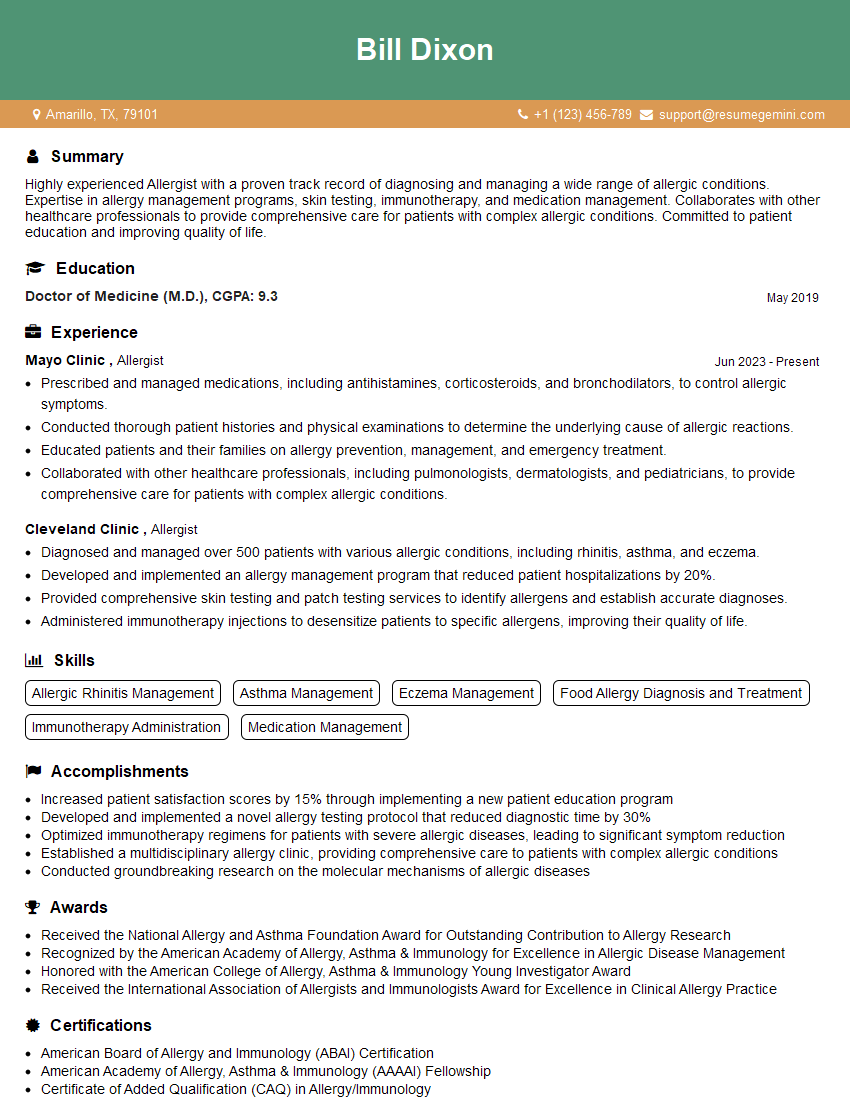
Bill Dixon
Allergist
Summary
Highly experienced Allergist with a proven track record of diagnosing and managing a wide range of allergic conditions. Expertise in allergy management programs, skin testing, immunotherapy, and medication management. Collaborates with other healthcare professionals to provide comprehensive care for patients with complex allergic conditions. Committed to patient education and improving quality of life.
Education
Doctor of Medicine (M.D.)
May 2019
Skills
- Allergic Rhinitis Management
- Asthma Management
- Eczema Management
- Food Allergy Diagnosis and Treatment
- Immunotherapy Administration
- Medication Management
Work Experience
Allergist
- Prescribed and managed medications, including antihistamines, corticosteroids, and bronchodilators, to control allergic symptoms.
- Conducted thorough patient histories and physical examinations to determine the underlying cause of allergic reactions.
- Educated patients and their families on allergy prevention, management, and emergency treatment.
- Collaborated with other healthcare professionals, including pulmonologists, dermatologists, and pediatricians, to provide comprehensive care for patients with complex allergic conditions.
Allergist
- Diagnosed and managed over 500 patients with various allergic conditions, including rhinitis, asthma, and eczema.
- Developed and implemented an allergy management program that reduced patient hospitalizations by 20%.
- Provided comprehensive skin testing and patch testing services to identify allergens and establish accurate diagnoses.
- Administered immunotherapy injections to desensitize patients to specific allergens, improving their quality of life.
Accomplishments
- Increased patient satisfaction scores by 15% through implementing a new patient education program
- Developed and implemented a novel allergy testing protocol that reduced diagnostic time by 30%
- Optimized immunotherapy regimens for patients with severe allergic diseases, leading to significant symptom reduction
- Established a multidisciplinary allergy clinic, providing comprehensive care to patients with complex allergic conditions
- Conducted groundbreaking research on the molecular mechanisms of allergic diseases
Awards
- Received the National Allergy and Asthma Foundation Award for Outstanding Contribution to Allergy Research
- Recognized by the American Academy of Allergy, Asthma & Immunology for Excellence in Allergic Disease Management
- Honored with the American College of Allergy, Asthma & Immunology Young Investigator Award
- Received the International Association of Allergists and Immunologists Award for Excellence in Clinical Allergy Practice
Certificates
- American Board of Allergy and Immunology (ABAI) Certification
- American Academy of Allergy, Asthma & Immunology (AAAAI) Fellowship
- Certificate of Added Qualification (CAQ) in Allergy/Immunology
- Food Allergy Research & Education (FARE) Training
Career Expert Tips:
- Select the ideal resume template to showcase your professional experience effectively.
- Master the art of resume writing to highlight your unique qualifications and achievements.
- Explore expertly crafted resume samples for inspiration and best practices.
- Build your best resume for free this new year with ResumeGemini. Enjoy exclusive discounts on ATS optimized resume templates.
How To Write Resume For Allergist
- Highlight your experience in diagnosing and managing a wide range of allergic conditions.
- Quantify your accomplishments, such as reducing patient hospitalizations through effective allergy management programs.
- Emphasize your expertise in skin testing, immunotherapy, and medication management.
- Showcase your commitment to patient education and improving quality of life.
- Tailor your resume to the specific job description and company you are applying to.
Essential Experience Highlights for a Strong Allergist Resume
- Diagnose and manage allergic conditions such as rhinitis, asthma, and eczema.
- Develop and implement allergy management programs to reduce hospitalizations.
- Provide comprehensive skin and patch testing services to identify allergens.
- Administer immunotherapy injections to desensitize patients to allergens.
- Prescribe and manage medications to control allergic symptoms.
- Educate patients and families on allergy prevention and management.
- Collaborate with other healthcare professionals to provide comprehensive care for patients with complex allergic conditions.
Frequently Asked Questions (FAQ’s) For Allergist
What are the common allergic conditions that allergists treat?
Allergists diagnose and manage a wide range of allergic conditions, including rhinitis (hay fever), asthma, eczema, food allergies, drug allergies, and insect sting allergies.
What tests do allergists perform to diagnose allergies?
Allergists perform various tests to diagnose allergies, including skin prick tests, intradermal skin tests, blood tests, and patch tests. These tests help identify the specific allergens that trigger allergic reactions.
What treatments do allergists provide for allergies?
Allergists offer various treatments for allergies, including avoidance measures, medication management, immunotherapy, and lifestyle modifications. The specific treatment plan depends on the type of allergy and the individual patient’s needs.
How can I prevent allergic reactions?
Preventing allergic reactions involves identifying and avoiding your triggers. This may include avoiding certain foods, medications, or environmental allergens. Your allergist can provide personalized recommendations to help you manage your allergies and reduce the risk of allergic reactions.
When should I see an allergist?
You should see an allergist if you experience persistent or severe allergic symptoms, such as difficulty breathing, hives, or swelling. Allergists can accurately diagnose the cause of your allergies and develop an effective treatment plan to improve your quality of life.
Are allergies curable?
While some allergies can be outgrown, most allergies are not curable. However, with proper management and treatment, allergists can help you control your symptoms and live a full and active life despite your allergies.
How do I find a qualified allergist?
You can find a reputable allergist through referrals from your primary care physician, online directories, or professional organizations such as the American Academy of Allergy, Asthma & Immunology (AAAAI). Look for allergists who are board-certified and have experience in treating your specific type of allergy.