Are you a seasoned Developmental Therapist seeking a new career path? Discover our professionally built Developmental Therapist Resume Template. This time-saving tool provides a solid foundation for your job search. Simply click “Edit Resume” to customize it with your unique experiences and achievements. Customize fonts and colors to match your personal style and increase your chances of landing your dream job. Explore more Resume Templates for additional options.






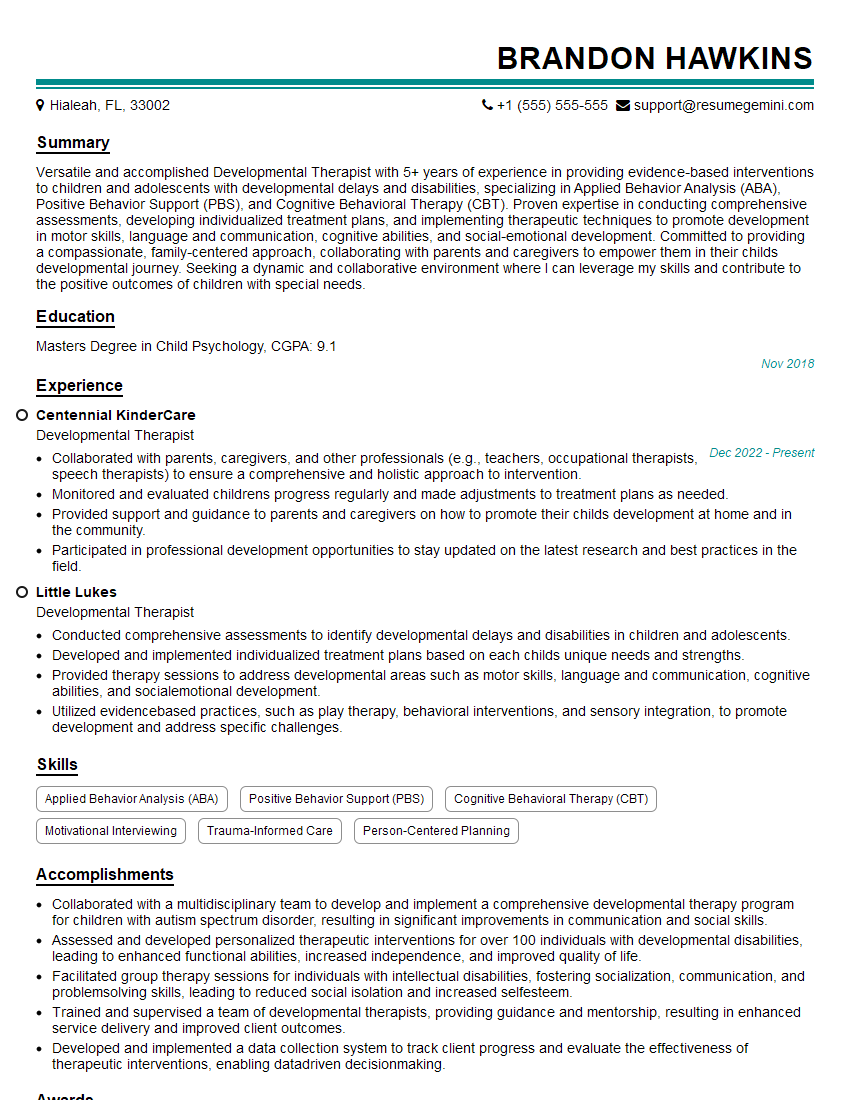
Brandon Hawkins
Developmental Therapist
Summary
Versatile and accomplished Developmental Therapist with 5+ years of experience in providing evidence-based interventions to children and adolescents with developmental delays and disabilities, specializing in Applied Behavior Analysis (ABA), Positive Behavior Support (PBS), and Cognitive Behavioral Therapy (CBT). Proven expertise in conducting comprehensive assessments, developing individualized treatment plans, and implementing therapeutic techniques to promote development in motor skills, language and communication, cognitive abilities, and social-emotional development. Committed to providing a compassionate, family-centered approach, collaborating with parents and caregivers to empower them in their childs developmental journey. Seeking a dynamic and collaborative environment where I can leverage my skills and contribute to the positive outcomes of children with special needs.
Education
Masters Degree in Child Psychology
November 2018
Skills
- Applied Behavior Analysis (ABA)
- Positive Behavior Support (PBS)
- Cognitive Behavioral Therapy (CBT)
- Motivational Interviewing
- Trauma-Informed Care
- Person-Centered Planning
Work Experience
Developmental Therapist
- Collaborated with parents, caregivers, and other professionals (e.g., teachers, occupational therapists, speech therapists) to ensure a comprehensive and holistic approach to intervention.
- Monitored and evaluated childrens progress regularly and made adjustments to treatment plans as needed.
- Provided support and guidance to parents and caregivers on how to promote their childs development at home and in the community.
- Participated in professional development opportunities to stay updated on the latest research and best practices in the field.
Developmental Therapist
- Conducted comprehensive assessments to identify developmental delays and disabilities in children and adolescents.
- Developed and implemented individualized treatment plans based on each childs unique needs and strengths.
- Provided therapy sessions to address developmental areas such as motor skills, language and communication, cognitive abilities, and socialemotional development.
- Utilized evidencebased practices, such as play therapy, behavioral interventions, and sensory integration, to promote development and address specific challenges.
Accomplishments
- Collaborated with a multidisciplinary team to develop and implement a comprehensive developmental therapy program for children with autism spectrum disorder, resulting in significant improvements in communication and social skills.
- Assessed and developed personalized therapeutic interventions for over 100 individuals with developmental disabilities, leading to enhanced functional abilities, increased independence, and improved quality of life.
- Facilitated group therapy sessions for individuals with intellectual disabilities, fostering socialization, communication, and problemsolving skills, leading to reduced social isolation and increased selfesteem.
- Trained and supervised a team of developmental therapists, providing guidance and mentorship, resulting in enhanced service delivery and improved client outcomes.
- Developed and implemented a data collection system to track client progress and evaluate the effectiveness of therapeutic interventions, enabling datadriven decisionmaking.
Awards
- Received the Excellence in Developmental Therapy Award for outstanding contributions to the field.
- Honored with the Employee of the Year Award for exceptional performance in developmental therapy services.
- Recognized with the Innovation Award for developing a novel therapeutic intervention for individuals with disabilities.
- Granted a research grant to investigate the effectiveness of early intervention strategies for infants with developmental delays.
Certificates
- Board Certified Behavior Analyst (BCBA)
- Registered Behavior Technician (RBT)
- Certified Autism Specialist (CAS)
- Certified Developmental Disability Professional (CDDP)
Career Expert Tips:
- Select the ideal resume template to showcase your professional experience effectively.
- Master the art of resume writing to highlight your unique qualifications and achievements.
- Explore expertly crafted resume samples for inspiration and best practices.
- Build your best resume for free this new year with ResumeGemini. Enjoy exclusive discounts on ATS optimized resume templates.
How To Write Resume For Developmental Therapist
- Highlight your passion for supporting children with special needs, and demonstrate your genuine desire to make a difference in their lives.
- Showcase your knowledge and experience in various therapeutic techniques and evidence-based practices.
- Quantify your accomplishments and outcomes whenever possible to demonstrate the impact of your work.
- Emphasize your ability to collaborate effectively with parents, caregivers, and other professionals to achieve shared goals.
- Tailor your resume to each specific job you apply for, highlighting the most relevant skills and experiences.
Essential Experience Highlights for a Strong Developmental Therapist Resume
- Conduct comprehensive developmental assessments to evaluate and identify developmental delays and disabilities
- Develop and implement individualized treatment plans tailored to each child’s unique needs and strengths
- Provide individualized and group therapy sessions targeting motor skills, language and communication, cognitive abilities, and social-emotional development
- Incorporate evidence-based practices, such as Applied Behavior Analysis (ABA), Positive Behavioral Support (PBS), Cognitive Behavioral Therapy (CBT), and sensory integration, into therapy sessions
- Collaborate with parents, caregivers, and other professionals involved in the child’s development, such as teachers, occupational therapists, and speech therapists
- Monitor and evaluate children’s progress regularly and make adjustments to treatment plans as needed
- Provide ongoing support and guidance to parents and caregivers, empowering them with strategies to foster their child’s development at home and in the community
Frequently Asked Questions (FAQ’s) For Developmental Therapist
What is the primary role of a Developmental Therapist?
A Developmental Therapist is responsible for assessing, diagnosing, and treating developmental delays and disabilities in children and adolescents. They work closely with children and their families to provide individualized support and intervention, aiming to enhance their development and quality of life.
What are the common techniques used by Developmental Therapists?
Developmental Therapists employ various evidence-based techniques to promote development, including Applied Behavior Analysis (ABA), Positive Behavior Support (PBS), Cognitive Behavioral Therapy (CBT), sensory integration, and play therapy. These techniques are tailored to each child’s unique needs and are designed to improve skills in areas such as communication, social interaction, motor function, and cognitive abilities.
What is the educational background required to become a Developmental Therapist?
Most Developmental Therapists hold a Master’s degree in a related field such as Child Psychology, Special Education, Occupational Therapy, or Speech-Language Pathology. Some states may require additional certification or licensure to practice as a Developmental Therapist.
What are the essential qualities of a successful Developmental Therapist?
Successful Developmental Therapists possess a deep understanding of child development and a passion for helping children with special needs. They are empathetic, patient, and have excellent communication and interpersonal skills. They are also highly organized, detail-oriented, and able to work independently and as part of a team.
What are the career prospects for Developmental Therapists?
Developmental Therapists are in high demand as the prevalence of developmental delays and disabilities continues to rise. They can work in a variety of settings, including schools, clinics, hospitals, and private practice. With experience and additional training, Developmental Therapists can advance to leadership positions, specialize in specific areas such as autism or early intervention, or pursue research opportunities.
What are some of the challenges faced by Developmental Therapists?
Developmental Therapists often work with children who have complex needs and may face challenges related to communication, behavior, and social interaction. They may also experience emotional challenges as they witness the struggles faced by children and their families. It is important for Developmental Therapists to practice self-care and seek support from colleagues and supervisors to manage these challenges.
How can I find a Developmental Therapist for my child?
To find a qualified Developmental Therapist for your child, you can consult with your pediatrician or local health department for referrals. You can also search online directories of healthcare providers or contact organizations specializing in developmental disabilities. It is important to choose a therapist who is experienced in working with children with similar needs to your child and who you feel comfortable with.
What can I expect during a Developmental Therapy session?
During a Developmental Therapy session, the therapist will typically begin by observing your child and interacting with them to assess their strengths and needs. They may use standardized assessments or questionnaires to gather information about your child’s development. Based on their assessment, the therapist will develop an individualized treatment plan outlining the specific goals and interventions that will be used. Therapy sessions may include activities such as play, structured exercises, and parent training.