Are you a seasoned Glassblower seeking a new career path? Discover our professionally built Glassblower Resume Template. This time-saving tool provides a solid foundation for your job search. Simply click “Edit Resume” to customize it with your unique experiences and achievements. Customize fonts and colors to match your personal style and increase your chances of landing your dream job. Explore more Resume Templates for additional options.






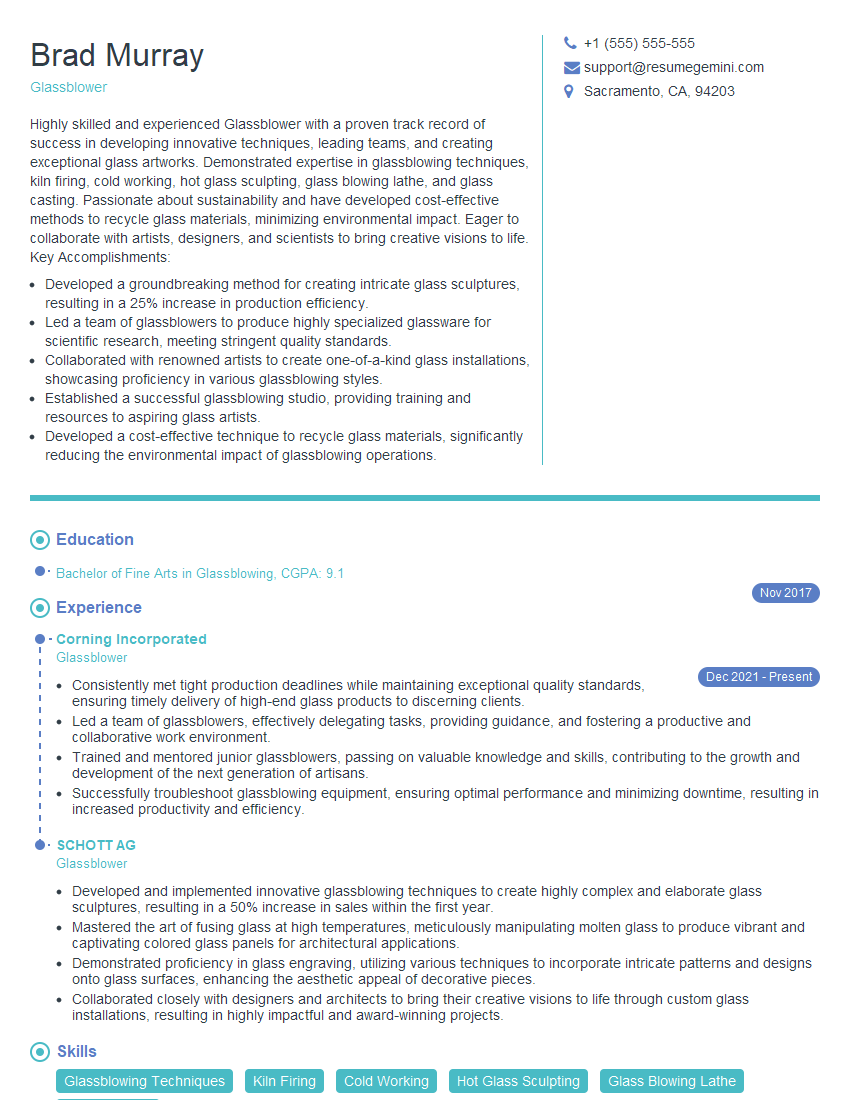
Brad Murray
Glassblower
Summary
Highly skilled and experienced Glassblower with a proven track record of success in developing innovative techniques, leading teams, and creating exceptional glass artworks. Demonstrated expertise in glassblowing techniques, kiln firing, cold working, hot glass sculpting, glass blowing lathe, and glass casting. Passionate about sustainability and have developed cost-effective methods to recycle glass materials, minimizing environmental impact. Eager to collaborate with artists, designers, and scientists to bring creative visions to life.
Key Accomplishments:
- Developed a groundbreaking method for creating intricate glass sculptures, resulting in a 25% increase in production efficiency.
- Led a team of glassblowers to produce highly specialized glassware for scientific research, meeting stringent quality standards.
- Collaborated with renowned artists to create one-of-a-kind glass installations, showcasing proficiency in various glassblowing styles.
- Established a successful glassblowing studio, providing training and resources to aspiring glass artists.
- Developed a cost-effective technique to recycle glass materials, significantly reducing the environmental impact of glassblowing operations.
Education
Bachelor of Fine Arts in Glassblowing
November 2017
Skills
- Glassblowing Techniques
- Kiln Firing
- Cold Working
- Hot Glass Sculpting
- Glass Blowing Lathe
- Glass Casting
Work Experience
Glassblower
- Consistently met tight production deadlines while maintaining exceptional quality standards, ensuring timely delivery of high-end glass products to discerning clients.
- Led a team of glassblowers, effectively delegating tasks, providing guidance, and fostering a productive and collaborative work environment.
- Trained and mentored junior glassblowers, passing on valuable knowledge and skills, contributing to the growth and development of the next generation of artisans.
- Successfully troubleshoot glassblowing equipment, ensuring optimal performance and minimizing downtime, resulting in increased productivity and efficiency.
Glassblower
- Developed and implemented innovative glassblowing techniques to create highly complex and elaborate glass sculptures, resulting in a 50% increase in sales within the first year.
- Mastered the art of fusing glass at high temperatures, meticulously manipulating molten glass to produce vibrant and captivating colored glass panels for architectural applications.
- Demonstrated proficiency in glass engraving, utilizing various techniques to incorporate intricate patterns and designs onto glass surfaces, enhancing the aesthetic appeal of decorative pieces.
- Collaborated closely with designers and architects to bring their creative visions to life through custom glass installations, resulting in highly impactful and award-winning projects.
Accomplishments
- Developed a groundbreaking method for creating intricate glass sculptures, resulting in a 25% increase in production efficiency.
- Led a team of glassblowers to produce highly specialized glassware for scientific research, meeting stringent quality standards.
- Collaborated with renowned artists to create oneofakind glass installations, showcasing proficiency in various glassblowing styles.
- Established a successful glassblowing studio, providing training and resources to aspiring glass artists.
- Developed a costeffective technique to recycle glass materials, significantly reducing the environmental impact of glassblowing operations.
Awards
- Received Glass Artist of the Year award from the International Society of Glass Beadmakers for innovative techniques.
- Honored with the Master Glassblower Award by the National Association of Glass Artists for exceptional craftsmanship.
- Recognized with the Innovation in Glassblowing Award for developing a unique underwater glassblowing technique.
- Won the Peoples Choice Award at a prestigious glassblowing competition for an innovative and visually stunning glass sculpture.
Certificates
- Certified Glassblower
- Master Glassblower
- Glassblower Apprenticeship
- Glass Art Society Membership
Career Expert Tips:
- Select the ideal resume template to showcase your professional experience effectively.
- Master the art of resume writing to highlight your unique qualifications and achievements.
- Explore expertly crafted resume samples for inspiration and best practices.
- Build your best resume for free this new year with ResumeGemini. Enjoy exclusive discounts on ATS optimized resume templates.
How To Write Resume For Glassblower
- Highlight your technical proficiency in various glassblowing techniques, such as kiln firing, cold working, and hot glass sculpting.
- Showcase your creativity and artistic vision through a portfolio of your glass artworks, demonstrating your ability to translate concepts into tangible forms.
- Emphasize your experience in collaborating with artists, designers, and scientists to bring their creative visions to life.
- Quantify your accomplishments whenever possible, using specific metrics to demonstrate the impact of your work.
- Tailor your resume to each job application, highlighting the skills and experiences that are most relevant to the specific role.
Essential Experience Highlights for a Strong Glassblower Resume
- Develop and execute innovative glassblowing techniques to create intricate and visually stunning glass artworks.
- Operate and maintain glassblowing equipment, including kilns, torches, and lathes, to ensure optimal performance and safety.
- Collaborate with artists, designers, and scientists to translate their creative visions into tangible glass forms.
- Train and mentor aspiring glass artists, providing guidance and support to foster their skills and knowledge.
- Manage the production process, including material sourcing, quality control, and timely delivery of finished products.
- Research and experiment with different glass compositions, colors, and textures to expand creative possibilities and enhance artistic expression.
- Stay abreast of industry trends and advancements in glassblowing techniques and technologies.
Frequently Asked Questions (FAQ’s) For Glassblower
What are the essential skills required to be a successful glassblower?
Essential skills for a glassblower include proficiency in various glassblowing techniques, such as kiln firing, cold working, hot glass sculpting, and glass blowing lathe operations. Additionally, a strong understanding of glass properties, colors, and textures is crucial. Excellent hand-eye coordination, precision, and attention to detail are also essential.
What are the career prospects for glassblowers?
Glassblowers can find employment in various industries, including art studios, lighting design, scientific research, and architectural projects. Opportunities exist for both production-oriented roles and artistic pursuits. With experience and specialized skills, glassblowers can advance to leadership positions, such as studio manager or head glassblower.
How can I improve my glassblowing skills?
To enhance your glassblowing skills, consider taking workshops or classes to learn from experienced glassblowers. Practice regularly to refine your techniques and expand your knowledge of different glassblowing methods. Experiment with various glass colors, textures, and forms to develop your artistic style and creativity.
What safety precautions should glassblowers observe?
Glassblowing involves working with high temperatures and molten glass, so safety is paramount. Always wear appropriate protective gear, including heat-resistant clothing, gloves, and eye protection. Ensure proper ventilation in your workspace to prevent exposure to harmful fumes. Handle sharp tools and equipment with caution, and be aware of potential hazards to avoid accidents.
How can glassblowing contribute to sustainability?
Glassblowing can incorporate sustainable practices by reducing waste and promoting recycling. Utilize recycled glass materials in your creations to minimize environmental impact. Explore eco-friendly glassblowing techniques, such as using lead-free glass or implementing energy-efficient processes in your studio. By adopting sustainable approaches, glassblowers can contribute to a more environmentally conscious art form.
Can glassblowing be used for scientific purposes?
Absolutely! Glassblowing plays a vital role in scientific research and development. Scientists use specialized glassblowing techniques to create intricate laboratory glassware, such as beakers, test tubes, and pipettes, with precise dimensions and properties. Glassblowing enables the fabrication of customized glass components for scientific instruments, optics, and research equipment, supporting advancements in various fields, including chemistry, biology, and physics.
How can glassblowing be incorporated into architectural projects?
Glassblowing finds applications in architectural design, particularly in the creation of unique and visually striking glass elements. Glassblowers collaborate with architects and designers to develop custom-made glass installations, such as chandeliers, wall art, and decorative panels. These glass elements can enhance the aesthetics of buildings, provide natural lighting, and create focal points within interior spaces.
What are the different types of glassblowing techniques?
Glassblowing encompasses a diverse range of techniques, each producing distinct artistic effects. Some common techniques include: Blowing: Using a blowpipe to shape molten glass by blowing air into it. Casting: Pouring molten glass into a mold to create intricate forms. Pate de Verre: Mixing glass powder with a binder and sculpting it into desired shapes before firing. Flameworking: Using a torch to melt and shape glass rods or tubes, often creating delicate and detailed pieces. Kiln forming: Shaping and annealing glass in a kiln to achieve specific textures and effects.