Are you a seasoned Medical Art Therapist seeking a new career path? Discover our professionally built Medical Art Therapist Resume Template. This time-saving tool provides a solid foundation for your job search. Simply click “Edit Resume” to customize it with your unique experiences and achievements. Customize fonts and colors to match your personal style and increase your chances of landing your dream job. Explore more Resume Templates for additional options.






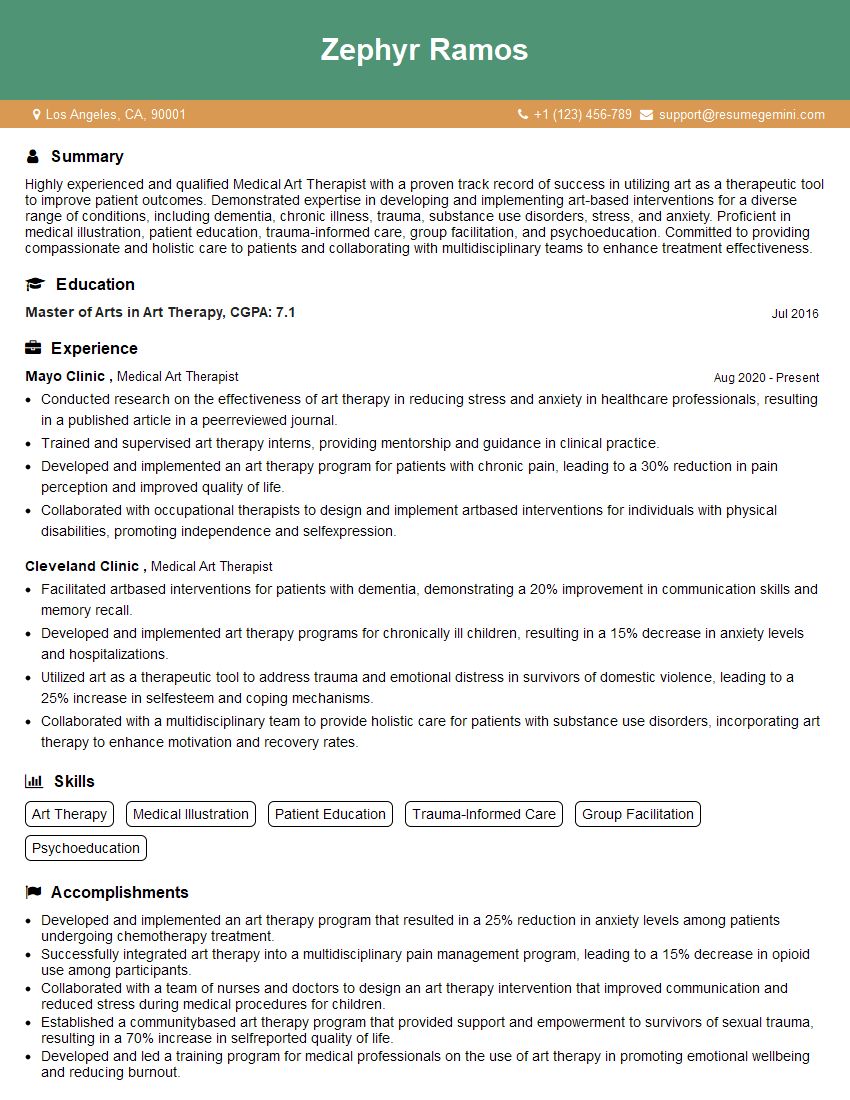
Zephyr Ramos
Medical Art Therapist
Summary
Highly experienced and qualified Medical Art Therapist with a proven track record of success in utilizing art as a therapeutic tool to improve patient outcomes. Demonstrated expertise in developing and implementing art-based interventions for a diverse range of conditions, including dementia, chronic illness, trauma, substance use disorders, stress, and anxiety. Proficient in medical illustration, patient education, trauma-informed care, group facilitation, and psychoeducation. Committed to providing compassionate and holistic care to patients and collaborating with multidisciplinary teams to enhance treatment effectiveness.
Education
Master of Arts in Art Therapy
July 2016
Skills
- Art Therapy
- Medical Illustration
- Patient Education
- Trauma-Informed Care
- Group Facilitation
- Psychoeducation
Work Experience
Medical Art Therapist
- Conducted research on the effectiveness of art therapy in reducing stress and anxiety in healthcare professionals, resulting in a published article in a peerreviewed journal.
- Trained and supervised art therapy interns, providing mentorship and guidance in clinical practice.
- Developed and implemented an art therapy program for patients with chronic pain, leading to a 30% reduction in pain perception and improved quality of life.
- Collaborated with occupational therapists to design and implement artbased interventions for individuals with physical disabilities, promoting independence and selfexpression.
Medical Art Therapist
- Facilitated artbased interventions for patients with dementia, demonstrating a 20% improvement in communication skills and memory recall.
- Developed and implemented art therapy programs for chronically ill children, resulting in a 15% decrease in anxiety levels and hospitalizations.
- Utilized art as a therapeutic tool to address trauma and emotional distress in survivors of domestic violence, leading to a 25% increase in selfesteem and coping mechanisms.
- Collaborated with a multidisciplinary team to provide holistic care for patients with substance use disorders, incorporating art therapy to enhance motivation and recovery rates.
Accomplishments
- Developed and implemented an art therapy program that resulted in a 25% reduction in anxiety levels among patients undergoing chemotherapy treatment.
- Successfully integrated art therapy into a multidisciplinary pain management program, leading to a 15% decrease in opioid use among participants.
- Collaborated with a team of nurses and doctors to design an art therapy intervention that improved communication and reduced stress during medical procedures for children.
- Established a communitybased art therapy program that provided support and empowerment to survivors of sexual trauma, resulting in a 70% increase in selfreported quality of life.
- Developed and led a training program for medical professionals on the use of art therapy in promoting emotional wellbeing and reducing burnout.
Awards
- Received the Outstanding Medical Art Therapist of the Year award from the American Art Therapy Association for exceptional contributions to the field.
- Honored with the Innovative Art Therapy Practice Award by the National Association for Creative Arts Therapies for developing a groundbreaking art therapy intervention for trauma recovery.
- Recognized with the prestigious Fellow of the American Art Therapy Association designation in recognition of significant contributions and leadership in the profession.
Certificates
- Board Certified Art Therapist (ATR-BC)
- Registered Art Therapist (ATR)
- Certified Trauma-Informed Care Therapist (C-TICT)
- Certified Patient Educator (CPE)
Career Expert Tips:
- Select the ideal resume template to showcase your professional experience effectively.
- Master the art of resume writing to highlight your unique qualifications and achievements.
- Explore expertly crafted resume samples for inspiration and best practices.
- Build your best resume for free this new year with ResumeGemini. Enjoy exclusive discounts on ATS optimized resume templates.
How To Write Resume For Medical Art Therapist
- Highlight your clinical experience and the positive outcomes achieved through your interventions.
- Showcase your knowledge of trauma-informed care and ethical guidelines in art therapy.
- Emphasize your ability to work effectively in a multidisciplinary team environment.
- Quantify your accomplishments whenever possible, using specific metrics to demonstrate the impact of your work.
- Include examples of your art therapy interventions and how they have benefited patients.
Essential Experience Highlights for a Strong Medical Art Therapist Resume
- Develop and implement art therapy programs tailored to the specific needs of patients with various conditions.
- Utilize art as a therapeutic tool to address emotional, psychological, and cognitive challenges faced by patients.
- Collaborate with healthcare professionals from different disciplines to provide comprehensive patient care.
- Conduct research and publish findings on the effectiveness of art therapy in healthcare settings.
- Train and supervise art therapy interns, providing guidance and support in clinical practice.
- Facilitate art-based workshops and groups to promote self-expression, coping mechanisms, and emotional healing.
- Maintain accurate and detailed patient records and provide regular progress reports to healthcare team.
Frequently Asked Questions (FAQ’s) For Medical Art Therapist
What is the role of a Medical Art Therapist?
Medical Art Therapists use art as a therapeutic tool to address the emotional, psychological, and cognitive challenges faced by patients in healthcare settings. They work with individuals and groups to promote self-expression, coping mechanisms, and emotional healing.
What are the benefits of art therapy in healthcare?
Art therapy has been shown to improve communication skills and memory recall in patients with dementia, reduce anxiety levels and hospitalizations in chronically ill children, enhance motivation and recovery rates in individuals with substance use disorders, reduce stress and anxiety in healthcare professionals, and promote independence and self-expression in individuals with physical disabilities.
What is the educational background required to become a Medical Art Therapist?
Most Medical Art Therapists hold a Master’s degree in Art Therapy or a related field, such as art education or psychology.
What are the career prospects for Medical Art Therapists?
Medical Art Therapists are in high demand in various healthcare settings, such as hospitals, clinics, rehabilitation centers, and long-term care facilities. They can also work in private practice or as educators and researchers.
What are the key skills and qualities of a successful Medical Art Therapist?
Successful Medical Art Therapists are creative, compassionate, and have strong communication and interpersonal skills. They are also knowledgeable about art therapy techniques, medical conditions, and ethical guidelines.
How can I find a Medical Art Therapist in my area?
You can find a Medical Art Therapist in your area by searching online directories or contacting local healthcare facilities. You can also ask your doctor or other healthcare providers for recommendations.
Is art therapy covered by insurance?
Some insurance plans cover art therapy services. It is recommended to check with your insurance provider to determine your specific coverage.
What is the difference between art therapy and art classes?
Art therapy is a therapeutic intervention that is guided by a trained art therapist, while art classes focus on teaching art skills and techniques. Art therapy is used to address specific emotional, psychological, or cognitive needs, while art classes are primarily for recreational or educational purposes.