Are you gearing up for a career shift or aiming to ace your next interview? Look no further! We’ve curated a comprehensive guide to help you crack the interview for the coveted Cotton Grower position. From understanding the key responsibilities to mastering the most commonly asked questions, this blog has you covered. So, buckle up and let’s embark on this journey together
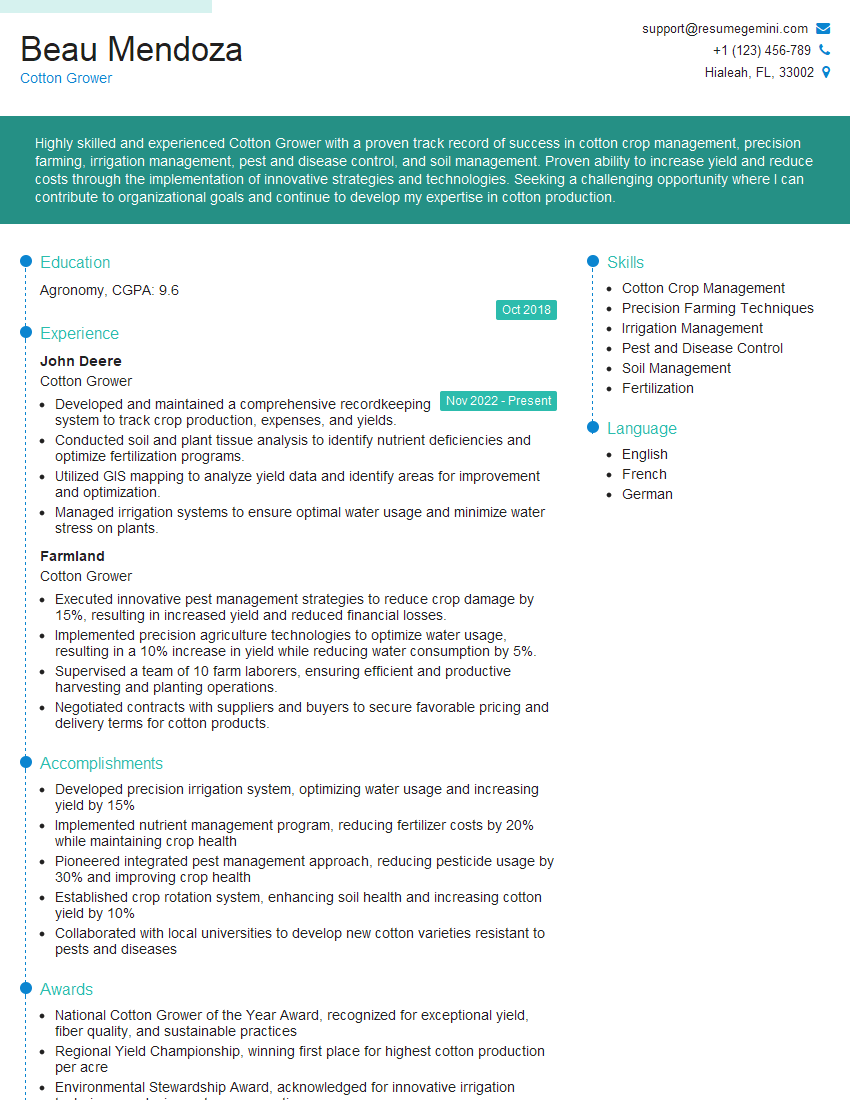
Acing the interview is crucial, but landing one requires a compelling resume that gets you noticed. Crafting a professional document that highlights your skills and experience is the first step toward interview success. ResumeGemini can help you build a standout resume that gets you called in for that dream job.






Essential Interview Questions For Cotton Grower
1. Explain the different types of cotton varieties and their advantages and disadvantages?
- Upland cotton: Most commonly grown variety, known for its high yield and adaptability to various climates. However, it is susceptible to pests and diseases.
- Pima cotton: Long-staple cotton known for its exceptional strength, softness, and luster. It has a low yield and is more susceptible to weather conditions.
- Egyptian cotton: Extra-long staple cotton known for its high quality, silky feel, and durability. It has a limited production and is more expensive.
- Organic cotton: Grown without the use of pesticides or synthetic fertilizers. It is more sustainable but has lower yields and higher production costs.
2. Describe the key pests and diseases that affect cotton crops and discuss management strategies?
Pests:
- Boll weevils: Feed on cotton bolls, causing damage and reducing yields.
- Aphids: Suck sap from leaves, weakening plants and transmitting diseases.
- Thrips: Small insects that damage flowers and bolls, reducing yields.
Diseases:
- Fusarium wilt: Soil-borne fungus that causes wilting and death of plants.
- Leaf spot: Fungal disease that causes leaf damage and reduces yield.
- Root rot: Caused by soil-borne fungi, it damages roots and inhibits nutrient uptake.
Management Strategies:
- Integrated Pest Management (IPM): Combining cultural practices, biological control, and selective pesticide use.
- Crop rotation: Planting different crops in succession to break pest and disease cycles.
- Resistant varieties: Selecting cotton varieties with natural resistance to pests and diseases.
3. Explain the factors that influence cotton yield and quality?
- Soil conditions: Well-drained, fertile soils with adequate organic matter promote healthy plant growth and yield.
- Water availability: Proper irrigation is crucial for cotton growth and fiber development.
- Climate: Warm, sunny climates with moderate rainfall favor cotton production.
- Genetics: Choosing high-yielding, disease-resistant varieties can significantly impact yield and quality.
- Management practices: Proper planting, fertilization, pest and disease control, and harvesting techniques are essential for optimal yield and quality.
4. Discuss the harvesting techniques used for cotton and the factors to consider when determining the appropriate timing?
- Mechanical harvesting: Using machines to strip or pick cotton bolls from plants.
- Hand harvesting: Manually picking cotton bolls, which is more labor-intensive but results in higher quality fiber.
Factors for determining harvesting timing:
- Boll maturity: Harvesting when bolls are fully mature ensures maximum fiber yield and quality.
- Weather conditions: Avoid harvesting during wet or windy weather to prevent fiber damage and contamination.
- Market conditions: Consider market prices and demand when deciding the best time to harvest.
5. Describe the postharvest handling and storage techniques for cotton to maintain its quality?
- Ginning: Removing seeds and lint from cotton bolls to produce raw cotton fibers.
- Baling: Compressing and wrapping cotton fibers into bales for transportation and storage.
- Storage: Storing cotton bales in clean, dry, well-ventilated warehouses to prevent moisture damage and contamination.
6. Discuss the importance of sustainable cotton production and the practices implemented to promote environmental responsibility?
- Reducing pesticide and fertilizer use: Adopting IPM and organic farming practices to minimize chemical inputs.
- Efficient water management: Using irrigation techniques that conserve water and prevent runoff.
- Soil conservation: Implementing crop rotation, cover crops, and conservation tillage to maintain soil health and prevent erosion.
- Biodiversity promotion: Encouraging natural predators and beneficial insects to control pests and enhance ecosystem health.
7. Explain the market trends and challenges facing the cotton industry?
Market Trends:
- Growing demand for sustainable cotton: Consumers are increasingly demanding ethical and environmentally friendly cotton products.
- Technological advancements: Innovation in cotton production, such as high-yield varieties and precision agriculture, is driving efficiency and productivity.
Challenges:
- Competition from synthetic fibers: Polyester and other artificial materials pose competition to cotton in the textile industry.
- Climate change: Extreme weather events and changing rainfall patterns can impact cotton production and yields.
- Pest and disease resistance: Pests and diseases can evolve resistance to current management strategies, requiring ongoing research and innovation.
8. How do you stay updated with the latest advancements and best practices in cotton farming?
- Industry publications and journals: Subscribing to relevant magazines and newsletters.
- Conferences and workshops: Attending industry events to learn from experts and network with peers.
- Online resources: Utilizing websites and databases dedicated to cotton farming for information and research.
9. What are your strengths and weaknesses as a Cotton Grower?
Strengths:
- In-depth knowledge of cotton cultivation: Years of experience in managing cotton crops effectively.
- Strong understanding of pest and disease management: Proficient in implementing IPM strategies to minimize crop losses.
- Excellent communication and interpersonal skills: Able to collaborate effectively with colleagues, clients, and stakeholders.
Weaknesses:
- Limited experience in sustainable cotton farming: Keen to gain more knowledge and implement sustainable practices.
- Not yet fluent in the local language: Making an effort to improve language proficiency for better communication with local communities.
10. Why are you interested in working as a Cotton Grower for our company?
- Company reputation and commitment to sustainability: Attracted by the company’s dedication to ethical and environmentally responsible cotton production.
- Opportunities for professional growth and development: Eager to contribute to the company’s success and expand my knowledge in cotton farming.
- Contribution to the local community: Passionate about supporting local cotton farmers and promoting sustainable agricultural practices in the region.
Interviewers often ask about specific skills and experiences. With ResumeGemini‘s customizable templates, you can tailor your resume to showcase the skills most relevant to the position, making a powerful first impression. Also check out Resume Template specially tailored for Cotton Grower.
Career Expert Tips:
- Ace those interviews! Prepare effectively by reviewing the Top 50 Most Common Interview Questions on ResumeGemini.
- Navigate your job search with confidence! Explore a wide range of Career Tips on ResumeGemini. Learn about common challenges and recommendations to overcome them.
- Craft the perfect resume! Master the Art of Resume Writing with ResumeGemini’s guide. Showcase your unique qualifications and achievements effectively.
- Great Savings With New Year Deals and Discounts! In 2025, boost your job search and build your dream resume with ResumeGemini’s ATS optimized templates.
Researching the company and tailoring your answers is essential. Once you have a clear understanding of the Cotton Grower‘s requirements, you can use ResumeGemini to adjust your resume to perfectly match the job description.
Key Job Responsibilities
A Cotton Grower is accountable for overseeing the cultivation and yield of cotton crops. Their responsibilities encompass a wide range of tasks, including:
1. Planning and Preparation
Develop and implement comprehensive crop production plans, taking into account factors such as soil conditions, weather patterns, and market demand.
- Determine optimal planting dates, seed varieties, and irrigation schedules.
- Select and prepare land for planting, ensuring proper soil pH, drainage, and fertility.
2. Crop Management
Monitor crop growth and development, applying appropriate cultural practices to maximize yield and quality.
- Fertilize and irrigate crops according to established plans.
- Control weeds, pests, and diseases through integrated pest management techniques.
3. Harvesting and Marketing
Coordinate and oversee the harvesting, storage, and marketing of cotton crops.
- Schedule and manage harvesting operations to ensure timely and efficient yield collection.
- Transport and store cotton in optimal conditions to maintain quality.
4. Record Keeping and Analysis
Maintain accurate and detailed records of all aspects of cotton production, including yield, inputs, and expenses.
- Analyze production data to identify areas for improvement and optimize crop yields.
- Collaborate with extension services and industry experts to stay abreast of best practices and technological advancements.
Interview Tips
To ace an interview for a Cotton Grower position, it is crucial to prepare effectively and demonstrate your expertise in the field.
1. Research the Company and Industry
Research the specific company you are applying to and the cotton industry as a whole. This will help you understand their operations, challenges, and market trends.
- Visit the company website to learn about their values, products, and production methods.
- Read industry reports and articles to stay informed about current issues and advancements.
2. Highlight Your Experience and Skills
Emphasize your experience in cotton cultivation and highlight your proficiency in key areas such as:
- Crop planning and management
- Pest and disease control
- Harvesting and marketing
- Record keeping and analysis
3. Share Case Studies and Success Stories
Provide specific examples from your past experiences that demonstrate your ability to overcome challenges and achieve successful outcomes.
- Describe a situation where you implemented a new technique that resulted in increased yield.
- Explain how you resolved a pest infestation that threatened your crop.
4. Ask Thoughtful Questions
Asking intelligent questions during the interview shows your interest, curiosity, and engagement. Focus on questions that relate to the company’s operations, industry trends, or opportunities for professional growth.
- Example: “What are the company’s sustainability initiatives in cotton production?”
- Example: “What technological advancements are emerging in the cotton industry that could impact future production practices?”
5. Project Confidence and Professionalism
Maintain a positive and confident attitude throughout the interview. Dress professionally, arrive on time, and be respectful of the interviewers.
- Make eye contact, speak clearly, and articulate your answers concisely.
- Demonstrate enthusiasm for the position and a strong work ethic.
Next Step:
Armed with this knowledge, you’re now well-equipped to tackle the Cotton Grower interview with confidence. Remember, preparation is key. So, start crafting your resume, highlighting your relevant skills and experiences. Don’t be afraid to tailor your application to each specific job posting. With the right approach and a bit of practice, you’ll be well on your way to landing your dream job. Build your resume now from scratch or optimize your existing resume with ResumeGemini. Wish you luck in your career journey!